


Trademarks have generally been associated with words or symbols which distinguish the goods or services of one enterprise from those of others. Over the years, trademark law has progressed to a great extent and includes non-conventional trademarks such as colors, shapes, smells, and sounds among many other types of trademark rights that are recognized worldwide, including India.
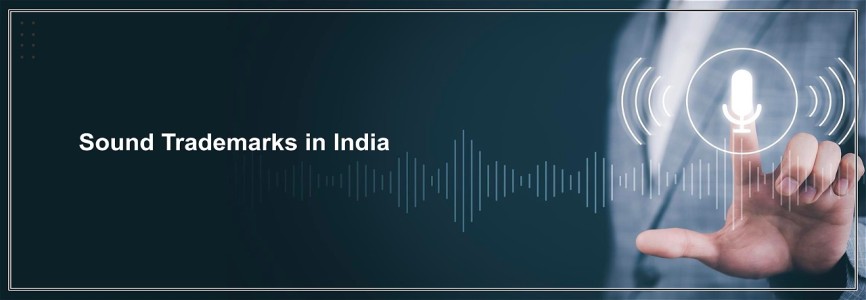
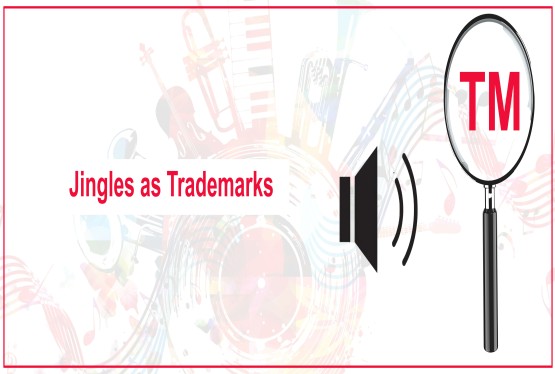
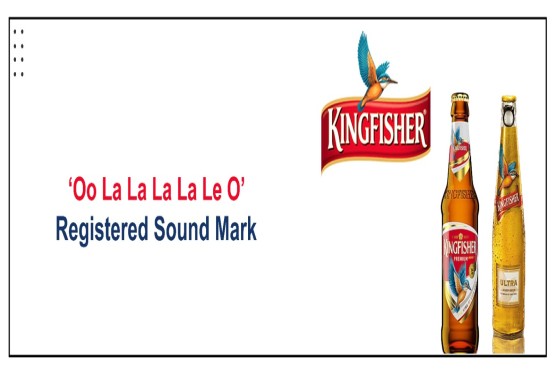
A sound trademark is a mark consisting of an audible trademark such as a specific tune which is capable of distinguishing and identifying the goods or services of one company from those of others. This includes the roar of the MGM lion prior to a film, the Intel sound used in computers while they start, or the tune associated with the commercials of a brand name. In essence, the use of a distinctive sound becomes associated with a brand in such a manner that consumers can easily recognize the trademark by just hearing it.
Statutory Legal Context
TRADEMARK ACT 1999: The Trade Marks Act of 1999 and the Trade Marks Rules 2017 are the two laws related to trademarks in India. What is curious is that the word "sound mark" itself is not used in the Act. But, at the same time, Section 2(1)(m) of the Act gives a broad definition of “mark.” In accordance with Section 2(1)(m), “mark” includes any word, number, label, name, brand, trade, envelope, or anything else.
It is the use of the phrase “any combination thereof,” combined with the wide non-exhaustive definition, which allows the Trade Marks Registry to grant approval for non-conventional marks such as sounds, provided that they meet the statutory requirement of being graphically represented and distinct.Section 2(1)(zb) states that a trade mark is a mark that has the ability to be graphically represented and distinguish one’s goods or services. These two requirements are the basis for registering sound marks in India.
TRADEMARK RULES 2017: The Trade Marks Rules, 2017 truly marked a turning point in the history of sound marks in India. Therein Rule 26(5) gives recognition to sound marks for the first time in Indian statutory law. It states that in the instances of applications for the registration of marks which are sound marks, the playback of sound is submitted in MP3 format and must be within 30 seconds duration recorded in a medium which permits easy and clear playing back with the help of an adequate graphical representation.
This was a significant leap given that it at once officially recognized sound as a species of marks eligible for registration and specified type of technical format to be used for their applications.
Prior to 2017, applicants for sound mark registration had to use a very broad wording of the Act in order to obtain approval from the Registrar relying mainly on musical notations and detailed descriptions.
Importance of Sound Trademark
Brand Building in Multi-Sensory Market Environment: Branding is not limited to visuals these days but goes beyond that to auditory branding. Brands interact with consumers through various sources like smartphones and digital advertising whereby auditory branding comes into Just like the visual logo, sound marks can be copied by competitors hence causing confusion to consumers. Trademarking a sound mark gives the brand a legal backing and stops competitors from using any sound that would be similar to sound mark that market the brand.
Increase in Goodwill and Brand Value: Once a sound mark is trademarked it becomes an intangible asset to the business with some economic worth. With time, the sound associated with the brand has the power of creating goodwill due to its continued positive association with the brand in the minds of the consumers. Legal protection ensures the consumers’ goodwill is play in building recall for brands. If the sound mark is created well, it can be a powerful brand recognition tool as it helps create brand association without making use of visuals. Prevention from Imitation not taken away by other people who want to use the sound for their benefit.
Promoting Innovations in Brand Marketing: The establishment of sound trademarks creates a great deal of creative thinking among organizations about how to brand themselves in the market. This leads companies to move away from conventional branding approaches and innovate in their marketing practices, ultimately producing more memorable brand experiences for clients.
India’s First Registration in Sound Mark
The first sound trademark was registered in India in the year 2008 to Yahoo! Inc. for its unique sound yodel, which is used for computer and internet services. Since then, several companies have registered their sound trademarks in India. For instance, this includes a sound trademark of ICICI Bank for the jingle used in the advertisements, Nokia for its famous ringtone, and Allianz SE for its corporate sound identity, thus proving that Indian trademark law has been open to this widely accepted form of intellectual property despite the lack of the necessary provisions in the parent act.
Legal Principles Governing Sound Trademark
Graphical Representation: One of the main legal challenges that sound marks have to deal with is the condition for graphical representation, as per Section 2 (1) (zb). A sound cannot be "seen", the way a word and a visual mark can. Hence, an applicant has to convert the sound into a format that can be visually recognized by the Registrar and the public. Usually, it is achieved by means of a musical score showing the specific notes, rhythm and duration of the sound. An ordinary verbal definition of a sound like "a joyful jingle" will not suffice, as it is definitely not precise enough for a third party to understand what exactly the mark applied for comprises.
Distinctiveness: Like any other type of trademark, a sound mark must be distinct in the sense that it should signal the source of the goods or services and distinguish them from those provided by others. Sounds that are commonly used or generic, like a simple ringtone of a basic beep, are unlikely to be protected unless they have gained distinctiveness through a long and traditional usage of the mark in the marketplace (secondary meaning).
Non-Functionality: Like trade dress rules, sound mark must be nonfunctional. This means that if the sound is determined or dictated by the nature of the product, or if it is important for the product (for instance, an alarm that complies with safety regulations), the sound may not have trademark protection. Otherwise, it is not fair toward competitors.
Duration and Requirements of Format: According to rule 26(5), the sound must be delivered in mp3 format with the length of up to thirty seconds and graphical representation. This is done to make the mark short, easy to remember, and administratively easy for examination.
Likelihood of Confusion: When determining if there is infringement, courts and the Registrar apply a general test that is common for any type of mark: whether the use of a similar sound by a different person is likely to cause confusion among consumers about the origin of goods/services.
Challenges in Current Context
The requirement for the sound mark to be expressed in terms of musical notation can be a daunting task for applicants with little or no formal musical background. Furthermore, there is a degree of subjectivity in the assessment of originality and graphical representation of sound marks as this is a relatively new category in India.
There is also a lack of judicial precedents in India that directly deal with sound mark infringement or opposition cases thus causing confusion for companies that would want to enforce their rights. While word and logo trademarks benefit from long case law history, sound mark law is still forming itself; thus, companies have to rely on rules that have been borrowed from other areas in trademark law.
Future Aspects of Sound Mark Protection
The requirement for the sound mark to be expressed in terms of musical notation can be a daunting task for applicants with little or no formal musical background. Furthermore, there is a degree of subjectivity in the assessment of originality and graphical representation of sound marks as this is a relatively new category in India.
There is also a lack of judicial precedents in India that directly deal with sound mark infringement or opposition cases thus causing confusion for companies that would want to enforce their rights. While word and logo trademarks benefit from long case law history, sound mark law is still forming itself; thus, companies have to rely on rules that have been borrowed from other areas in trademark law.
loser alignment with international legal standards could warn India benefits, for example, by giving it an opportunity to join the Singapore Treaty that would facilitate trademark registration procedures, including entering non-traditional trademarks, like sounds. Moreover, the growing level of awareness among enterprises about the possibilities of sound mark protection, especially small and medium-sized ones, may contribute to creating a rich and diverse registry of sound marks in India.
With the development of AI and audio generation technologies, new issues may emerge about the ownership of sound marks created with the help of these tools, which Indian trademark legislation will have to consider.
Comparative Perspective in Other Jurisdiction
United States: The United States Patent and Trademark Office (USPTO) has been accepting sound marks since 1950, making NBC’s chimes one of the first sound marks registered in the world. Unlike the requirements of Indian registration, the USPTO does not restrict applicants to using musical notation. Rather, they can describe the sound in words and send in recordings, which give applicants more opportunities for trademarking their sound.
European Union: In 2017, the EU Trade Mark Regulation amendments did away with the requirement of graphical representation.
This meant that applicants could now simply present their audio files without worrying about using musical notation, which makes this method more convenient than applying under the Indian trademark law and ensures easier registration of marks.
United Kingdom: Following Brexit, the UK Intellectual Property Office has adopted the same practice as the EU and accepts audio files as an adequate representation of trademarks, without the need of any use of musical notation.
China and Japan: Both of these jurisdictions have recently begun accepting sound marks for registration. They are following a wider trend around the world regarding the trademarking of sounds as transactions become more global and online branding more digital.
In comparison to these jurisdictions, the reliance of India on musical notation according to Rule 26(5) instead of allowing use of audio files as independent representations is viewed by many in the legal field as being extremely conservative and demanding on the technical front, which may require reconsideration in view of the fact that global practices are moving towards simpler file based submissions.
Taj Sound Mark
The Taj sound mark is one of the latest add-ons in the record of sound trademarks in India. The registration was granted to Indian Hotels Company Limited (IHCL), a subsidiary of Tata Group and the owner of the celebrated Taj brand on January 7, 2026, for the Taj sonic sound under Application No. 6962095 in Classes 09, 35 and 43.
It was the first sound mark approved in India's hospitality industry. The sound mark consists of certain musical notes which are D, E, E, G, A and E being composed in D Major with the time signature of 4/4 and the tempo standing at 130 beats per minute creating a short distinctive chime.
During the examination, the Trade Marks Registry raised doubts under Section 9(1)(a) citing lack of distinctiveness but IHCL managed to prove that the sound is not functional and is not background sounds for making announcements or operations and is not a common practice in the hospitality industry thereby being able to show that it does have certain qualities of tone that can be associated with calmness, comfortability and luxury connected to the brand.
Conclusion
Non-conventional trademark protection through sound trademarks is one emerging aspect of IP protection in India. While the Trade Marks Act, 1999 does not refer specifically to sound marks, the general and all-encompassing definition of a 'mark' along with the process of recognition as
Provided for under Rule 26(5) of the Trade Marks Rules, 2017 have facilitated India in accepting this non-conventional form of trademark.
The significance of sound trademarks is in the fact that they provide an easy means of creating memorable and protected brand identities. But the registration process of sound marks follows established principles in the field like graphical representation, distinctiveness and non-functionality, ensuring that only those sound marks get trademark protection which qualifies as being source identifiers.
Considering the fact that digitalization of the Indian economy continues to increase, the need for the use of sound marks for protecting brands is likely to increase in the future. The development of legal and procedural framework, along with the help of case laws on the subject, is therefore going to be an absolute necessity in the days to come.


_(b)_of_the_Trademark_Act,_1999_(1)_crop10_thumb.jpg)


_crop10_thumb.jpg)


_crop10_thumb.jpg)
_crop10_thumb.jpg)


_crop10_thumb.jpg)


_crop10_thumb.jpg)


_crop10_thumb.jpg)


_crop10_thumb.jpg)


_crop10_thumb.jpg)


_crop10_thumb.jpg)


_crop10_thumb.jpg)


_crop10_thumb.jpg)


_crop10_thumb.jpg)









_crop10_thumb.jpg)

































































_crop10_thumb.jpeg)










































_crop10_thumb.jpg)