



When a company shuts down, the focus is usually on its physical assets. Machinery, land, buildings, inventory, bank accounts and receivables are dealt with during the closure, liquidation or insolvency process. However, a company's most valuable assets may sometimes be intangible. These can include trademarks, brand names, logos, copyrights, patents, designs, domain names, trade secrets and goodwill. This raises an important legal question that what happens to a company's intellectual property when the company itself shuts down?
The answer is that the intellectual property does not disappear with the company. Intellectual property carries a separate commercial and legal existence. A company may cease to manufacture products, enter liquidation or even ultimately cease to exist, while its trademark or other intellectual property may continue to have value. At the same time, intellectual property rights are not necessarily permanent. A trademark can be affected by non-use, failure to renew registration, abandonment, loss of goodwill or the absence of a valid chain of title.
The status has to be examined by looking at the manner in which the company has closed, the ownership of the IP, the nature of the IP right and the statutory requirements applicable to it.
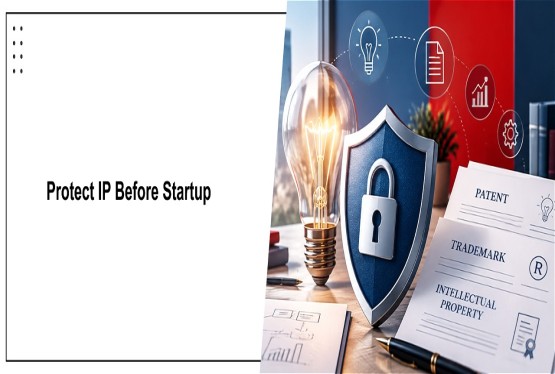
Intellectual Property Is an Asset of the Company
A company has a separate legal personality. It is a legal person distinct from its directors, shareholders and promoters. Therefore, where a trademark is registered in the name of the company, the trademark ordinarily belongs to the company and not personally to its directors or shareholders. This distinction becomes important when a company shuts down.
For example, if XYZ Private Limited owns the registered trademark “XYZ” and subsequently stops carrying on business, the founder of XYZ does not automatically become the owner of the trademark. Unless there is a valid assignment, transmission or some other legal basis for transfer, the trademark remains an asset of the company. This principle becomes even more significant when the company enters liquidation. Section 36 of the Insolvency and Bankruptcy Code, 2016 expressly includes intellectual property within the liquidation estate. Consequently, intellectual property owned by a corporate debtor can form part of the assets that are dealt with during liquidation. In practical terms, this means that a trademark should not be ignored simply because it is intangible. A valuable brand can sometimes be worth considerably more than the company's physical assets.
What Does “Shutting Down” a Company Actually Mean?
The phrase “company shuts down” has no single legal meaning. A company may stop carrying on business but continue to remain incorporated. It may voluntarily seek removal of its name from the register. It may be struck off by the Registrar of Companies. It may enter winding-up or liquidation proceedings. It may also undergo insolvency proceedings under the Insolvency and Bankruptcy Code. These different situations can produce different consequences for intellectual property. If a company merely stops doing business but remains incorporated, its intellectual property continues to belong to it. The company may continue to renew its trademarks, license them, assign them or otherwise deal with them.If the company is struck off and dissolved, the position becomes more complicated because the corporate entity itself ceases to operate in the ordinary manner. However, former directors or shareholders cannot simply assume that the company's assets automatically become their personal property. Where a company enters liquidation, its assets are collected and dealt with through the liquidation process. Intellectual property may therefore become part of the liquidation estate and may be sold or otherwise realised. The most important point is that closure of business and extinction of intellectual property rights are two separate legal questions.
What Happens to a Trademark When the Company Stops Operating?
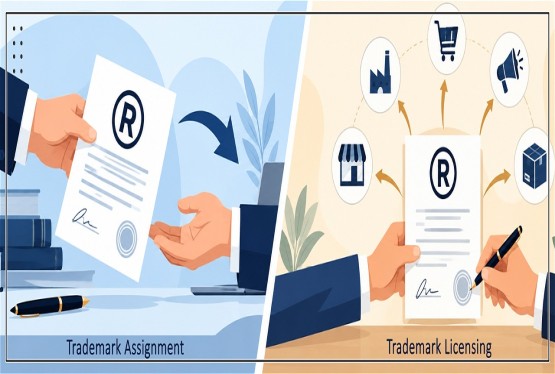
A registered trademark does not automatically disappear merely because the company stops carrying on business. The Trade Marks Act, 1999 treats registered trademarks as transferable property. Section 37 gives the registered proprietor the power to assign the trademark, while Section 38 provides for the assignability and transmissibility of registered trademarks subject to the Act. Consequently, a company approaching closure can potentially transfer its trademark to another company or purchaser. The trademark may also be transferred as part of a sale of the business. The law, however, places restrictions on certain types of assignments. Sections 40 and 41 of the Trade Marks Act address situations where assignments may create conflicting or confusing rights. Section 42 deals with assignments otherwise than in connection with the goodwill of the business. Section 45 provides for registration of the assignee's title. Therefore, where a company is shutting down, it is not sufficient merely to sign an informal agreement saying that the “brand belongs to the purchaser”. The ownership of the trademark should be properly transferred and the necessary steps should be taken before the Trade Marks Registry.
Can a Liquidator Sell a Trademark?
A trademark can form part of the assets available for realisation during liquidation. Section 36 of the Insolvency and Bankruptcy Code expressly includes intellectual property within the liquidation estate. This is important because a liquidator is not restricted to physical property. Intangible assets may also need to be identified, protected, valued and sold. A company may have stopped manufacturing a product, but its brand may still have considerable commercial value. A purchaser may be interested in acquiring the trademark, associated goodwill, domain names and other brand assets with a view to reviving the business. This is why a proper intellectual property audit should be undertaken during insolvency and liquidation. Failure to identify a trademark can lead to serious consequences, particularly where the brand subsequently becomes commercially successful in the hands of another person.
Trademark Non-Use and Abandonment
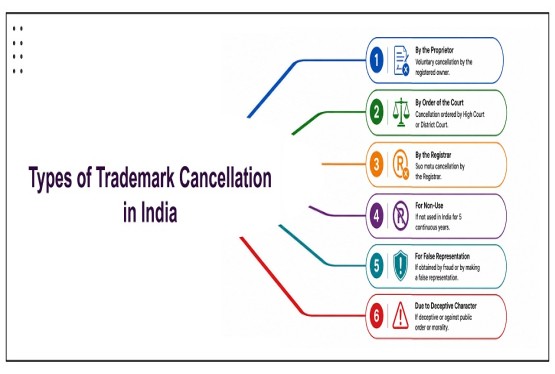
The position becomes more complicated because trademark law is closely connected with actual commercial use. Section 47 of the Trade Marks Act, 1999 provides for removal of a registered trademark on the ground of non-use, subject to the requirements and exceptions contained in the Act. The underlying principle is that trademark law is designed to protect marks that function as indicators of commercial origin. It is not intended to permit a proprietor to indefinitely reserve a trademark without using it. However, non-use does not necessarily mean automatic abandonment. The circumstances surrounding the non-use can be important. A court may have to consider why the trademark was not being used, how long the period of non-use lasted, whether there was an intention to resume business, whether the proprietor was prevented from using the mark by circumstances beyond its control and whether goodwill associated with the mark continued to exist. This distinction is particularly important when dealing with companies that have gone into liquidation.
The Landmark Yezdi Trademark Litigation
The most useful recent Indian case for understanding what happens to a trademark after a company shuts down is the litigation concerning the YEZDI trademark and Ideal Jawa (India) Ltd. Ideal Jawa was the original manufacturer associated with the Yezdi motorcycle brand. The company stopped production in 1996 and subsequently went into winding-up proceedings. The company was ordered to be wound up in 2001, and its assets were subsequently sold. A dispute later arose concerning the YEZDI trademarks. The Official Liquidator claimed that the trademarks belonged to Ideal Jawa and continued to form part of the company's assets. Boman R. Irani and Classic Legends, on the other hand, claimed rights over the mark and subsequently obtained registrations associated with the YEZDI brand.
The litigation produced two significantly different judgments from the Karnataka High Court.
The 2022 Karnataka High Court Single Judge Judgment
On 16 December 2022, the Single Judge of the Karnataka High Court ruled in favour of the Official Liquidator and Ideal Jawa. The Single Judge held that the YEZDI trademark belonged to Ideal Jawa, which was in liquidation. The registrations obtained in favour of Boman R. Irani were declared null and void, and directions were issued concerning the transfer and protection of the marks. The judgment proceeded on the basis that the trademarks were assets of the company and that the winding-up process placed the company's assets under the control of the liquidation process. The decision was significant because it treated the trademark as an asset capable of surviving the company's cessation of manufacturing activities.
The 2025 Karnataka High Court Division Bench Judgment
The matter was subsequently considered by a Division Bench of the Karnataka High Court in Classic Legends Private Limited & Ors. v. Official Liquidator of M/s Ideal Jawa (India) Ltd. & Ors. On 27 November 2025, the Division Bench allowed the appeals and set aside the Single Judge's decision. The Division Bench considered, among other things, the fact that Ideal Jawa had stopped manufacturing in 1996, the long period of non-use, the expiry or removal of certain registrations and the conduct of the parties concerning the mark. The Division Bench held that the goodwill associated with the trademark could not simply survive indefinitely in a vacuum after the underlying business had ceased. It also examined the fact that certain trademark registrations had expired and had not been renewed. The Court ultimately concluded that the YEZDI trademark was no longer an asset of Ideal Jawa in the manner claimed by the Official Liquidator and allowed Classic Legends and Boman R. Irani to continue with their rights in the mark. This judgment is particularly important for the present article because it illustrates that the existence of a trademark as an asset at the beginning of liquidation does not necessarily answer the question of whether enforceable trademark rights continue many years later.
Why the Yezdi Case Is So Important
The Yezdi dispute brings together several areas of law that are often considered separately. Company law asks whether the trademark was an asset of the company at the time of winding-up. Insolvency and liquidation law asks whether that asset came under the control of the liquidator and whether it could be sold for the benefit of creditors. Trademark law asks whether the registration continued to subsist, whether the mark was used and whether goodwill continued to exist. The result demonstrates that all three areas must be considered together. The Yezdi case also illustrates an important practical problem. A company may stop using its trademark but fail to formally transfer or surrender it. Years later, another party may begin using the same or a similar mark. The dispute then becomes one not only of registration, but also of goodwill, abandonment, non-use and the conduct of the respective parties.
The Supreme Court Proceedings in the Yezdi Matter
The Yezdi litigation has subsequently reached the Supreme Court. In April 2026, the Supreme Court issued notice on a petition filed by the Official Liquidator of Ideal Jawa challenging the Karnataka High Court Division Bench judgment. The Supreme Court matter is titled Official Liquidator of M/s Ideal Jawa Private Limited v. Classic Legends Private Limited & Ors., Diary No. 18873 of 2026. The Court listed the matter for further consideration. Accordingly, the Yezdi case should presently be described carefully in a legal article. The 2025 Karnataka Division Bench judgment is an important and currently relevant judgment, but it should not be presented as the final determination of the Supreme Court on the issue. This pending Supreme Court proceeding makes the case even more significant for understanding the developing law concerning trademarks of defunct or liquidated companies.
R.R. Oomerbhoy Pvt. Ltd. v. Court Receiver
Another important case is R.R. Oomerbhoy Pvt. Ltd. v. Court Receiver, High Court, Bombay, decided by the Bombay High Court in 2003. The case concerned trademarks belonging to a partnership firm that had ceased business following disputes between its partners. The defendants argued that because the business had stopped, the goodwill and proprietary rights in the trademarks had effectively disappeared. The Bombay High Court rejected this argument. The Court held that the mere cessation of business does not necessarily destroy goodwill or the property in a trademark. It recognised that goodwill can have substantial value during dissolution and that trademarks can form an integral part of that goodwill. The Court also held that the Court Receiver, having been appointed over the firm's assets, could protect the trademarks and take action for infringement and passing off. The Court treated the trademarks as assets of the partnership and recognised the Receiver's responsibility to preserve those assets. This case is particularly useful because it demonstrates the opposite side of the argument seen in the Yezdi litigation. The lesson from R.R. Oomerbhoy is that cessation of business does not necessarily mean immediate extinction of goodwill or trademark rights. The lesson from Yezdi is that prolonged non-use, expiry of registrations, absence of continuing business and other circumstances may ultimately lead a court to reach a different conclusion. Therefore, there is no simple rule that “once a company closes, its trademark survives” or that “once a company closes, its trademark dies”.
The Importance of Goodwill
Goodwill is central to understanding what happens to a trademark after the closure of a business. A trademark does not exist only as a name or logo. It represents the commercial reputation and consumer association developed around that mark. If consumers continue to associate a particular name with a particular source of goods or services, the brand may retain substantial goodwill even if the original business has temporarily stopped operating. However, goodwill cannot necessarily be assumed to continue forever. A company that stopped trading yesterday is in a very different position from a company that stopped trading twenty years ago, sold all of its assets and never used or protected its trademark during that period. The longer the period of non-use, the more important questions concerning abandonment, statutory removal and continuing goodwill become.
Can the Founder Take the Company's Trademark?
Generally, no, a founder does not automatically acquire ownership of a company's trademark merely because the founder created the brand or was responsible for building its reputation. If the trademark belongs to the company, it is a company asset. A director or promoter seeking to acquire it would ordinarily need a legally valid transfer or assignment, subject to company law, insolvency law and trademark law. This is particularly important during liquidation because company assets are subject to the statutory liquidation process. A promoter cannot simply remove an asset from the company's estate because the promoter originally created or developed the brand. The Yezdi litigation demonstrates how complicated this question can become where former promoters claim personal rights over a mark historically used by the company.
What Happens When a Company Is Struck Off?
Strike-off is different from liquidation. Under the Companies Act, 2013, a company whose name is struck off and which is dissolved ceases to operate as a company, subject to the statutory provisions governing the consequences of dissolution. However, the directors and shareholders cannot simply assume that every asset previously owned by the company has automatically become theirs. If a valuable trademark was overlooked before the company was struck off, questions may arise regarding restoration of the company and the treatment of the asset. Section 252 of the Companies Act provides a mechanism for restoration of a company's name in appropriate circumstances. The trademark itself must also be examined. Its registration may have expired, it may have become vulnerable to removal for non-use, or another party may have subsequently applied for registration. Thus, the closure of the company may create a complicated intersection between company law and trademark law.
What Happens to Other Intellectual Property?
The same broad principle applies to other forms of intellectual property, although each category is governed by its own legislation. A patent owned by a company may constitute an asset that can be transferred or realised during insolvency or liquidation. Copyright owned by a company may include software, website content, advertising material, photographs, artwork, manuals and other copyright-protected works. Registered designs can also constitute valuable assets. Domain names, although not identical to statutory intellectual property rights, can have substantial commercial value and should also be identified during the closure process. A company therefore should not conduct an asset audit that covers only physical property. Intellectual property should form part of the asset inventory.
What Should Companies Do Before Shutting Down?
A company contemplating closure should conduct an intellectual property audit before the closure process is completed. The company should identify all registered trademarks, pending applications, unregistered brands, logos, patents, copyrights, designs, domain names, licences and other IP-related assets. It should then verify ownership. A trademark may sometimes be registered in the name of a promoter while the business itself is operated by a company. In other cases, the registration may be in the name of a holding company or subsidiary. The company should also check renewal dates and the actual use of its trademarks. Evidence of use can be extremely important in future litigation. Invoices, advertisements, packaging, websites, sales records, licensing arrangements and promotional material can help establish continuing use and goodwill. If the company intends to sell the brand, the assignment documents should be properly prepared and the transfer should be recorded with the Trade Marks Registry. If the company is entering liquidation, the liquidator should identify and value the intellectual property rather than assuming that intangible assets have no value.
Case Laws and Their Practical Significance
The Indian case law demonstrates that the treatment of trademarks after business closure depends heavily on the factual circumstances.
-
In R. Oomerbhoy Pvt. Ltd. v. Court Receiver, High Court, Bombay, the Bombay High Court held that cessation of business did not automatically destroy the goodwill or property in the trademarks. The case supports the proposition that a trademark may survive the cessation or dissolution of a business and may continue to constitute an asset capable of protection and sale.
-
In the Ideal Jawa/YEZDI litigation, the Karnataka High Court Single Judge initially treated the trademark as an asset of the company in liquidation. The Division Bench subsequently reversed that decision in November 2025, holding that the long period of non-use and the surrounding circumstances meant that the mark could no longer be claimed as an asset of Ideal Jawa in the manner asserted by the Official Liquidator. The Supreme Court has since issued notice in the Official Liquidator's challenge to the Division Bench decision. Consequently, the Yezdi litigation remains particularly important as a developing area of law.
Together, these cases show that business closure does not automatically determine the fate of a trademark. The court may need to examine registration, renewal, actual use, goodwill, abandonment, ownership and the conduct of the parties.
Conclusion
When a company shuts down, its intellectual property does not necessarily shut down with it.
A trademark may remain a valuable company asset, become part of a liquidation estate, be sold to another entity or continue to generate commercial value after the original company has disappeared. At the same time, trademark rights are not unlimited. Failure to renew a registration, prolonged non-use, abandonment and loss of goodwill can significantly affect the rights associated with a mark. The most important lesson is therefore that the life of a company and the life of its intellectual property are not necessarily the same. A company's trademark may outlive the company, but whether it does so depends on the legal status of the trademark, its continued use, the existence of goodwill, the ownership of the mark and the manner in which the company's affairs are brought to an end. The Yezdi litigation provides a particularly useful modern illustration. The original manufacturer, Ideal Jawa, ceased production decades ago, yet its historic trademark became the subject of extensive litigation involving the Official Liquidator, former promoters and a new company seeking to revive the brand. The Karnataka High Court's 2025 Division Bench decision and the subsequent Supreme Court proceedings demonstrate that the question of whether a defunct company's trademark survives can involve complex questions of company law, liquidation law and trademark law. For companies approaching closure, the practical lesson is simple: intellectual property should be treated as an asset, not an afterthought. Before a company disappears, its trademarks, copyrights, patents, designs, domain names and goodwill should be identified, valued, protected and, where appropriate, transferred through proper legal processes. A company may cease to exist, but its brand can continue to live on. The law determines who has the right to carry that brand into the future.
Frequently Asked Questions
Q1. Does a trademark automatically disappear when a company closes?
Ans. No. A company's closure does not by itself automatically extinguish its trademark. The status of the registration, use of the mark, renewal, goodwill, ownership and manner of closure must be examined.
Q2. Can a liquidator sell a trademark?
Ans. Yes. Intellectual property can form part of the liquidation estate. A liquidator may therefore be able to realise the value of a trademark in accordance with the applicable insolvency or liquidation framework.
Q3. Can the founder take the trademark after the company shuts down?
Ans. Not automatically. If the trademark belongs to the company, the founder does not become its owner merely because they created the brand or founded the company.
Q4. Can a trademark survive after a company stops trading?
Ans. Yes. A trademark can continue to exist after the business stops operating, particularly where the registration remains valid and there is continuing goodwill. However, prolonged non-use can expose the mark to removal proceedings.
Q5. Does non-use automatically cancel a registered trademark?
Ans. No. Non-use can provide grounds for removal under Section 47 of the Trade Marks Act, but the statutory requirements and exceptions must be considered.
Q6. Can a trademark be sold separately from the business?
Ans. Yes, subject to the provisions of the Trade Marks Act. However, assignments involving goodwill and assignments that could create conflicting rights are subject to statutory restrictions.
Q7. What happens to a trademark when a company is struck off?
Ans. There is no automatic rule that the trademark becomes the property of the directors or shareholders. The company's dissolution, the status of the trademark and possible restoration or other legal remedies must be considered.
Q8. What if the company's trademark registration has expired?
Ans. The position will depend on the circumstances. It may be necessary to examine whether the registration can be renewed or restored, whether the mark has been used subsequently and whether another party has acquired rights in the meantime.
Q9. Can another person register the old company's trademark?
Ans. Potentially, but not automatically. The previous proprietor's rights, use of the mark, goodwill, abandonment, statutory registration status and the conduct of the new applicant will all be relevant.
Q10. What is the significance of the Yezdi case?
Ans. The Yezdi case is significant because it directly addresses the intersection of liquidation, trademark ownership, non-use, goodwill and the rights of former promoters. The Karnataka High Court Division Bench reversed the earlier Single Judge decision, and the Official Liquidator's challenge is now before the Supreme Court.
Q11. Is goodwill automatically destroyed when a company stops operating?
Ans. No. The Bombay High Court in R.R. Oomerbhoy specifically recognised that mere cessation of business does not necessarily destroy goodwill or the property in a trademark. However, the longer the period of non-use and the more completely the underlying business disappears, the more complicated the question becomes.
Q12. Can a trademark be revived after a company shuts down?
Ans. In some circumstances, the underlying business or brand may be revived by another entity through a valid transfer or acquisition. However, revival of the trademark is not automatic. The legal status of the registration and ownership must first be established.


_(b)_of_the_Trademark_Act,_1999_(1)_crop10_thumb.jpg)


_crop10_thumb.jpg)


_crop10_thumb.jpg)
_crop10_thumb.jpg)


_crop10_thumb.jpg)


_crop10_thumb.jpg)


_crop10_thumb.jpg)


_crop10_thumb.jpg)


_crop10_thumb.jpg)


_crop10_thumb.jpg)


_crop10_thumb.jpg)


_crop10_thumb.jpg)


_crop10_thumb.jpg)








_crop10_thumb.jpg)



























_crop10_thumb.jpeg)





















_crop10_thumb.jpg)