


A trademark is one of the most valuable intellectual property rights of a business. It helps consumers identify the source of goods or services and distinguishes one company's products from those of another. A trademark may consist of a word, logo, symbol, name, label, or any other distinctive feature that represents a business. Over time, a trademark acquires goodwill and reputation through continuous use, quality of products, and customer trust.
With the rapid growth of digital marketing, trademark protection has become more significant than ever. Today, businesses rely heavily on search engines such as Google to promote their products and reach potential customers. One of the most popular methods of online advertising is keyword advertising, where advertisers bid for specific words or phrases so that their advertisements appear when users search those terms.
However, legal issues arise when a business purchases the registered trademark of another company as an advertising keyword. Such use may divert customers, create confusion, and allow competitors to benefit from the goodwill of an established brand. Courts are therefore required to balance the rights of trademark owners with the functioning of digital advertising platforms.
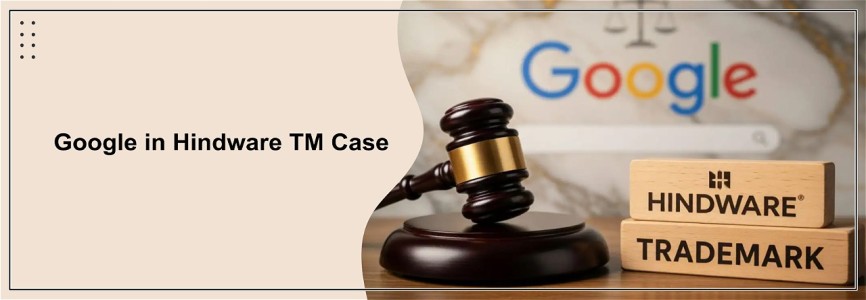
A recent example is the dispute between Hindware and Google. In this case, the Delhi High Court held that Google's practice of allowing competitors to use the trademark "Hindware" as a keyword amounted to trademark infringement. The Court restrained Google from using the trademark as an advertising keyword and awarded damages to Hindware. Google has challenged this decision before the Division Bench of the Delhi High Court, making the case an important development in Indian trademark law.
Case Name
Google LLC v. Hindware Limited (Appeal against the judgment dated 22 May 2026)
Court: Delhi High Court
Bench: Justice V. Kameswar Rao and Justice Manmeet P. S. Arora
Date of Order: 10 July 2026
Facts of the Case
Hindware Limited is one of India's leading manufacturers of sanitaryware and bathroom products. Over several decades, the company has built a strong reputation in the market and registered "Hindware" as its trademark under the Trade Marks Act, 1999. Because of its long-standing presence and extensive advertising, the trademark has become well known among Indian consumers.
The dispute began in 2013 when Hindware discovered that its competitors, including Cera Sanitaryware Limited and Grohe India Private Limited, had purchased the keyword "Hindware" through Google's advertising platform, then known as Google AdWords (now Google Ads).
As a result, whenever users searched for the word "Hindware" or related terms such as "Hindware Sanitary" and "Hindware Sanitaryware" on Google, advertisements of competing companies appeared at the top of the search results. Hindware argued that consumers searching for its trademark were specifically looking for its products, but Google's advertising system redirected their attention towards rival brands.
According to Hindware, Google was not merely providing a neutral advertising platform. It actively suggested trademarks as keywords, conducted auctions for those keywords, and earned revenue whenever advertisers purchased them. Therefore, Hindware claimed that Google was commercially exploiting its registered trademark without its permission.
The company filed a suit before the Delhi High Court seeking a permanent injunction to restrain Google from allowing advertisers to use the trademark "Hindware" as a keyword. It also sought damages for the alleged trademark infringement and unfair commercial practices.
Legal Issues Before the Court
The Delhi High Court considered the following important issues:
-
Whether allowing advertisers to use the registered trademark "Hindware" as a keyword amounted to trademark infringement.
-
Whether Google's role in suggesting and auctioning trademarked keywords made it liable under the Trade Marks Act, 1999.
-
Whether the use of the trademark as a keyword enabled competitors to take unfair advantage of Hindware's goodwill and reputation.
-
Whether Hindware was entitled to an injunction and damages against Google.
Relevant Provisions of the Trade Marks Act, 1999
Section 2(1)(zb): Meaning of Trademark
Section 2(1)(zb) defines a trademark as a mark capable of distinguishing the goods or services of one person from those of another. A trademark helps consumers identify the origin of products and protects the reputation built by a business over time.
In the present case, "Hindware" was a registered and well-known trademark. The company argued that its trademark had acquired considerable goodwill through years of continuous use, making it eligible for protection under the Act.
Section 28: Rights of Registered Proprietor
Section 28 grants exclusive rights to the registered owner of a trademark. It allows the proprietor to use the trademark exclusively and prevents others from using identical or deceptively similar marks without authorization.
Hindware relied upon this provision to argue that no third party, including competitors or online advertising platforms, could commercially use its trademark without its consent. Since Google permitted advertisers to purchase the keyword "Hindware," the company claimed that its exclusive rights had been violated.
Section 29: Infringement of Registered Trademark
Section 29 explains when a registered trademark is infringed. A trademark is infringed when an identical or deceptively similar mark is used in relation to goods or services in a manner that is likely to confuse consumers or create an association with the registered trademark.
Hindware argued that consumers searching for its products were shown advertisements of competing brands because they had purchased the keyword "Hindware." According to the company, this practice diverted customers and enabled competitors to benefit from its reputation. It therefore claimed that Google's conduct amounted to trademark infringement.
Section 29(4): Protection of Well-Known Trademarks
Section 29(4) provides additional protection to trademarks that have acquired a strong reputation. It prohibits the use of a registered trademark even in situations where such use takes unfair advantage of or harms the distinctive character or reputation of the mark.
Hindware submitted that its trademark was widely recognized in the sanitaryware market. By allowing competitors to use the trademark as a keyword, Google enabled them to benefit from Hindware's goodwill without making similar efforts to build their own reputation.
Section 29(8): Infringement Through Advertising
Section 29(8) of the Trademarks Act, 1999 deals specifically with the use of trademarks in advertisements. It provides that advertising amounts to infringement if it takes unfair advantage of a registered trademark, is contrary to honest commercial practices, or harms the distinctive character or reputation of the trademark.
In the present case, Hindware argued that Google allowed advertisers to use its trademark registration as an advertising keyword for commercial gain. According to the company, this enabled competitors to attract customers who were specifically searching for Hindware products. Hindware therefore claimed that Google's advertising policy was contrary to fair commercial practices and fell within the scope of Section 29(8).
Sections 134 and 135: Jurisdiction and Remedies
Section 134 allows the registered proprietor of a trademark to file a suit for infringement or passing off before the appropriate court. Section 135 empowers the court to grant remedies such as permanent injunctions, damages, accounts of profits, and other appropriate reliefs.
Relying on these provisions, Hindware approached the Delhi High Court seeking an injunction against Google and compensation for the alleged infringement. The Single Judge accepted Hindware's claim and awarded damages of Rs.30 lakh while also restraining Google from using the trademark "Hindware" as an advertising keyword.
Observations of the Delhi High Court
The Single Judge observed that Google's role was not limited to providing a neutral online platform. According to the Court, Google actively suggested trademarks as advertising keywords, conducted auctions for those keywords, and earned revenue whenever advertisers purchased them. Therefore, Google was commercially involved in the entire process.
The Court further observed that Hindware had spent several years building its reputation and goodwill in the sanitaryware market. Allowing competing companies to use the trademark "Hindware" as a keyword enabled them to benefit from that goodwill without making similar investments.
The Court described Google's conduct as "free-riding", stating that the company was monetising the reputation and popularity of Hindware by selling its trademark to advertisers. Such conduct, according to the Court, gave an unfair commercial advantage to competitors and weakened the exclusive rights of the trademark owner.
Accordingly, the Court restrained Google from allowing the use of "Hindware" or similar expressions as advertising keywords and directed the company to pay damages of Rs.30 lakh to Hindware.
Google's Appeal Before the Division Bench
Google challenged the judgment before a Division Bench of the Delhi High Court. Senior Advocate Abhishek Singhvi appeared on behalf of Google and sought an interim stay on the direction requiring payment of damages.
Google argued that the judgment was inconsistent with earlier judicial decisions and internationally accepted practices relating to keyword advertising. It submitted that search engines around the world permit advertisers to bid on keywords and that such practices are an accepted feature of digital marketing.
Google also maintained that it merely provides an advertising platform and does not itself manufacture or sell competing products. According to the company, advertisers independently choose the keywords they wish to purchase, and users are capable of distinguishing sponsored advertisements from ordinary search results.
After hearing the submissions, the Division Bench issued notice to Hindware and listed the matter for further hearing. However, the Court did not grant an interim stay on the earlier judgment at that stage. The appeal is still pending, and the final decision is awaited.
Importance of the Judgment
The Hindware judgment is significant because it deals with an important issue arising from modern digital advertising. As more businesses depend on online platforms for marketing, disputes involving trademarks and keyword advertising are becoming increasingly common.
The decision reinforces the principle that registered trademarks are valuable business assets that deserve legal protection. It also indicates that online platforms may be held responsible if they actively participate in commercial activities that result in trademark infringement.
The judgment is equally important for consumers. When users search for a particular brand, they generally expect to find information relating to that brand. If advertisements of competitors appear because they have purchased the trademark as a keyword, consumers may be diverted or misled. By protecting trademarks in the online environment, the Court also seeks to protect consumer confidence.
Critical Analysis
The Single Judge's decision reflects the growing need to protect trademark rights in the digital economy. The Court recognised that online advertising platforms are no longer passive intermediaries in every situation. Where a platform actively suggests, promotes, and profits from the use of registered trademarks, it may be required to bear legal responsibility.
At the same time, the case also raises important questions regarding the functioning of search engines and online advertising. Keyword advertising is widely used across the world and is considered an effective method of promoting businesses. A complete restriction on the use of trademarked keywords may affect competition and increase advertising costs for businesses.
Therefore, a balance must be maintained between protecting the exclusive rights of trademark owners and allowing fair competition in the digital marketplace. The final decision of the Division Bench is expected to provide greater clarity on this issue and may become an important precedent for future trademark disputes involving online advertising.
Conclusion
The dispute between Google and Hindware is one of the most significant trademark cases involving digital advertising in India. It highlights the legal challenges created by keyword advertising and the increasing importance of protecting intellectual property rights in the online environment.
The Delhi High Court held that Google's practice of allowing competitors to purchase the trademark "Hindware" as an advertising keyword amounted to trademark infringement and unfair commercial exploitation. The Court observed that Google was commercially benefiting from Hindware's goodwill and therefore restrained the company from using the trademark as a keyword while also awarding damages.
Google has challenged the decision before the Division Bench, and the final outcome of the appeal will have a major impact on businesses, trademark owners, advertisers, and digital platforms across India. Whatever the final decision may be, the case has already become an important milestone in the development of Indian trademark law and online advertising practices.
Frequently Asked Questions (FAQs)
Q1. What is the Google-Hindware trademark dispute about?
Ans. The dispute concerns Google's practice of allowing competitors to purchase the registered trademark "Hindware" as an advertising keyword through Google Ads. Hindware claimed that this practice amounted to trademark infringement.
Q2. Why did Hindware file a case against Google?
Ans. Hindware argued that Google commercially exploited its registered trademark by allowing competitors to use it as a keyword, thereby diverting customers and benefiting from Hindware's goodwill.
Q3. Which court heard the case?
Ans. The dispute was heard by the Delhi High Court.
Q4. What did the Single Judge decide?
Ans. The Court restrained Google from allowing the use of "Hindware" as an advertising keyword and directed the company to pay Rs.30 lakh as damages.
Q5. Which provisions of the Trade Marks Act, 1999 were relevant in this case?
Ans. The important provisions included Sections 2(1)(zb), 28, 29, 29(4), 29(8), 134, and 135 of the Trademarks Act, 1999.
Q6. What does "free-riding" mean in trademark law?
Ans. Free-riding refers to taking unfair commercial advantage of another company's reputation or goodwill without making similar efforts to build that reputation.
Q7. Why did Google challenge the judgment?
Ans. Google argued that keyword advertising is an internationally accepted practice and that the judgment was inconsistent with earlier legal decisions.
Q8. Is the case finally decided?
Ans. No. Google has filed an appeal before the Division Bench of the Delhi High Court. The appeal is still pending.
Q9. Why is this judgment important?
Ans. The judgment clarifies the legal issues relating to trademark protection in online advertising and may influence how digital platforms operate in India.
Q10. What is the key takeaway from this case?
Ans. The key takeaway is that registered trademarks enjoy strong legal protection, and businesses or online platforms should avoid using another company's trademark in a manner that takes unfair advantage of its reputation or misleads consumers.


_(b)_of_the_Trademark_Act,_1999_(1)_crop10_thumb.jpg)


_crop10_thumb.jpg)


_crop10_thumb.jpg)
_crop10_thumb.jpg)


_crop10_thumb.jpg)


_crop10_thumb.jpg)


_crop10_thumb.jpg)


_crop10_thumb.jpg)


_crop10_thumb.jpg)


_crop10_thumb.jpg)


_crop10_thumb.jpg)


_crop10_thumb.jpg)


_crop10_thumb.jpg)









_crop10_thumb.jpg)




























































_crop10_thumb.jpeg)














































_crop10_thumb.jpg)