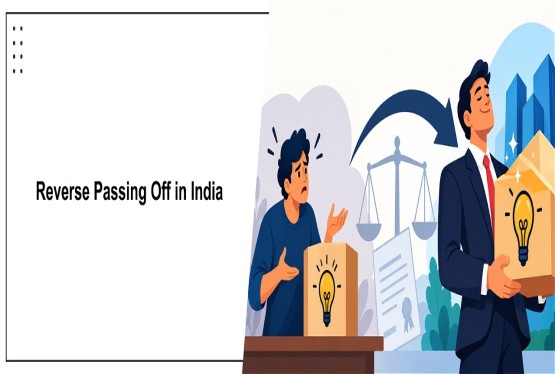



A trademark involves much more than a symbol, name, or logo. A trademark is treated as an important commercial asset since it features an identity of the business and its reputation. It allows customers to differentiate services of different companies and gives them quality assurance. Trademarks are of vital importance for the growth of a business in modern days. Trademark rights in India are regulated by the Trade Marks Act, 1999, which provides protection for the people who got a trademark registered. However, Indian law also recognizes common law principle according to which trademark rights can emerge via honest and continuous prior use of the trademark with registration, creating a conflict between statutory monopoly and goodwill developed by the market. The ruling provided by the Delhi High Court in the case named Thukral Mechanical Works v. PM Diesels Pvt. Ltd. (2026) has revisited the issue mentioned above and has offered valuable insights into the regulation and existence of the trademark rights.
Prior Use V. Registered Use
Trademark laws in India have two different forms of source from which protection arises; statutory rights arising out of registration and common law rights arising out of previous use. While both systems seek to protect the trademarks, they arise from completely different bases of law and protect different business interests.
The rights of the registered proprietor arise under the Trade Marks Act, 1999. It gives exclusive right of use of the trademark for the goods or services registered and enables the proprietor to sue for infringement of the rights by the unauthorized user.
Conversely, an earlier user has the right to protection due to the original use of a trademark in business for a genuine, continuously operation. These rights arise from the notion of "passing off", which defends a trader’s goodwill gained from trading experience and reputation and not from formal registration. The law stipulates that a prospective customer links a trademark with a trader who has been using it, regardless of the fact whether it is registered or not.
The problem occurs when one of the parties has a legitimate trademark registration, while the other has been using such or similar mark for a longer period of time. Courts have to decide whether a legal registration prevails over goodwill developed before. Indian trademark law constantly strives to find the right balance between the two interests, since it recognizes the importance of registration, but it is also aware of the fact that registration does not cancel the legitimate rights of a bona fide prior user, as far as it has been registered earlier.
Legal Context Governing These Rights
The connection between registration and prior use is regulated under the provisions of the Trade Marks Act, 1999, along with the principles of common law known as the passing off. Thus, on one hand, the Act recognizes statutory rights that belong to the registered proprietor, but, on the other hand, ensures the rights of the prior users whose goodwill has been developed due to constant commercial exploitation.
Under the Section 28 of the Act, the right to exclusively use the trademark in connection with the goods or services in relation to which it is registered belongs to the registered proprietor and constitutes the foundation for the infringement claim. Along with this, Section 29 of the Act regulates the question of infringement and provides instances of such.
Nonetheless, legal protection is limited. In Section 27(2), passing off as a common law remedy is retained and acknowledges that trademark rights do not solely originate from registration. Furthermore, in Section 34, protection is given to a user of a trademark who has used an identical or similar trademark prior to the registration of trademark owner. In Neon Laboratories Ltd. v. Medical Technologies Ltd. (2015) and S. Syed Mohideen v. P. Sulochana Bai (2016) cases, the Supreme Court held that in a conflict between prior user of trademark and a registered trademark, prior use prevails.
Case Analysis: Thukral Mechanical Works V. Pm Diesels Pvt. Ltd.
Background and Facts of the Case
One of the longest trademark disputes in India is considered to be the Field Marshal case, which has been going on for over 40 years. The litigation revolved around a clash between the statutory rights of a registered owner of a trademark and the rights of a trader who had developed his business goodwill prior to registration.
The "FIELD MARSHAL" trademark was first registered by Jain Industries in 1960s in respect of centrifugal pumps. Despite the fact that the registration was valid, Jain Industries did not commercialize the trademark sufficiently to create any market goodwill.
In 1975 PM Diesels Pvt. Ltd. began using the "FIELDMARSHAL" trademark in relation to centrifugal pumps. The company kept producing its products under this mark and became well-known in India through continual manufacture and sales.
Thereafter, in 1986, the registered trademark was assigned by Jain Industries to Thukral Mechanical Works, who started using the trademark commercially from 1988 onwards. Considering themselves to be the rightful owner of the registered trademark, Thukral filed a case stating that the PM Diesels were using their registered trademark without authorization.
Very quickly, the issue was taken beyond the infringement claim. PM Diesels contended that although Thukral claimed to be the rightful owner of the trademark, they had been using the mark in good faith for several years prior to their own entry into the marketplace and hence should be afforded the protection of their good will.
Issues Arised Before the Court:
The Division Bench was primarily called upon to determine the following questions:
-
Whether a registered proprietor can restrain a trader who has honestly and continuously used an identical or similar trademark prior to the proprietor's actual commercial use.
-
Whether the goodwill acquired by a prior user is entitled to protection even where another party holds a valid registration.
-
Whether infringement and passing-off rights can simultaneously exist in favour of different parties.
-
How should Indian courts reconcile the apparent conflict between Sections 28 and 34 of the Trade Marks Act, 1999?
These questions collectively formed what the Court described as the "Kerly Impasse."
Contentions Raised by Both the Parties
Arguments presented by Thukral Mechanical Works
-
Thukral Mechanical Works claimed that it was the legal registered owner of the trademark "FIELD MARSHAL" after a valid transfer from Jain Industries. It argued that registration created exclusive statutory rights under Section 28 of the Trade Marks Act, 1999, including the right to sue infringers.
-
Furthermore, it was claimed that the validity of the registration had already been established in earlier legal proceedings, and that PM Diesels cannot continue using nearly the same trademark. It was stated by Thukral that such use would defeat the purpose of trademark registration.
Arguments presented by PM Diesels Pvt. Ltd.
-
The stand taken by PM Diesels, in this case, was based solely on the prior user doctrine. It claimed that as it had been using the mark "FIELDMARSHAL" since 1975, PM Diesel had established such a reputation among the consumers regarding the mark that it had enjoyed significant goodwill before Thukral started using it in commerce.
-
It also pointed out that trademark law does not only give protection to registered trademarks but also protects commercial goodwill. PM Diesel relied on the provisions of Section 34 of the Trade Marks Act and established law that prior use gives superior rights to the owner of the trademark against the person who uses the same mark but is a subsequent user of the mark. Therefore, it claimed that because of its long use and reputation, PM Diesels was entitled to protection under common law by way of passing off.
Delhi High Cpourt’s Observation
The Delhi High Court noticed that this case presented a unique legal situation because both parties had legitimate rights which were acquired from different sources. Mr Thukral had statutory rights as a result of registration and PM Diesels had acquired considerable good will commercially by virtue of old usage.
The Court stated that infringement and passing-off are not the same legal actions to serve the different requirements of law. An infringement action protects the exclusive statutory rights resulting from registration while a passing-off action protects the goodwill and reputation created by the trader in real use. This means that success in one of the actions does not dictate success in the other.
In its examination of the case, the Court cited the principle set out in Kerly's Law of Trade Marks and Trade Names that in exceptional cases, the registered owner and the prior user can be vested with valid rights at the same time. According to the Court, this situation is termed as "Kerly Impasse", and it pointed out that the Field Marshal situation is a good example for this exceptional situation.
Moreover, the Court stated that trademark law is not intended to reward registration but is aimed at the more important purpose of protecting honest commercial activities and preventing consumer confusion. Therefore, the fact that somebody has acquired goodwill through his activity does not necessarily mean that he will be deprived of the protection in case that another person only has a statutory registration.
Judgement of the Case
The Division Bench ultimately aimed to harmonize the statutory provisions instead of treating one group of rights as completely superseding the other. It accepted the validity of the registered trademark of Thukral Mechanical Works and asserted that the said registration continues to provide statutory rights that can support a claim of infringement. Nevertheless, it took note of the fact that PM Diesels had independently gained significant goodwill owing to its uninterrupted commercial use of "FIELDMARSHAL" before Thukral even began to trade under the assigned trademark.
Consequently, the Court ruled that the rights arising from registration and those originating from prior use work in different legal spheres. While registering a mark will remain an important statutory right, it does not cancel out the common-law rights of a user that are protected under Section 34 of the Trade Marks Act and the doctrine of passing off.
Understanding Kerly Impasse
One of the most remarkable aspects of Delhi High Court's verdict was its exposition of the "Kerly Impasse," a term taken from Kerly's Law of Trade Marks and Trade Names, a popular English book on trademark law. The impasse is understood as a situation in which a registered owner wins his case against infringement due to his statutory rights and a prior user wins his action against passing off due to logo goodwill. In this case, both parties have enforceable rights by law, but they arise from different sources. Delhi High Court recognised the Field Marshal case as a typical example of this predicament. Rather than isolating registration from previous use, the Court joined them, stating that infringement is intended to protect statutory rights, while passing off protects commercial goodwill. Therefore, the ruling shows that Indian trademark law takes into account the need for legal certainty and fairness in commercial relations.
Critical Analysis: Balancing Statuatory Rights and Commercial Reality
Delhi High Court's ruling is of great importance in trademark law in India as it holds that trademark law serves to protect consumer goodwill and fair trading, rather than simply rewarding registration. The Court clarified that infringement and passing-off remedies can function independently of each other, thus simultaneously recognizing the co-existence of statutory rights and common law rights. Thus, its interpretation strengthens the provision of Section 34 of the Trade Marks Act, 1999.
At the same time, this ruling raises various practical concerns. The existence of conflicting rights may lead to confusion for companies that rely only on the validity of their trademark and do not investigate the history of its usage in the market. It stresses the need to examine not only the trademark registers but also the market context before using or enforcing the said trademark. While the Court was successful in finding its way through the specific circumstances of the Field Marshall case, similar cases may create problems in cases when it is disputed whether a prior trademark has been used in the market or whether the business has goodwill. Nonetheless, the ruling is pragmatic in the sense that neither registrations nor goodwill is regarded as an absolute right.
Conclusion
The ruling in Thukral Mechanical Works v. PM Diesels Pvt. Ltd. stands out as an important development in the history of Indian trademark law. The Delhi High Court reestablished the principle that while registration provides trademark protection, it must be coupled with goodwill from use of the mark, which forms an important aspect of the law of trademarks. The ruling was especially significant for providing clarity regarding the relationship between trademark infringement and passing off, thereby helping to resolve the "Kerly Impasse", where it had been established that a statutory right overlaps and coexists with the common law right.
The ruling emphasizes the fact that trademarks achieve commercial value through goodwill in the eyes of the public and their established reputation in the marketplace. This serves as a reminder to companies that they need to combine registration with genuine use of the trademark and due diligence. For the legal profession, it reinforces the principle of equitable principles applying alongside statutory provisions in trademark law.


_(b)_of_the_Trademark_Act,_1999_(1)_crop10_thumb.jpg)


_crop10_thumb.jpg)


_crop10_thumb.jpg)
_crop10_thumb.jpg)


_crop10_thumb.jpg)


_crop10_thumb.jpg)


_crop10_thumb.jpg)


_crop10_thumb.jpg)


_crop10_thumb.jpg)


_crop10_thumb.jpg)


_crop10_thumb.jpg)


_crop10_thumb.jpg)


_crop10_thumb.jpg)










_crop10_thumb.jpg)














































































_crop10_thumb.jpeg)


























































_crop10_thumb.jpg)