


A trademark is one of the most valuable intellectual property rights of a business. It helps consumers identify the source of goods or services and distinguishes one company’s products from those of another. A trademark may include a word, name, logo, symbol, label, or any other distinctive feature that represents the identity of a business. Over time, a trademark gains commercial value through continuous use, advertising, customer trust, and the reputation developed in the market.
In today’s competitive business environment, companies invest significant resources in building strong brands. Therefore, unauthorized use of a similar trademark can affect not only the rights of the original owner but also create confusion among consumers. Trademark law aims to prevent such confusion and protect the goodwill attached to established brands. The Trademarks Act, 1999 provides legal protection to trademark registration in India. It prevents registration of marks that are identical or deceptively similar to existing trademarks and also provides enhanced protection to famous brands that have acquired substantial reputation.
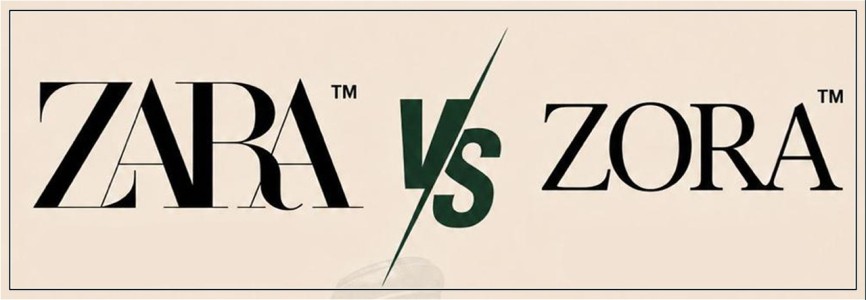
A recent decision of the Delhi High Court involving the trademarks ZARA and ZORA highlighted these important principles. The Court cancelled the registration of the trademark ZORA, which was owned by a fabric trader, after finding that it was deceptively similar to the internationally recognized fashion brand ZARA. The judgment is important because it explains how courts determine similarity between trademarks and confirms that a reputed trademark can receive wider protection when another mark attempts to take unfair advantage of its goodwill.
Case Name
Industria De Diseño Textil S.A. (Inditex) v. Registrar of Trademarks & Anr.
Court: Delhi High Court
Judge: Justice Jyoti Singh
Decision: July 2026
Facts of the Case
Industria De Diseño Textil S.A. (Inditex), the owner of the global fashion brand ZARA, challenged the registration of the trademark ZORA before the Delhi High Court. ZARA is an internationally recognized fashion brand with a strong presence in India. The company has registered the trademark in India since the 1990s and has built significant goodwill through years of business operations, advertising, and consumer recognition.
The dispute began when a trader dealing in polyester fabrics obtained registration of the trademark ZORA under Class 24, which covers textile and fabric-related goods. The registration was challenged by Inditex on the ground that ZORA was deceptively similar to ZARA. Inditex argued that both trademarks consisted of four letters, started with the letter “Z”, ended with “RA”, and had a similar visual and phonetic appearance. According to the company, consumers with imperfect memory could easily believe that ZORA was connected with ZARA.
The trademark owner also argued that ZARA had acquired a strong reputation in India and deserved protection as a well-known trademark. It was submitted that even if the goods covered under both marks were different, a similar trademark should not be allowed to take advantage of ZARA’s reputation. The owner of ZORA defended the registration by arguing that both marks were different and operated in separate markets. It was submitted that ZORA was adopted independently and that there was no evidence of actual consumer confusion.
The Registrar of Trademarks had earlier refused ZARA’s objection and allowed registration of ZORA. Aggrieved by this decision, Inditex approached the Delhi High Court seeking cancellation of the registration.
Legal Issues Before the Court
The Delhi High Court considered the following important issues:
-
Whether the trademarks ZARA and ZORA were deceptively similar under the Trademarks Act, 1999.
-
Whether the Registrar of Trademarks correctly compared the two marks while allowing registration of ZORA.
-
Whether ZARA was entitled to protection as a well-known trademark even though ZORA was registered for different goods.
-
Whether the absence of actual consumer confusion was sufficient to allow registration of ZORA.
-
Whether the registration of ZORA should be removed from the Register of Trademarks.
Relevant Provisions of the Trademarks Act, 1999
Section 11 – Relative Grounds for Refusal of Registration
Section 11 of the Trademarks Act, 1999 prevents registration of trademarks that are identical or deceptively similar to an earlier trademark. The purpose of this provision is to protect existing trademark owners and prevent confusion among consumers.
While deciding similarity between two marks, courts do not compare only individual letters. The overall impression created by the trademarks is considered, including their appearance, pronunciation, and meaning. In this case, Inditex argued that although ZARA and ZORA were not exactly identical, their overall structure and sound were similar enough to create confusion. The Court accepted that trademarks must be examined from the perspective of an ordinary consumer who may not remember every minor detail.
Section 11(2) – Protection of Well-Known Trademarks
Section 11(2) provides additional protection to well-known trademarks. Such trademarks receive protection even against similar marks used for different goods or services if the later mark takes unfair advantage of the reputation of the earlier trademark.
The respondent argued that ZARA could not claim such protection because it had not been formally declared a well-known trademark. However, the Court rejected this argument and clarified that actual reputation and recognition among consumers are important factors. The Court observed that ZARA had extensive market presence, reputation, and consumer recognition. Therefore, it was entitled to protection based on its goodwill.
Section 31 – Registration as Prima Facie Evidence
Section 31 provides that registration of a trademark acts as evidence of its validity. However, such registration is not final and can be challenged if it violates the provisions of the Trademarks Act. In the present case, although ZORA had already been registered, the Court examined whether the registration was legally valid and whether it affected the rights of the earlier trademark owner.
Section 57 – Rectification and Cancellation of Registration
Section 57 gives the High Court power to remove or cancel a trademark registration that was wrongly granted or is inconsistent with the law. After finding that ZORA was deceptively similar to ZARA, the Delhi High Court exercised this power and directed removal of ZORA from the Register of Trademarks.
Arguments Presented by ZARA (Inditex)
Inditex argued that the Registrar had made an error by comparing the trademarks in a limited manner. According to the company, the marks should have been examined as a whole rather than focusing only on the difference between the letter’s “A” and “O”.
The company submitted that both marks had a similar structure and pronunciation. Since consumers generally remember brands through overall impressions, the minor difference between the two marks was not sufficient to prevent confusion. Inditex also argued that ZARA had earned a strong reputation and that allowing a similar mark would weaken the uniqueness of the brand. It claimed that the respondent could unfairly benefit from the goodwill created by ZARA.
Arguments Presented by the Owner of ZORA
The respondent argued that ZORA and ZARA were different trademarks and that both businesses operated in separate fields. It was submitted that the respondent was involved in textile trading, whereas ZARA was primarily known as a fashion retail brand.
The respondent further argued that ZORA was adopted honestly and independently. It was also contended that there was no evidence showing actual confusion among consumers. The respondent maintained that ZARA should not receive additional protection as a well-known trademark without a formal declaration by the Registrar.
Observations of the Delhi High Court
The Delhi High Court held that trademarks must be compared as a whole and not by separating individual elements. The Court observed that ZARA and ZORA shared a similar structure and created a similar overall impression. According to the Court, both marks contained four letters, started with “Z”, ended with “RA”, and differed only in the middle vowel. This difference was not enough to remove the possibility of confusion among consumers. The Court applied the principle of an average consumer with imperfect recollection. It observed that consumers do not usually compare trademarks carefully before making purchases and may rely on their memory of a brand.
The Court also rejected the argument that absence of actual confusion was enough to protect ZORA. Trademark law focuses on the likelihood of confusion and aims to prevent damage before it occurs. Considering ZARA’s reputation, market presence, and goodwill, the Court held that the trademark deserved strong protection. It therefore cancelled the registration of ZORA and directed removal of the mark from the Register of Trademarks.
Importance of the Judgment
The judgment is significant because it strengthens protection for reputed trademarks in India. It confirms that famous brands can prevent the registration of similar marks even when the goods involved are different.
The decision also highlights the importance of conducting proper trademark searches before adopting a brand name. Businesses must ensure that their trademarks do not conflict with existing reputed marks. For consumers, the judgment helps prevent confusion by ensuring that similar trademarks do not create a false association between unrelated businesses.
Critical Analysis
The Delhi High Court’s decision reflects the importance of protecting brand reputation and consumer trust. A trademark represents years of investment and business effort, and allowing similar marks to exist may reduce its distinctiveness. The Court correctly recognised that trademark comparison should focus on the overall impression created in the minds of consumers. The decision also provides clarity regarding well-known trademarks by confirming that reputation itself can justify enhanced protection.
However, trademark protection must always be balanced with fair competition. Not every similarity between two marks should result in cancellation. Courts must examine the facts of each case, including the nature of goods, consumer base, and market conditions. In the present case, the Court found that the similarity between ZARA and ZORA, combined with ZARA’s reputation, justified cancellation of the later trademark.
Conclusion
The Delhi High Court’s decision in the ZARA–ZORA trademark dispute is an important development in Indian trademark law. The judgment reinforces the principle that businesses cannot adopt marks that are likely to benefit from the reputation of established brands.
By cancelling the registration of ZORA, the Court protected the goodwill attached to ZARA and strengthened the rights of trademark owners against confusingly similar marks. The case serves as a reminder that trademarks are valuable business assets and must be selected carefully. Strong trademark protection not only benefits businesses but also ensures that consumers can make informed choices in the marketplace.
Frequently Asked Questions (FAQs)
Q1. What was the dispute between ZARA and ZORA?
Ans. The dispute concerned the registration of ZORA, which ZARA’s owner claimed was deceptively similar to its famous trademark.
Q2. Which court decided this case?
Ans. The case was decided by the Delhi High Court.
Q3. Why did ZARA oppose ZORA?
Ans. ZARA argued that both marks were visually and phonetically similar and could confuse consumers.
Q4. What is deceptive similarity in trademark law?
Ans. It means that two marks are so similar that consumers may mistakenly believe they belong to the same business.
Q5. Can a trademark be cancelled after registration?
Ans. Yes, under Section 57 of the Trademarks Act, courts can cancel wrongly granted registrations.
Q6. Does a trademark need a formal declaration to be well-known?
Ans. No. Reputation and recognition among consumers can also establish protection as a well-known trademark.
Q7. What is the main takeaway from this judgment?
Ans. Businesses must carefully select trademarks because similar marks may face legal challenges, especially when they affect reputed brands.


_(b)_of_the_Trademark_Act,_1999_(1)_crop10_thumb.jpg)


_crop10_thumb.jpg)


_crop10_thumb.jpg)
_crop10_thumb.jpg)


_crop10_thumb.jpg)


_crop10_thumb.jpg)


_crop10_thumb.jpg)


_crop10_thumb.jpg)


_crop10_thumb.jpg)


_crop10_thumb.jpg)


_crop10_thumb.jpg)


_crop10_thumb.jpg)


_crop10_thumb.jpg)








_crop10_thumb.jpg)




























































_crop10_thumb.jpeg)






































_crop10_thumb.jpg)