


As a result of the rapid advancement of artificial intelligence (AI), the way people create, communicate and consume digital content has completely changed. AI can generate photorealistic images, clone someone's voice, create videos of people saying or doing things that they never actually said or did — deepfakes that were once purely in the realm of science fiction have become a reality and will continue to impact celebrities, politicians, businesses, and everyday people alike.
Although artificial intelligence provides incredible opportunities for innovation, it also poses new legal and ethical challenges. One of these challenges is unauthorized use of someone's identity. AI can now reproduce an individual's face, voice, signature, and unique manner of speaking within seconds utilizing AI tools. This raises an important legal question in the digital real i.e. Who owns an individual's identity?
The above question highlights the legal concept of personality rights, which prohibit unauthorized commercial use of a person's identity. Traditionally, personality rights have been linked to celebrities whose identity (name, image) has some economic value. But with the advancement of technologies, anyone can become a target of identity manipulation. As a result, the concept of personality rights has gone much beyond than the traditional practice.
India has seen considerable judicial development related to the protection of people's personal rights, yet there is no specific statute in the country protecting them. Instead, constitutional principles, intellectual property laws, the right to privacy, and the common law concept of passing off are used for providing such protection. In some instances, these other forms of protection have provided an appropriate remedy. However, none of them were designed to deal with the problems associated with artificial intelligence.
This article discusses how deepfake technology is changing the legal landscape around protecting people's personal rights as they relate to their likenesses and presents the most recent court decisions in India related to these issues. Additionally, through analysing the limitations of the legal system in India as it currently stands, this article analyze if a new legal framework is necessary in order to properly protect personal digital identities.
Understanding Deepfakes
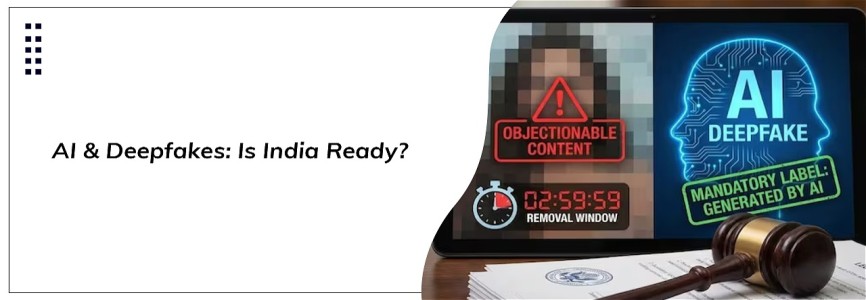
Deepfakes are synthetic media created using technology powered by artificial intelligence (AI), mostly generated via deep learning algorithms. These algorithms use large datasets of photos, videos, or audio data to create realistic yet fake images/videos. Unlike traditional photo editing, deepfakes can fake facial expressions, body movements (including the whole body), speech patterns, and even emotional expressions in a very realistic manner.
When first developed, deepfakes were seen as solely a technological novelty. Now, they serve a multitude of purposes that range from benign humour to malicious intentional disinformation. AI-generated video deepfakes have been created to produce false political speeches, deceptive advertisements, fraudulent financial schemes, and non-consensual intimate images. Voice deepfakes similarly create concern because they allow criminals to impersonate someone in order to commit fraud, or inappropriately connect public figures with products and services that they did not endorse.
Due to the rapid spread of social media, such content is often impossible to delete once it has gone viral. By the time someone takes legal action against the copyright infringement, millions of users may have already viewed it, and hundreds of thousands of users may have already shared it.
What Are Personality Rights?
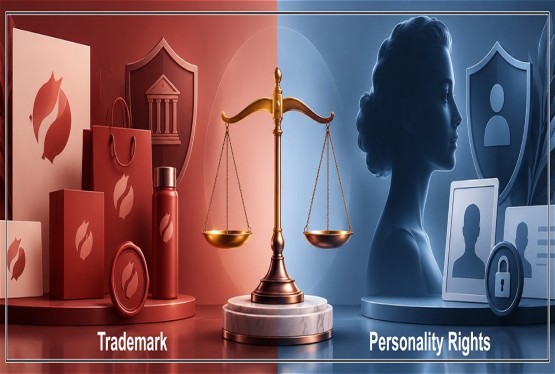
Personality rights are a type of right that protects individuals from being unfairly exploited commercially through their identity. Identity includes elements like an individual’s name, photograph, image, likeness, voice, signature, gestures, catch phrases, or other unique characteristics. Unlike, Copyright law which protects creative works, and Trademark law protects brands and business goodwill, personality rights protect the commercial and personal value associated with an individual’s identity.
As an example, when a sports brand signs a celebrity to become a brand ambassador for their product, the company does not buy the celebrity’s photograph but rather buys the ability to use the celebrity’s identity commercially. If another company were to create an AI generated advertisement of the same celebrity without consent, they would be infringing on that celebrity’s copyright and would also be commercially benefiting from the celebrity’s personality through their actions.
Personality rights thus have two aspects. One is the economic aspect, allowing individuals to make commercial gain out of their identity. The other one is the dignity and privacy aspect, protecting the individual from any unauthorized and deceptive portrayal of identity.
How Deepfakes evolved the Nature of Personality Rights?
Deepfake technology has radically shifted the legal paradigm. Prior to this, the violation of personality rights mostly entailed the unauthorized use of photographs or endorsement. Now, artificial intelligence can make up a completely fictitious person.
For example, a video created with the help of AI that shows a well-known actor making an endorsement for cryptocurrency or a well-respected musician supporting some political campaigns. Even though the video is made-up, people are likely to consider it as legitimate due to how realistic it is.
The problem extends beyond public figures – students, professionals, journalists, and regular citizens have started falling prey to impersonation, harassment, identity theft, and defamation through AI-generated content. Hence, the law has been forced to confront a completely new issue. It is now not enough for the law to safeguard just the creative work; it needs to protect digital identity as well.
Current Legal Context of India
India does not have an explicit piece of legislation that covers the nature and extent of personality rights. Rather, the legal protections available for those rights arise from various existing principles within the law.
The Constitution of India guarantees an individual’s right to live with dignity and right to privacy under Article 21. The Supreme Court in R. Rajagopal v State of Tamil Nadu, recognised that individuals have a legal right to determine whether or not to publish their identifiers, as well as how to exploit them commercially. In addition, the Supreme Court further entrenched this legal basis for protection in the privacy judgement in K.S. Puttaswamy v. Union of India.
Under the Copyright Act of 1957, certain protections are available to a performer in respect of the exploitation of their performance, however, it does not grant protection to the face, voice or identity of the performer separately. Therefore, although a performer may have the protection of their right in respect of a recorded performance, they will not have the same protection for all digital reproductions of their image.
Under the Trade Marks Act of 1999, an individual’s name or signature, can be registered as a trade mark. However, this does not provide a comprehensive legal framework for the protection of the performer’s facial features, voice or digital avatar.
The Information Technology Act 2000 and Digital Personal Data Protection Act 2023 provide partial remedies against the abuse of digital information and the unlawful activities that can take place online.
However, these two acts address the processing of data and the offences committed online as opposed to providing a framework for the protection of an individual’s personality rights against the generation of an impersonation of their identity by AI-generated means. Therefore, the legal framework is, primarily, fragmented and not comprehensive.
Judicial Evolvement of Personality Rights: From Privacy to AI Protections
Personality rights have developed in India mainly through judicial interpretation as opposed to legislation. As time went on, courts in India came up with an expanded scope of these rights which went beyond the right to the privacy of an individual to the protection of the commercial identity of individuals from emerging technology such as artificial intelligence and deepfakes.
The legal base for personality rights in India started when the Supreme Court in the case of R. Rajagopal v. State of Tamil Nadu (1994), famously known as the Auto Shankar case, recognized the right of each individual to control the publication of certain facets of his/her personal life without consent since the right is a subset of the right to privacy guaranteed under Article 21 of the Indian Constitution.
Three decades later, however, the advent of Generative AI posed new challenges for the judicial determination of personality rights. In Anil Kapoor v. Simply Life India (2023), the Delhi High Court ruled on this issue when it restrained the unauthorised usage of the actor's name, picture, voice, signature, his catchphrase "Jhakaas," gesture and his digital look alike generated through AI technology. The court has acknowledged that artificial intelligence can clone anyone in no time, and that is why the personality right will not be limited to mere physical appearance, but also include an individual's personality which can now be cloned digitally.
In Arijit Singh v. Codible Ventures LLP (2024), the Bombay High Court has granted an injunction restraining the defendant from using the plaintiff's voice, picture, signature, and other personal details via AI-powered platforms. The court has noted that there is a serious danger posed to the reputation and career of an artist because of the unauthorised usage of voice, and it cannot be overlooked that an individual's distinct voice is a part of his personality which must be protected legally.
Judiciary has maintained this progressive trend in some other recent decisions regarding AI-generated deepfakes. In the case of Sonakshi Sinha before the Delhi High Court, the actress requested protection against any unauthorized generation and distribution of the AI-generated content misappropriating her image and identity on digital platforms. The Court provided interim protection and ordered removal of such infringing content by the online intermediaries, thereby reiterating the fact that digital copies and AI-generated impostors can constitute an infringement of personality rights even without appropriating the physical entity itself.
Thus, these decisions indicate the fact that the Indian courts have successfully managed to evolve personality rights from being merely a privacy doctrine to an evolving legal concept that could address the issue of identity misappropriation using AI technology. However, the dependence of courts on their own innovations is yet another indicator of the imminent need for a legislative framework for regulating the use of deepfakes.
The Legislative GAP
Despite these positive legal developments, there are a number of significant gaps still left in the law:
-
There is no legal definition provided by Indian law for personality rights. This creates a large reliance on decisions made by judges, and this creates uncertainty in the scope of protection available.
-
There is currently no specific legislation that addresses the issue of AI-generated deepfakes. While there is existing legislation regarding identity theft, obscenity and copyright infringement, there is nothing in law that directly prohibits the use of AI technologies to produce or make use of AI-generated replicas for either commercial or non-commercial purposes.
-
Even though manipulated video content can be spread rapidly, and the rights that are created from the east to west in video could be lost before legal remedies are available, the current laws do not place any obligation upon online platforms to be proactive in removing or preventing the distribution of such content.
-
Lastly, while many countries around the world provide posthumous protection to supporters of their laws or regulations, the Indian legal system does not clearly provide posthumous protection to a person's digital identity after their death (e.g., the digital identity of celebrities or other well-known individuals).
Global Approach towards Personality Rights
A number of jurisdictions have begun responding to the above emerging issues. U.S. is now recognising a right of publicity as a separate intellectual property (IP) right which is further reaffirmed by Tennessee’s recently enacted and effective ELVIS Act that specifically provides protection for individuals against the use of their biometric characteristics (i.e., voice) for AI-generated cloning/prototyping (as examples, but there are numerous others from around the world) without their consent. Additionally, the European Union recognises personality rights through privacy legislation and the General Data Protection Regulation (GDPR) for the protection of children by providing explicit consent before collecting or disclosing certain personal data, including biometric data. This movement towards cross-border protections for individuals against the use of their likeness (i.e., name, image, etc.) by AI/ML technology has resulted in jurisdictions around the world creating specific legislation to govern how AI and ML i.e. Machine Learning will affect and impact individuals based on their personal data.
Way Forward
The Indian court system has been very effective in defending the rights of many victims of personality rights abuses. However, due to the rapid advancement of generative AI, there is a need for legislative action.
The proposed Personality Rights Protection Act would provide clarity through clearly defined personality rights, regulating AI-generated deep fakes, developing a rapid notice and takedown procedure, increasing the level of accountability for online businesses and providing appropriate civil and criminal remedies to correct any breaches of persons’ rights.
It is also important that the proposed legislation will properly weigh all competing interests. Legitimate forms of expression (artistic, satirical, academic) and news reporting must remain legally protected while simultaneously preventing the commercialisation of and deception created through AI-generated content.
Conclusion
AI has redefined identity as a digital asset of increasing value. The rise of Deepfake technology indicates that faces, voices and personalities can be duplicated, altered and exploited for profit through AI technology; often without the consent of the duplicated person. While the Indian Judiciary has made strides in recognising personality-based rights through Intellectual Property law and constitutional principles, protection is currently reactive and uncoordinated.
The rise in misuse of AI generated artistic content supports the notion that existing laws relating to copyright, trademarks and privacy are insufficient at present. This places India in an important position, a position where the introduction of a proper statutory framework pertaining to the protection of personality rights will not only protect celebrities, but also every individual whose identity could be duplicated through digital media.
With the rise of evolving AI technologies, it is imperative that law evolves alongside these technologies. Protecting personality-based rights is no longer about the preservation of commercial value; but rather; protecting human identity, dignity and autonomy; now and moving forward into the digital world. India's challenge will not be whether regulation is appropriate or necessary; but what steps will India take to create appropriate regulatory controls in an expedited manner that fosters innovation whilst at the same time protecting the exploitation of an individual's identity from artificial intelligence.


_(b)_of_the_Trademark_Act,_1999_(1)_crop10_thumb.jpg)


_crop10_thumb.jpg)


_crop10_thumb.jpg)
_crop10_thumb.jpg)


_crop10_thumb.jpg)


_crop10_thumb.jpg)


_crop10_thumb.jpg)


_crop10_thumb.jpg)


_crop10_thumb.jpg)


_crop10_thumb.jpg)


_crop10_thumb.jpg)


_crop10_thumb.jpg)


_crop10_thumb.jpg)








_crop10_thumb.jpg)



























































_crop10_thumb.jpeg)