


Reputation is a term that has been used historically in a narrow sense as a feature of an individual’s character, merited and manifested through personal performance and public image. What happens if instead of belonging to a single individual, reputation is said to belong to a family name that is kept up from one generation to another like some sort of intangible property?
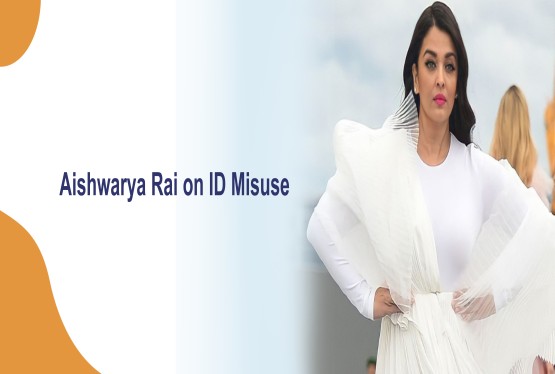
This rather unorthodox yet important issue was brought up by the High Court of Delhi in the lawsuit filed by minor Aaradhya Bachchan, daughter of movie actors Abhishek Bachchan and Aishwarya Rai Bachchan, and granddaughter of famous Amitabh Bachchan.
The lawsuit has a certain degree of attention not only because of the star status of the individuals involved, but also because it provides the judiciary with an opportunity to investigate the possibility of using the framework of laws on trademarks, passing off personality rights, and defamation for the protection of a family name as a kind of inherited reputation. The article will provide an overview of the legal background preceding the case, the facts of the case, and the relevant statutory and common law provisions.
Legal Background
In the past 15 years or so, a body of jurisprudence has developed around the concepts of "personality rights" and "publicity rights" in Indian law. These rights enable an individual (mostly celebrities) to have control over the commercial utilization of the personality traits belonging to them, e.g. their name, voice, image, signature, and mannerisms. It all started with the Titan Industries Ltd. v. Ram Kumar Jewellers (2012) case, when the Delhi High Court held that celebrities possess an economic interest in their identity that could be protected from unauthorized commercial utilization.
This trend was strengthened in Amitabh Bachchan v. Rajat Nagi & Ors. (2022), when the Delhi High Court issued an ex-parte "John Doe" (Ashok Kumar) order, which prevented not only the named defendants but also "the world in general" from misusing Bachchan's name, voice, image, or any other personality traits belonging to him for commercial or other purposes.
Moreover, the Court ordered the Ministry of Electronics and Information Technology and the Department of Telecommunications to block websites along with URLs and telephone numbers used for the dissemination of infringing content. Keeping this background in mind, Aaradhya Bachchan filed proceedings in 2023 through her father, claiming not only that her reputation as an independent public personality has been infringed, but also that as a minor girl, her privacy and the goodwill of her family had been violated by digital content makers.
The scope of the suit then lies in the convergence of three branches of law: passing off law (which has traditionally been considered to be an intellectual property and unfair competition concept), defamation law, and the ongoing development of the right to privacy and the right to personality under the Indian Constitution as well as common law.
Facts of the Case
The case was filed in Delhi High Court in 2023 by Aaradhya Bachchan, a minor child, through her father Abhishek Bachchan against several YouTube channels as well as unknown ("John Doe") defendants. The issue raised by the plaintiff was that these channels were publishing misleading, sensational and defamatory information about the health and private life of the child using the name and images of the Bachchan family to generate viewership.
It was claimed that the content was "fake news" of a very serious nature affecting not only the child but also the entire family of the Bachchans. On April 20, 2023, a single-judge Bench of the Delhi High Court had already restrained various YouTube channels from disseminating false information about the health of Aaradhya Bachchan and stated that disseminating misinformation about a child is an example of "morbid perversity," and intermediary companies like Google could not be allowed to circulate false information.
The issue resurfaced in front of Justice Anup Jairam Bhambhani. Counsel for the claimant, Advocate Pravin Anand stated that the reputation and goodwill of the whole Bachchan family was in jeopardy and the doctrine of passing off, which is usually invoked in matters associated with goodwill in the market, was applicable to the case at hand in order to protect the reputation of the family against being harmed or misused by third parties illegally. It was asserted that the family should be protected against misrepresentation and unauthorized uses of their image or name as long as their reputation remains intact, as the same was nothing but the use of their pictures to gain popularity.
Legal Provisions and Doctrine
Many aspects of the law come together in this case, making an examination of them quite helpful.
-
Passing Off and Trademarks: Passing off is part of common law and relates but is different from statutory protection of trademarks through the Trade Marks Act. It serves to protect goodwill in a mark, name, or get-up from misrepresentation that causes harm. Traditionally, the concept of passing off has been applied in situations where a trader misrepresents his goods or services as those of another trader and thereby causes damage to another party’s goodwill. The counsel for the Bachchan family argued that just like a trademark, any family name is able to generate goodwill due to the cumulative success of its members; as a result, it has a right to be protected from misappropriation.
- The Rights of the Personality and Publicity: Personality Rights have been judicially upheld under Article 21's Right to Privacy. In the famous case of Justice K.S. Puttaswamy v. Union of India (2017), it was reiterated that this came from the various principles of unfair competition and passing off. The Titan Industry and Amitabh Bachchan v. Rajat Nagi judgment gave protection for a person’s name, voice, image, and likeness from unauthorized commercial use.
- Defamation: Defamation in India is a civil and criminal wrong. As per the Bharatiya Nyaya Sanhita, 2023 (which replaces the IPC of 1860), defamation continues to be an offense under the sections in the new statute that are equivalent to Section 499 and 500 IPC. The elements of defamation include the truthfulness or falsehood of the statement made, its communication to a third person, and its impact on the reputation of the individual. A question that arose in court was whether the tort of defamation, traditionally a non-transferable tort involving an individual’s reputation, could also be integrated into the law concerning intellectual property rights, which is primarily concerned with protecting economic interests rather than individual dignity.
- Technology Act, 2000: Due to the fact that the offending material was distributed over various online channels, the laws governing intermediary responsibility (Section 79) and the remedial procedure under Section 69A, as well as the IT (Intermediary Guidelines and Digital Media Ethics Code) Rules, 2021, are central to the question of any injunction against the further distribution of problematic materials on an online platform.
-
Rights of Children: Because Aaradhya Bachchan was underage when the original case was brought before the courts, legal considerations respecting the privacy and protection of minors—based on the Juvenile Justice (Care and Protection of Children) Act of 2015 and the legal defenses available to legal minors—also affect the court's approach, especially when it came to its prior comments about the cruel nature of publishing wrong information concerning a child.
The Question Framed by the Court
Justice Bhambhani posed three major — and only indicative — questions of law for the court to consider at the hearing.
-
The first question is whether the extent of the reputation of a family name is the same as the protection and extent of the family name and reputation of trademark. The judge wording suggested that trademark enjoys a monetary value mainly because the goods and services have already been sold to the public under that mark, while family name reputation can be dictated by the success and fame of family members in a particular area. The question is whether this reputation based on achievements can be inherited, like goodwill, and if yes, how far down it can be passed and for how long.
- The second question addresses whether anything like dissemination of fake news constitutes violation of IP rights and which particular type of IP right is involved in the case described.
-
The last question is whether defamation as an established tort practice is somehow related and influenced by IP rights and definitions.
Need and Importance of Judicial Clarification
This inquiry is important for the gap it reveals in Indian law. The existing laws are not meant to cover this particular case. Notably, trademark and passing-off law protect commercial goodwill built from conducting business; defamation law protects a person’s reputation from false statements; and personality rights protect the commercial value of a person’s persona built through public life achievements. None of the existing laws was designed to protect someone who is still a minor and has yet to establish their own reputation through achievements, therefore relying instead on the reputation built by their relatives.
Understanding better is important for a number of reasons. First, it will affect how family members of famous personalities will manage to protect their children or family members from unfair or defamatory content that makes money by exploiting the power of their surname.
Second, it will help online platforms as well as content creators understand where the limit lies between lawful comments about well-known persons and unlawful use of the family name for the purpose of getting engagement or profit. Furthermore, the case examines the flexibility of the concept of intellectual property. It raises the question of whether concepts like personal dignity and reputation are better described as property rather than in tort law or constitutional privacy jurisprudence terms. The significance here lies in the fact that intellectual property rights are usually transferable, licensable, and inheritable while personal reputation is usually none of these things or only in certain situations.
Significance of the Case
This legal case holds significance beyond the Bachchans. It is a logical transition from the Rajat Nagi decision of 2022, which granted personality rights to a celebrity and the current case, where the focus is on inherited or acquired reputation, which a child gets automatically by being born to a famous family.
The ruling of the court, if it happens, will lead to a significant growth in this branch of law and create a quasi-proprietary right, providing hierarchy to the family surname, which the blood relatives of the famous person can claim even if they don’t have their own public reputation.
On the contrary, if the court decides not to provide such protection, it will remain consistent with the traditional view of reputation and will not recognize this right as individual and movable under Indian law, while making way for other types of lawsuits – privacy, defamation, or child protection cases.
Judgement of the Case
The case is yet to reach its final judgment. As of now, it remains to be seen how this legal battle unfolds.
-
Interim orders passed (not finalized): In the case of Aaradhya Bachchan & Anr. V. Bollywood Time & Ors. [CS(COMM) 230/2023], the Justice C. Hari Shankar passed the first interim injunction on April 20, 2023, where he restrained several YouTube channels from advertising that Aaradhya had been seriously ill or dead. The order also instructed Google LLC to stop the airing of videos on YouTube wherein the plaintiff was portrayed wrongly, in this case, as terminally sick or even deceased, as some of the videos contained morphed visuals. The videos have also been banned for being misleading and misrepresenting the information about the plaintiff's health.
- February 2025 - Aaradhya filed an application for summary judgment against the non-responsive YouTube channels and Justice Mini Pushkarna issued notice to nine channels, including "Bollywood Time." Additionally, she sought to move forward on an ex-parte basis and obtain a decree in her favour, since the defendants weren't appearing and the Court issued summonses to channels such as "Bollywood Time," "Bolly Pakora," "Bolly Samosa," and "Bollywood Shine," holding that a prima facie case had been established for interim relief.
-
13 August 2026- Justice Anup Jairam Bhambhani, who heard the matter afresh (probably with regard to larger / consolidated issues of law or an application relating to the same), refused to render any judgment. Instead, he framed three open questions of law, which were listed for determination at a later stage, with regard to generational reputation, fake news being an infringement of intellectual property rights, and defamation as intellectual property. The matter was again listed on 15 September.
In conclusion, the legal matters discussed in the article have not been conclusively determined. There are only temporary temporary injunctions in place right now to safeguard Aaradhya from particular defamatory/misleading statements, in addition to a summary judgment request against the defendants who did not show up.The real question has yet to be answered, whether a family’s reputation goes through generations in the way a trademark does.
Conclusion
The questions posed by the Delhi High Court in the case involving Aaradhya Bachchan indicate that the judiciary understands that existing legal frameworks may not be sufficient to remedy the issue at hand, namely, the exploitation of a child for commercial gain and fame by using her family’s name, compounded by the fact that digital platforms provide excellent means of commercial exploitation of any name.
What the court decides, in the end, with regard to whether it will protect the family name as a trademark, or will use other means of providing the same remedy, will have its significance in the evolution of laws concerning the right to personality in India, the next hearing being set for 15 September.


_(b)_of_the_Trademark_Act,_1999_(1)_crop10_thumb.jpg)


_crop10_thumb.jpg)


_crop10_thumb.jpg)
_crop10_thumb.jpg)


_crop10_thumb.jpg)


_crop10_thumb.jpg)


_crop10_thumb.jpg)


_crop10_thumb.jpg)


_crop10_thumb.jpg)


_crop10_thumb.jpg)


_crop10_thumb.jpg)


_crop10_thumb.jpg)


_crop10_thumb.jpg)









_crop10_thumb.jpg)




























































_crop10_thumb.jpeg)