



Keyword advertising allows advertisers to select words or phrases that trigger sponsored advertisements. Those keywords may include another trader's trademark. The central question is when such use amounts to infringement under Indian law. Indian jurisprudence must be read by reference to the facts, procedural stage and statutory provision in each case.
What is Keyword Advertising?
Keyword advertising is an online advertising technique in which an advertiser selects particular words or phrases so that an advertisement may be displayed in response to a user's search. The selected keyword can be invisible to the user. The consumer ordinarily sees the search results page and sponsored advertisement, rather than the internal keyword. The distinction between backend keyword and visible advertisement is central to Indian trademark analysis.Statutory Framework
The Trade Marks Act, 1999 has no provision expressly titled “keyword advertising”. Depending on the facts, Sections 29(1), 29(2), 29(4), 29(6) and 29(8) may become relevant. Section 29(6) concerns circumstances in which a person is deemed to use a trademark registration. Section 29(8) addresses infringement through advertising where the statutory requirements concerning unfair advantage, honest practices, distinctive character or reputation are met. Section 30 recognises limitations and certain permitted uses subject to statutory conditions. Every keyword containing a registered trademark does not automatically infringe Section 29.Consim Info Pvt. Ltd. v. Google India Pvt. Ltd.
The Madras High Court considered Google's AdWords programme, sponsored links and trademarks used as keywords. The proceedings included an order dated 30 September 2010 and appellate proceedings decided on 10 September 2012. The appellate litigation examined whether Google's allowing trademarked words to be used as keywords constituted relevant trademark “use”. The case is an important early Indian authority, but should not be converted into a universal rule that all keyword advertising is lawful or unlawful.DRS Logistics: Single-Judge Decision (2021)
In M/s DRS Logistics (P) Ltd. & Anr. v. Google India Pvt. Ltd. & Ors., CS(COMM) 1/2017, judgment dated 30 October 2021, the Delhi High Court considered allegations involving competitor advertisements triggered by keywords corresponding to the plaintiffs' trademarks. The Single Judge took a prima facie view concerning trademark use and issued directions concerning investigation of complaints. Because this was an interlocutory stage, these findings should not be presented as a final determination of all infringement issues.Google LLC v. DRS Logistics: Division Bench (2023)
Google LLC v. DRS Logistics (P) Ltd. & Ors., FAO(OS)(COMM) 2/2022 & FAO(OS)(COMM) 22/2022, decided 10 August 2023, 2023 SCC OnLine Del 4809; 2023:DHC:5615-DB. The Division Bench held that use of a registered trademark as a keyword in Google's Ads Programme could constitute “use” for purposes of the Trade Marks Act and considered Google's role and Section 79 of the Information Technology Act. The judgment also explains that keyword use absent relevant confusion, unfair advantage, dilution or compromise of the trademark would not itself establish infringement. It therefore cannot accurately be reduced to either “all keyword bidding is infringement” or “keyword bidding is always lawful”.Why the 2023 DRS Decision Must Be Read Carefully
It is incomplete to say that DRS Logistics simply held keyword use “not infringement”. The Division Bench recognised keyword use as capable of constituting trademark use, while explaining that infringement requires the relevant statutory ingredients. The 2021 findings were made at the interim stage, so the 2023 decision must be read with its procedural and statutory context.Hindware Ltd. v. Grohe India Pvt. Ltd. & Ors. (2026)
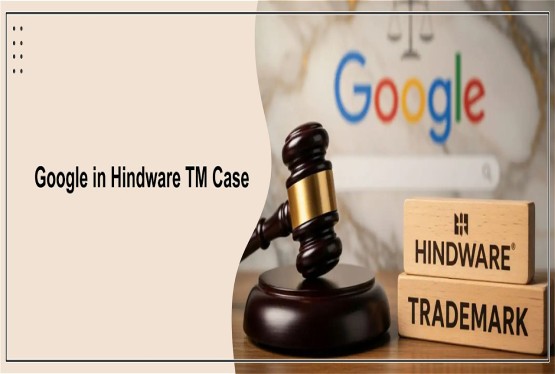
Hindware Ltd. v. Grohe India Pvt. Ltd. & Ors. and connected CS(COMM) 592/2017, Delhi High Court, Justice Mini Pushkarna, 22 May 2026, 2026:DHC:4614. After trial, the Court held Google LLC and Google India liable in relation to the use of HINDWARE and specified combinations as Google AdWords keywords. The Court reasoned that invisible keyword use could constitute “use” and found the conduct within Section 29(8), including unfair exploitation of the trademark's advertising function and conduct contrary to honest practices. The Court granted a permanent injunction and awarded nominal damages of ?15 lakh in each of the two suits, totalling ?30 lakh, jointly and severally against Google LLC and Google India, together with actual litigation costs.Hindware Does Not Make Every Keyword Automatically Infringing
Hindware should not be described as establishing that every competitor keyword is automatically unlawful. The judgment distinguished DRS Logistics on procedural stage, the nature of the mark and the statutory analysis. Hindware was a post-trial decision concerning a distinctive and recognised mark, with particular emphasis on Section29(8). Its application remains fact- and provision-specific.
Appeal in Hindware: Current Procedural Position
Google has appealed the 22 May 2026 judgment. In Google LLC v. Hindware Limited & Ors., RFA(OS)(COMM) 14/2026 and connected appeals, the Delhi High Court Division Bench issued notice on 10 July 2026 and did not grant interim relief staying the Single Judge judgment at that stage. On 24 July 2026, the matter was re-notified after arguments commenced. The Single Judge decree should therefore be described as a significant current decision under appeal, not as an uncontested final statement of Indian law.Advertiser v. Search-Engine Liability
The advertiser and search-engine operator may perform legally distinct acts. A court may have to determine whether the advertiser's conduct, the platform's own conduct, or both satisfy the requirements of infringement. DRS Logistics and Hindware illustrate why the platform's actual role in the advertising system can matter.Section 79 of the Information Technology Act
Google has relied on the intermediary safe-harbour framework under Section 79 of the Information Technology Act, 2000. DRS Logistics examined Google's entitlement to that defence in the Ads Programme context. Hindware likewise rejected Google's intermediary defence in the circumstances of that case. This does not mean Section 79 is irrelevant in every online trademark dispute; its application depends on the statutory requirements and the platform's actual conduct.Keyword Advertising and Initial-Interest Confusion
Keyword advertising can produce what is often described as initial-interest confusion: a consumer searching for one trader's mark may encounter a competitor's sponsored advertisement. Diversion alone should not be stated as an automatic infringement rule. The relevant question remains whether the facts satisfy the applicable provisions of the Trade Marks Act.Keyword Advertising and Comparative Competition
A competitor may seek consumers interested in a rival product, so not every attempt to reach users searching for a competitor is necessarily unlawful. At the same time, use of a distinctive competitor mark as a keyword can become actionable where it exploits the mark's goodwill in a manner prohibited by the Act. Hindware places particular emphasis on the advertising function of a trademark and Section 29(8).A Practical Legal Test
Step 1 — identify the registered right, goods/services and distinctiveness.
Step 2 — identify whether the keyword is identical, similar, descriptive, generic or a misspelling.
Step 3 — examine the visible advertisement, advertiser identification and any suggestion of affiliation or misleading claim.
Step 4 — identify the applicable statutory provision.
Step 5 — examine the platform's actual role.
Step 6 — consider legitimate competition and statutory limitations.
Step 7 — check whether the authority is interim, final or under appeal.
Conclusion
Keyword advertising cannot safely be characterised through a single formula. The most defensible proposition is that use of a trademark as a keyword can constitute legally relevant “use”, but liability depends on the statutory provision invoked and the facts establishing its requirements. Hindware is particularly significant because it treated invisible keyword use as part of the advertising process and found Google's conduct infringing under Section 29(8), but the decision is under appellate challenge and should not be presented as the uncontested final word on all keyword advertising in India.


_(b)_of_the_Trademark_Act,_1999_(1)_crop10_thumb.jpg)


_crop10_thumb.jpg)


_crop10_thumb.jpg)
_crop10_thumb.jpg)


_crop10_thumb.jpg)


_crop10_thumb.jpg)


_crop10_thumb.jpg)


_crop10_thumb.jpg)


_crop10_thumb.jpg)


_crop10_thumb.jpg)


_crop10_thumb.jpg)


_crop10_thumb.jpg)


_crop10_thumb.jpg)









_crop10_thumb.jpg)













































_crop10_thumb.jpeg)