



Colours can play a powerful role in brand identification. Consumers may associate a particular colour, colour combination or visual presentation with a particular commercial source. The safest answer is nuanced: Indian law expressly recognises combinations of colours as potential trademark registration matter, while the position concerning a single colour standing completely alone is less straightforward and should not be described as either categorically prohibited or automatically registrable.
The Statutory Framework
Section 2(1)(m) of the Trade Marks Act, 1999 defines “mark” and expressly includes a “combination of colours”. Section 2(1)(zb) defines “trade mark” as a mark capable of being represented graphically and capable of distinguishing the goods or services of one person from those of others. Section 10 further provides that a trade mark may be limited wholly or in part to any combination of colours and that such limitation is relevant to the distinctve character of the mark. These provisions clearly accommodate coloure combinations, but do not expressly create a separate statutory category called a "single-colour trademark".
Distinctiveness Is Fundamental
Section 9(1)(a) provides that marks devoid of distinctive character are not registrable, subject to the statutory proviso concerning acquired distinctiveness. The important question is therefore whether the claimed sign is capable of distinguishing the proprietor’s goods or services and, where necessary, whether use has caused consumers to associate the relevant visual feature with that commercial source.
Colour Combination: A Clearer Case
In Deere & Company v. Malkit Singh, CS(COMM) 738/2018, decided 23 April 2018, the Delhi High Court considered Deere’s green-and-yellow colour combination and trade dress for agricultural equipment. The Court found a prima facie case for protection and interim relief on the material before it, including the long and distinctive use claimed by Deere. This was an interim, fact-specific order and should not be treated as a rule that every colour combination is automatically registrable.
The First Louboutin Decision
In Christian Louboutin SAS v. Abubaker & Ors., CS(COMM) 890/2018, judgment dated 25 May 2018, a Single Judge of the Delhi High Court took a restrictive view of a single colour under Sections 2(m) and 2(zb), and also considered Section 30(2)(a). The dispute concerned Louboutin’s red-sole mark. This judgment is important historically, but it cannot be treated as the final current answer because it was subsequently set aside by a Deivision Bench.
The 2019 Division Bench Decision
In Christian Louboutin SAS v. Abubaker & Ors., RFA (OS)(COMM) 13/2018, order dated 11 April 2019, the Division Bench set aside the Single Judge’s judgment and restored the suit. The Court noted that Louboutin’s case was not simply ownership of an abstract colour: its registered device mark involved a particular shade of red applied to a particular location, the outsole of a shoe. The Court held that issues such as whether the mark was functional or source-identifying required consideration on pleadings and evidence. Crucially, the Division Bench expressly stated that it was not expressing an opinion on the merits.
Louboutin’s 2017 Decision
In Christian Louboutin SAS v. Mr. Pawan Kumar & Ors., CS(COMM) 714/2016, judgment dated 12 December 2017, the Delhi High Court decreed the suit concerning Louboutin’s registered “RED SOLE” device mark after considering evidence of registration, use and reputation. This is relevant to the litigation history, but it should not be simplified into a universal rule that Louboutin owns the colour red across all products and contexts.
Colour Plus Placement Is Different From an Abstract Colour
The Louboutin appellate judgment highlights an important distinction: a proprietor may claim a mark consisting of a colour used in a particular configuration or location. The legal question then is whether that particular visual sign functions as a distinctive identifier and satisfies the statutory requirements, rather than whether the proprietor owns the abstract colour itself.
Pernod Ricard and Colour Schemes
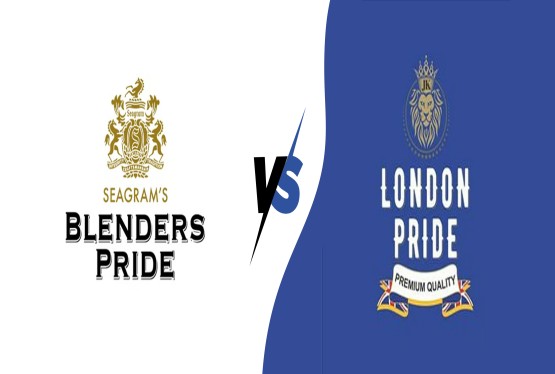
In Pernod Ricard India Private Limited & Anr. v. Karanveer Singh Chhabra, 2025 INSC 981, judgment dated 14 August 2025, the Supreme Court considered competing whisky marks, packaging, colour schemes and trade dress. The Court emphasised overall comparison, the anti-dissection principle and the problem of claiming exclusivity over common or non-distinctive elements. The decision should be used as a caution against extracting an isolated colour from a larger presentation and claiming a monopoly over it. It did not hold that every colour scheme is automatically protectable.
Trade Dress Can Make Colour Legally Significant
Colour may form part of a broader trade dress or get-up. A claimant may rely on colour, layout, graphics, packaging, labels and other visual features to establish source identification or passing off. The relevant protection is not necessarily ownership of the colour in the abstract; it may arise from the distinctive overall presentation and the goodwill associated with it.
Acquired Distinctiveness
Where a colour-based sign is not inherently distinctive, evidence of acquired distinctiveness can become important. Relevant evidence may include duration of use, sales, advertising expenditure, promotional material, market recognition, consumer evidence and press coverage. Long use alone is not necessarily conclusive; the evidence must support source-identifying significance.
Functional or Common Features
Trademark law should not ordinarily be used to give one trader an unfair monopoly over features that are functional, customary or legitimately needed by competitors. This concern is particularly relevant where a colour is used merely for decoration, safety, coding or industry convention. Section 30(2)(a) may also become relevant to permissible use of characteristics of goods, depending on the facts.
Registration Does Not Create Universal Ownership
Even where a colour or colour combination forms part of a registered mark, the proprietor does not automatically obtain an unrestricted monopoly over that colour in every industry and context. Trademark rights are linked to the registered mark, the goods or services, the manner of use and the statutory framework.
Passing Off
Even where a particular colour is not independently registered, it may still be relevant to passing off when it forms part of a distinctive get-up associated with the claimant. The focus is on goodwill, misrepresentation and damage, together with the overall presentation and consumer perception.
Practical Approach
A business seeking colour-based protection should identify the exact visual sign: the colour or colours, shade or combination, location of use, surrounding graphics, packaging and other distinctive elements. It should conduct clearance searches, use the feature consistently, preserve evidence of first and continuous use, maintain advertising and sales records, and consider complementary protection for word marks, device marks, artwork and eligible designs.
Devil’s Advocate: Claims to Avoid
It would be unsafe to state that: (1) Indian law absolutely prohibits single-colour trademarks; (2) Indian law automatically permits registration of any single colour; (3) the 2019 Louboutin Division Bench finally held that a single colour is a trademark; (4) Louboutin obtained ownership of the colour red for all goods; (5) Deere established that every colour combination is registrable; or (6) Pernod Ricard held that colour schemes are automatically protectable. Each proposition overstates the authorities.
Conclusion
The legally defensible answer is that Indian trademark law clearly accommodates colour combinations, while the status of a single colour standing entirely alone is more nuanced. The Louboutin litigation demonstrates that the issue cannot be answered by relying on the 2018 Single Judge judgment alone: the 2019 Division Bench set it aside and restored the suit without deciding the merits. Deere illustrates that a distinctive colour combination may receive interim protection where long use and source identification are established, while Pernod Ricard reinforces the need to examine the overall commercial impression and avoid monopolising common elements in isolation. Colour can therefore have trademark significance in India, but exclusivity depends on the precise mark, distinctiveness, commercial context, evidence and statutory requirements.


_(b)_of_the_Trademark_Act,_1999_(1)_crop10_thumb.jpg)


_crop10_thumb.jpg)


_crop10_thumb.jpg)
_crop10_thumb.jpg)


_crop10_thumb.jpg)


_crop10_thumb.jpg)


_crop10_thumb.jpg)


_crop10_thumb.jpg)


_crop10_thumb.jpg)


_crop10_thumb.jpg)


_crop10_thumb.jpg)


_crop10_thumb.jpg)


_crop10_thumb.jpg)











_crop10_thumb.jpg)


































































































_crop10_thumb.jpeg)