



In today’s global economy, a trademark can be one of a brand’s most valuable assets. Names like Nintendo, Apple, Coca-Cola and Toyota aren’t just labels on products; they stand for decades of reputation, trust and consumer. But that same global reach also creates opportunities for others to borrow famous names in countries where the original brand has little or no physical presence. A local business might think that if it calls its company ‘Nintendo India’, people will assume it’s connected to the real Nintendo. Indian trademark law is designed to stop exactly that kind of opportunism and ultimately infringement. A recent Delhi High Court order in a case involving Nintendo shows how this works in practice and where the limits lie.
The Nintendo case
In November 2025, Japanese gaming giant Nintendo found out that a company incorporated in Patna, Bihar, was using the name “Nintendo India Private Limited” and this company was in the real estate business including buying, managing and dealing in land and property, not in video games or entertainment. Nintendo sent a cease-and-desist notice in February 2026. When the issue wasn’t resolved, it went to the Delhi High Court. On 29 July 2026, Justice Jyoti Singh passed an interim order restraining the Patna firm (and anyone acting for it) from using the corporate name “Nintendo India Private Limited”, and the mark “NINTENDO” in any way that could infringe Nintendo’s rights.
The court’s basic view was straightforward:
-
Nintendo has built huge reputation and goodwill in India and globally.
-
The defendant’s name is almost identical to Nintendo’s mark.
-
Using that name in real estate could mislead people into thinking there’s some link or affiliation with the gaming company.
-
It looked like an attempt to “ride on” Nintendo’s established brand value.
So, at least until the next hearing, the real estate firm cannot use the Nintendo name.
How Indian trademark law actually works
India’s main trademark law is the Trade Marks Act, 1999. It does two things, first that it protects registered trademarks against unauthorised use and second, it gives extra protection to certain reputed or well-known marks, even across different industries.
The basic rule is that registered marks get exclusive rights. Section 28 gives the registered owner the exclusive right to use the mark for the goods or services it’s registered for. Section 29 defines what counts as infringement. In simple terms, Section 29(1) states that if someone uses an identical or confusingly similar mark for the same kind of goods/services, that’s infringement and Section 29(2) states that even if the goods/services are similar (not identical), infringement can still happen if consumers are likely to be confused. This is the basic “same field, similar name” scenario most people think of in trademark disputes.
Protection beyond your own industry: Section 29(4)
Famous brands face a different problem, which is misuse in completely unrelated sectors. Think of a tech brand’s name being used by a restaurant chain, or a car brand’s name by a clothing label. That’s where Section 29(4) becomes crucial. It kicks in when:-
-
The disputed mark is identical or similar to a registered trademark;
-
It’s used for goods or services that are not similar to those the trademark is registered for;
-
The registered trademark has a reputation in India; and
-
The later use, without good reason, takes unfair advantage of or harms the distinctive character or reputation of the famous mark.
In the Nintendo case, the court applied this logic that Nintendo’s mark is registered and well-known and Real estate is not similar to video games. But the name “Nintendo India Private Limited” still tries to benefit from Nintendo’s reputation. So, even though the businesses don’t compete, the law can still step in.
What makes a trademark “well-known”?
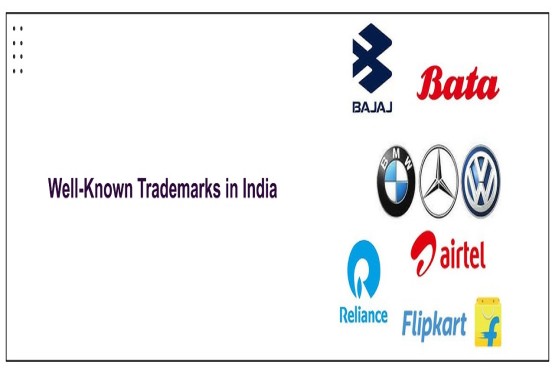
Indian law also recognises a special category of well-known trademarks. These get stronger and broader protection.
Under Section 11, the law can refuse registration of a new mark if it is identical or similar to an earlier well-known mark; and its use would unfairly exploit or damage the earlier mark’s reputation—even for different goods/services. Factors that help a mark qualify as “well-known” include:
-
How much the public recognises it;
-
How long and how widely it’s been used;
-
Advertising and promotion;
-
Past registrations and successful enforcement actions.
Section 11(9) says the authorities don’t necessarily need proof that the mark is registered or used in India to treat it as well-known. This matters for global brands that may not yet have a big local footprint but are still widely recognised. That said, being famous worldwide doesn’t automatically guarantee “well-known” status in India. Evidence of reputation among Indian consumers still matters.
The idea of “trans-border reputation”
Indian courts have also developed the concept of trans-border reputation: a foreign brand’s goodwill can reach India even if its physical presence here has been limited.
-
Whirlpool (N.R. Dongre v. Whirlpool Corp.): The Supreme Court held that a foreign mark can acquire reputation in India through international advertising, magazines, TV and other exposure, even before major local operations.
-
Milmet Oftho v. Allergan (OCUFLOX): Reinforced protection of foreign pharmaceutical brands’ goodwill against later Indian adoption.
The logic is that in the age of the internet, streaming, social media and travel, consumers know global brands long before those brands set up big offices or factories in India. But global fame alone isn’t a free pass. Indian courts balance two interests:
-
Protecting genuine international goodwill and
-
Avoiding a situation where any globally famous name gets a monopoly in India without real local connection.
The Toyota Prius case is the classic example. Toyota tried to stop an Indian company from using “Prius”. The Supreme Court said that it’s not enough to show that ‘Prius’ is famous globally; Toyota had to prove the mark had sufficient reputation in India at the relevant time. So, international fame helps but you still need to show that Indian consumers actually associate the mark with your brand.
Passing off: Protection even without registration
Not every brand registers its trademark in every country. That’s where the common-law remedy of passing off comes in. Section 27(2) of the Trade Marks Act preserves the right to sue for passing off. To win, a brand usually needs to show that it has goodwill or reputation in India, the other party made a misrepresentation that suggests a connection and that this is likely to cause damage to the brand’s goodwill. This is especially useful for foreign brands that may not have registered their mark in India but are still known here. Cases like Yahoo Inc. v. Akash Arora show Indian courts protecting such goodwill against deceptive use.
What can courts actually do when someone misuses a brand?
When infringement (or passing off) is shown—or even strongly suspected at an early stage—Indian courts can grant several remedies to protect the brand owner. The most immediate and common remedy is an injunction: courts can issue temporary (interim) orders to stop the infringing use right away while the case is still ongoing, and later pass permanent injunctions after the final judgment. Courts can also award monetary relief, either as damages to compensate the brand owner for the loss suffered, or as an order requiring the infringer to hand over the profits made from the unauthorised use of the mark. Beyond these, courts can pass other practical orders, such as directing the delivery up or destruction of infringing packaging, signs, advertisements and similar materials, and ordering the defendant to stop using the mark in company names, websites, business cards, ads and other commercial materials. Section 29 of the Trade Marks Act itself lists many acts that can amount to infringement, including affixing the mark to goods or packaging, offering goods or services under that mark, importing or exporting infringing goods, and using the mark in business documents or advertising. In Nintendo’s case, the immediate win was an interim injunction that froze the use of the “Nintendo” name until the next hearing.
What this means for businesses
For international brands, the Nintendo case highlights the importance of registering trademarks in India at an early stage rather than relying solely on global reputation. Registration provides a stronger legal position when challenging unauthorised use. International brands should also actively monitor the market for potentially infringing company names, domain names, social media handles and other forms of unauthorised use. Prompt enforcement is equally important, as taking timely action through cease-and-desist notices and, where necessary, legal proceedings can help prevent further exploitation of the brand's goodwill and reputation.
For Indian businesses, the case serves as a caution against adopting the names of famous international brands, even when operating in an entirely different industry. Such use can result in legal consequences where the statutory requirements for trademark infringement are satisfied. Businesses should therefore conduct a proper trademark search before finalising a brand or company name, as incorporation of a company under a particular name does not automatically mean that the name is free from trademark-related objections. Further, businesses should take legal notices seriously and respond appropriately rather than ignoring them. The Nintendo dispute demonstrates that failure to resolve an objection at the notice stage may ultimately result in court proceedings and injunctive relief.
Conclusion
The Nintendo order is a clear signal that Indian courts are willing to protect strong, reputed marks even when the infringer is in a completely different line of business. At the same time, cases like Whirlpool, OCUFLOX and Toyota Prius show that this protection is not automatic; it depends on evidence of reputation and goodwill in India In practice, the law tries to ensure that the value a brand builds over decades cannot be quietly hijacked by someone else just by slapping a famous name on an unrelated business.


_(b)_of_the_Trademark_Act,_1999_(1)_crop10_thumb.jpg)


_crop10_thumb.jpg)


_crop10_thumb.jpg)
_crop10_thumb.jpg)


_crop10_thumb.jpg)


_crop10_thumb.jpg)


_crop10_thumb.jpg)


_crop10_thumb.jpg)


_crop10_thumb.jpg)


_crop10_thumb.jpg)


_crop10_thumb.jpg)


_crop10_thumb.jpg)


_crop10_thumb.jpg)








_crop10_thumb.jpg)






























































_crop10_thumb.jpeg)















































_crop10_thumb.jpg)