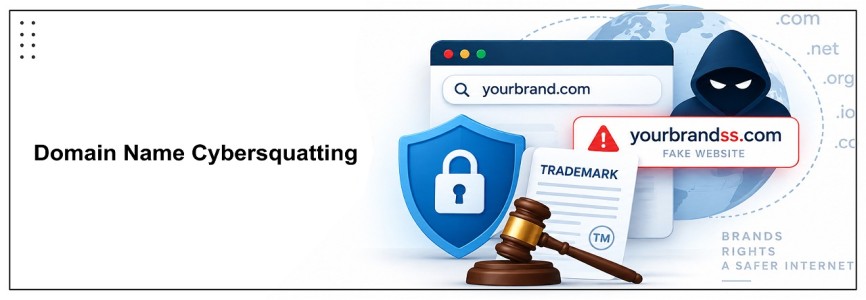



The growth of e-commerce and digital businesses has transformed domain names from mere internet addresses into commercially valuable identifiers. A domain name may enable consumers to locate a website, but it can also become closely associated with the business, goods or services offered through that website. This commercial significance has created an important intersection between domain names and trademark law. One significant problem is cybersquatting the registration or use of a domain name that incorporates or closely resembles another party's trademark registration or business identifier, particularly where the registrant lacks a legitimate interest and acts in bad faith.
Indian law does not contain a separate statute specifically called a “Cybersquatting Act”. Protection has instead developed through trademark law, common-law passing off, judicial decisions and specialised domain-name dispute-resolution mechanisms. The Supreme Court's decision in Satyam Infoway Ltd. v. Siffynet Solutions Pvt. Ltd., (2004) 6 SCC 145, is the leading Indian authority on the relationship between domain names and trademark principles.
Understanding Domain Names
A domain name is a human-readable internet address such as example.com, brand.in or company.co.in. Technically it assists in locating an internet resource; commercially, a distinctive domain name can identify the business or services associated with a website. The Supreme Court in Satyam Infoway recognised this commercial, source-identifying function.
What is Cybersquatting?
Cybersquatting generally refers to registration or acquisition of a domain name corresponding to another party's trademark, trade name or distinctive identifier, particularly where the registrant lacks a legitimate interest and acts in bad faith. Examples include registering a famous mark, a deliberate misspelling, multiple abusive domains, a domain primarily for resale, or a domain used to divert consumers or create an impression of affiliation. Similarity alone does not automatically establish cybersquatting.
Indian Trademark Law and Domain Names
The Trade Marks Act, 1999 contains no separate definition of “cybersquatting”. Section 27(1) bars an infringement action for an unregistered mark, while Section 27(2) preserves passing off. Section 28 concerns rights conferred by registration. Section 29 provides the infringement framework, including Section 29(4) for certain uses of reputed registered marks with dissimilar goods or services where statutory requirements are met. Section 30 contains limitations on the effect of registration. It would be inaccurate to state that every similar domain-name registration automatically constitutes infringement under Section 29.
Yahoo! Inc. v. Akash Arora
Yahoo! Inc. v. Akash Arora & Anr., 1999 PTC (19) 201 (Delhi) concerned “YahooIndia.com”. The Delhi High Court granted interim protection, finding potential confusion and deception. The case showed that passing-off principles could apply to domain names. It must be read historically because it pre-dates the operative framework of the Trade Marks Act, 1999 and should not be presented as a direct interpretation of present Section 29.
Rediff Communication Ltd. v. Cyberbooth
Rediff Communication Ltd. v. Cyberbooth & Anr., AIR 2000 Bom 27 involved “radiff.com”, alleged to be deceptively similar to “rediff.com”. The Bombay High Court applied passing-off principles and contributed to recognition of the commercial significance of domain names.
Tata Sons Ltd. v. Manu Kosuri
Tata Sons Ltd. v. Manu Kosuri & Ors., 2001 PTC 432 (Delhi) concerned domain names incorporating the TATA mark. It is important in the development of Indian cybersquatting jurisprudence, but was decided before the present statutory framework and involved an ex parte proceeding. It should therefore be cited carefully rather than as a comprehensive modern rule.
Info Edge (India) Pvt. Ltd. v. Shailesh Gupta
Info Edge (India) Pvt. Ltd. & Anr. v. Shailesh Gupta & Anr., 2002 (24) PTC 355 (Delhi) concerned Naukri.com and Naukari.com. The Delhi High Court considered similarity, overlapping business activities and diversion of internet traffic. It illustrates that a domain name may acquire protectable goodwill and that a minor spelling variation may be significant where confusion or diversion is likely.
Satyam Infoway Ltd. v. Siffynet Solutions Pvt. Ltd.
Satyam Infoway Ltd. v. Siffynet Solutions Pvt. Ltd., (2004) 6 SCC 145; AIR 2004 SC 3540 is the leading Supreme Court authority. The dispute concerned “Sify” and “Siffy”. The Court recognised that domain names can acquire commercial, source-identifying significance, goodwill and reputation, and accepted that they may be protected through passing-off principles.
Trademark Infringement and Passing Off
A domain-name dispute may involve statutory infringement, passing off, protection of reputed marks where statutory requirements are met, or domain-dispute mechanisms. An unregistered mark may still receive passing-off protection under Section 27(2). Conversely, domain-name registration does not automatically amount to trademark infringement.
INDRP for .IN and .Bharat
The .IN Domain Name Dispute Resolution Policy (INDRP) applies to .IN and .Bharat domain names within the .IN Registry framework operated by NIXI. Clause 4 requires the complainant to establish: (1) identical or confusing similarity to a name, trademark or service mark in which the complainant has rights; (2) no rights or legitimate interests of the registrant; and (3) registration or use in bad faith or for an illegal/unlawful purpose.
Legitimate Interests
Clause 6 addresses circumstances demonstrating rights or legitimate interests, including bona fide offering of goods or services before notice of the dispute, being commonly known by the domain name, and legitimate non-commercial or fair use without intent to misleadingly divert consumers for commercial gain or tarnish the relevant mark.
Bad Faith
Clause 7 addresses evidence of registration and use in bad faith. Examples include registration primarily for resale to the complainant or a competitor for consideration exceeding documented out-of-pocket costs; a pattern of preventing trademark owners from reflecting marks in corresponding domains; intentional commercial diversion by creating likelihood of confusion; and registration primarily to disrupt a competitor's business. These are examples of evidence and should not be treated as an exhaustive definition.
Remedies under INDRP
INDRP proceedings are distinct from ordinary civil actions. Where the Policy requirements are established, domain-level remedies principally include cancellation or transfer of the domain name. The Policy operates within its own arbitration procedure. Court remedies may also be available depending on the underlying cause of action.
INDRP and UDRP
INDRP and UDRP are not identical. INDRP principally governs .IN and .Bharat domains. UDRP is an international administrative mechanism associated with ICANN and applies to domains subject to the UDRP. Both frameworks examine similarity, legitimate interests and bad faith, but the applicable policy and procedure depend on the domain and registration arrangement.
Typosquatting
Typosquatting involves deliberately adopting a domain based on a predictable spelling or typing error in another party's domain. Such conduct may facilitate consumer diversion, advertising revenue, competing sales or false affiliation. Legal significance depends on rights, similarity, legitimate interests, use and bad faith.
Well-Known Marks
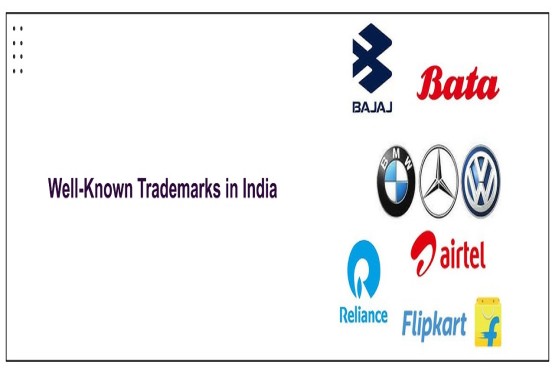
Disputes involving well-known trademark or highly distinctive marks may raise stronger concerns because such marks can possess substantial goodwill and reputation. Section 29(4) addresses certain uses of a registered mark having a reputation in India in relation to dissimilar goods or services where statutory requirements concerning unfair advantage or detriment are satisfied. Fame alone does not eliminate the need to establish the applicable cause of action.
Does Mere Registration Constitute Trademark Infringement?
Not automatically. Relevant questions include whether the mark is registered, what rights exist, whether goodwill has been acquired, similarity, the goods or services involved, manner of use, legitimate interest, bad faith, commercial purpose, and whether the expression is descriptive or otherwise capable of legitimate use. Domain registration and trademark infringement are therefore not legally synonymous.
Practical Legal Test
Step 1: Identify the claimant's rights.
Step 2: Examine visual, phonetic and overall similarity.
Step 3: Examine how the domain is used—active, parked, offered for sale, redirected, competing, affiliated, commercial or non-commercial.
Step 4: Examine the registrant's legitimate interests.
Step 5: Examine evidence of bad faith, including resale, abusive patterns, diversion, competitor disruption or misleading affiliation.
Step 6: Identify the appropriate forum and remedy: court action, passing off, trademark infringement where applicable, INDRP or UDRP.


_(b)_of_the_Trademark_Act,_1999_(1)_crop10_thumb.jpg)


_crop10_thumb.jpg)


_crop10_thumb.jpg)
_crop10_thumb.jpg)


_crop10_thumb.jpg)


_crop10_thumb.jpg)


_crop10_thumb.jpg)


_crop10_thumb.jpg)


_crop10_thumb.jpg)


_crop10_thumb.jpg)


_crop10_thumb.jpg)


_crop10_thumb.jpg)


_crop10_thumb.jpg)








_crop10_thumb.jpg)














































_crop10_thumb.jpeg)