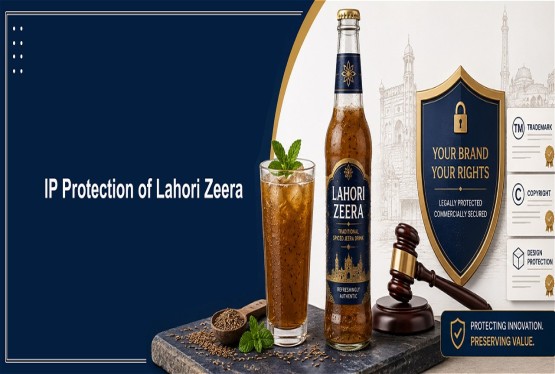




In modern consumer markets, a product is often recognised not merely by its brand name but also by the way in which it is presented. The shape of a bottle, arrangement of colours, placement of graphics, label design and overall visual appearance can contribute to product identity. This overall commercial presentation is commonly described as “trade dress” or “get-up”.
Indian trademark legislation does not create a separately defined statutory right called “trade dress”. Nevertheless, the Trade Marks Act, 1999 expressly accommodates several elements that may form part of packaging identity. Section 2(1)(m) includes “shape of goods, packaging or combination of colours” within the inclusive definition of “mark”, while Section 2(1)(zb) defines a trade mark and expressly includes the shape of goods, their packaging and combination of colours.
Packaging is therefore capable of entering the trademark registration, but it is not automatically proprietary. The central question is whether the relevant feature or combination functions as a source identifier and, where passing off is alleged, whether the defendant’s presentation amounts to a misrepresentation likely to damage the claimant’s goodwill.
What Is Trade Dress?
Trade dress generally refers to the overall appearance or get-up through which goods or services are presented to consumers. For packaged products it may include container shape, colour combinations, labels, typography, graphic layout, illustrations, placement of visual elements and the overall combination of these features.
In Colgate Palmolive Company v. Anchor Health & Beauty Care Pvt. Ltd., 2003 (27) PTC 478 (Delhi), the Delhi High Court considered an alleged imitation of red-and-white trade dress and container shape for tooth powder. At the interim stage, the Court considered the overall appearance of the competing packages and found a prima facie likelihood of confusion. The case should not, however, be read as creating a free-standing monopoly over every individual colour or packaging feature.
Statutory Recognition of Packaging
Section 2(1)(m) of the Trade Marks Act, 1999 expressly includes “shape of goods, packaging or combination of colours or any combination thereof” within the definition of “mark”. Section 2(1)(zb) similarly recognises shape of goods, their packaging and combinations of colours within the definition of a trade mark.
This recognition does not remove the requirement of distinctiveness. Section 9(1)(a) excludes marks devoid of distinctive character, subject to the statutory proviso concerning acquired distinctiveness. Section 9(3) also restricts registration of certain shapes, including shapes resulting from the nature of the goods, shapes necessary to obtain a technical result, and shapes giving substantial value to the goods.
Packaging Protection and Passing Off
A major route for protecting unregistered packaging get-up in India is the common-law action of passing off. In Laxmikant V. Patel v. Chetanbhai Shah, (2002) 3 SCC 65, the Supreme Court recognised the importance of protecting goodwill and preventing a competitor from presenting its goods or business in a manner likely to divert customers through deception.
In packaging disputes, the alleged misrepresentation may arise from imitation of the overall get-up rather than an identical word mark. The classical elements are generally expressed as goodwill or reputation, misrepresentation leading or likely to lead the public to believe that the defendant’s goods are those of the claimant, and damage or likelihood of damage to the claimant’s goodwill.
Colgate v. Anchor: Overall Packaging Can Matter
In Colgate Palmolive v. Anchor, the plaintiff sought interim protection against alleged imitation of its red-and-white presentation and container shape. The Court considered the overall appearance of the competing products and held that the similarity, in the circumstances before it, could create confusion regarding source.
The decision is important for recognising the relevance of colour combination, get-up, layout and container shape in a passing-off analysis. It did not hold that a trader automatically owns red and white, nor that different brand names can never prevent confusion. Its reasoning was tied to the particular packaging, use, reputation and circumstances, and the relief was interim.
ITC v. Britannia: An Important Limitation
The ITC–Britannia litigation is particularly important because it demonstrates the evidentiary limits of packaging claims. ITC sued Britannia over the yellow-and-blue packaging of Nutri Choice Digestive Zero, alleging similarity with ITC’s Sunfeast Farmlite Digestive – All Good packaging.
On 6 September 2016, a Single Judge granted an interim injunction against Britannia’s then-current packaging. Britannia appealed. On 10 March 2017, a Division Bench of the Delhi High Court set aside that injunction.
The Division Bench held that passing off is fact-specific and that ITC had to establish, at least prima facie, that the yellow-and-blue combination had become distinctive specifically of its product. The Court found that this had not been established. It emphasised that colours and colour combinations are not inherently distinctive and that exclusivity should not readily be granted where the relevant combination has been used only for a short period.
Accordingly, ITC v. Britannia should not be cited as a positive precedent for automatic ownership of a colour combination. Its stronger value for an article on packaging is as a caution that goodwill must attach to the get-up itself.
Distinctiveness Is the Core Requirement
The central question is whether the packaging functions as a source identifier. A conventional carton, common bottle, ordinary colour, standard nutritional information or descriptive product photograph may be visually useful without identifying commercial origin.
The fact that a business was the first to use a feature does not by itself create perpetual trademark exclusivity. What matters is whether consumers have come to associate the relevant feature, or combination of features, with one commercial source.
Acquired Distinctiveness and Secondary Meaning
Packaging that is not inherently distinctive may, where the statutory requirements are satisfied, acquire distinctiveness through use. Evidence can include duration and continuity of use, sales, advertising expenditure, geographical reach, consumer recognition, market surveys, publicity and evidence showing association between the get-up and the claimant.
The claimant should establish distinctiveness in the get-up itself rather than merely relying on the reputation of a separate word mark displayed prominently on the package. This point was emphasised by the Division Bench in Britannia v. ITC.
Overall Impression and the Parle Products Principle
The Supreme Court’s decision in Parle Products (P) Ltd. v. J.P. & Co., Mysore, (1972) 1 SCC 618 : AIR 1972 SC 1359, remains a leading authority on deceptive similarity. The Court stressed consideration of the broad and essential features rather than mechanically placing marks side by side and searching for differences.
This principle is particularly relevant to packaging because consumers do not necessarily analyse every component separately. Several individually ordinary elements may combine to create a distinctive overall impression. At the same time, Parle Products does not mean that every visual similarity amounts to infringement or passing off.
Shape of Packaging and Micolube
In Micolube India Ltd. v. Rakesh Kumar, 199 (2013) DLT 740, a Full Bench of the Delhi High Court considered the interaction between shape-based trademark protection, passing off and design protection. The Court recognised that the 1999 Trade Marks Act expanded the statutory concept of a trade mark to include shape.
The Court also considered the limits created by the Designs Act and the danger of using passing off or trademark law to extend a design monopoly beyond its statutory period. Micolube is therefore important because packaging-shape protection cannot be analysed in isolation from the separate design regime.
Registered Packaging and Unregistered Get-Up
There is an important distinction between a packaging feature or combination that has been validly registered as a trade mark and an unregistered packaging get-up protected through passing off. A registered mark can invoke the statutory infringement provisions, subject to the scope and validity of the registration. An unregistered get-up generally requires proof of the ingredients of passing off.
Section 29 of the Trade Marks Act sets out trademark infringement of registered trademarks and recognises, among other things, use of a registered mark on goods or their packaging.
Bajaj Almond Drops: A Registered Trade-Dress Example
In Bajaj Resources Pvt. Ltd. v. Pioneer Herbals & Ors., CS(COMM) 311/2022, order dated 11 May 2022, the Delhi High Court considered competing hair-oil containers and labels. The plaintiffs relied on a registered mark incorporating the container, label, colour elements and other visual features of Bajaj Almond Drops.
The Court found broad similarities in the relevant physical products and formed a prima facie view that the defendants’ product was a substantial and colourable imitation. The dispute was subsequently resolved. On 26 July 2022, the Court recorded the settlement, under which the defendants agreed to change relevant container, label and colour features and the suit was decreed in the agreed terms.
This should therefore be described as a case involving a registered packaging/trade-dress mark followed by a settlement decree, not as a final general rule that every similar package is infringing.
Trade Dress Is Not an Automatic Monopoly over Individual Features
A trader should not be able to appropriate ordinary features merely by using them first. A basic colour, conventional bottle, ordinary geometric shape, standard product information or common packaging convention may remain available to competitors.
The claim becomes stronger where the combination and overall arrangement have acquired source-identifying significance. The ITC–Britannia appellate judgment demonstrates this clearly: the yellow-and-blue combination was not shown, even prima facie, to be exclusively associated with ITC’s biscuits.
Functional Features and Section 9(3)
Shape-based packaging claims must account for Section 9(3). A mark cannot be registered if it consists exclusively of a shape resulting from the nature of the goods, a shape necessary to obtain a technical result, or a shape giving substantial value to the goods.
The provision reflects the need to prevent trademark law from becoming a perpetual monopoly over functional or utilitarian features that may be better addressed by other intellectual-property regimes.
Copyright and Design Protection May Coexist in the Packaging Strategy
Packaging may contain several potentially protectable components. Original artwork may raise copyright questions, eligible visual features may raise design-law questions, and distinctive words, logos, colour combinations or packaging configurations may raise trademark questions.
These rights are not interchangeable. A business should identify precisely what it wants to protect and choose the appropriate registration and enforcement strategy.
Evidence Is Often Decisive
Packaging disputes may require evidence concerning adoption, duration of use, sales, advertising, geographical reach, consumer recognition, market practice, competing packaging and the circumstances in which the defendant adopted its package.
The legal inquiry is therefore not simply whether two packages look similar. It may also require determining whether the claimant’s get-up has become associated with that claimant in the minds of the relevant purchasing public.
The Consumer and Purchasing Context
The likelihood of confusion is assessed in context. Price, nature of the goods, purchasing conditions, trade channels and the degree of attention ordinarily exercised by consumers may matter. A low-priced fast-moving consumer product may be selected differently from a specialised and expensive product.
The Practical Legal Test
A business considering protection for product packaging should ask: What exactly is distinctive? Is it inherently distinctive or has it acquired distinctiveness? Is the feature capable of trademark protection? Does it overlap with copyright or design protection? And does competing packaging create a likelihood of confusion or misrepresentation?
The Future of Packaging as Trade Dress in India
Packaging is increasingly part of brand identity across physical retail and digital marketplaces. The future development of Indian trade-dress law will require a balance between protecting genuine source-identifying packaging and preserving competitors’ freedom to use ordinary colours, shapes, layouts and functional features.
Conclusion
Indian law provides meaningful protection for distinctive product packaging, but that protection should not be described as an automatic or unlimited statutory “trade dress right”. The Trade Marks Act, 1999 expressly includes packaging, shape of goods and combinations of colours within the statutory concept of marks and trade marks, while registration remains subject to distinctiveness and other statutory limitations.
The law of passing off provides another important route where an unregistered packaging get-up has acquired goodwill and the defendant’s presentation amounts to a misleading representation likely to damage that goodwill. Colgate Palmolive v. Anchor demonstrates the relevance of overall packaging; Parle Products provides the broader principle concerning comparison of essential features; and Micolube demonstrates the need to consider the interaction between shape-based trademark claims and design protection.
The ITC v. Britannia litigation provides an equally important caution: a claimant cannot assume that a colour combination or packaging feature is exclusively associated with it merely because it has been used and advertised. The Division Bench ultimately set aside the interim injunction because the evidence did not establish, even prima facie, that the yellow-and-blue combination had become a distinctive badge of ITC’s product.
The central principle is straightforward: Indian law protects packaging when it performs a genuine source-identifying function and the applicable legal requirements are satisfied not merely because the packaging is attractive, unusual or commercially successful.


_(b)_of_the_Trademark_Act,_1999_(1)_crop10_thumb.jpg)


_crop10_thumb.jpg)


_crop10_thumb.jpg)
_crop10_thumb.jpg)


_crop10_thumb.jpg)


_crop10_thumb.jpg)


_crop10_thumb.jpg)


_crop10_thumb.jpg)


_crop10_thumb.jpg)


_crop10_thumb.jpg)


_crop10_thumb.jpg)


_crop10_thumb.jpg)


_crop10_thumb.jpg)









_crop10_thumb.jpg)

























































































_crop10_thumb.jpeg)