


Hindustan Unilever Limited (HUL) is one of India’s largest and most trusted fast-moving consumer goods (FMCG) companies. With a history of over 90 years, HUL has become a part of daily life for millions of Indians. People across the country use its well-known brands every day whether they are bathing with Lux or Dove, washing clothes with Surf Excel or Rin, cleaning utensils with Vim, enjoying a cup of Brooke Bond Red Label tea, or using skincare products like Glow & Lovely or Ponds. HUL’s wide range of products covers home care, personal care, food, beverages, and health & hygiene, giving it a strong presence in both urban and rural areas. This article provides a simple overview of HUL’s business, its major achievements, and explains how shareholders can claim their unclaimed dividends through the Investor Education and Protection Fund (IEPF).
History and Background HUL
HUL is a subsidiary of the British Dutch multinational company Unilever. It began operations in India in 1933 as Lever Brothers and later became Hindustan Lever Limited. In 2007, it was renamed Hindustan Unilever Limited. HUL has a deep reach in India, serving both urban and rural markets. With a wide distribution network and digital innovation, the company has adapted quickly to changing consumer habits. HUL has consistently focused on sustainable and inclusive growth. Its "Unilever Sustainable Living Plan (USLP)" targets environmental footprint reduction and promotes health and well-being.
Financial Performance
Hindustan Unilever Limited (HUL) is listed on both the Bombay Stock Exchange (BSE) and the National Stock Exchange (NSE). Over the years, the company has shown steady and strong financial growth, making it one of the most reliable companies for investors. HUL regularly declares and pays dividends to its shareholders as a part of its consistent performance.
However, many shareholders fail to collect their dividend payments on time. When dividends remain unclaimed for a certain period, the amount is transferred to the Investor Education and Protection Fund (IEPF). This article also explains how such shareholders can recover their unclaimed dividends through the IEPF process.
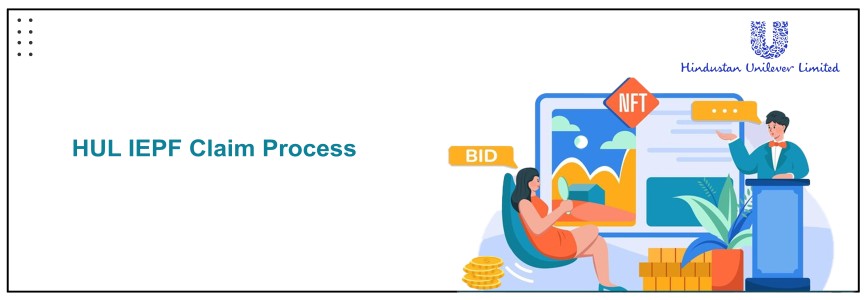
Step-by-Step Process to Claim Dividend from IEPF
Step 1: Check Your Unclaimed Dividend Status
First, visit the HUL website under the “Investor Relations” section or go to the IEPF website. Enter your folio number or DP ID/Client ID, and the website will show whether any of your dividends or shares have been marked as unclaimed and transferred to the IEPF.
Step 2: Send Physical Documents to HUL’s Registrar
Send the following to HUL’s Registrar and Share Transfer Agent (RTA):
-
Reach out to the company’s Registrar or Nodal Officer to confirm that you are eligible to claim the shares or dividends transferred to the IEPF.
-
Request an Entitlement Letter, which will specify the number of shares or dividend amount transferred to the IEPF and Confirmation that you are the rightful claimant
-
Send your request along with the following documents to einward.ris@kfintech.com along with Identity proof (such as PAN and Aadhaar), Shareholding details (Folio number or Demat account details), Any old dividend warrants or supporting evidence (if available)
Step 3: Prepare IEPF Form-5 on MCA Website
Go to the MCA (Ministry of Corporate Affairs) website. Log-in or register yourself under the MCA Services section. Select and fill Form IEPF-5 with the required details, including:
- Following document are required
-
Personal Information: PAN, Aadhaar, Address, Email ID, Contact Number
-
Company Details: Name of the company (e.g., Hindustan Unilever Limited)
-
Claim Details: Number of shares and/or unpaid dividends
-
Demat Account Information: DP ID and Client ID
- Once completed, submit the form online. After submission, download the filled IEPF Form-5 along with the acknowledgement receipt (SRN number) for future reference.
Step 4: Prepare Document Set for Submission to Company
Send a hard copy of the IEPF-5 Form and supporting documents to the company's Nodal Officer. List of Required Documents-
-
Signed printout of IEPF-5 and acknowledgement
-
Indemnity bond (on non-judicial stamp paper, as per IEPF rules)
-
Advance stamped receipt (with claimant’s and witness’s signature)
-
Entitlement Letter (from company)
-
Self-Attested copies of: PAN and Aadhaar, Cancelled Cheque Leaf and Client Master List (CML) from your DP.
-
Original share certificate (if physical shares)
Additional Documents (For Legal Heir Claims)-
-
Death certificate of original shareholder
-
Legal Heir/Succession Certificate or Registered Will
-
No Objection Certificates (NOCs) from other heirs (if required)
-
ID and address proof of all legal heirs.
Step 5: Submit Documents to Company Nodal Officer
Send the complete set to the Nodal Officer of the company by speed post or courier.
Details of HUL Nodal Officer-
Ms. Uma Rajagopalan
Hindustan Unilever Limited,
Unilever House,
B. D. Sawant Marg,
Chakala, Andheri (E),
Mumbai - 400 099.
Tel.: +91 22 5043 2790
Email: HUL.IEPF@unilever.com
Step 6: Verification by the Company
After receiving your documents, the company reviews them to confirm that your claim is genuine and complete. Once the verification is done, HUL prepares a Verification Report and sends it to the IEPF Authority. This process usually has to be completed within 30 days. Only after the company submits this report can the IEPF Authority start processing your refund.
Step 7: Approval by IEPF Authority
The IEPF Authority reviews the application and if everything is in order or correct, shares are transferred to claimant’s Demat Account and unpaid dividends (if any) are credited to the bank account.
Recovering shares from IEPF is a step-by-step process that requires proper documentation. With careful compliance and timely follow-up, rightful shareholders or their heirs can successfully reclaim their shares and dividends.
Final Word
Recovering unclaimed dividends or shares from the IEPF may seem complicated, but with the right steps and proper documentation, the process becomes much easier to follow. Hindustan Unilever Limited (HUL), being one of India’s most trusted companies, has a transparent system in place through its Registrar and Nodal Officer to help shareholders and their families reclaim what rightfully belongs to them. By checking unclaimed dividend status, obtaining the necessary confirmations, filing Form IEPF-5, and submitting the required documents, shareholders can smoothly complete the claim process.
HUL’s long-standing reputation, strong financial performance, and commitment to responsible governance ensure that investor interests are well protected. With timely action and careful attention to each step, shareholders or legal heirs can successfully recover their shares and dividend amounts from the IEPF Authority, restoring valuable investments and securing their financial rights.
FAQs
Q1. What is IEPF?
Ans. IEPF stands for Investor Education and Protection Fund, a government-managed fund that holds money and shares that people forget to claim.
These can include:
• Unclaimed dividends
• Matured deposits
• Shares not claimed for many years
This system protects investors and ensures their unclaimed assets stay safe until they are claimed back.
Q2. Why are my HUL shares or dividends transferred to the IEPF?
Ans. If you do not claim your dividends for seven consecutive years, the company is required by law to transfer: The unclaimed dividends, The shares related to those dividends
to the IEPF Authority.
This rule is meant to prevent misuse of inactive shareholding and protect investor interests.
Q3. How do I check if my HUL shares are in the IEPF?
Ans. You can check this through two simple methods:
On HUL’s website under the “Investor Relations – Unclaimed Shares” section
On the IEPF official website, where you can search using:
• Your folio number (for physical shares)
• DP ID/Client ID (for Demat shares)
This helps you confirm whether your shares or dividends have been transferred.
4. Is filing the IEPF-5 form mandatory?
Ans. Yes. The IEPF-5 form is compulsory for anyone who wants to reclaim:
• Shares
• Dividends
• Interest
• Refund of matured deposits from the IEPF Authority. Without filing IEPF-5, the recovery process cannot begin.
Q5. Can legal heirs claim shares from the IEPF?
Ans. Yes. If the original shareholder has passed away, their
• Legal heir
• Nominees
• Successors (can claim the shares by providing certain documents such as:)
• Death certificate
• Succession certificate or legal heir certificate
• No Objection Certificate (NOC) from other legal heirs (if required)
The process ensures shares are transferred to the rightful person.
Q6. How long does it take to get HUL shares back from the IEPF?
Ans. The timeline depends on verification:
• The company (HUL or its RTA) has 30 days to verify your documents.
• After that, the IEPF Authority may take a few weeks to a few months to process the claim.
The total duration usually ranges between 2–6 months, depending on completeness of documents.
Q7. Do I need to submit original documents?
Ans. Some documents may need to be submitted in original:
• Original physical share certificates (if applicable)• Indemnity bond (in some cases)
• Advance stamped receipt
Other documents like identity proof, address proof, and bank proof can be submitted as self-attested copies. Legal heirs may be asked to provide original legal heirship documents depending on the case.
Q8. What happens if my documents are incomplete?
Ans. If any document is missing, unclear, or incorrect:
• The claim may be rejected, or
• The company/IEPF may ask for resubmission, causing delay
Therefore, it is very important to ensure that: All documents are properly filled, Signatures match All necessary proofs are attached. This helps avoid delays and faster processing.
Q9. Will the recovered shares be sent back in physical form?
Ans. No. Even if your shares were originally in physical certificate form, the IEPF Authority returns them only in Demat form. So you must have an active Demat account, and the shares will be credited directly to it.


_crop10_thumb.jpg)




_crop10_thumb.jpg)
_crop10_thumb.jpg)


_crop10_thumb.jpg)


_crop10_thumb.jpg)


_crop10_thumb.jpg)

_crop10_thumb.jpg)


-suratgujarat-section-158_crop10_thumb.jpg)
-suratgujarat_crop10_thumb.jpg)
-(33)_crop10_thumb.jpg)


-ahmedabad_crop10_thumb.jpg)
-learn_crop10_thumb.jpg)

-learnn_crop10_thumb.jpg)


_crop10_thumb.jpg)






_Guidelines_learn_crop10_thumb.jpg)


_learn_crop10_thumb.jpg)
_crop10_thumb.jpeg)


_crop10_thumb.jpg)


_Second_Amendment_Rules,_2025_learn_crop10_thumb.jpg)


_learn_crop10_thumb.jpg)










_learn_crop10_thumb.jpeg)








_learn_crop10_thumb.jpg)
_rd_roc_learn_crop10_thumb.jpg)







_learn_crop10_thumb.jpg)





_learn_crop10_thumb.jpg)
_Learn_crop10_thumb.jpg)











_learn_crop10_thumb.jpg)
_learn_crop10_thumb.jpg)





_crop10_thumb.jpeg)






_crop10_thumb.jpg)






_crop10_thumb.jpg)