



IRDAI Compliance
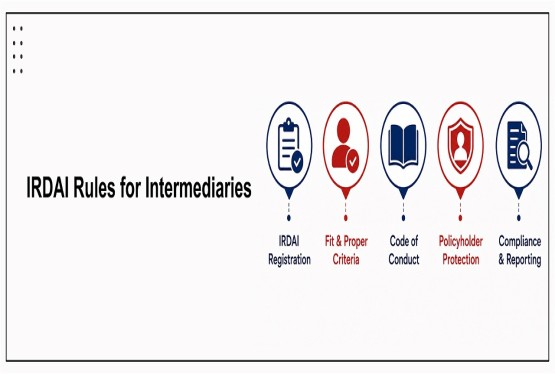
Insurance Broker Company compliance under the IRDAI (Insurance Regulatory and Development Authority of India) structure is one of the most detailed and strictly monitored compliance ecosystems in India’s financial services sector. Every insurance broker company, whether a direct broker, reinsurance broker, or composite broker is required to maintain continuous IRDAI regulatory compliance, operational discipline, and statutory reporting as per the IRDAI (Insurance Brokers) Regulations, 2018 and subsequent circulars, guidelines, and amendments issued from time to time.
The insurance broking industry is governed by a strict regime of corporate governance, capital requirements, all times net-worth maintenance, professional indemnity insurance, audit obligations, anti-money laundering safeguards, policyholder protection rules, and ongoing reporting through the IRDAI BAP (Broker Administration Portal), makes “insurance broker compliance” and “IRDAI broker regulations” among the most important topics for industry participants, policyholders, and financial regulators in India. As IRDAI continues to strengthen the insurance distribution ecosystem, insurance brokers in India are required to adopt strong internal controls, transparent customer communication, and strict adherence to the IRDAI code of conduct.
Professional Indemnity Insurance Compliance
A major component of insurance broker compliance is the requirement to maintain professional indemnity insurance at all times. Every insurance broker is required to take and renew indemnity coverage that protects clients and insurers from Errors, Omissions, Negligence, Fraud AND Breach of duty etc . The indemnity policy must cover wrongful acts of employees, losses arising from professional services, and claims discovered during the policy period and the indemnity insurance limit is linked to the broker’s revenue, usually:
-
Three times the remuneration of the preceding year, or
-
Rs.50 lakh, whichever is higher
Code of Conduct Compliance
The cornerstone of IRDAI insurance broker compliance is the Code of Conduct, which mandates Integrity, Fair dealing, Full disclosure, Product suitability, Transparency, Conflict-free advisory and Brokers must:
-
Act in the best interest of clients
-
Disclose remuneration
-
Avoid misleading statements
-
Maintain confidentiality
-
Provide adequate product comparison
IRDAI Broker Company must obtain a written client mandate (for corporate clients) and conduct suitability analysis before offering recommendations. The code of conduct also prohibits brokers from accepting gifts, incentives, or dual representation without disclosure. These obligations are closely monitored during IRDAI audits and inspections.
Record Keeping & Audit Requirements
A mandatory and major part of insurance broker company compliance is compliance with record-keeping, document retention, and operational audit requirements and Brokers must maintain records related to:
-
Proposals
-
Product comparison
-
Risk analysis
-
Client mandate letters
-
KYC documents
-
Claims assistance
-
Grievance records
-
Remuneration statements
-
Reinsurance treaties
-
Correspondence with insurers
All records must be preserved for at least seven years. Brokers must undergo annual audits covering:
-
Financial statements
-
Internal controls
-
Compliance with IRDAI regulations
-
Adherence to remuneration caps
-
Solicitation practices
-
Mandatory registers
Audit reports must be submitted to IRDAI within 30 days of the AGM in case of Private Limited Company.
IRDAI BAP Portal Filings
Insurance broker company must file numerous periodic submissions and annual returns on the IRDAI BAP portal, including:
-
Annual Return
-
Net Worth Certificate
-
Auditor Compliance Certificate
-
Details of remuneration from insurers
-
Corporate Governance Certificate
-
Business Statement
-
List of Qualified Persons
-
PO training details
-
Reinsurance placement details (where applicable)
-
Grievance Redressal Statement
-
Indemnity Insurance Compliance Declaration
Grievance Redressal Compliance
Insurance broker companies must follow strong grievance redressal systems, including:
-
Maintaining a complaint register
-
Acknowledging grievances within 3 days
-
Resolving grievances within 2 weeks
-
Reporting grievance statistics to IRDAI
Financial Discipline & Insurance Bank Account Requirements
Brokers must maintain strict financial segregation.
Reinsurance and composite brokers must maintain a separate Insurance Bank Account dedicated to policy-related transactions.
AML / CFT / KYC Compliance
Insurance brokers must comply with IRDAI and FIU-IND anti-money laundering rules. Key obligations include:
-
Client identification & KYC
-
Risk profiling
-
PEP screening
-
Transaction monitoring
-
Filing STR (Suspicious Transaction Reports)
-
Appointment of AML Compliance Officer
-
Reporting to FIU-IND
Cyber Security Compliance
Brokers must implement strong cyber-security measures due to sensitive customer data handling.
These include:
-
IT security controls
-
Encryption
-
Access management
-
Disaster recovery
-
Cyber insurance (optional)
-
Data logs and vulnerability testing
License Renewal Compliance
Every insurance broker must follow strict renewal procedures:
-
Submit renewal application 30 days before licence expiry
-
Updated Net Worth Certificate
-
Professional indemnity insurance proof
-
List of QPs & PO’s training status
-
Auditor’s compliance certificate
-
Self-declaration of compliance
Missing even one requirement can lead to rejection of renewal.
Prohibited Activities Under IRDAI Regulations
Brokers are prohibited from:
-
Multi-level marketing
-
Unauthorised bundling
-
Mis-selling
-
Charging unapproved fees
-
Sharing commission with unlicensed entities
-
Acting as insurer
FDI & Shareholding Compliance
Insurance brokers can receive 100% FDI but must Comply with FEMA and Report shareholding changes to IRDAI along with Maintain Fit & Proper standards for shareholders if any.
Remuneration & Commission Compliance
Brokers must comply with IRDAI remuneration regulations:
-
Adhering to commission caps
-
Disclosing remuneration
-
Avoiding prohibited incentives
IRDAI Inspection & Supervision
IRDAI may audit brokers anytime to examine accounting Records and books, Sales practices, Grievance mechanism, AML controls, Training & manpower quality and Remuneration correctness etc.
Internal Controls & SOP Requirements
Brokers must implement the Compliance manuals, SOPs, HR training, Risk management structure , Fit & Proper declarations including Continuous governance monitoring
Therefore, the insurance broker compliance ecosystem is extensive, interconnected, and evolving which covers company law, insurance law, financial compliance, consumer protection, AML norms, cyber security, fit and proper criteria, training obligations, governance, reporting, and renewal. With India’s insurance penetration expanding and IRDAI pushing for customer-centric regulation, insurance brokers must maintain full compliance discipline to operate legally and sustain long-term credibility.


_crop10_thumb.jpg)





_crop10_thumb.jpg)
_crop10_thumb.jpg)


_crop10_thumb.jpg)


_crop10_thumb.jpg)


_crop10_thumb.jpg)

_crop10_thumb.jpg)


-suratgujarat-section-158_crop10_thumb.jpg)
-suratgujarat_crop10_thumb.jpg)
-(33)_crop10_thumb.jpg)


-ahmedabad_crop10_thumb.jpg)
-learn_crop10_thumb.jpg)

-learnn_crop10_thumb.jpg)


_crop10_thumb.jpg)







_Guidelines_learn_crop10_thumb.jpg)


_learn_crop10_thumb.jpg)
_crop10_thumb.jpeg)


_crop10_thumb.jpg)


_Second_Amendment_Rules,_2025_learn_crop10_thumb.jpg)


_learn_crop10_thumb.jpg)
















_learn_crop10_thumb.jpeg)

















_learn_crop10_thumb.jpg)



_rd_roc_learn_crop10_thumb.jpg)















_learn_crop10_thumb.jpg)












_learn_crop10_thumb.jpg)
_Learn_crop10_thumb.jpg)




































_learn_crop10_thumb.jpg)




_learn_crop10_thumb.jpg)












_crop10_thumb.jpeg)





















_crop10_thumb.jpg)


















_crop10_thumb.jpg)