



Losing track of your shares, whether due to misplaced physical certificates, inactivity in your Demat account, or other administrative gaps, can mean losing access to potentially significant wealth. In an era where equity investments form a core component of long-term financial planning, it's vital to ensure that your shares are not only in your possession but also properly documented, updated, and accessible.
If you or someone in your family has lost track of shares or never claimed dividends or bonuses due over the years, this article will guide you through every step required to retrieve those shares. From identifying the cause of the issue to dealing with the IEPF Authority and Registrar and Transfer Agents (RTAs), this guide outlines the procedures for reclaiming your rightful ownership.
Why Recovering Lost Shares Matters
Recovering shares is not only about retrieving a financial asset but about safeguarding legal ownership, unlocking hidden wealth, and protecting your family’s financial legacy. Neglecting to act can result in the eventual transfer of your investments to the Investor Education and Protection Fund (IEPF), which though reversible, involves lengthy paperwork and delays.
Here’s why recovering lost shares is essential:
-
They Hold Monetary Value: Even a small number of shares purchased decades ago can hold considerable value due to stock splits, bonuses, and capital appreciation.
-
You Miss Out on Dividends: Lost shares mean missed dividend income, bonus issues, and rights entitlements.
-
They Represent Ownership: Shares confer voting rights and a legal stake in the issuing company.
-
Asset Consolidation: Lost shares can affect wealth planning, inheritance, and tax disclosures.
-
Regulatory Risk: Undisclosed or forgotten shares can pose risks during income tax assessments or estate transfers.
-
Fraud Protection: Inactive shares are vulnerable to misuse or fraudulent claim if left unattended.
-
Avoid IEPF Transfer: After seven years of inactivity, shares and unclaimed dividends are transferred to IEPF, creating additional recovery hurdles.
Process for Recovering Lost or Unclaimed Shares
The following is the process to Recover Lost or Unclaimed Shares:
Step 1: Identify the Reason for Loss
The process to recover shares depends largely on how or why the shares became inaccessible. Common reasons include:
-
Physical Certificates Lost or Damaged: Paper certificates may have been misplaced, destroyed, or lost due to relocation, theft, or natural damage.
-
Transferred to IEPF: After seven years of unclaimed dividends, both shares and dividends are transferred to the IEPF under Section 124 and 125 of the Companies Act, 2013.
-
Demat Account Issues: Inactive or closed Demat accounts, mismatches in KYC details, or rejected dematerialisation can cause credit failure.
-
Ownership Disputes or Inheritance Issues: Succession, death of a shareholder, or untransferred legal ownership due to missing documentation.
Step 2: Collect All Relevant Supporting Documents
Before initiating contact with any authority, compile the necessary documentation to prove your claim:
-
PAN Card and Aadhaar (Identity and address proof)
-
Original or photocopy of physical share certificates (if available)
-
Contract notes or transaction slips (for purchased shares)
-
Demat account statements from your Depository Participant
-
Dividend records (warrants, passbook entries, or bank statements)
-
Death certificate of original holder (if claiming as heir)
-
Legal heir or succession certificate (in case of inheritance)
-
Canceled cheque for bank verification
-
Passport-size photographs
-
Client Master List (for Demat shares)
Keep both digital and physical copies of all these documents.
Step 3: Contact the Registrar and Transfer Agent (RTA)
Each listed company delegates record maintenance and share management to RTAs such as:
-
KFin Technologies Limited
-
Link Intime India Pvt. Ltd.
-
Bigshare Services Pvt. Ltd.
-
Skyline Financial Services Pvt. Ltd.
You can visit the company’s website or the stock exchange listing page to find its designated RTA.
When contacting the RTA:
-
Mention the folio number or Demat account number
-
Provide your full name, PAN, and registered address
-
Enquire about the current status of the shares (active, transferred to IEPF, etc.)
The RTA can guide you whether the shares are still with the company, held in physical form, transferred to IEPF, or lying dormant.
Step 4: Recovering Physical Shares
If you determine that your shares are in physical form and:
-
Still With You But Not Dematerialised:
-
Open a Demat account with any SEBI-registered Depository Participant (DP).
-
Fill out a Dematerialisation Request Form (DRF).
-
Submit the original share certificates and DRF to your DP.
-
DP sends these to the RTA for conversion into electronic form.
-
Certificates Lost or Damaged:
-
Lodge a complaint (FIR) with the local police for lost certificates.
-
Obtain a copy of the FIR and a non-traceable certificate (if required).
-
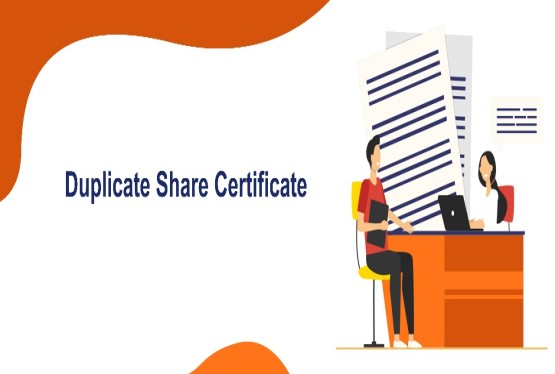
Approach the RTA for issuing duplicate share certificates.
-
Submit:
-
FIR copy
-
Indemnity Bond and Affidavit
-
Identity proof (PAN, Aadhaar)
-
Signature verification letter from your banker
-
The RTA will issue duplicate certificates upon validation.
-
You can then proceed to dematerialise these shares.
Step 5: Recover Shares Transferred to IEPF
If the shares have been moved to IEPF due to inactivity, the following process applies:
-
Search for Shares on the IEPF Website
-
Visit www.iepf.gov.in
-
Use the “Search for unclaimed shares” option by entering the investor name, company name, or folio details.
-
File Form IEPF-5
-
Download and fill the online form (IEPF-5).
-
Provide details such as your name, company, folio/Demat number, dividend years, etc.
-
Submit it online and note the generated Service Request Number (SRN).
-
Prepare Physical Document Set
-
Print the filed IEPF-5 and acknowledgement receipt.
-
Prepare supporting documents:
-
PAN, Aadhaar
-
CML
-
Cancelled cheque
-
Indemnity bond (on stamp paper)
-
Affidavit (where applicable)
-
Share certificates or proof of entitlement
-
Death/succession certificate for legal heirs
-
Send Documents to Company’s Nodal Officer
-
Mail the complete set to the Nodal Officer of the concerned company.
-
The company must verify and forward your claim to the IEPF Authority within 15 days.
-
IEPF Authority Review and Approval
-
The IEPF Authority processes your claim, may seek clarifications, and, once satisfied, releases:
-
Shares to your Demat account
-
Dividends to your registered bank account
Step 6: Resolving Demat Account Issues
If your shares were in electronic form but became inaccessible:
-
Contact your Depository Participant (e.g., Zerodha, HDFC, ICICI, Upstox).
-
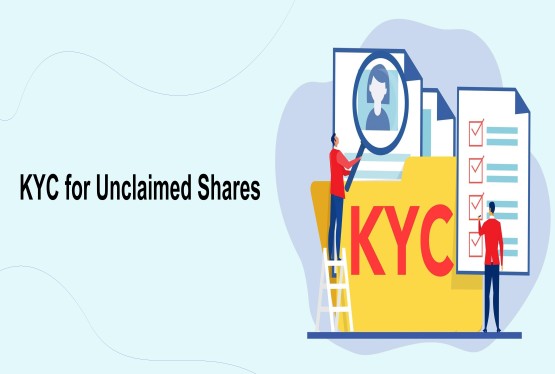
Ensure your KYC (PAN, Aadhaar, email, mobile) is updated.
-
Reactivate inactive or dormant accounts by submitting new KYC.
-
Request re-credit if shares were held but not reflected due to account issues.
-
If multiple Demat accounts exist, consolidate them.
For CDSL/NSDL discrepancies, raise a complaint via SEBI SCORES portal if no satisfactory response is received.
Step 7: Handle Ownership or Legal Disputes
If shares are disputed or the original holder is deceased:
-
Legal heirs should provide:
-
Succession Certificate from Court or
-
Probate of Will (if the deceased left a will)
-
NOC from other heirs (if applicable)
-
If shares are jointly held, the survivor must submit the co-holder's death certificate and self-declaration.
In complex inheritance or disputed claims, consult a securities lawyer or financial advisor to structure the recovery.
Step 8: Consolidate and Convert to Demat
Post recovery:
-
Consolidate holdings from different folios or certificates by writing to the RTA.
-
Mandatorily convert physical shares to Demat
-
Link your Aadhaar and PAN with Demat and bank accounts.
-
Update nominee details to avoid future complications.
Step 9: Regular Monitoring and Prevention
To prevent recurrence:
-
Monitor shareholding status via Demat account portals.
-
Keep address, mobile number, and email updated with your DP.
-
Opt for ECS for dividends instead of cheques.
-
Keep records of investments secure and periodically reviewed.
-
Update nominee and family about your investments for easy future access.
Therefore the process to recover shares, be it physical, demat, or transferred to IEPF, requires patience, documentation, and coordination with multiple stakeholders. However, the benefits far outweigh the time and effort involved. Whether it’s to claim your own long-forgotten investments or those of a family member, act now to ensure your wealth is protected, your rights are restored, and your investments are brought back into your control.
If you're unsure where to begin or need help with documentation, reach out to professionals or legal advisors experienced in securities law. The sooner you begin the recovery process, the easier it will be to reclaim what’s yours.
FAQ’S
Q1. What are unclaimed or lost shares?
Ans. Unclaimed or lost shares are investments that belong to someone but have not been accessed for many years due to reasons like change of address, death of the holder, or lost documents.
Q2. Do RTAs help in finding lost share details?
Ans. Yes, Registrars like KFin, Link Intime, Skyline, MAS, Cameo help verify shareholder details and guide the recovery process.
Q3. Is the recovery process difficult?
Ans. It can be a bit technical, but with the correct documents and guidance, it becomes smooth.
Q4. What if the company has changed its name or merged?
Ans. No problem. Shares can still be recovered. The Registrar or IEPF verifies the old company records and transfers the shares.
Q5. What if the original share certificate is lost?
Ans. You can still recover the shares. The company or RTA will issue a duplicate certificate after verification and completing formalities.
Q6. Can I recover shares of my deceased parents?
Ans. Yes, you can recover them by providing legal documents like death certificate, legal heir proof, and completing the company/IEPF process.
Q7. How do I know if my parents had any shares?
Ans. You can check old files, bank statements, Demat statements, dividends received, SMS alerts, or mail from companies. You can also search through IEPF records or contact the company’s registrar (RTA).
Q8. Why do shares become unclaimed?
Ans. Shares become unclaimed when the shareholder does not update contact details, loses certificates, forgets the investment, or passes away without informing family.
Q9. Do I need to visit the company office physically?
Ans. No. Most work is done by email or courier with the RTA. Only in rare cases physical presence is needed.
Q10. What if dividends were credited to an old or closed bank account?
Ans. The amount will still be available in IEPF. Once shares are recovered, you can claim dividends too.
Q11. Can someone help me with the entire recovery process?
Ans. Yes, professional consultants and share recovery experts can handle end-to-end work like document preparation, RTA communication, IEPF filing, and Demat support.


_crop10_thumb.jpg)




_crop10_thumb.jpg)
_crop10_thumb.jpg)


_crop10_thumb.jpg)


_crop10_thumb.jpg)


_crop10_thumb.jpg)

_crop10_thumb.jpg)


-suratgujarat-section-158_crop10_thumb.jpg)
-suratgujarat_crop10_thumb.jpg)
-(33)_crop10_thumb.jpg)


-ahmedabad_crop10_thumb.jpg)
-learn_crop10_thumb.jpg)

-learnn_crop10_thumb.jpg)


_crop10_thumb.jpg)






_Guidelines_learn_crop10_thumb.jpg)


_learn_crop10_thumb.jpg)
_crop10_thumb.jpeg)


_crop10_thumb.jpg)


_Second_Amendment_Rules,_2025_learn_crop10_thumb.jpg)


_learn_crop10_thumb.jpg)











_learn_crop10_thumb.jpeg)










_learn_crop10_thumb.jpg)

_rd_roc_learn_crop10_thumb.jpg)





_learn_crop10_thumb.jpg)





_learn_crop10_thumb.jpg)
_Learn_crop10_thumb.jpg)














_learn_crop10_thumb.jpg)

_learn_crop10_thumb.jpg)




_crop10_thumb.jpeg)







_crop10_thumb.jpg)






_crop10_thumb.jpg)