


When a shareholder passes away, their shares, dividends, and other financial benefits do not disappear. However, if no one claims them for a long time, these assets are transferred to a government authority called the IEPF (Investor Education and Protection Fund).
Many families do not even know that their loved one owns shares, and years later they suddenly discover that everything has gone to IEPF. The good news is that these shares can be recovered by the legal heirs through a process called Transmission.
This article explains the entire transmission process for recovery of shares from IEPF
What is IEPF?
IEPF stands for Investor Education and Protection Fund. It is a government fund managed by the Ministry of Corporate Affairs (MCA).
When shares, dividends, or refunds remain unclaimed for 7 consecutive years, the company must transfer them to IEPF.
These include:
-
Unpaid dividends
-
Bonus shares
-
Rights shares
-
Original equity shares
-
Matured deposits and debentures
Even after transfer to IEPF, the legal heirs still remain the rightful owners.
What is Transmission of Shares?
Transmission means transfer of shares due to death of the shareholder.
When a shareholder dies:
-
His shares pass to his legal heirs or nominee
-
If shares are in IEPF, transmission must be completed before recovery
So, transmission is the first legal step, and IEPF recovery is the second step.
Why is Transmission Required in IEPF Recovery?
IEPF releases shares only to the rightful owner.Since the original shareholder is no longer alive, the government must be sure who is legally entitled.
Transmission ensures:
-
The company updates its records
-
Legal heir’s name is entered
-
Ownership is legally recognized
Without transmission:
-
IEPF will reject the claim
-
Shares cannot be released
Who Can Apply for Transmission?
The following persons can apply:
-
Nominee (if nominee was registered)
-
Legal heir (son, daughter, spouse, etc.)
-
Executor of will
-
Court-appointed successor
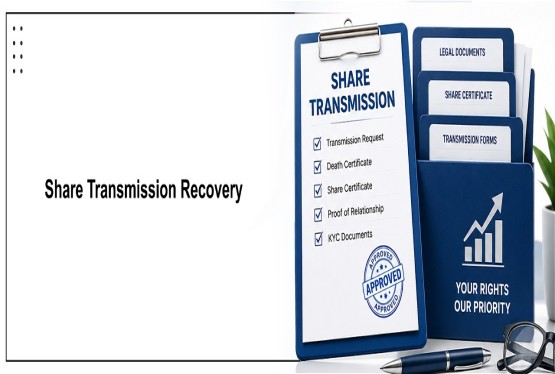
Important Documents Required
For transmission and IEPF recovery, you will need:
1. Death Certificate
Issued by municipal authority.
2. Legal Heir Proof
Any one of the following:
-
Succession Certificate
-
Legal Heir Certificate
-
Probate of Will
-
Letter of Administration
3. KYC of Claimant
-
PAN
-
Aadhaar
-
Address proof
-
Bank details
4. Share Details
-
Company name
-
Folio number or DP ID
-
Share certificate copy (if available)
Process in Recovery of Shares from IEPF
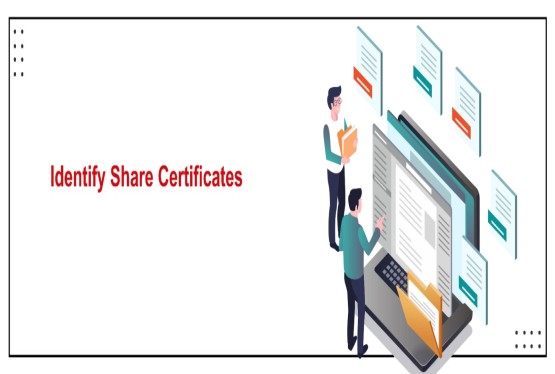
Step 1: Identify Shares Lying with IEPF
-
Which company – Identify the exact company in which the deceased shareholder had invested so the claim is filed with the correct company and RTA.
-
How many shares – Find the number of shares held so the rightful quantity can be recovered from the IEPF without any mismatch.
-
Dividend amount – Find the unpaid dividend amount transferred to IEPF so the full money due to the legal heir is claimed and credited.
This is done from:
-
IEPF website – Used to check whether the shareholder’s unclaimed shares and dividends have been transferred to the IEPF by searching their name.
-
Company’s investor records – The company’s internal records show the original shareholding details such as folio number, shares held, and dividend history.
-
RTA (Registrar & Transfer Agent) – The RTA maintains official shareholder data for the company and helps confirm shareholding, transmission status, and IEPF transfer details.
Step 2: File IEPF Form IEPF-5
This form is filed online on the MCA portal.
It includes:
-
Shareholder’s name
-
Legal heir details
-
Company name
-
Amount and shares claimed
After submission:
-
Acknowledgement is generated
Step 3: Send Physical Documents to Company
After filing IEPF-5:
You must send documents to the company or its RTA:
Documents include:
-
IEPF-5 acknowledgement
-
Death certificate
-
Legal heir proof
-
Indemnity bond
-
Affidavit
-
KYC documents
Step 4: Company Verifies Transmission
The company checks:
-
Whether the claimant is the correct legal heir
-
Whether documents are genuine
-
Whether shares were transferred to IEPF
Once satisfied:
-
Company sends verification report to IEPF Authority
Step 5: IEPF Authority Approval
The IEPF authority reviews:
-
Company verification – The IEPF Authority checks the confirmation sent by the company that the claimant is the rightful person and the shares are actually transferred to IEPF.
-
Documents submitted – It verifies whether all required papers like death certificate, KYC, indemnity bond, and claim forms are complete and correct.
-
Legal proof – It confirms that the claimant has valid legal authority, such as a succession certificate or probate, to receive the deceased shareholder’s shares.
If all is correct:
-
An order is passed for release of shares – If everything is found correct, the IEPF Authority issues an official order directing that the shares and dividend be transferred to the legal heir.
Step 6: Shares Credited to Legal Heir
Once approved:
-
Shares are transferred to claimant’s Demat Account
-
Dividend amount is credited to bank account
This completes the recovery.
What If There Are Multiple Legal Heirs?
All heirs must:
-
Give consent – All legal heirs must agree in writing to allow one person to receive the shares on behalf of everyone.
-
Or provide NOC – If not jointly applying, the other heirs must give a No Objection Certificate confirming they have no objection to the claim.
-
Or court order – If there is any dispute or no mutual consent, a court-issued succession order is required to decide who will receive the shares.
Only one person can receive shares on behalf of all.
What If There Is a Will?
If a will exists:
-
Probate is required – A probate issued by the court is needed to legally confirm that the will is genuine and valid.
-
Shares go as per will – Once probate is granted, the shares are transferred to the beneficiaries exactly as stated in the will.
Time Required
On average:
-
3 to 6 months – The complete IEPF share recovery and transmission process usually takes around three to six months on average.
-
Company response – The faster the company or its RTA verifies and forwards the claim, the quicker the recovery is completed.
-
Document completeness – Correct and complete documents avoid objections and delays in the IEPF approval process.
-
IEPF processing speed – The time taken by the IEPF Authority to review and approve the claim also affects the overall timeline.
Common Reasons for Rejection
-
Wrong legal heir proof
-
Name mismatch
-
Missing documents
-
Bank KYC mismatch
-
Not completing transmission documents
Why Professional Help Is Important
IEPF transmission is legal and technical. One small mistake can delay recovery by months.
Professionals help in:
-
Tracing shares – Professionals help locate old or forgotten shareholdings by checking company, RTA, and IEPF records.
-
Drafting affidavits – They prepare legally correct affidavits, indemnity bonds, and declarations required for transmission and IEPF claims.
-
Dealing with RTAs – Experts communicate with Registrar & Transfer Agents to get shareholding verified and transmission approved.
-
Following up with IEPF – They regularly track the claim status and respond to any queries raised by the IEPF Authority to ensure faster approval.
Conclusion
Losing a loved one is already very painful, and it becomes even more stressful when you find out that their hard-earned money and shares have gone to the IEPF. But there is no need to panic. The government does not take this money, it only keeps it safe until the real owner or legal heir comes forward. The transmission process is the legal way through which the shares of the deceased person are transferred to their family. Once this is done, getting the shares and dividends back from IEPF becomes much easier. With the right guidance and proper paperwork, families can recover shares, unpaid dividends, bonus shares, and other benefits that belong to them. Compliance Calendar LLP helps families in this entire journey, making sure their rightful money and investments come back to them without unnecessary stress or confusion.
FAQ’s
Q1. What is transmission of shares?
Ans. Transmission of shares refers to the transfer of ownership of shares by operation of law. It usually occurs due to the death of a shareholder, insolvency, or succession. Unlike transfer, it does not involve a sale or consideration.
Q2. How is transmission different from transfer of shares?
Ans. Transmission occurs by law (death, insolvency, succession).
-
Transfer is a voluntary act by the shareholder through execution of a transfer deed for consideration.
-
No stamp duty is payable on transmission, while it is generally applicable on transfer.
Q3. When does transmission of shares take place?
Ans. Transmission commonly takes place in the following situations:
-
Death of a shareholder
-
Insolvency of a shareholder
-
Inheritance as per will or succession law
-
Court order or operation of law
Q4. Who can apply for transmission of shares?
Ans. The legal heir, nominee, executor, or administrator of the deceased shareholder can apply for transmission of shares.
Q5. What documents are required for transmission of shares on death of a shareholder?
Ans. Generally, the following documents are required:
-
Transmission request letter
-
Death certificate (attested copy)
-
Succession certificate / probate / letter of administration (if applicable)
-
PAN, address proof, and KYC documents of claimant
-
Affidavit and indemnity bond (as required by the company)
-
Original share certificates (in case of physical shares)
Q6. Is a succession certificate mandatory for transmission?
Ans. Not always. If the value of shares is small or there is a nominee, companies may accept an affidavit and indemnity bond instead. However, for high-value holdings, a succession certificate, probate, or letter of administration may be mandatory.
Q7. What is the role of a nominee in transmission of shares?
Ans. A nominee is a trustee who is entitled to receive the shares after the shareholder’s death. The shares are transmitted in the nominee’s name, subject to applicable laws and company policies.
Q8. Is stamp duty payable on transmission of shares?
Ans. No, stamp duty is not payable on transmission of shares as it is not a voluntary transfer.
Q9. How long does the transmission process take?
Ans. The transmission timeline varies depending on:
-
Completeness of documents
-
Value of shares
-
Company or RTA processing time Typically, it may take 30–90 days after submission of complete documents.
Q10. Can shares be transmitted jointly to multiple legal heirs?
Ans. Yes, shares can be transmitted jointly to multiple legal heirs if supported by proper legal documents and consent from all heirs.
Q11. What happens to dividends during the transmission process?
Ans. Any unpaid dividend declared before the shareholder’s death can be claimed by the legal heir or nominee after completion of transmission formalities.
Q12. What is the process for transmission of demat shares?
Ans. For demat shares:
-
Submit transmission request to the Depository Participant (DP)
-
Provide death certificate and KYC documents
-
DP coordinates with the depository (NSDL/CDSL)
Q13. What is the process for transmission of physical shares?
Ans. For physical shares:
-
Submit documents directly to the company or its Registrar & Transfer Agent (RTA)
-
Original share certificates are required
-
Company/RTA processes and issues shares in the claimant’s name
Q14. Can transmitted shares be sold immediately?
Ans. Yes, after transmission and completion of all formalities, the legal heir or nominee can sell or transfer the shares.
Q15. What laws govern transmission of shares in India?
Ans. Transmission of shares is governed by:
-
Companies Act, 2013
-
Articles of Association of the company
-
SEBI regulations (for listed companies)


_crop10_thumb.jpg)





_crop10_thumb.jpg)
_crop10_thumb.jpg)


_crop10_thumb.jpg)


_crop10_thumb.jpg)


_crop10_thumb.jpg)

_crop10_thumb.jpg)


-suratgujarat-section-158_crop10_thumb.jpg)
-suratgujarat_crop10_thumb.jpg)
-(33)_crop10_thumb.jpg)


-ahmedabad_crop10_thumb.jpg)
-learn_crop10_thumb.jpg)

-learnn_crop10_thumb.jpg)


_crop10_thumb.jpg)








_Guidelines_learn_crop10_thumb.jpg)


_learn_crop10_thumb.jpg)
_crop10_thumb.jpeg)


_crop10_thumb.jpg)


_Second_Amendment_Rules,_2025_learn_crop10_thumb.jpg)


_learn_crop10_thumb.jpg)


















_learn_crop10_thumb.jpeg)


















_learn_crop10_thumb.jpg)


_rd_roc_learn_crop10_thumb.jpg)











_learn_crop10_thumb.jpg)










_learn_crop10_thumb.jpg)
_Learn_crop10_thumb.jpg)



























_learn_crop10_thumb.jpg)



_learn_crop10_thumb.jpg)











_crop10_thumb.jpeg)













_crop10_thumb.jpg)














_crop10_thumb.jpg)