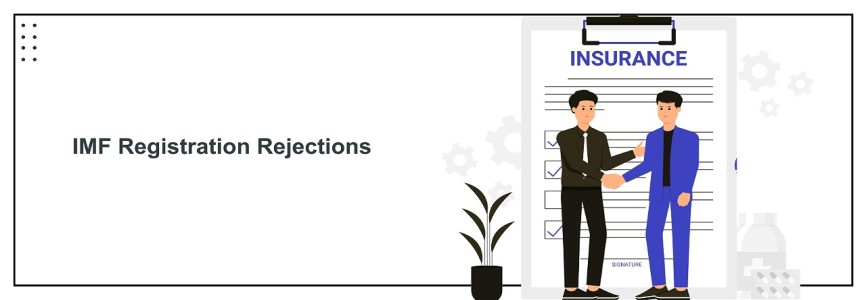



Insurance Marketing Firm (IMF) registration is a regulatory licence granted by the Insurance Regulatory and Development Authority of India (IRDAI). It is not a routine business approval. IRDAI treats IMFs as entities that play a direct role in shaping consumer decisions, handling sensitive personal and financial information, and acting as an interface between insurers and policyholders. Because of this sensitive role, the regulator follows a preventive and risk-mitigation approach right at the registration stage.
IRDAI’s objective goes far beyond checking whether minimum eligibility conditions are met. The authority evaluates whether the applicant demonstrates genuine regulatory seriousness, long-term operational capability, a strong governance culture, and the ability to protect policyholder interests. Most IMF rejections arise when applications fail to demonstrate these qualities in substance, even though they may appear technically compliant on paper.
Improper Entity Structure and Weak Constitutional Framework
IRDAI allows IMF registration only for specific legal forms such as Private Limited Companies, Limited Liability Partnerships (LLPs), and Cooperative Societies. These structures provide defined governance mechanisms, statutory audit requirements, disclosure obligations, and accountability of promoters and directors. Applications are rejected when promoters choose ineligible structures such as proprietorships or informal partnerships, as these lack adequate regulatory safeguards and transparency.
Even when the entity structure itself is eligible, rejection often occurs if the Memorandum of Association (MOA) or LLP Agreement does not clearly establish insurance marketing as the core business activity. IRDAI closely examines whether insurance distribution is central to the entity’s existence or merely an incidental or secondary activity. Generic object clauses such as “marketing services” or “business consultancy” indicate lack of regulatory clarity and raise doubts about the applicant’s preparedness and seriousness. To avoid this, the entity must be incorporated with a clear insurance marketing intent, and constitutional documents must explicitly reflect alignment with IRDAI regulations.
Inadequate Capitalisation and Financial Substance
IRDAI expects IMFs to be financially stable because weak financial capacity increases the risk of mis-selling, customer grievances, and operational failure. Applications are rejected when capital appears symbolic rather than substantive. Common issues include temporary infusion of funds only for filing purposes, fluctuating net worth, or reliance on borrowed capital instead of promoter contribution.
IRDAI places significant reliance on net worth certificates as indicators of financial health. Certificates that are outdated, not issued by a practising Chartered Accountant, or inconsistent with financial statements seriously undermine credibility. To avoid rejection, applicants must ensure genuine capital infusion maintained on an ongoing basis and submit a recent, properly certified net worth certificate supported by clean and consistent financial records.
Principal Officer Not Meeting Regulatory Expectations
The Principal Officer (PO) is considered the compliance nerve centre of an IMF. IRDAI holds the PO responsible for regulatory adherence, supervision of sales activities, grievance redressal, and ensuring ethical conduct of Insurance Sales Persons (ISPs). Rejections occur when IRDAI perceives the PO as under-qualified, under-trained, or distracted by other professional engagements.
Even minor non-compliance in PO eligibility is treated as a serious regulatory risk. IRDAI does not accept explanations such as training being completed later or examinations being cleared after approval. To avoid rejection, the Principal Officer must meet educational criteria, complete mandatory training in full, clear the IRDAI examination before filing, and be exclusively associated with the IMF. This assures IRDAI of clear compliance accountability.
Absence of Physical Infrastructure and Operational Depth
IRDAI rejects entities that appear to be shell operations. A functional office is essential because IMFs must handle customer data, policy documentation, complaints, and service requests. Applications fail where the office exists only for address proof and lacks real operational readiness.
Residential premises without commercial permission, shared spaces without exclusive control, or absence of basic IT systems suggest poor preparedness. To avoid rejection, applicants should set up a dedicated office supported by valid lease or ownership documents, basic IT infrastructure, secure data storage systems, and visible operational readiness before applying.
Weak Manpower Planning and ISP Readiness
Insurance Sales Persons (ISPs) represent the IMF at the customer interface. IRDAI believes that poorly trained ISPs increase the risk of mis-selling and customer dissatisfaction. Applications are rejected when ISPs are proposed hypothetically or when their training and certification are incomplete.
IRDAI does not approve IMF registrations based on future hiring plans. To avoid rejection, applicants must appoint trained and certified ISPs before filing the application and maintain proper records of their training, certification, and engagement.
Documentation Deficiencies and Compliance Culture Gaps
IRDAI treats documentation quality as a mirror of an entity’s compliance culture. Applications are rejected for minor inconsistencies across documents, missing declarations or signatures, incorrect dates or addresses, or improper notarisation. Such errors indicate weak internal controls and lack of attention to regulatory discipline.
To avoid rejection, applicants must adopt a strict compliance mindset, cross-check every document carefully, ensure internal consistency, and treat all filings as legal records rather than routine paperwork.
Failure to Satisfy “Fit and Proper” Norms
The “fit and proper” test is a core regulatory safeguard. IRDAI examines the integrity, financial soundness, and reputation of promoters, directors, and key personnel. Rejections occur when applicants hide past legal, regulatory, or financial issues or provide incomplete disclosures.
IRDAI views non-disclosure itself as a serious integrity lapse, often more severe than the underlying issue. To avoid rejection, applicants must disclose all material facts honestly and transparently. Full disclosure builds regulatory confidence even where past issues exist.
Poor Engagement with IRDAI During Clarification and Inspection Stage
After an IMF application is submitted, IRDAI often seeks clarifications or conducts inspections to assess whether the applicant is genuinely prepared to operate as an insurance intermediary. This stage is not a routine formality but a critical evaluation of the applicant’s governance quality and compliance mindset. IRDAI closely observes how promptly and seriously an applicant responds to its communications. Delayed replies, evasive answers, or incomplete explanations indicate weak internal controls, lack of accountability, and poor regulatory discipline.
Inspection observations are treated by IRDAI as corrective opportunities, not minor procedural steps. When applicants ignore observations, provide partial compliance, or fail to submit supporting evidence, the regulator views it as an inability or unwillingness to comply with regulatory standards. Such conduct significantly increases the risk of rejection. To avoid this, applicants must respond promptly, clearly, and comprehensively to every clarification or inspection remark, submitting documentary proof and detailing corrective actions wherever required.
Inadequate of the IMF Regulatory Model
A major reason for IMF registration rejection is misunderstanding the regulatory framework governing Insurance Marketing Firms. Many applicants mistakenly treat IMF registration as similar to insurance agency or insurance broking, which leads to non-compliant business plans, incorrect revenue structures, and improper insurer relationships. IRDAI, however, treats IMFs as a distinct category with clearly defined permissions, restrictions, and compliance obligations.
When an application reflects confusion about the scope of IMF activities, it signals regulatory immaturity. IRDAI expects applicants to clearly understand what products can be marketed, how many insurers can be tied up, how remuneration is regulated, and what activities are prohibited. Applicants can avoid rejection by thoroughly studying IMF regulations and designing their business model strictly within the permitted regulatory boundaries, ensuring that every operational aspect aligns with IRDAI norms.
Absence of a Professional Compliance Strategy
IMF registration involves multiple layers of compliance, including legal structuring, financial validation, regulatory disclosures, and operational preparedness. Applications frequently fail when promoters rely on assumptions, informal advice, or incomplete understanding of IRDAI requirements. Small errors at early stages often compound into major deficiencies during scrutiny, ultimately leading to rejection.
A professional compliance strategy ensures that the entity is structured correctly, documents are accurate and consistent, and regulatory communication is handled effectively. Professional guidance also helps applicants anticipate regulatory expectations and respond proactively to IRDAI queries. Adopting a structured compliance approach significantly reduces rejection risk and improves approval timelines.
Final Word
IMF registration rejection is usually not a random decision. It shows that Insurance Regulatory and Development Authority of India (IRDAI) believes the applicant is not yet ready to operate responsibly in the insurance system. IRDAI’s main focus is to protect policyholders, ensure ethical selling, and maintain stability in the insurance market. If an applicant appears unprepared, careless with compliance, or unclear about regulatory duties, the authority prefers to stop the entry at the registration stage itself rather than allow future risk to consumers.
Applicants who plan properly, follow rules seriously, maintain transparency, and seek professional compliance support send a strong signal of regulatory maturity. Such preparation shows that the business understands its long-term responsibilities, not just short-term approval. In the insurance sector, compliance is not an obstacle to growth. Instead, it builds credibility, trust, and sustainability, which are essential for surviving and growing in a highly regulated environment.
Frequently Asked Questions (FAQs)
Q1. Why does IRDAI reject IMF registration applications?
Ans. Insurance Regulatory and Development Authority of India (IRDAI) rejects IMF applications when it finds gaps in governance, compliance readiness, financial strength, or operationa l capability. The regulator’s focus is on protecting policyholders and preventing future risks, not merely checking whether minimum eligibility conditions are met on paper.
Q2. Is IMF registration rejection arbitrary?
Ans. No, IMF registration rejection is never arbitrary. IRDAI follows a structured evaluation process that includes document review, background checks, and regulatory assessment. Rejection reflects the regulator’s view that the applicant is not yet ready to operate responsibly within the insurance ecosystem.
Q3. Are documentation errors a common reason for rejection?
Ans. Yes, documentation errors are one of the most common reasons for rejection. Even small inconsistencies, missing declarations, or incorrect details indicate weak internal controls. IRDAI treats documentation quality as a reflection of the applicant’s compliance culture and governance discipline.
Q4. Does IRDAI assess business intent beyond paperwork?
Ans. Yes. IRDAI looks beyond formal documents to assess the applicant’s seriousness, ethical intent, and long-term commitment to insurance marketing. Generic objects, unclear business plans, or superficial compliance suggest lack of preparedness and often lead to rejection.
Q5. Can weak responses during clarification or inspection cause rejection?
Ans. Yes. IRDAI closely monitors how applicants respond to queries and inspection observations. Delayed, incomplete, or evasive replies signal governance weakness. Inspection stages are meant for corrective action, and failure to address concerns properly can directly result in rejection.
Q6. Is misunderstanding the IMF regulatory model a risk factor?
Ans. Absolutely. Treating IMF registration like insurance agency or broking shows regulatory misunderstanding. IRDAI expects IMFs to operate within clearly defined limits. Non-compliant revenue models or insurer relationships indicate structural risk and frequently lead to rejection.
Q7. Can lack of professional compliance support affect approval?
Ans. Yes. IMF registration involves legal, financial, and regulatory layers. Applicants relying on assumptions or informal advice often make cumulative errors across stages. Professional compliance support helps ensure correct structuring, accurate documentation, and timely regulatory engagement.
Q8. Does strong governance improve approval chances?
Ans. Yes. Strong governance intent demonstrated through clear roles, compliance accountability, financial discipline, and transparent disclosures significantly improves approval chances. IRDAI prefers applicants who show readiness to operate responsibly rather than those merely seeking quick approval.
Q9. Is consumer protection a priority for IRDAI?
Ans. Yes. Consumer protection is central to IRDAI’s mandate. The regulator ensures that IMFs are capable of preventing mis-selling, handling grievances, and safeguarding sensitive data. Any weakness that may harm policyholders is treated seriously during registration scrutiny.
Q10. Is compliance a barrier to growth in the insurance sector?
Ans. No. Compliance is not a hurdle but the foundation of credibility and trust. IMFs that build strong compliance systems gain regulatory confidence, customer trust, and long-term sustainability, enabling stable growth within India’s regulated insurance environment.


_crop10_thumb.jpg)





_crop10_thumb.jpg)
_crop10_thumb.jpg)


_crop10_thumb.jpg)


_crop10_thumb.jpg)


_crop10_thumb.jpg)

_crop10_thumb.jpg)


-suratgujarat-section-158_crop10_thumb.jpg)
-suratgujarat_crop10_thumb.jpg)
-(33)_crop10_thumb.jpg)


-ahmedabad_crop10_thumb.jpg)
-learn_crop10_thumb.jpg)

-learnn_crop10_thumb.jpg)


_crop10_thumb.jpg)








_Guidelines_learn_crop10_thumb.jpg)


_learn_crop10_thumb.jpg)
_crop10_thumb.jpeg)


_crop10_thumb.jpg)


_Second_Amendment_Rules,_2025_learn_crop10_thumb.jpg)


_learn_crop10_thumb.jpg)



















_learn_crop10_thumb.jpeg)

















_learn_crop10_thumb.jpg)



_rd_roc_learn_crop10_thumb.jpg)













_learn_crop10_thumb.jpg)











_learn_crop10_thumb.jpg)
_Learn_crop10_thumb.jpg)





























_learn_crop10_thumb.jpg)


_learn_crop10_thumb.jpg)











_crop10_thumb.jpeg)















_crop10_thumb.jpg)





















_crop10_thumb.jpg)