



Many Indian investors still hold old physical share certificates, pieces of paper bought decades ago, often inherited from parents or grandparents. Over time, rules changed, companies merged, addresses were lost, and paperwork became confusing. As a result, thousands of investors are unable to sell, transfer, or even access their own shares.
To solve this long-standing problem, Securities and Exchange Board of India (SEBI) has introduced a special one-time window that allows investors to transfer and dematerialise physical shares that were bought or sold before 1 April 2019.
Learn more about Why Do Physical Shares Need More Attention.
Why Did SEBI Introduce This Special Window?
Earlier, share transactions were done using physical certificates and transfer deeds. Later, SEBI made demat form mandatory to improve safety and transparency. From 1 April 2019, transfer of shares in physical form was stopped.
However, many genuine investors were left stuck because:
-
Their transfer requests were rejected earlier
-
The seller was not traceable
-
Signatures did not match
-
Companies changed names or merged
-
Investors were unaware of the new rules
To protect investors and improve ease of investment, SEBI decided to give people one last chance to regularise these old transactions.
This is not a permanent relaxation. It is a time-bound opportunity.
What Is the SEBI Special Window (2026–27)?
SEBI has opened a special window for transfer and dematerialisation of physical securities with the following key features:
-
Opening date: 5 February 2026
-
Closing date: 4 February 2027
-
Duration: 1 year
-
Applicable only to: Shares bought/sold before 1 April 2019
This window applies even if:
-
Your earlier request was rejected
-
The request was returned
-
The request was never processed
This is officially notified through a SEBI circular dated 30 January 2026
Who Can Use This Special Window?
You can use this window only if all conditions below are satisfied.
You are eligible if:
-
The transfer deed was executed before 1 April 2019, and
-
You have the original physical share certificate, and
-
The shares are not already transferred to IEPF, and
-
There is no dispute between buyer and seller
Both fresh applications and earlier rejected cases are covered.
You cannot use this window if:
-
You do not have the original share certificate
-
Shares are already transferred to IEPF
-
There is a court dispute between buyer and seller
-
Transfer deed was executed after 1 April 2019
SEBI has clearly stated that IEPF shares are excluded from this benefit.
Simple Eligibility Table (Explained)
|
Situation |
Eligible? |
|
Transfer deed before 1 April 2019 + original certificate available |
Yes |
|
Earlier rejected transfer + certificate available |
Yes |
|
Certificate missing |
No |
|
Shares already with IEPF |
No |
What Happens After Transfer? (Very Important)
Once your transfer is approved:
-
Shares will be credited only in DEMAT form
-
Shares will be locked-in for 1 year
-
During lock-in, shares cannot be sold, pledged, or transferred
Why lock-in?
SEBI has added this safeguard to prevent misuse or fraud.
Documents Required from the Investor
To apply under this special window, the transferee (buyer) must submit:
-
Original physical share certificate
-
Transfer deed executed before 1 April 2019
-
Proof of purchase (if available – receipt, agreement, etc.)
-
KYC documents (PAN, Aadhaar, address proof – via ISR forms)
-
Demat account Client Master List (CML)
-
Not older than 2 months
-
Attested by your Depository Participant (DP)
-
Undertaking-cum-Indemnity Bond (as per SEBI format)
The indemnity bond must be:
-
On stamp paper
-
Notarised
-
Signed by transferee(s)
What If the Seller Is Missing or Not Cooperating?
SEBI has thoughtfully addressed this real-life problem.
If:
Seller cannot be traced
The company or RTA tries to contact the seller at the address available in company records, but:
-
Letters are returned undelivered
-
Address no longer exists
Objection memo cannot be delivered
Normally, if documents are incomplete or clarification is needed, an objection memo is sent to the seller. However, if:
-
The seller does not receive it, or
-
The letter comes back undelivered
Seller is unresponsive or non-cooperative
Sometimes the seller:
-
Receives communication but does not reply
-
Refuses to cooperate
-
Is intentionally avoiding contact
Earlier, such cases used to get stuck indefinitely. SEBI has now provided a lawful exit route.
Then the company/RTA must:
Where must the advertisement be published?
SEBI requires two newspapers:
-
One national English daily newspaper
-
Ensures nationwide visibility
-
Covers sellers who may have moved to another state
-
One regional language newspaper
-
Published in the area of the seller’s last known address
-
Increases chances of reaching local heirs or relatives
-
Give 30 days for objections
-
Upload the notice on the company website
After 30 days, if no objection is received, transfer can proceed.
What About Name or Signature Mismatch?
These are very common issues in old records.
Name mismatch:
Allowed if you submit:
-
Gazette notification, or
-
Official ID explaining name change
Signature mismatch:
Handled as per SEBI LODR Regulations using verification procedures.
This means minor errors will not block genuine cases.
What If the Transferee Has Died?
Sometimes, the person who purchased the physical shares (transferee) is no longer alive by the time the transfer or dematerialisation process is started. SEBI has addressed this situation clearly so that the investment does not get stuck or wasted.
Legal Heirs Can Claim the Shares
If the transferee has passed away, the shares do not lapse or become invalid. The legal heirs such as the spouse, children, or other rightful successors are allowed to claim the shares.
This is important because many shares were bought long ago, and families often discover them years later. SEBI ensures that death of the transferee does not block rightful ownership, provided the heirs can prove their relationship and entitlement.
Normal Transmission Procedure Will Apply
In such cases, the process is treated as a transmission of shares, not a transfer. Transmission means change of ownership due to death, not sale.
The company or RTA will follow the standard transmission process, which is already recognised under company law and SEBI regulations. This avoids unnecessary complications and ensures the shares are transferred legally and smoothly to the heirs.
All Legal Documents Must Be Submitted
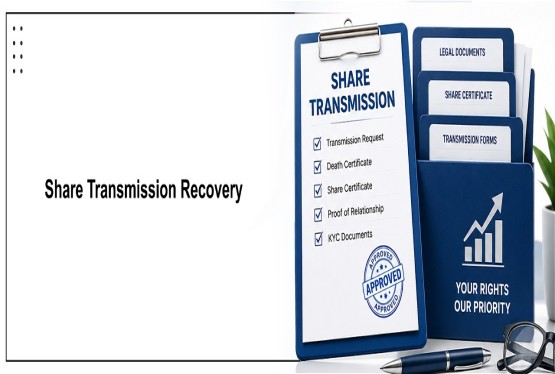
Legal heirs must submit proper documents, such as:
-
Death certificate of the transferee
-
Proof of legal heirship (succession certificate, legal heir certificate, probate, or will, as applicable)
-
KYC documents of the legal heirs
-
Demat account details of the claimant(s)
These documents help the company or RTA verify the claim and prevent misuse. Once documents are found in order, the shares are transmitted and credited to the heirs’ demat account, subject to SEBI rules.
What If Fraud Is Detected?
SEBI understands that while helping genuine investors is important, preventing misuse of this special window is equally critical. Therefore, strong safeguards have been built into the process, especially during the one-year lock-in period after shares are transferred to the demat account.
Fraud Detection During the 1-Year Lock-In Period
Once physical shares are transferred and credited to the transferee’s demat account, they are placed under a mandatory lock-in for one year. This lock-in period acts as a safety window.
If during this one-year period it is found that:
-
Documents were forged or manipulated
-
Transfer deed was fake or altered
-
False declarations or wrong identity was used
-
Any misrepresentation was made to obtain the shares
then the case is treated as suspected or confirmed fraud.
Shares Will Remain Locked
If fraud is detected:
-
The shares will not be released
-
The lock-in will continue beyond one year
-
Shares cannot be:
-
Sold
-
Transferred
-
Pledged
-
Used as security
This ensures that no wrongful benefit is taken by the person who obtained the shares fraudulently.
Release Only Possible Through Court Order
In fraud cases, SEBI does not allow automatic release of shares. Instead:
-
The shares will remain frozen
-
Only a competent court’s order can decide:
-
Who the rightful owner is
-
To whom the shares should be released
This brings judicial oversight into the process and ensures fairness.
- How This Protection Helps Everyone
Protects Genuine Investors
Honest investors are protected from:
-
Fake claims by third parties
-
Wrongful transfer of their shares
-
Loss due to impersonation or forgery
Protects Companies and RTAs
Companies and RTAs are safeguarded from:
-
Legal liability
-
Accusations of wrongful transfer
-
Financial and reputational damage
They can confidently process transfers knowing SEBI has given a clear legal framework.
Protects the Securities Market
Strict action against fraud:
-
Maintains market integrity
-
Builds trust in demat and transfer systems
-
Prevents misuse of investor-friendly relaxations
This balance ensures that ease of investment does not come at the cost of market safety.
Time Limit for Processing by Company / RTA
Once you submit complete documents, the company or RTA must:
-
Process the request within 70 days
This ensures accountability and faster resolution.
Role of Companies, RTAs, and Stock Exchanges
SEBI has placed clear responsibilities:
-
Verify identity (PAN, address, ID)
-
Verify signatures
-
Publish advertisements where required
-
Inform depositories about lock-in
-
Publicise the special window every two months
This ensures that investors are aware and supported.
What Is Not Covered Under This Window?
Important exclusions:
-
Shares already transferred to IEPF
-
Cases involving legal disputes
-
Missing original certificates
-
Transfers after April 2019
If shares are with IEPF, a separate recovery of shares process applies.
Why This Circular Is a Big Relief for Investors
This special window:
-
Unlocks stuck wealth
-
Helps senior citizens and heirs
-
Reduces dependency on litigation
-
Improves trust in capital markets
For many families, old shares can be worth lakhs or even crores today.
Practical Tips for Investors
SEBI’s special window is a one-time, time-bound opportunity. While the rules are investor-friendly, success depends largely on how carefully and early an investor acts. The following practical tips can save time, money, and unnecessary stress.
Start Early - Do Not Wait Till 2027
The special window is open only for one year. Waiting until the last few months can be risky because:
-
Companies and RTAs may face heavy application volumes
-
Any document deficiency will cause delays
-
You may need time to arrange missing papers or affidavits
Locate Original Certificates Carefully
The original physical share certificate is mandatory. Without it, the application will not be accepted.
Check:
-
Old files, lockers, trunks, and cupboards
-
Bank lockers or family storage
-
Documents kept by parents or grandparents
Open a Demat Account in Advance
All shares approved under this window will be credited only in demat form. Therefore:
-
A demat account in the transferee’s or legal heir’s name is compulsory
-
Opening a demat account at the last moment may delay the process
Ensure:
-
Name in demat account matches PAN and KYC
-
The demat account is active
-
You obtain a Client Master List (CML) in advance
Take Professional Help If Documents Are Old
Old share cases often involve:
-
Name or signature mismatches
-
Missing seller details
-
Company mergers or change of RTA
-
Incomplete transfer deeds
A professional (CA, CS, or legal expert) can:
-
Review documents before submission
-
Prepare indemnities and affidavits correctly
-
Avoid rejection or repeated objections
Keep Copies of All Submissions
Always keep:
-
Photocopies and scanned copies of all documents
-
Acknowledgements, courier receipts, and emails
-
Copies of advertisements and undertakings
These records are essential if:
-
The company seeks clarification later
-
Documents are misplaced
-
Any dispute or follow-up arises
Final Thoughts
For many years, people across India have been holding old physical share certificates but could not do anything with them. They could not sell them, transfer them, or even convert them into demat form because of changing rules, missing paperwork, or untraceable sellers. For common investors and families, this meant money lying locked and forgotten.
SEBI’s 2026–27 special window is a rare and thoughtful solution to this long-standing problem. It gives investors a clear chance to fix old issues legally, without forcing them to go to court or give up on their investments. At the same time, SEBI has added safety checks like document verification, public notices, and a one-year lock-in to make sure the system is not misused. SEBI has tried to help honest investors while protecting the market from fraud. That balance is what makes this window special.
If you, your parents, or your grandparents have physical share certificates bought before 2019, this may be the best and possibly last opportunity to convert those papers into usable, modern investments. Once this window closes, the chances of getting another relaxation like this are very low. Do not ignore old share certificates. Do not delay action. Start early, collect documents, and complete the process while this special window is open. What looks like an old piece of paper today may turn out to be a valuable financial asset for your family tomorrow.
Frequently Asked Questions (FAQs)
Q1. What is the SEBI special window for physical shares?
Ans. The SEBI special window is a one-time opportunity provided by the Securities and Exchange Board of India (SEBI) that allows investors to transfer and convert old physical share certificates into demat form. This facility is meant for shares that were bought or sold before 1 April 2019 and could not be transferred earlier due to regulatory changes, missing sellers, or procedural issues.
Q2. Who can apply under this special window?
Ans. Any investor or legal heir can apply if the physical shares were purchased before 1 April 2019, the original share certificate is available, and there is no ownership dispute. The shares should also not have been transferred to the Investor Education and Protection Fund (IEPF). Even applications that were earlier rejected or returned can be reconsidered under this window.
Q3. What is the time period for applying?
Ans. The special window will remain open for one year, from 5 February 2026 to 4 February 2027. Applications must be submitted within this period. After the window closes, requests for transfer or dematerialisation of physical shares will not be accepted, so investors are advised to start the process early.
Q4. Is it compulsory to have a demat account?
Ans. Yes, having a demat account is mandatory. All shares approved under this special window will be credited only in dematerialised form. Physical share certificates will not be issued again. Therefore, investors should open and activate a demat account in advance before submitting their application.
Q5. What documents are generally required for the application?
Ans. Investors are required to submit the original physical share certificate, the transfer deed executed before 1 April 2019, PAN and KYC documents, a demat account Client Master List, and an undertaking-cum-indemnity bond. Depending on the case, additional documents may be requested by the company or the RTA.
Q6. What happens if the seller of the shares cannot be traced?
Ans. If the seller cannot be contacted, is unresponsive, or objection notices cannot be delivered, SEBI allows the company or RTA to issue a public notice through newspaper advertisements. A 30-day period is given for objections. If no objection is received within this time, the company can proceed with the transfer, ensuring that genuine investors are not left stuck due to missing sellers.
Q7. What if the transferee (buyer) has passed away?
Ans. If the person who purchased the shares has died, the shares can be claimed by the legal heirs. In such cases, the process is treated as transmission of shares rather than transfer. Legal heirs must submit documents such as the death certificate, proof of heirship, and their KYC details. The investment does not lapse due to the death of the transferee.
Q8. Is there any lock-in period after the shares are transferred?
Ans. Yes, once the shares are transferred and credited to the demat account, they are subject to a mandatory one-year lock-in period. During this time, the shares cannot be sold, transferred, pledged, or otherwise dealt with. This lock-in is intended to prevent misuse of the special window.
Q9. What happens if fraud is detected after the transfer?
Ans. If fraud, forgery, or misrepresentation is detected during the lock-in period, the shares will remain frozen. The lock-in will continue until the matter is resolved, and the shares can be released only based on an order passed by a competent court. This safeguard helps protect genuine investors, companies, and the securities market.
Q10. Why is this special window considered very important?
Ans. This special window is important because it provides a lawful and time-bound solution to long-pending physical share issues. It helps investors unlock old investments, avoids lengthy court cases, and protects family wealth. Since such relaxations are rare, this may be the last opportunity for investors to regularise their old physical shares.


_crop10_thumb.jpg)




_crop10_thumb.jpg)
_crop10_thumb.jpg)


_crop10_thumb.jpg)


_crop10_thumb.jpg)


_crop10_thumb.jpg)

_crop10_thumb.jpg)


-suratgujarat-section-158_crop10_thumb.jpg)
-suratgujarat_crop10_thumb.jpg)
-(33)_crop10_thumb.jpg)


-ahmedabad_crop10_thumb.jpg)
-learn_crop10_thumb.jpg)

-learnn_crop10_thumb.jpg)


_crop10_thumb.jpg)





_Guidelines_learn_crop10_thumb.jpg)


_learn_crop10_thumb.jpg)
_crop10_thumb.jpeg)


_crop10_thumb.jpg)


_Second_Amendment_Rules,_2025_learn_crop10_thumb.jpg)


_learn_crop10_thumb.jpg)












_learn_crop10_thumb.jpeg)











_learn_crop10_thumb.jpg)
_rd_roc_learn_crop10_thumb.jpg)







_learn_crop10_thumb.jpg)





_learn_crop10_thumb.jpg)
_Learn_crop10_thumb.jpg)














_learn_crop10_thumb.jpg)

_learn_crop10_thumb.jpg)




_crop10_thumb.jpeg)





_crop10_thumb.jpg)





_crop10_thumb.jpg)