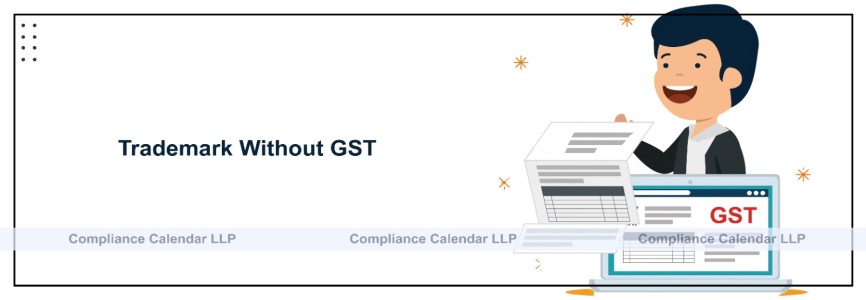



Many entrepreneurs are often unsure whether GST registration is required before filing a trademark. This confusion usually arises because new businesses often start small or operate in a pre-revenue stage but still need to secure their brand name, logo, or slogan from misuse. Trademark protection helps establish brand ownership and legal recognition, even before a business becomes fully operational or starts generating taxable revenue. Understanding how trademark and GST requirements work helps businesses plan their compliance correctly from the beginning.
Trademark law and GST law serve completely different purposes. Trademark law exists to protect intellectual property and brand identity, while GST law is designed to regulate taxation on the supply of goods and services. These laws function independently, which means tax registration is not a legal condition for securing trademark rights.
What is a Trademark?
A trademark is a unique sign that helps consumers identify the goods or services of one business and distinguish them from others. It can be a brand name, logo, symbol, tagline, design, colour combination, or even a sound that represents a business in the market. When a trademark is registered under the Trade Marks Act, 1999, it gives the owner the exclusive legal right to use that mark for the specific products or services for which it is registered. This means no other person can use the same or a confusingly similar mark for similar goods or services without permission.
Trademark registration also plays a major role in building brand value and business credibility. It creates a legal record of ownership, makes it easier to take action against copying or misuse, and helps customers trust and recognize the brand in the marketplace.
What is GST Registration?
GST registration means getting officially registered under the Goods and Services Tax system so that the government can collect tax on the sale of goods or services. A business is required to take GST registration when its sales cross a certain limit or when it is involved in activities like selling across states, selling online, or importing and exporting. Once registered, the business must charge GST on its invoices and pay that tax to the government.
In simple terms, GST registration is about paying and reporting taxes on business transactions. It has nothing to do with owning a brand name or protecting a logo or business identity. Trademark and GST serve different purposes.
Is GST Registration Mandatory for Trademark Registration?
Many business owners think GST registration is required before applying for a trademark, but this is a misunderstanding. Trademark registration is about protecting a brand, while GST registration is about paying tax. These two legal requirements are not connected. A business can exist, create a brand, and protect it even if it is not yet required to register under GST.
Legal Position under Trademark Law
The Trade Marks Act, 1999 allows any person who owns or plans to use a trademark to apply for registration. The law focuses only on whether the applicant is the owner of the mark and whether the mark is being used or will be used. It does not consider the size of the business, its income, or whether it has GST registration. Since neither the Trade Marks Act nor the Trade Marks Rules require a GST number for filing an application, GST registration is not a legal requirement for getting a trademark.
Independence of Trademark Law and GST Law
Trademark law and GST law serve different purposes. Trademark law protects a business’s brand name, logo, and identity, while GST law is meant to collect tax on business transactions. Even a small business that does not cross the GST limit can still own and protect a trademark. The absence of GST registration does not affect trademark ownership or legal rights in any way.
Who Can Apply for a Trademark Without GST?
Individuals and Freelancers
Individuals who provide services or sell products under their own name, such as consultants, trainers, designers, and online creators, can register a trademark without having GST. As long as their income does not cross the GST limit, they are not required to register under GST, but they can still protect their brand legally through trademark registration.
Startups and Small Businesses
Many startups operate for a long time before earning taxable revenue. During this early stage, they often focus on branding, marketing, and building customer trust. Trademark registration allows them to secure their brand name and logo even if they are not yet registered under GST.
Proprietorships, Firms and Companies
All types of business entities, including sole proprietorships, partnership firms, LLPs, and private limited companies, can apply for trademarks without GST registration. The right to own and protect a trademark is based on brand ownership and intended use, not on tax registration.
What Does the Trademark Application Form Require?
The trademark application process is designed to identify the owner of the brand and clearly define what is being protected. It does not focus on tax or financial details. The purpose of the application form is to record who owns the trademark, what the trademark looks like, and which goods or services it will cover.
Details Required in Form TM-A
Form TM-A is the official form used to apply for trademark registration. In this form, the applicant must provide basic identity and trademark information such as the name and address of the applicant, whether the applicant is an individual, firm, or company, and a clear representation of the trademark. The form also requires a description of the goods or services and the trademark class under which protection is sought. The applicant must also state whether the trademark is already in use or will be used in the future. Importantly, the form does not ask for a GST number, which shows that GST registration is not required for trademark filing.
User Claim and Supporting Documents
If the applicant states that the trademark is already being used, supporting proof must be submitted. This may include invoices, product packaging, website pages, advertisements, or social media posts that show the brand being used in business. These documents help the trademark office verify that the mark is genuinely used in the market. They are meant to prove brand use, not tax compliance or GST registration.
Why Many People Believe GST is Required
Many business owners assume that GST registration is compulsory for trademark registration, but this belief mainly comes from how businesses are usually set up and operated. When a new business starts, owners often complete several registrations at the same time, such as company registration, GST, bank accounts, and trademark filing. Because these steps are done together, it creates the impression that all of them are legally linked, even though they are governed by different laws.
Simultaneous Business Setup
When entrepreneurs launch a business, they usually register for GST and apply for a trademark at the same time. This makes people think that one cannot exist without the other. In reality, these are separate processes GST is for tax purposes, while trademark registration is for protecting the brand.
Banking and Invoice Requirements
Banks, suppliers, and online platforms often ask for a GST number before processing payments, issuing invoices, or allowing product listings. These are commercial or regulatory requirements for doing business transactions. However, they do not come from trademark law, and they do not affect the right to register or own a trademark.
What Happens If GST is Taken After Trademark Registration?
Getting GST registration after filing or receiving a trademark does not change anything about the trademark. Trademark rights are based on ownership and use of a brand, not on tax registration. Once a trademark is applied for or registered, it continues to remain valid regardless of when GST is obtained.
No Impact on Trademark Rights
If a business later becomes liable for GST and registers under GST, the trademark remains fully protected. The rights of the trademark owner, including the right to use the brand and take legal action against infringement, are not affected by GST registration.
Importance of Consistency
Even though GST does not affect trademark rights, it is important that the business name, address, and branding used in GST records match the trademark details. This consistency helps avoid confusion, supports brand authenticity, and strengthens legal protection in case of disputes or enforcement actions.
Recent Position of Law and Practice
The current legal and procedural framework for trademark registration continues to allow applicants to file and obtain trademarks without GST registration. The government has not introduced any rule or notification linking GST compliance with trademark eligibility. This means the legal position remains unchanged and businesses can protect their brands independently of their tax registration status.
No Amendment Making GST Mandatory
There has been no amendment to the Trade Marks Act or the Trade Marks Rules that makes GST registration a condition for trademark filing. The law still permits any person who owns or plans to use a trademark to apply, regardless of GST.
Digital Filing and Compliance Checks
Trademark applications are now filed online through the trademark portal, making the process faster and paperless. Even in this digital system, GST details are not required, confirming that GST registration is not necessary for trademark approval.
Conclusion
Trademark registration is a legal process focused on protecting brand identity and ownership. It is based on whether a person or business owns a mark or intends to use it in connection with specific goods or services. The law does not look at tax registration, business turnover, or GST status when deciding whether a trademark can be granted. GST registration, on the other hand, is required only when a business reaches certain financial or operational thresholds and has nothing to do with intellectual property rights.
Therefore, a trademark can be legally registered even if the business is not registered under GST. The absence of GST does not affect the validity, ownership, or legal protection of a trademark in any way.
Frequently Asked Questions
Q1. Is GST registration mandatory for trademark registration in India?
Ans. GST registration is not required because trademark law is based on brand ownership and usage. Even if a business has no taxable income or GST registration, it can still legally protect its brand through trademark registration.
Q2. Can I apply for a trademark without having a GST number?
Ans. Yes, a GST number is not required in the trademark application form. You only need to provide your name, address, and details of the brand you want to protect. GST status does not affect trademark filing.
Q3. Can individuals and freelancers register a trademark without GST?
Ans. Individuals and freelancers can register trademarks in their own name without GST if their income is below the GST threshold. Trademark law allows anyone using or planning to use a brand to secure exclusive legal rights.
Q4. Can startups apply for trademarks before GST registration?
Ans. Startups often build their brand before generating income. Trademark law allows them to protect their brand name, logo, or slogan even if GST registration has not yet been taken or is not required.
Q5. Can a private limited company file a trademark without GST?
Ans. A private limited company can apply for a trademark even if it has not obtained GST registration. Trademark ownership depends on business identity and brand use, not tax compliance or GST status.
Q6. Does the trademark office ask for GST during filing?
Ans. The trademark office does not ask for GST details because trademark registration focuses on identifying the brand owner and the mark. Tax registration has no role in determining whether a trademark can be granted.
Q7. What if I take GST registration after my trademark is registered?
Ans. Obtaining GST after trademark registration does not affect your trademark. The legal ownership and protection of the brand continue exactly the same, as GST only deals with taxation, not brand rights.
Q8. Will my trademark be cancelled if I don’t have GST?
Ans. No, a trademark cannot be cancelled for lack of GST. Trademark validity depends on use and ownership of the mark, not on tax registration or GST compliance.
Q9. Why do people think GST is required for trademark registration?
Ans. This confusion arises because businesses often apply for GST and trademarks together while setting up operations. However, they are governed by different laws and serve different legal and commercial purposes.
Q10. Should I register my trademark before or after GST?
Ans. You should register your trademark as early as possible. Brand protection does not depend on GST, so securing your trademark before becoming taxable helps prevent others from copying or misusing your brand.


_crop10_thumb.jpg)





_crop10_thumb.jpg)
_crop10_thumb.jpg)


_crop10_thumb.jpg)


_crop10_thumb.jpg)


_crop10_thumb.jpg)

_crop10_thumb.jpg)


-suratgujarat-section-158_crop10_thumb.jpg)
-suratgujarat_crop10_thumb.jpg)
-(33)_crop10_thumb.jpg)


-ahmedabad_crop10_thumb.jpg)
-learn_crop10_thumb.jpg)

-learnn_crop10_thumb.jpg)


_crop10_thumb.jpg)








_Guidelines_learn_crop10_thumb.jpg)


_learn_crop10_thumb.jpg)
_crop10_thumb.jpeg)


_crop10_thumb.jpg)


_Second_Amendment_Rules,_2025_learn_crop10_thumb.jpg)


_learn_crop10_thumb.jpg)

















_learn_crop10_thumb.jpeg)


















_learn_crop10_thumb.jpg)

_rd_roc_learn_crop10_thumb.jpg)













_learn_crop10_thumb.jpg)












_learn_crop10_thumb.jpg)
_Learn_crop10_thumb.jpg)







































_learn_crop10_thumb.jpg)



_learn_crop10_thumb.jpg)













_crop10_thumb.jpeg)



















_crop10_thumb.jpg)



















_crop10_thumb.jpg)