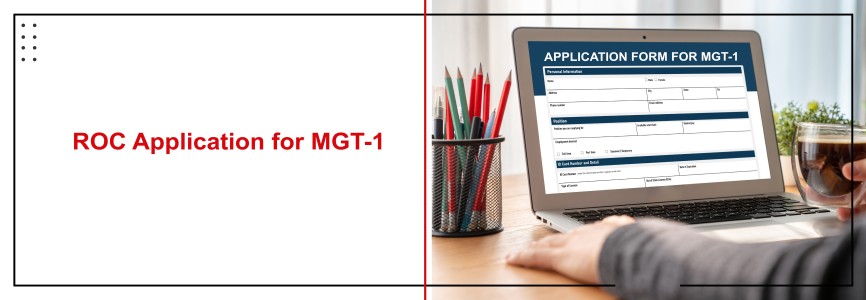



Company Must file an application with ROC Before Seeking NCLT Intervention for Rectification of Register of Members (MGT-1)
The National Company Law Tribunal (NCLT) at Kochi has clarified that a company cannot directly approach the Tribunal to rectify its Register of Members without first placing the matter before the Registrar of Companies (ROC), the decision reinforces the statutory structure under the Companies Act, 2013, which mandates that grievances relating to shareholding records must first be examined at the administrative level before judicial intervention is sought.
According to the Tribunal, Section 59 of the Companies Act 2013 functions as an appellate mechanism, meaning that the NCLT can entertain a rectification matter only when the company or shareholder has already approached the ROC or the company itself and received an adverse decision or refusal. By passing the ROC would render the statutory scheme ineffective and defeat the purpose of mandatory disclosures, maintenance of registers, and penal provisions built into the Act.
In the case before the Tribunal, the applicant sought rectification of the Register of Members (MGT-1) to record a past share transfer that had allegedly been approved internally but never reflected in the statutory registers or MCA ROC or annual filings. The Tribunal noted that the company had admittedly failed to update its Register of Members and had continued to file returns without reflecting the claimed change in shareholding. Such omissions, if allowed to be corrected directly through the Tribunal, would undermine the compliance mechanism and create a route to circumvent penal consequences.
The NCLT emphasized that the statutory obligations under Sections 88, 92, and 94 regarding maintenance and updating of the Register of Members are non-negotiable compliance duties. A company is expected to maintain accurate records and ensure that its annual returns mirror the entries in the statutory registers. Any discrepancy must first be addressed administratively by rectifying internal records and then presenting the corrected position to the ROC for examination.
The Tribunal also underscored that Section 59 is not a substitute for routine compliance. The provision is available only when an aggrieved person or company has exhausted the remedy before the ROC and seeks appellate review. Therefore, in the absence of any prior approach to the ROC or any record of refusal, the application for rectification before NCLT was held to be not maintainable.
Moreover, the NCLT pointed out procedural deficiencies in the documents relied upon for the rectification request, including questions of authenticity and unexplained delays. Applying the Limitation Act, it reaffirmed that petitions for rectification must be brought within a reasonable period and cannot be used retrospectively to cure long-standing non-compliance.
The order reiterates an important compliance principle:
Rectification of shareholding records must begin with the company’s own registers and the ROC. The NCLT can step in only after the statutory process has been followed, and not as a first resort.
Case Details:-
-
Appellant: Nuventure Connect Private Limited
-
The company admitted that although the board approved the transfer and issued a share certificate, the transferee’s name was never entered in the Register of Members. ROC records continued to show the original promoters.
The above judgment serves as a reminder for companies to maintain proper records, ensure timely filings, and follow the statutory route before invoking the Tribunal’s jurisdiction in matters relating to the Register of Members.


_crop10_thumb.jpg)





_crop10_thumb.jpg)
_crop10_thumb.jpg)


_crop10_thumb.jpg)


_crop10_thumb.jpg)


_crop10_thumb.jpg)

_crop10_thumb.jpg)


-suratgujarat-section-158_crop10_thumb.jpg)
-suratgujarat_crop10_thumb.jpg)
-(33)_crop10_thumb.jpg)


-ahmedabad_crop10_thumb.jpg)
-learn_crop10_thumb.jpg)

-learnn_crop10_thumb.jpg)


_crop10_thumb.jpg)








_Guidelines_learn_crop10_thumb.jpg)


_learn_crop10_thumb.jpg)
_crop10_thumb.jpeg)


_crop10_thumb.jpg)


_Second_Amendment_Rules,_2025_learn_crop10_thumb.jpg)


_learn_crop10_thumb.jpg)

















_learn_crop10_thumb.jpeg)



















_learn_crop10_thumb.jpg)


_rd_roc_learn_crop10_thumb.jpg)













_learn_crop10_thumb.jpg)










_learn_crop10_thumb.jpg)
_Learn_crop10_thumb.jpg)

































_learn_crop10_thumb.jpg)




_learn_crop10_thumb.jpg)












_crop10_thumb.jpeg)















_crop10_thumb.jpg)


















_crop10_thumb.jpg)