


SEBI RA Registration in India is mandatory for any individual, partnership firm, LLP, company or body corporate that wants to provide research services in the Indian securities market for consideration. RA means Research Analyst. A research analyst generally prepares research reports, gives buy, sell or hold recommendations, provides stock-specific analysis, issues price targets, publishes market views or gives opinions on securities or public offers. The main purpose of SEBI Research Analyst Registration is to regulate persons who influence investment decisions through research reports and recommendations. Since research services can directly impact investors, SEBI has created a separate legal framework under the SEBI (Research Analysts) Regulations, 2014.
These regulations prescribe eligibility, registration procedure, qualification, certification, deposit, disclosures, conflict management, record keeping, code of conduct and post-registration compliance. In India, a person should not carry on research analyst activities without obtaining registration from SEBI. Unregistered research advice, paid stock tips, model portfolio recommendations, paid Telegram calls, paid WhatsApp recommendations, social media-based research services and subscription-based research reports may attract regulatory action if they fall within the scope of research services.
Legal Framework of SEBI RA Registration
SEBI RA Registration is mainly governed by the following legal framework:
- SEBI Act, 1992
- SEBI (Research Analysts) Regulations, 2014
- SEBI circulars and guidelines issued from time to time
- SEBI Research Analyst Guidelines dated 8 January 2025
- SEBI FAQs and clarifications on regulatory provisions
- Directions issued by SEBI and RAASB
- Code of Conduct under the RA Regulations
The SEBI Act, 1992 gives SEBI power to protect investors, regulate the securities market and regulate intermediaries. Research analysts are treated as regulated market participants because their reports and recommendations may influence investment behaviour.
The SEBI (Research Analysts) Regulations, 2014 are the main regulations for registration and compliance. These regulations cover who can apply, how the application must be made, eligibility requirements, qualification requirements, deposit requirements, validity of registration, conditions of registration, disclosures in research reports, limitations on trading, investor grievance redressal, inspection and action in case of default.
Meaning of Research Analyst
A Research Analyst is a person who is engaged in the business of providing research services for consideration. Research services may include preparation or publication of research reports, making buy or sell recommendations, giving opinions on securities, providing analysis on listed or proposed-to-be-listed securities, or giving recommendations relating to public offers.
A research analyst may operate as:
- Individual Research Analyst
- Partnership Firm
- LLP
- Company
- Body Corporate
- Research Entity
- Proxy Adviser, where applicable
- Part-Time Research Analyst, subject to applicable conditions
The definition is broad enough to include both traditional research houses and modern digital research service providers. If a person provides paid securities research through websites, mobile apps, webinars, YouTube memberships, Telegram groups, WhatsApp groups, newsletters or subscription platforms, SEBI RA Registration may be required depending on the nature of service.
Activities Covered under SEBI RA Registration
SEBI RA Registration is generally required when a person provides research-related services in securities. These may include:
- Equity research reports
- Stock recommendations
- Buy, sell or hold calls
- Target price-based reports
- IPO research
- Sector reports
- Thematic research reports
- Public appearance with securities recommendation
- Paid research newsletters
- Model portfolio-based research, where treated as research service
- Research on listed securities or proposed listed securities
- Proxy advisory services, where applicable
A key test is whether the activity involves securities market research and whether it is provided for consideration. Even if the service is provided online, the legal requirement remains the same.
Key Regulations under SEBI RA Regulations
Regulation 3: Application for Registration
Regulation 3 provides that a person who wants to act as a research analyst must apply for a certificate of registration. The application must be made in the prescribed form along with applicable fees and supporting documents.
Regulation 4: Research Report by Person Located Outside India
This regulation deals with issuance of research reports by persons located outside India. Foreign research reports relating to Indian securities must comply with the conditions prescribed under the regulations.
Regulation 5: Further Information and Clarification
SEBI may ask the applicant to provide additional information, documents, clarification or personal representation. If the application is incomplete or unclear, SEBI may raise queries before granting registration.
Regulation 6: Eligibility Criteria
Regulation 6 deals with the factors SEBI considers before granting registration. SEBI examines whether the applicant is fit and proper, has adequate qualification, infrastructure, compliance capacity, past conduct and ability to comply with the regulations.
Regulation 7: Qualification and Certification Requirement
Regulation 7 is one of the most important provisions. It prescribes qualification and certification requirements for individual research analysts, principal officers, persons associated with research services and partners or employees engaged in research services. The person must also hold the required NISM certification as specified by SEBI. Certification is not a one-time formality. It must be kept valid as per the applicable certification requirement.
Regulation 8: Deposit Requirement
Research analysts must maintain the required deposit as specified by SEBI. The deposit requirement is linked with investor protection and may be used for dues arising from arbitration, conciliation or dispute resolution proceedings if the research analyst fails to pay such dues.
Regulation 9: Grant of Certificate
If SEBI is satisfied that the applicant meets the requirements, it may grant a certificate of registration. After registration, the research analyst receives a SEBI registration number and must display it properly in communications, research reports and public material.
Regulation 10: Validity of Certificate
The certificate of registration remains valid unless suspended or cancelled, subject to payment of applicable fees and continuing compliance.
Regulation 11: Renewal / Continuation Requirement
The research analyst must comply with the renewal or continuation requirement, including payment of applicable fees within the prescribed timeline.
Regulation 13: Conditions of Certificate
A registered research analyst must comply with all conditions of registration, SEBI Act, RA Regulations, circulars, guidelines and instructions issued by SEBI or the recognised supervisory body.
Regulation 15: Internal Policies and Procedures
Research analysts must have internal policies to identify, manage and disclose conflicts of interest. This is important because research analysts may have financial interests, business relationships or other conflicts that can affect the independence of research.
Regulation 16: Limitations on Trading
Research analysts and related persons are subject to trading restrictions. The purpose is to prevent misuse of research recommendations and avoid front-running or personal benefit from unpublished research.
Regulation 17: Compensation Restrictions
Compensation of research analysts should not be linked in a manner that compromises independence. For example, research compensation should not be dependent on investment banking, merchant banking or brokerage business in a way that creates conflict.
Regulation 18: Limitation on Publication and Public Appearance
This provision controls publication of research reports, public appearances and conduct of business. Research analysts must ensure that opinions are not misleading, exaggerated or unsupported.
Regulation 19: Disclosures in Research Reports
Research reports must contain proper disclosures, including financial interest, ownership interest, material conflict of interest, compensation received and other relevant details. These disclosures help investors understand whether the analyst has any direct or indirect interest in the subject company.
Regulation 20: Contents of Research Report
Research reports must be clear, fair and based on reasonable grounds. They should contain facts, assumptions, basis of recommendation, risk factors and other relevant information.
Regulation 21: Recommendations in Public Media
If a research analyst gives recommendation through public media, the analyst must comply with disclosure and conduct requirements. This includes TV appearances, interviews, online media, social media and other public platforms.
Regulation 22: Distribution of Research Reports
Research reports must be distributed in a fair manner. Selective circulation or giving unfair advantage to some clients may create compliance risk.
Regulation 24: General Responsibility
Research analysts must act honestly, fairly and professionally. They must ensure that investors are not misled by false, exaggerated or incomplete research.
Regulation 25: Maintenance of Records
Research analysts must maintain records of research reports, data, rationale, communications, client details, complaints, disclosures and other required documents.
Regulation 26: Compliance Officer
A non-individual research analyst must appoint a compliance officer. The compliance officer is responsible for monitoring compliance with SEBI regulations, circulars and internal policies.
Regulation 26A and 26B: Dispute Resolution and Investor Grievance
Research analysts must comply with dispute resolution and grievance redressal requirements. Investor complaints must be handled within the prescribed timeline and through proper channels.
Regulation 27 to 31: Inspection
SEBI has the power to inspect books, records and documents of research analysts. The research analyst must cooperate during inspection and provide required information.
Regulation 32: Default Action
If a research analyst violates the regulations, SEBI may take action. This may include warning, direction, suspension, cancellation, monetary penalty or other action under the SEBI Act.
Regulation 33: Power to Issue Clarifications
SEBI may issue circulars, guidelines and clarifications for effective implementation of the RA Regulations.
Recent Updates in SEBI RA Registration
SEBI has recently made important changes to the Research Analyst framework. The framework has been updated to make registration more structured, reduce entry barriers, improve supervision and strengthen investor protection. One major development is the role of the Research Analyst Administration and Supervisory Body, known as RAASB. BSE Limited has been recognised as RAASB for administration and supervision of research analysts. This means the registration and supervision process is now more structured, and research analysts are required to comply with directions issued through the recognised body.
SEBI has also issued guidelines for research analysts in January 2025. These guidelines deal with qualification, certification, deposit, registration, fees, client consent, disclosures, grievance handling, advertisement and compliance matters. Another important update relates to eligibility and qualification. SEBI has widened the qualification framework and brought more clarity for persons associated with research services. However, NISM certification remains an important requirement. Applicants must check the latest certification requirement before filing the application.
Eligibility for SEBI RA Registration
The eligibility should be checked carefully before filing the application.
For Individual Applicant
- Must be an individual eligible to act as research analyst
- Must satisfy qualification requirement
- Must hold valid NISM Research Analyst certification
- Must meet fit and proper criteria
- Must have required infrastructure
- Must have required net worth or deposit, as applicable
- Must not have adverse regulatory record
- Must comply with SEBI Act and RA Regulations
For Partnership Firm
- Partners engaged in research services must meet certification requirement
- Firm must satisfy fit and proper criteria
- Must have proper office infrastructure
- Must maintain required deposit
- Must have proper internal policies
- Must submit partnership deed
- Must comply with SEBI conditions
For LLP / Company / Body Corporate
- Must be legally incorporated
- Must appoint principal officer
- Principal officer must meet qualification and certification requirement
- Persons associated with research services must meet applicable certification requirement
- Must appoint compliance officer
- Must maintain required net worth / deposit
- Must have internal policies and control systems
- Must have grievance redressal mechanism
- Must comply with disclosure norms
Fit and Proper Requirement
The applicant, promoters, directors, partners, principal officer and key persons should satisfy fit and proper criteria. SEBI may consider integrity, reputation, character, absence of serious regulatory action, financial solvency and past conduct.
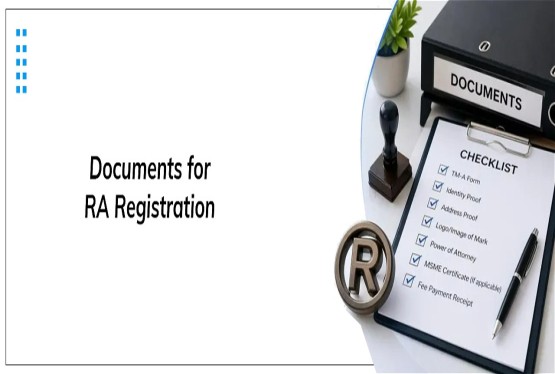
Documents Required for SEBI RA Registration
Basic Documents
- PAN card of applicant / entity
- Aadhaar / identity proof of individual applicant
- Address proof
- Passport size photograph
- Contact details and email ID
- Educational qualification proof
- NISM certificate
- Experience proof, if applicable
Entity Documents
- Certificate of Incorporation
- MOA and AOA
- LLP Agreement / Partnership Deed
- PAN of entity
- GST certificate, if available
- Board resolution / partner authorisation
- Details of directors / partners
- Shareholding pattern
- Organisational structure
Financial Documents
- Net worth certificate from Chartered Accountant
- Latest financial statements
- ITR acknowledgement
- Bank statement
- Deposit proof, if applicable
Compliance Documents
- Fit and proper declaration
- Infrastructure declaration
- Details of compliance officer
- Details of principal officer
- Internal policy on conflict of interest
- Research report format
- Disclosure policy
- Investor grievance policy
- Code of conduct undertaking
- Declaration of no disciplinary action
- Details of existing business activities
Additional Documents
- Website details, if any
- Mobile app details, if any
- Client agreement / terms and conditions
- KYC process note
- Advertisement and social media policy
- Sample research report
- Details of group entities / associates
- Details of past SEBI registration, if any
SEBI RA Registration Process in India
The registration process generally starts with eligibility review. The applicant must first check whether the proposed activity falls under research analyst services. After that, the applicant must prepare documents, ensure NISM certification, obtain net worth certificate and prepare compliance policies. The application is filed through the prescribed online system along with fees. After filing, SEBI or the recognised supervisory body may examine the application and raise queries. The applicant must reply with proper documents and clarification. If SEBI is satisfied, it grants registration. The applicant then receives SEBI RA registration number. After registration, the RA must comply with ongoing obligations, including disclosures, record keeping, grievance handling, website disclosures, client consent, audit and reporting.
Post-Registration Compliance for Research Analysts
Getting the registration certificate is only the first step. A registered research analyst must continuously comply with SEBI regulations.
Important post-registration compliances include:
- Display SEBI registration number
- Maintain valid NISM certification
- Maintain required deposit
- Follow code of conduct
- Issue proper disclosures in research reports
- Maintain research records
- Maintain client records
- Resolve investor complaints
- Follow advertisement guidelines
- Avoid misleading claims
- Maintain conflict of interest policy
- Appoint compliance officer, if non-individual
- Keep website disclosures updated
- File reports as required
- Cooperate with inspection
- Pay applicable fees on time
Disclosures in Research Reports
Disclosures are the backbone of the RA framework. A research analyst must disclose whether the analyst, associate or relative has financial interest in the subject company. The analyst must also disclose whether there is any actual or beneficial ownership, material conflict, compensation received, market making activity, investment banking relationship or other relevant connection. The research report should not hide material facts. It should clearly state the basis of recommendation, assumptions used, risk factors and limitations. Misleading research reports may result in SEBI action.
Trading Restrictions for Research Analysts
SEBI has placed restrictions on trading by research analysts to maintain independence. A research analyst should not misuse unpublished research or trade in a manner that conflicts with recommendations issued to clients. The analyst must avoid dealing in securities covered in the research report during restricted periods. The analyst should also not trade contrary to the recommendation. These restrictions are designed to prevent front-running, conflict of interest and unfair gain.
Penalty for Non-Compliance
If a person provides research analyst services without SEBI registration, SEBI may initiate action under the SEBI Act and RA Regulations. Action may include directions to stop services, refund of fees, penalty, debarment, suspension, cancellation or other enforcement action. Non-compliance after registration may also lead to serious consequences. Common violations include failure to disclose conflict, misleading recommendation, invalid certification, non-maintenance of records, non-resolution of complaints, violation of trading restrictions, non-payment of fees and failure to cooperate during inspection.
Why SEBI RA Registration is Important
SEBI RA Registration gives legal recognition to a person providing research services. It builds trust among investors and helps the applicant operate in a regulated manner. For fintech platforms, stock research firms, finance educators, subscription-based research providers and independent analysts, RA Registration is important before offering paid research services. It also protects the business from legal risk. In the current environment, SEBI is actively monitoring unregistered investment advice, stock tips, social media recommendations and paid research services. Therefore, businesses should obtain proper registration before starting such services.
Conclusion
SEBI RA Registration in India is a key regulatory requirement for anyone who wants to provide paid research services in the securities market. The law is not limited to traditional stock research firms. It also applies to digital platforms, independent analysts, paid communities, newsletters, research portals and social media-based research businesses if their services fall within the definition of research services.
The SEBI RA framework covers registration, qualification, NISM certification, deposit, disclosures, trading restrictions, client communication, grievance redressal, inspection and default action. With recent updates, SEBI has made the framework more structured and investor-focused. Applicants should carefully prepare documents, policies and compliance systems before applying for SEBI RA Registration.
FAQs
Q1. What is SEBI RA Registration?
Ans. SEBI RA Registration is a certificate granted by SEBI to a person or entity that wants to provide research services in the Indian securities market. It is required before offering paid research reports, stock recommendations or securities analysis.
Q2. Who needs SEBI Research Analyst Registration?
Ans. Any individual, partnership firm, LLP, company or body corporate providing paid research services on securities may need SEBI RA Registration. This includes stock research platforms, paid newsletters, research firms and independent analysts.
Q3. Is NISM certification mandatory for RA Registration?
Ans. Yes. NISM Research Analyst certification is an important requirement. The applicant, principal officer and persons associated with research services must comply with applicable certification requirements.
Q4. Can a company apply for SEBI RA Registration?
Ans. Yes. A company, LLP or body corporate can apply for SEBI RA Registration. It must appoint a principal officer and compliance officer and meet qualification, certification, deposit and compliance requirements.
Q5. Is SEBI RA Registration required for free educational content?
Ans. General educational content may not require RA Registration if it does not provide specific securities recommendations or paid research services. However, paid stock-specific recommendations may require registration.
Q6. Can a Research Analyst give stock tips on Telegram or WhatsApp?
Ans. A person should not provide paid stock tips or research recommendations through Telegram, WhatsApp or similar platforms without proper SEBI registration, if the activity falls under research services.
Q7. What is RAASB?
Ans. RAASB means Research Analyst Administration and Supervisory Body. It assists in administration and supervision of research analysts as recognised by SEBI.
Q8. What are the main documents required for RA Registration?
Ans. Main documents include PAN, address proof, qualification proof, NISM certificate, net worth certificate, entity documents, financial statements, compliance policies, fit and proper declaration and sample research report.
Q9. What happens if someone works as Research Analyst without SEBI registration?
Ans. SEBI may take enforcement action, including direction to stop activities, refund of fees, penalty, debarment or other action under the SEBI Act and RA Regulations.
Q10. Is SEBI RA Registration valid forever?
Ans. The certificate remains valid unless suspended or cancelled, subject to compliance with SEBI conditions, payment of applicable fees and continuing regulatory obligations.


_crop10_thumb.jpg)





_crop10_thumb.jpg)
_crop10_thumb.jpg)


_crop10_thumb.jpg)


_crop10_thumb.jpg)


_crop10_thumb.jpg)

_crop10_thumb.jpg)


-suratgujarat-section-158_crop10_thumb.jpg)
-suratgujarat_crop10_thumb.jpg)
-(33)_crop10_thumb.jpg)


-ahmedabad_crop10_thumb.jpg)
-learn_crop10_thumb.jpg)

-learnn_crop10_thumb.jpg)


_crop10_thumb.jpg)








_Guidelines_learn_crop10_thumb.jpg)


_learn_crop10_thumb.jpg)
_crop10_thumb.jpeg)


_crop10_thumb.jpg)


_Second_Amendment_Rules,_2025_learn_crop10_thumb.jpg)


_learn_crop10_thumb.jpg)

















_learn_crop10_thumb.jpeg)
















_learn_crop10_thumb.jpg)

_rd_roc_learn_crop10_thumb.jpg)











_learn_crop10_thumb.jpg)









_learn_crop10_thumb.jpg)
_Learn_crop10_thumb.jpg)





























_learn_crop10_thumb.jpg)




_learn_crop10_thumb.jpg)









_crop10_thumb.jpeg)











_crop10_thumb.jpg)










_crop10_thumb.jpg)