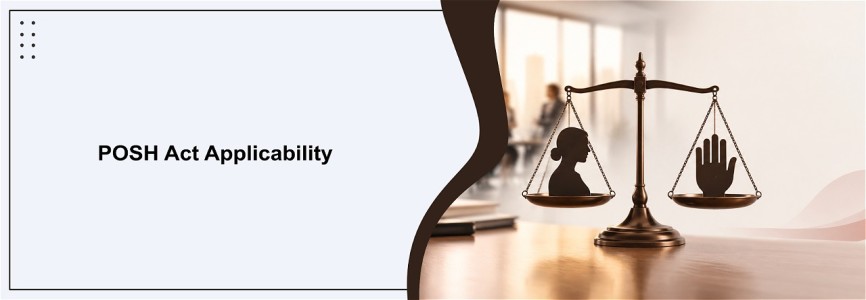



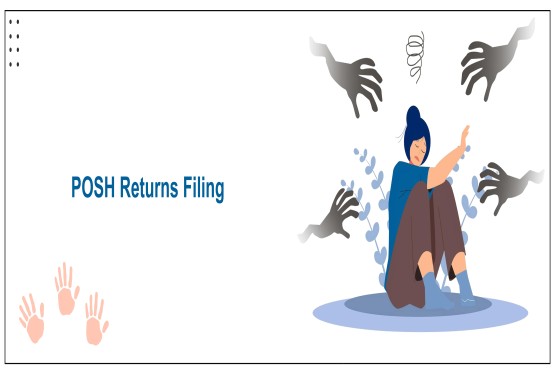
The Sexual Harassment of Women at Workplace (Prevention, Prohibition and Redressal) Act, 2013 (“POSH Act”) is applicable to workplaces in India for prevention, prohibition and redressal of sexual harassment of women at the workplace. The Act covers both the organised and unorganised sectors, including private companies, public sector organisations, government bodies, institutions, offices and other workplaces.
Definitions
As per Section 2 (o) “workplace” includes.
(i) any department, organisation, undertaking, establishment, enterprise, institution, office, branch or unit which is established, owned, controlled or wholly or substantially financed by funds provided directly or indirectly by the appropriate Government or the local authority or a Government company or a corporation or a co-operative society;
(ii) any private sector organisation or a private venture, undertaking, enterprise, institution, establishment, society, trust, non-governmental organisation, unit or service provider carrying on commercial, professional, vocational, educational, entertainmental, industrial, health services or financial activities including production, supply, sale, distribution or service;
(iii) hospitals or nursing homes;
(iv) any sports institute, stadium, sports complex or competition or games venue, whether residential or not used for training, sports or other activities relating thereto;
(v) any place visited by the employee arising out of or during the course of employment including transportation provided by the employer for undertaking such joumey;
(vi) a dwelling place or a house
As per Section 2(n) “sexual harassment” includes any one or more of the following unwelcome acts or behaviour (whether directly or by implication) namely:
(i) physical contact and advances; or
(ii) a demand or request for sexual favours; or
(iii) making sexually coloured remarks; or
(iv) showing pornography; or
(v) any other unwelcome physical, verbal or non-verbal conduct of sexual
nature;
Circumstances Considered as Sexual Harassment
Among other circumstances that occur as an act or behaviour of sexual harassment, the following circumstances shall also be included:
(i) implied or explicit promise of preferential treatment in her employment; or
(ii) implied or explicit threat of detrimental treatment in her employment; or
(iii) implied or explicit threat about her present or future employment status; or
(iv) interference with her work or creating an intimidating or offensive or hostile work environment for her; or
(v) humiliating treatment likely to affect her health or safety.
Constitution of Internal Complaints Committee
As per Section 4 (1) Every employer of a workplace shall, by an order in writing, constitute a Committee of Internal to be known as the “Internal Complaints Committee”
Provided that where the offices or administrative units of the workplace are located at different places or divisional or sub-divisional level, the Internal Committee shall be constituted at all administrative units or offices.
Punishment for False or Malicious Complaint and False Evidence
Section 14 of the Sexual Harassment of Women at Workplace (Prevention, Prohibition and Redressal) Act, 2013 deals with action against a false or malicious complaint and false evidence.
As per Section 14(1)
The Internal Committee (IC) or Local Committee (LC) may recommend the following actions:
-
The allegation against the respondent was malicious;
-
The complainant made the complaint knowing it to be false; or
-
The complainant or any other person making the complaint knowingly produced forged or misleading documents.
As per Section 14(2)
If, during the inquiry, the IC/LC finds that a witness has given false evidence or produced forged or misleading documents, it may recommend appropriate action against that witness in accordance with the applicable service rules or the prescribed procedure.
Action under Section 14 should be considered only where the required malicious intent, knowing falsity, or use of forged/misleading material is established. The Act specifically requires malicious intent to be established through an inquiry before action is recommended.
Appeal
As per Section 18
The appeal is to be filed before the court or tribunal in accordance with the applicable service rules.
Where no applicable service rules exist, the appeal may be filed in the manner prescribed under the POSH Rules. The precise appellate forum can therefore depend upon the employment/service framework applicable to the person. The appeal must be preferred within 90 days of the recommendations.
Recent Case Law
In Ashok Upadhyay v. Union Bank of India, W.P. No. 2385 of 2024, the Bombay High Court examined what happened after an IC had already exonerated the employee.
-
The complainant appealed.
-
The Bank's internally constituted Appellate Authority directed a fresh inquiry.
-
A second IC was constituted.
-
The second inquiry found the employee guilty, followed by disciplinary action.
But there was a fundamental problem.
-
The Court held that the employer could not create or constitute its own Appellate Authority under Section 18 of the POSH Act read with Rule 11 of the POSH Rules.
-
The Court consequently found the appellate mechanism legally unsustainable and the subsequent proceedings founded upon it could not stand.
The bigger lesson for organisations?
POSH compliance doesn't end with the IC report. The post-inquiry process matters just as much.
One wrong step after an IC report can potentially undermine an otherwise valid process.
The message for HR & ICs is clear: Don't just get the inquiry right. Get the entire POSH process right.


_crop10_thumb.jpg)




_crop10_thumb.jpg)
_crop10_thumb.jpg)


_crop10_thumb.jpg)


_crop10_thumb.jpg)


_crop10_thumb.jpg)

_crop10_thumb.jpg)


-suratgujarat-section-158_crop10_thumb.jpg)
-suratgujarat_crop10_thumb.jpg)
-(33)_crop10_thumb.jpg)


-ahmedabad_crop10_thumb.jpg)
-learn_crop10_thumb.jpg)

-learnn_crop10_thumb.jpg)


_crop10_thumb.jpg)





_Guidelines_learn_crop10_thumb.jpg)


_learn_crop10_thumb.jpg)
_crop10_thumb.jpeg)


_crop10_thumb.jpg)


_Second_Amendment_Rules,_2025_learn_crop10_thumb.jpg)


_learn_crop10_thumb.jpg)








_learn_crop10_thumb.jpeg)







_learn_crop10_thumb.jpg)
_rd_roc_learn_crop10_thumb.jpg)




_learn_crop10_thumb.jpg)





_learn_crop10_thumb.jpg)
_Learn_crop10_thumb.jpg)















_learn_crop10_thumb.jpg)

_learn_crop10_thumb.jpg)





_crop10_thumb.jpeg)




_crop10_thumb.jpg)



_crop10_thumb.jpg)