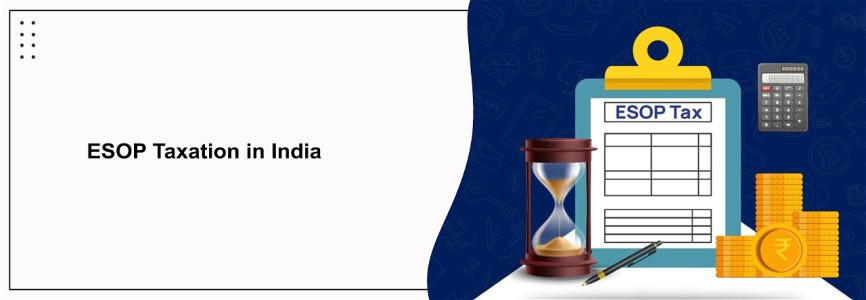



Employee Stock Option Plans, commonly known as ESOPs, have become an important part of employee compensation in India, especially in startups, technology companies and rapidly growing businesses. Instead of relying only on salary and cash incentives, startups often offer employees an opportunity to acquire shares in the company. This allows employees to participate in the future growth of the business while helping startups attract and retain talented professionals.
However, ESOPs also involve important tax implications. Employees may have to pay tax when they exercise their options even if they have not yet sold the shares or received any cash. A second tax liability may arise when the shares are eventually sold. For startups, ESOPs also create responsibilities relating to valuation, payroll, tax deduction, corporate approvals and employee communication.
What Is an ESOP?
An Employee Stock Option Plan is a scheme under which a company gives eligible employees the right to purchase or subscribe to its shares at a predetermined price after satisfying certain conditions. An ESOP does not normally give immediate ownership of shares. Instead, employees first receive options that become exercisable after the applicable vesting conditions are fulfilled.
Grant of ESOPs
The grant is the first stage of an ESOP arrangement. At this stage, the company communicates to the employee the number of options granted, the exercise price, vesting schedule and other important terms. Merely receiving an ESOP grant generally does not result in immediate taxation because the employee has not yet acquired the underlying shares.
Vesting of Options
Vesting refers to the stage at which the employee earns the right to exercise the options. Companies may provide time-based vesting, performance-based vesting or a combination of both. For example, 25% of the options may vest every year over four years. Normally, tax does not arise merely because an option has vested.
Exercise of Options
Exercise occurs when an employee chooses to convert vested options into actual shares by paying the applicable exercise price. This is one of the most important stages from a taxation perspective because the fair market value of the shares on the exercise date is considered while determining the taxable ESOP perquisite.
Allotment of Shares
After the employee exercises the options and pays the required amount, the company allots or transfers the shares. The difference between the prescribed fair market value and the amount paid by the employee can become taxable as salary income in the form of a perquisite.
Sale of ESOP Shares
The final stage normally occurs when the employee sells the shares acquired through the ESOP. Any increase or decrease in value after the shares were acquired is considered separately for capital gains taxation. Therefore, ESOPs can create one tax liability when shares are acquired and another when they are eventually sold.
How Are ESOPs Taxed in India?
ESOP taxation in India broadly takes place at two different stages. The first stage occurs when the employee exercises the option and receives shares, while the second stage arises when those shares are subsequently sold.
Tax at the Time of Exercise
When an employee exercises an ESOP, the difference between the fair market value of the share and the exercise price paid by the employee is generally treated as a taxable salary perquisite. This amount is added to the employee's taxable salary and taxed according to the applicable income-tax provisions.
For example, suppose an employee exercises 5,000 options at an exercise price of Rs.50 per share when the fair market value is Rs.200 per share. The difference of Rs.150 per share represents the taxable perquisite. Therefore, Rs.7,50,000 may be included in the employee's taxable salary.
Tax at the Time of Sale
When the employee eventually sells the shares, the transaction becomes relevant for capital gains taxation. The fair market value that was considered while calculating the salary perquisite generally becomes the cost of acquisition for the purpose of calculating capital gains. The difference between the sale price and this cost is then treated as a capital gain or capital loss.
Calculation of ESOP Perquisite Value
The taxable value of an ESOP benefit is primarily based on the difference between the fair market value of the share and the price actually paid by the employee.
Fair Market Value of Shares
Fair Market Value, commonly referred to as FMV, represents the value of the company's shares determined according to the prescribed tax rules. FMV is important because the taxable benefit enjoyed by the employee is measured with reference to this value on the relevant exercise date.
Exercise Price
The exercise price is the amount an employee is required to pay to acquire each share after exercising the ESOP. It is usually fixed when the options are granted and may be significantly lower than the future market value of the shares if the company grows substantially.
Taxable Perquisite Formula
The taxable perquisite can broadly be calculated by subtracting the exercise price from the fair market value of each share and multiplying the difference by the number of shares exercised. Therefore, if the FMV is Rs.500 and the exercise price is Rs.100, the taxable value would generally be Rs.400 per share.
How Is Fair Market Value Determined?
The manner in which fair market value is determined depends upon whether the company's shares are listed on a recognised stock exchange or remain unlisted.
FMV of Listed Shares
For listed shares, the fair market value is generally determined with reference to the stock market price on the exercise date in accordance with the applicable valuation rules. Since listed securities have observable market prices, determining their value is relatively straightforward compared with private-company shares.
FMV of Unlisted Shares
For unlisted companies and startups, there is no public market price available. Therefore, valuation must be carried out according to the prescribed income-tax valuation mechanism. In applicable cases, a Category I Merchant Banker registered with SEBI determines the FMV of the unlisted shares for ESOP taxation purposes.
Importance of Correct Valuation
An incorrect valuation can lead to incorrect taxation of employees and may also create compliance risks for the employer. Startups should therefore ensure that valuation is completed by an appropriately qualified professional and within the prescribed validity period before processing employee exercises.
TDS Liability of the Employer
Since the taxable value of ESOPs is generally treated as salary income, employers have important tax deduction responsibilities.
Inclusion in Salary Income
The taxable ESOP perquisite is generally included in the employee's salary for tax purposes. This means that the employer must account for the value while determining the employee's taxable salary and applicable tax deduction.
TDS on ESOP Perquisite
The employer is generally responsible for deducting tax on the taxable ESOP benefit in accordance with the applicable salary withholding provisions. The tax can create a cash-flow challenge because the employee may be required to bear the tax even though the employee has not yet sold the shares.
Payroll Compliance
Startups should ensure that ESOP exercises are correctly coordinated between the company's HR, payroll, finance, legal and tax teams. A failure to communicate exercise information to payroll can result in incorrect TDS deductions, salary reporting and employee tax statements.
ESOP Tax Deferment for Eligible Startups
Indian tax law provides a special tax-deferment mechanism for employees of certain eligible startups to address the liquidity difficulties associated with ESOP taxation.
Purpose of Tax Deferment
The purpose of the deferment mechanism is to prevent eligible startup employees from being forced to pay immediate tax on shares that may not have any readily available market. Since shares of private startups cannot generally be sold on a stock exchange, employees can otherwise face a significant tax liability without receiving cash.
Deferment Does Not Mean Tax Exemption
Employees should understand that the benefit only postpones the payment of tax. It does not make the ESOP income tax-free. Once one of the prescribed triggering events occurs, the deferred tax must be paid within the applicable statutory period.
Events Triggering Payment of Deferred Tax
The deferred ESOP tax becomes payable upon the occurrence of the earliest prescribed event. These events broadly include expiry of the specified deferment period, sale of the relevant shares or cessation of the employee's employment with the eligible startup.
Eligibility of the Startup
Not every startup can automatically claim the ESOP tax deferment benefit. The employer must satisfy the definition and conditions applicable to an eligible startup under the income-tax framework. Therefore, employees should confirm the employer's eligibility instead of assuming that every DPIIT-recognised startup automatically qualifies.
Capital Gains Tax on Sale of ESOP Shares
Once the employee sells the shares acquired through an ESOP, the transaction is generally treated separately from the earlier salary taxation.
Cost of Acquisition
The fair market value considered for calculating the employee's taxable ESOP perquisite generally becomes the cost of acquisition of those shares for capital gains purposes. This prevents the same portion of the share value from ordinarily being taxed again as a capital gain.
Calculation of Capital Gain
Capital gain is broadly calculated by deducting the applicable cost of acquisition and eligible transfer expenses from the sale consideration. If the shares are sold at a price higher than the cost, the employee may earn a capital gain. If the sale price is lower, the transaction can result in a capital loss.
Example of Capital Gain
Suppose an employee exercises an ESOP when the FMV is Rs.300 per share and the exercise price is Rs.50. The difference of Rs.250 is taxed as a salary perquisite. If the employee later sells the share for Rs.450, the capital gain would generally be calculated with reference to Rs.300 as the cost of acquisition. Accordingly, the subsequent appreciation of Rs.150 per share would be considered for capital gains taxation.
Short-Term and Long-Term Capital Gains
The tax treatment of capital gains depends on how long the shares were held and whether they are listed or unlisted.
Listed ESOP Shares
For listed equity shares, the prescribed holding period determines whether the gain is classified as short-term or long-term. Applicable tax rates also depend on statutory conditions, including Securities Transaction Tax requirements in relevant cases.
Unlisted Startup Shares
Most startup ESOP shares are unlisted. The applicable holding period for determining whether the gain is short-term or long-term is therefore different from that applicable to listed equity shares. Employees should carefully examine the period between allotment and sale before calculating their tax liability.
Holding Period of ESOP Shares
For ESOP shares, the holding period is generally linked to the date on which the underlying shares are allotted rather than the original date on which the options were granted. This distinction is important because the classification of the resulting capital gain can depend on the exact allotment and sale dates.
What Happens if the Share Value Falls?
ESOPs involve investment risk, and employees may sometimes exercise their options at a high valuation only to see the share price decline later.
Tax May Already Have Been Paid
Suppose an employee exercises shares when the FMV is Rs.500 per share and pays an exercise price of Rs.100. The Rs.400 difference may already have been treated as salary income. If the value later falls to Rs.300 and the employee sells the shares, the earlier salary taxation is not automatically reversed.
Capital Loss May Arise
Because the FMV used for salary taxation generally becomes the cost of acquisition, selling below that value can create a capital loss. Such loss is dealt with separately under the applicable capital gains provisions and is not simply deducted from the employee's earlier salary income.
Liquidity Risk for Employees
This illustrates the liquidity or dry-tax risk associated with ESOPs. An employee can become liable to tax based on the paper value of the shares without necessarily receiving corresponding cash. Employees should therefore consider both the company's valuation and the availability of liquidity before exercising substantial ESOP holdings.
ESOP Compliance Requirements for Startups
A startup cannot simply promise shares informally to employees. A legally compliant ESOP Compliance arrangement requires proper documentation, approvals and ongoing administration.
Preparation of ESOP Scheme
The company should prepare a comprehensive ESOP scheme explaining eligibility, vesting, exercise conditions, exercise period, lapse of options, employee separation, treatment in case of death or disability, and other relevant rights and restrictions.
Corporate Approvals
The issue of employee stock options must comply with the Companies Act, 2013 and the applicable rules. Necessary Board and shareholder approvals should be obtained before implementing the ESOP scheme and granting options.
Maintenance of ESOP Records
Startups should maintain complete records relating to options granted, vested, exercised, cancelled and outstanding. These records should also correspond with the company's cap table and statutory registers.
Valuation Documentation
Where required, the company should obtain a proper valuation for determining the fair market value of shares. The valuation report and supporting documents should be preserved as part of the ESOP and tax compliance records.
Employee Disclosures
Employees should be given clear information about their grant, vesting conditions, exercise price, applicable taxation and possible liquidity restrictions. This helps employees understand the real economic value of their ESOPs instead of focusing only on the number of options granted.
ESOPs in Listed Companies and Startups
Although the fundamental concept of ESOP taxation is similar, the practical experience can differ significantly between listed and unlisted companies.
Listed Company ESOPs
Employees of listed companies may have better liquidity because shares can generally be sold on the stock exchange, subject to applicable restrictions. This may allow employees to sell some shares to meet their tax liability.
Startup ESOPs
Employees of startups may receive shares that have a high valuation but cannot be sold immediately. Transfer restrictions, shareholder agreements, investor rights and the absence of a public market can prevent employees from obtaining liquidity.
Importance of Exit Opportunities
Employees should understand whether the startup has any mechanism such as an ESOP buyback, secondary sale, acquisition or proposed IPO that may provide future liquidity. However, such events are not guaranteed and should not be treated as certain when making exercise decisions.
Factors Employees Should Consider Before Exercising ESOPs
Exercising an ESOP should be treated as a financial decision rather than an automatic step after vesting.
-
Current Fair Market Value: The employee should examine the current FMV because a higher FMV generally results in a higher taxable perquisite where the exercise price remains unchanged.
-
Exercise Cost: Employees must consider the actual amount required to purchase the shares. A large number of options can require a substantial upfront payment even before tax is considered.
-
Tax Liability: The potential salary tax arising on exercise should be calculated before the employee commits to exercising a large number of options. This is particularly important where the company is privately held.
-
Future Growth Expectations: Employees may consider the company's prospects and expected future valuation. However, startup valuations can increase or decrease, and employees should avoid treating projections as guaranteed returns.
-
Liquidity Availability: Before exercising, employees should determine whether there is a realistic mechanism to sell the shares. Where no liquidity event is expected in the near term, the employee may have to hold the shares for several years.
-
Employment Plans: Employees should also examine the consequences of resignation or termination. Some ESOP schemes provide only a limited period for exercising vested options after leaving the company, while special tax-deferment provisions may also be affected by cessation of employment.
Benefits of ESOPs for Startups
ESOPs provide several strategic advantages to emerging companies when properly designed.
-
Employee Retention: A vesting schedule encourages employees to remain with the company for a longer period because they continue earning rights over their options while they remain employed.
-
Alignment With Business Growth: Employees holding ESOPs have a direct financial interest in the long-term growth of the company. This can create stronger alignment between employees, founders and investors.
-
Conservation of Cash: Early-stage startups may have limited cash resources. ESOPs can allow companies to offer competitive compensation packages without paying the entire value in immediate cash.
-
Talent Attraction: High-quality professionals may accept a startup opportunity when the compensation package includes meaningful equity participation and the possibility of benefiting from future company growth.
Common Mistakes in ESOP Taxation
ESOP taxation is often misunderstood by both employees and startups.
-
Assuming Tax Arises Only on Sale: Many employees assume they do not have any tax liability until the shares are sold. In reality, taxable salary income can arise much earlier when the options are exercised and shares are acquired.
-
Ignoring Valuation Requirements: Startups sometimes rely on an internal valuation or the latest investment price without verifying the applicable tax valuation rules. An improper valuation can result in incorrect employee taxation.
-
Confusing Vesting With Exercise: Vesting only gives the employee the right to exercise options. The employee does not necessarily become a shareholder at the vesting stage. Tax treatment should therefore be analysed according to the actual stage of the ESOP.
-
Treating Deferment as Exemption: The eligible-startup ESOP benefit only postpones tax payment. Employees should make financial arrangements for the liability because the tax eventually becomes payable.
-
Ignoring Exit Conditions: Employees sometimes resign without reviewing their ESOP agreement. This can lead to expiry of vested options or trigger tax consequences relating to deferred ESOP tax.
Conclusion
ESOPs can be a powerful wealth-creation opportunity for employees and an effective talent-management tool for startups. However, their real value can only be understood after considering taxation, exercise costs, valuation and liquidity. Employees should recognise that an ESOP is not the same as cash compensation and that tax may arise even before shares are sold.
For startups, implementing an ESOP scheme requires careful planning across company law, taxation, valuation, payroll and employee communication. A properly structured ESOP plan can strengthen employee retention and align teams with long-term growth, while improper implementation can create disputes and unexpected tax liabilities. Both employees and startups should therefore evaluate the legal and tax implications before exercising options, issuing shares or carrying out an ESOP liquidity transaction.
Frequently Asked Questions
Q1. Are ESOPs taxable when granted?
Ans. Generally, the grant of an ESOP does not itself create an immediate income-tax liability. The employee has only received a right to acquire shares in the future and has not yet received the shares.
Q2. Is tax payable when ESOPs vest?
Ans. Normally, vesting itself does not result in taxation. Vesting only makes the options eligible for exercise subject to the conditions mentioned in the ESOP scheme.
Q3. When does ESOP tax arise for an employee?
Ans. The first major tax event normally occurs when the employee exercises the option and shares are allotted or transferred. The taxable benefit is generally calculated using the difference between the FMV and exercise price.
Q4. How is ESOP perquisite value calculated?
Ans. The taxable perquisite is broadly calculated by subtracting the exercise price from the FMV on the exercise date and multiplying the resulting amount by the number of shares exercised.
Q5. Who determines the FMV of unlisted startup shares?
Ans. For applicable ESOP taxation purposes, unlisted shares generally require valuation in accordance with the prescribed rules, including valuation by an eligible SEBI-registered Category I Merchant Banker where required.
Q6. Are ESOPs taxed again when sold?
Ans. The sale can create a separate capital gains tax event. However, the FMV already considered for salary taxation generally becomes the cost of acquisition, so only the subsequent increase in value is ordinarily considered for capital gains.
Q7. Can startup employees defer ESOP tax?
Ans. Employees of qualifying eligible startups may receive the benefit of the special tax-deferment provisions. Eligibility depends on the startup satisfying the applicable statutory conditions.
Q8. Is deferred ESOP tax waived permanently?
Ans. No. Tax deferment merely postpones payment. It does not eliminate the employee's tax liability.
Q9. What happens if ESOP shares fall in value?
Ans. If shares are later sold below the cost considered for capital gains purposes, the employee may incur a capital loss. The earlier salary-perquisite taxation is generally not automatically reversed.
Q10. Should employees exercise ESOPs immediately after vesting?
Ans. There is no single answer suitable for every employee. Exercise decisions should consider FMV, exercise price, tax liability, liquidity, expected future growth, employment plans and the expiry period of vested options.


_crop10_thumb.jpg)





_crop10_thumb.jpg)
_crop10_thumb.jpg)


_crop10_thumb.jpg)


_crop10_thumb.jpg)


_crop10_thumb.jpg)

_crop10_thumb.jpg)


-suratgujarat-section-158_crop10_thumb.jpg)
-suratgujarat_crop10_thumb.jpg)
-(33)_crop10_thumb.jpg)


-ahmedabad_crop10_thumb.jpg)
-learn_crop10_thumb.jpg)

-learnn_crop10_thumb.jpg)


_crop10_thumb.jpg)








_Guidelines_learn_crop10_thumb.jpg)


_learn_crop10_thumb.jpg)
_crop10_thumb.jpeg)


_crop10_thumb.jpg)


_Second_Amendment_Rules,_2025_learn_crop10_thumb.jpg)


_learn_crop10_thumb.jpg)




















_learn_crop10_thumb.jpeg)




















_learn_crop10_thumb.jpg)


_rd_roc_learn_crop10_thumb.jpg)














_learn_crop10_thumb.jpg)










_learn_crop10_thumb.jpg)
_Learn_crop10_thumb.jpg)






























_learn_crop10_thumb.jpg)


_learn_crop10_thumb.jpg)









_crop10_thumb.jpeg)















_crop10_thumb.jpg)
















_crop10_thumb.jpg)