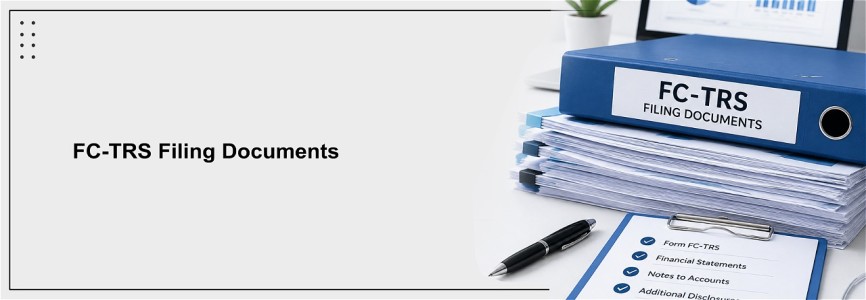



Complete Guide to FEMA Valuation, Form 15CA/15CB, TDS on Share Transfer and AD Bank Requirements
A transfer of equity instruments of an Indian company between a person resident in India and a person resident outside India is generally required to be reported in Form FC-TRS through the RBI FIRMS Portal.
Form FC-TRS reporting is not merely a procedural FEMA filing. The transaction must satisfy:
- FEMA pricing guidelines;
- foreign investment entry-route and sectoral conditions;
- mode-of-payment requirements;
- applicable Income-tax withholding obligations;
- valuation requirements; and
- documentary requirements prescribed by the Authorised Dealer Category-I Bank.
Where an Indian resident purchases shares from a non-resident shareholder, the transaction may also involve capital-gains taxation, withholding tax, Form 15CA, Form 15CB and outward remittance of the sale consideration.nThrough this article explains the principal requirements relating to the CA certificate for Form FC-TRS, valuation certificate, tax-clearance documents, Form 15CA/15CB and declarations generally requested by AD Banks.
Important: The exact document checklist may differ between AD Banks and according to the nature of the transaction. Parties should obtain the bank-specific checklist before completing the transaction.
What is Form FC-TRS?
Form FC-TRS stands for Foreign Currency–Transfer of Shares. It is filed through the Single Master Form facility on the RBI FIRMS Portal for reporting prescribed transfers of equity instruments of an Indian company.
FC-TRS reporting generally applies to transfers involving:
- A person resident outside India holding equity instruments on a repatriation basis and a person resident in India; or
- A person resident outside India holding equity instruments on a repatriation basis and another person resident outside India holding them on a non-repatriation basis.
Certain transfers, including prescribed transfers between a non-resident holding instruments on a non-repatriation basis and a resident, may not require FC-TRS reporting. Every transaction should therefore be examined according to its residency, repatriation status and mode of transfer.
Under the RBI reporting structure, Form FC-TRS must generally be filed within 60 days from the date of transfer of equity instruments or receipt/remittance of funds, whichever is earlier. The reporting obligation ordinarily falls on the resident transferor or resident transferee, as applicable.
What Instruments Are Covered by FC-TRS?
Form FC-TRS may apply to the transfer of eligible equity instruments of an Indian company, including:
- Equity shares;
- Fully, compulsorily and mandatorily convertible debentures;
- Fully, compulsorily and mandatorily convertible preference shares;
- Share warrants issued in accordance with applicable law; and
- Partly paid equity shares, subject to prescribed conditions.
Optionally convertible or non-convertible instruments are not automatically treated as equity instruments for foreign investment purposes. Their transfer must be examined under the applicable debt, borrowing or other FEMA structure.
FEMA Pricing Guidelines for Transfer of Shares
The transfer price must comply with the pricing guidelines under the Foreign Exchange Management (Non-Debt Instruments) Rules, 2019.
Transfer from Resident to Non-Resident
When a resident transfers unlisted equity instruments to a non-resident, the transfer price should generally not be lower than the fair value determined under the prescribed valuation structure.
This prevents an Indian resident from transferring an Indian asset to a non-resident below its permissible fair value.
Transfer from Non-Resident to Resident
When a non-resident transfers equity instruments to a resident, the transfer price should generally not exceed the fair value determined under the applicable pricing methodology.
This prevents excessive foreign-exchange outflow from India.
Valuation Methodology
For unlisted equity instruments, valuation should be undertaken using an internationally accepted pricing methodology on an arm’s-length basis, duly certified by an eligible professional such as:
- Chartered Accountant;
- SEBI-registered Merchant Banker; or
- Practising Cost Accountant, where permitted.
DCF is a commonly used methodology, but it is not compulsory in every transaction. Depending on the business and circumstances, valuation may use:
- Discounted Cash Flow method;
- Comparable Companies Multiple method;
- Comparable Transactions method;
- Net Asset Value method;
- Market-based approach; or
- A combination of internationally accepted methods.
The valuation report should clearly state the valuation date, assumptions, projections, methodology, adjustments and fair value per instrument.
Is a CA Certificate Mandatory for Form FC-TRS?
A valuation certificate or valuation report is generally required where the FEMA pricing guidelines apply, especially for unlisted equity instruments.
In practice, AD Banks may additionally require a comprehensive Chartered Accountant’s certificate for FC-TRS covering:
- Particulars of the transferor and transferee;
- Residential status of the parties;
- Number and nature of equity instruments;
- Face value and transfer price;
- Total consideration;
- Valuation methodology;
- Fair value per instrument;
- Compliance with FEMA pricing guidelines;
- Computation of capital gains;
- Applicability of withholding tax;
- Details of TDS deposited;
- Form 15CA/15CB compliance;
- DTAA benefit, where claimed; and
- Details of any lower or nil withholding order.
However, it is important to distinguish between:
- A FEMA valuation certificate, which supports pricing compliance; and
- A tax certificate or Form 15CB, which examines taxability and remittance-related compliance.
A single consolidated certificate may be accepted by some AD Banks, while others may require separate valuation and tax certificates.
Income-tax Implications of Non-Resident Share Transfer
Where an Indian resident purchases shares of an Indian company from a non-resident, the amount paid to the non-resident seller may contain income chargeable to tax in India.
Historically, Section 195 of the Income-tax Act, 1961 required the payer to deduct tax when making a payment to a non-resident if the sum was chargeable to tax in India. The applicable withholding must now also be reviewed under the Income-tax Act, 2025, effective from 1 April 2026, together with the applicable rules, notifications and transitional provisions.
The tax analysis ordinarily covers:
- Residential status of the seller;
- Period for which the shares were held;
- Cost of acquisition;
- Sale consideration;
- Fair-market-value provisions;
- Short-term or long-term nature of capital gains;
- Applicable tax rate;
- Surcharge and health and education cess;
- Availability of indexation, where applicable;
- Treaty eligibility;
- Tax Residency Certificate;
- Form 10F and beneficial-ownership documents;
- Permanent Establishment or business-connection exposure; and
- Availability of a lower or nil withholding certificate.
A transaction should not automatically be treated as tax-exempt merely because the non-resident has no Permanent Establishment in India. Capital gains from shares of an Indian company may be taxable in India independently of the existence of a PE, subject to the applicable DTAA.
Form 15CA and Form 15CB for Outward Remittance
The reference sometimes made to “Form 16CA/16CB” in share-transfer documentation is incorrect. The relevant remittance forms are Form 15CA and Form 15CB.
- Form 15CA contains information regarding a payment made to a non-resident or foreign company. Form 15CB is a certificate issued by a Chartered Accountant examining the nature of remittance, taxability and applicable withholding.
- Form 15CB is not mandatory for every foreign remittance.
The applicable part of Form 15CA generally depends on the value and taxability of the remittance:
|
Form 15CA part |
General application |
|
Part A |
Taxable remittance or aggregate remittances not exceeding ?5 lakh during the financial year |
|
Part B |
Remittance exceeding ?5 lakh where an order or certificate from the Assessing Officer has been obtained |
|
Part C |
Remittance exceeding ?5 lakh where a CA certificate in Form 15CB has been obtained |
|
Part D |
Remittance not chargeable to tax, subject to the applicable rules |
The Income Tax Department confirms that Form 15CB is event-based and is not mandatory in every remittance case. Source: Income Tax Department—Form 15CA FAQs
Is an Income-tax NOC Mandatory for FC-TRS?
An Income-tax NOC or tax-clearance certificate should not be described as universally mandatory for every FC-TRS filing.
Depending upon the transaction and the AD Bank’s internal compliance policy, the bank may seek one or more of the following:
- Evidence of TDS deduction and deposit;
- Form 15CA acknowledgment;
- Form 15CB;
- Lower or nil withholding certificate;
- Chartered Accountant’s tax-computation certificate;
- Tax Residency Certificate and Form 10F;
- Declaration from the non-resident seller;
- Indemnity from the payer or seller; or
- An order from the Assessing Officer determining the appropriate portion chargeable to tax.
A lower or nil deduction certificate becomes relevant where the applicant seeks withholding at a rate lower than the rate otherwise applicable.
An application for determining the appropriate taxable amount may also be considered where only part of the gross remittance represents income chargeable to tax.
Therefore, the document should ordinarily be described as a lower/nil withholding certificate or order, rather than a general “tax clearance certificate,” unless the relevant authority or AD Bank has specifically used that expression.
Typical AD Bank Document Checklist for FC-TRS
The following documents are commonly requested for an FC-TRS filing:
Transaction Documents
- Executed Share Purchase Agreement;
- Share Transfer Agreement or consent letters;
- Board approvals, where applicable;
- Share certificates or demat statements;
- Form SH-4, where legally applicable;
- Proof of payment or receipt of consideration;
- Foreign inward remittance certificate or bank advice;
- Outward remittance documents;
- KYC report from the remittance-receiving bank;
- Details of deferred consideration or escrow, if any.
FEMA and Corporate Documents
- Valuation report;
- CA or Merchant Banker valuation certificate;
- Declaration regarding compliance with FEMA pricing guidelines;
- Sectoral-cap and entry-route declaration;
- Government approval, where applicable;
- Declaration regarding beneficial ownership and land-border restrictions;
- Company’s latest shareholding pattern;
- Pre- and post-transfer shareholding;
- Certificate of incorporation, memorandum and articles;
- PAN and CIN of the Indian company;
- Board resolution or authorisation for the FIRMS filing;
- Entity Master registration details.
Income-tax Documents
- Capital-gains computation;
- CA tax certificate;
- Form 15CA acknowledgment;
- Form 15CB, where applicable;
- TDS challan;
- TDS return details;
- Lower or nil withholding certificate, where obtained;
- PAN of the non-resident seller;
- Tax Residency Certificate;
- Form 10F;
- No-PE or business-connection declaration, where relevant;
- Beneficial-ownership declaration;
- DTAA eligibility declaration;
- Tax indemnity.
This checklist is indicative. The concerned AD Category-I Bank may request additional documents before approving the filing or permitting outward remittance.
Format for CA Certificate for Form FC-TRS
To
The Authorised Dealer Category-I Bank
[Name and branch of the AD Bank]
Subject: Certificate regarding valuation, FEMA pricing and tax compliance for transfer of equity instruments of [Indian Company Name]
We have examined the documents and information made available to us in connection with the proposed/completed transfer of equity instruments of [Company Name], bearing CIN [CIN], and having its registered office at [address].
Based on the records, explanations and representations provided to us, we certify as follows:
1. Particulars of the Transaction
|
Particulars |
Details |
|
Transferor |
[Name, address, country and PAN/tax identification number] |
|
Transferee |
[Name, address, country and PAN/tax identification number] |
|
Residential status |
[Resident/non-resident status of each party] |
|
Nature of transfer |
[Resident to non-resident/non-resident to resident] |
|
Instrument |
[Number and type of equity instruments] |
|
Face value |
?[amount] per instrument |
|
Agreed price |
?[amount] per instrument |
|
Total consideration |
?[amount] |
|
Foreign-currency equivalent |
[Currency and amount] |
|
Valuation date |
[date] |
|
Fair value |
?[amount] per instrument |
|
Valuation methodology |
[methodology] |
2. FEMA Pricing Compliance
The fair value of the equity instruments has been determined using [methodology], being an internationally accepted pricing methodology applied on an arm’s-length basis.
The agreed transfer price of ?[amount] per instrument is:
- Not less than the applicable fair value in the case of a transfer from a resident to a non-resident; or
- Not more than the applicable fair value in the case of a transfer from a non-resident to a resident.
Accordingly, based on the documents and representations examined, the transfer price complies with the applicable FEMA pricing guidelines.
3. Tax Compliance
Based on the documents and information furnished:
- Sale consideration: ?[amount];
- Cost of acquisition: ?[amount];
- Expenses connected with transfer: ?[amount];
- Capital gain/loss: ?[amount];
- Applicable domestic-law/treaty provision: [details];
- Applicable withholding rate: [rate];
- Tax required to be withheld: ?[amount];
- Tax actually withheld: ?[amount];
- Challan details: [BSR code, challan number and date];
- Form 15CA acknowledgment number: [number];
- Form 15CB UDIN: [number]; and
- Lower/nil withholding certificate details, if applicable: [details].
The applicable withholding treatment has been determined on the basis of the representations, supporting documents and treaty-eligibility documents furnished to us.
This certificate is issued at the request of [applicant] exclusively for submission to the Authorised Dealer Bank in connection with Form FC-TRS reporting and related remittance formalities.
For [CA Firm Name]
Chartered Accountants
Firm Registration No.: [FRN]
[Signature]
[Name of Chartered Accountant]
Membership No.: [number]
UDIN: [number]
Place: [place]
Date: [date]
Suggested Non-Resident Transferor Declaration
I/We, [name of non-resident transferor], residing at/incorporated in [country and complete address], hereby declare that:
- I/We am/are a tax resident of [country] and have furnished a valid Tax Residency Certificate for the relevant period.
- The information furnished in the Tax Residency Certificate, Form 10F and other treaty documents is true and complete.
- I/We am/are the legal and beneficial owner of [number and type] equity instruments of [Indian company].
- The instruments have been acquired and held in accordance with applicable law.
- I/We have disclosed whether any Permanent Establishment, fixed base or business connection exists in India relevant to this transaction.
- Applicable Indian tax on the transfer has been or shall be discharged through withholding, advance tax, self-assessment tax or another legally permissible mechanism.
- I/We shall provide such information and assistance as may reasonably be required in connection with the tax assessment or regulatory verification of this transaction.
- I/We undertake to indemnify the buyer against any loss arising from a material misstatement or omission in the information and documents furnished by us, subject to the terms of the transaction agreement.
Signature: __________________
Name: [name]
Passport/Registration/Tax ID: [details]
Country: [country]
Date: [date]
Common Reasons for FC-TRS Rejection or Resubmission
AD Banks frequently return FC-TRS filings due to:
- Filing beyond the prescribed period;
- Incorrect reporting entity or applicant;
- Mismatch between Entity Master and transaction details;
- Incorrect residential or repatriation status;
- Valuation date not acceptable to the bank;
- Transfer price violating FEMA pricing guidelines;
- Absence of valuation workings;
- Incorrect instrument classification;
- Mismatch in the number of shares or consideration;
- Incomplete KYC report;
- Missing FIRC or bank advice;
- Non-submission of Form 15CA/15CB;
- Inadequate capital-gains computation;
- DTAA benefit claimed without TRC or Form 10F;
- Failure to submit TDS challan;
- Missing government approval;
- Inadequate beneficial-ownership declaration; or
- Failure to address delayed-reporting consequences.
Practical Compliance Steps
For a smooth FC-TRS filing, the parties should follow this sequence:
- Confirm the residential and repatriation status of both parties.
- Verify whether the proposed transfer is permitted under the automatic route or requires government approval.
- Check sectoral caps, performance conditions and beneficial-ownership restrictions.
- Obtain the FEMA valuation report before finalising the transfer price.
- Execute the share-transfer documents.
- Determine capital gains and withholding obligations before making payment.
- Obtain Form 15CB, file Form 15CA and deposit TDS, wherever applicable.
- Complete remittance and collect the banking and KYC documents.
- Update the company’s prescribed corporate and beneficial-ownership records.
- File Form FC-TRS within the applicable 60-day period.
- Respond promptly to any clarification raised by the AD Bank.
Final Notes:
A successful Form FC-TRS filing on the RBI FIRMS Portal requires coordination between FEMA valuation, corporate documentation, banking evidence and income-tax compliance.
The CA certificate should not contain broad or unsupported confirmations. It should clearly distinguish between:
- FEMA pricing certification;
- Capital-gains computation;
- Withholding-tax compliance;
- Form 15CA/15CB compliance; and
- Representations received from the transferor and transferee.
Similarly, an Income-tax NOC should not be treated as compulsory in every transaction. The appropriate documents depend on whether the remittance is taxable, whether lower or nil withholding is claimed, and what the concerned AD Bank requires.
Professional review before fixing the consideration or remitting funds can help avoid incorrect pricing, excess withholding, FC-TRS resubmission and delayed-reporting consequences.


_crop10_thumb.jpg)





_crop10_thumb.jpg)
_crop10_thumb.jpg)


_crop10_thumb.jpg)


_crop10_thumb.jpg)


_crop10_thumb.jpg)

_crop10_thumb.jpg)


-suratgujarat-section-158_crop10_thumb.jpg)
-suratgujarat_crop10_thumb.jpg)
-(33)_crop10_thumb.jpg)


-ahmedabad_crop10_thumb.jpg)
-learn_crop10_thumb.jpg)

-learnn_crop10_thumb.jpg)


_crop10_thumb.jpg)






_Guidelines_learn_crop10_thumb.jpg)


_learn_crop10_thumb.jpg)
_crop10_thumb.jpeg)


_crop10_thumb.jpg)


_Second_Amendment_Rules,_2025_learn_crop10_thumb.jpg)


_learn_crop10_thumb.jpg)

















_learn_crop10_thumb.jpeg)
















_learn_crop10_thumb.jpg)

_rd_roc_learn_crop10_thumb.jpg)












_learn_crop10_thumb.jpg)










_learn_crop10_thumb.jpg)
_Learn_crop10_thumb.jpg)

























_learn_crop10_thumb.jpg)

_learn_crop10_thumb.jpg)








_crop10_thumb.jpeg)












_crop10_thumb.jpg)
















_crop10_thumb.jpg)