


Corporate compliance under the Companies Act, 2013 ("the Act") is unforgiving in its timelines. Annual General Meetings (AGMs) must be held within statutorily fixed windows, financial statements and annual returns must be filed within prescribed periods. In the ordinary course of business, however, defaults do occur due to following major reasons:
-
Departure of a key employee at the wrong time,
-
Books of account take longer than expected to finalise,
-
oversight in tracking statutory due dates causes a company missing a deadline.
The good news is that the Act does not provide penalty in every default. Section 441 of the Companies Act, 2013 provides a mechanism called "compounding of offences", which allows a company and its officers to regularise certain defaults by paying a composition fee, instead of facing prosecution. This article explains the compounding framework in general terms, distinguishes it from the newer "penalty" regime that applies to several other defaults.
What Is "Compounding" and Why Does It Matter?
Compounding is, in essence, a settlement mechanism. Many provisions of the Act, if contravened, technically constitute an "offence" punishable with a "fine". Section 441 allows such offences (where they are punishable with fine only, and not with fine or imprisonment) to be "compounded". In which the company and the officers in default can apply to the competent authority, admit the default, explain the circumstances, and pay a composition amount, in lieu of prosecution.
The Legal Framework:
Section 441 splits compounding jurisdiction based on the quantum of fine involved:
-
Regional Director (RD): Where the maximum amount of fine which may be imposed for the offence does not exceed Rs.25,00,000.
-
National Company Law Tribunal (NCLT): Where the fine exceeds Rs.25,00,000.
Certain restrictions also apply. An offence cannot be compounded if:
-
Investigation has been initiated or is pending against the company, or
-
The same offence has been compounded within the preceding three years (in the case of a company or officer already compounded for the same or similar default earlier).
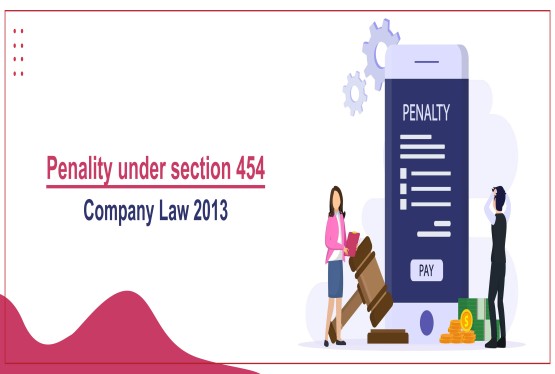
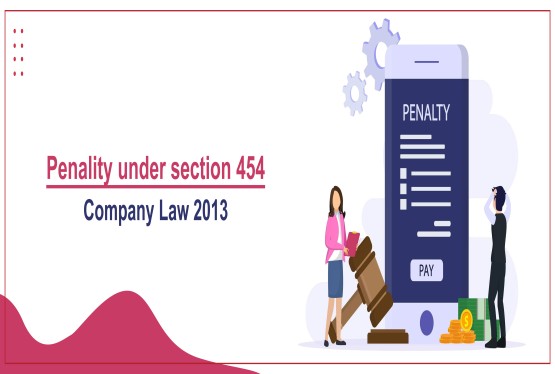
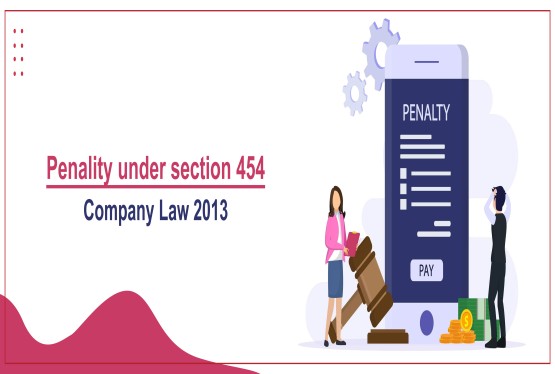
It is also worth noting explicitly that not every default under the Act is compoundable. Penalty provisions are not compounded under Section 441 at all; instead, they are dealt with through an in-house adjudication mechanism under Section 454, where the Registrar of Companies (ROC) himself acts as the Adjudicating Officer, issues a show-cause notice, and levies the penalty, with an appeal lying to the Regional Director.
The Statutory Provision in Focus: Section 96 and Section 99
Section 96(1) of the Act requires every company, other than a One Person Company, to hold an Annual General Meeting each year, subject to the following timelines:
-
The first AGM must be held within nine months from the closure of the first financial year.
-
Subsequent AGMs must be held within six months from the closure of the relevant financial year.
-
In any event, the gap between two AGMs cannot exceed fifteen months.
-
The Registrar may, for special reasons, extend the time for holding an AGM (other than the first AGM) by a further period not exceeding three months, upon an application made in that behalf (the "third proviso" to Section 96(1).
If a company fails to hold its AGM within the above timelines and has not obtained an extension then it is treated as being in default of Section 96, and the consequence is spelt out in Section 99:
"If any default is made in holding a meeting of the company in accordance with Section 96 or Section 97 or Section 98, the company and every officer of the company who is in default shall be punishable with fine which may extend to one lakh rupees and, in the case of a continuing default, with a further fine which may extend to five thousand rupees for every day during which such default continues."
Two things stand out from this provision. First, the fine is levied separately on the company and on every officer in default (it is not a single), shared fine. Second, in addition to the base fine of up to Rs.1,00,000, a continuing fine of up to Rs.5,000 per day may also be imposed for as long as the default subsists.
Worked Illustration: Calculating the Delay and the Fine Exposure
To make this concrete, consider a (illustrative) private limited company whose financial year ended on 31 March 2025.
Step 1 - Identify the due date.
As this is not the company's first AGM, Section 96(1) requires the AGM to be held within six months from the close of the financial year, i.e., on or before 30 September 2025.
Step 2 - Identify the actual date of the AGM.
Assume, due to the sudden departure of a key employee responsible for finalising the books of account, the company's AGM could actually only be held on 5 November 2025.
Step 3 - Compute the period of delay.
This is done on a straightforward calendar basis:
|
From |
To |
Days |
|
30 September 2025 |
30 October 2025 |
30 days |
|
30 October 2025 |
5 November 2025 |
6 days |
|
Total delay |
|
36 days |
So the company held its AGM 36 days after the statutory due date, without having obtained an extension under the third proviso to Section 96(1) contravening Section 96(1), attracting fine under Section 99.
Step 4- Compute the fine exposure.
Assume the company has three directors so all three directors qualify as "officers in default" under Section 2(60) of the Act. The maximum fine exposure, computed separately for the company and for each officer in default, would be:
|
Party |
Maximum fine (base) |
|
The Company |
Rs.1,00,000 |
|
Director 1 |
Rs.1,00,000 |
|
Director 2 |
Rs.1,00,000 |
|
Director 3 |
Rs.1,00,000 |
|
Total maximum exposure |
Rs.4,00,000 |
In addition, Section 99 permits a further fine of up to Rs.5,000 per day of continuing default, per party. If this were computed strictly for the 36-day period, it could theoretically add up to Rs.1,80,000 per party (36 days × Rs.5,000). However, in practice, since the default was cured promptly the AGM was in fact held, bringing the continuing default to an end companies typically submit, in their compounding application, that the continuing-default component ought not to be separately levied, and request the RD to restrict the compounding fee to a reasonable amount having regard to the base fine, the short and unintentional nature of the delay, and the company's overall compliance record. The final composition amount is entirely within the discretion of the Regional Director, who typically imposes a fraction of the maximum, especially for first-time, short-duration, and voluntarily-disclosed defaults.
The Compounding Process, Step by Step
Once the default and the applicable section are correctly identified, the process to compound typically involves:
-
Curing the default first: Before applying for compounding, the underlying default should be rectified as in this illustration, that means actually holding the AGM.
-
Board Resolution: The Board passes a resolution authorising the filing of the compounding application, appointing a practising professional (Company Secretary/Chartered Accountant/Advocate) to represent the company, and authorising specific directors to sign the application, execute affidavits, and issue authorisations on the company's behalf.
-
Drafting the application: The application sets out the cause title, jurisdiction, facts of the case, the nature of default, the period of default (as computed above), the calculation of fine, the grounds justifying a lenient view (first-time default, no loss to stakeholders, prompt rectification, etc.), and the specific prayer for compounding.
-
Supporting documents: These typically include the Certificate of Incorporation, Memorandum and Articles of Association, copies of relevant e-forms and challans already filed, notice and minutes of the AGM once held, an affidavit of verification (sworn by an authorised director, confirming the application's contents are true and correct), and a Power of Attorney or letter of authorisation in favour of the professional representing the company.
-
E-filing Form GNL-1: The application is filed electronically in Form GNL-1 on the MCA portal, along with the prescribed filing fee, and is thereafter forwarded to the jurisdictional Regional Director.
-
Hearing before the Regional Director: The RD's office typically fixes a date for hearing, at which the authorised professional appears, presents the facts, and responds to any queries. Carrying a written synopsis, proof of current compliance, and identity/authorisation documents is advisable.
-
The Compounding Order: If satisfied, the RD passes an order compounding the offence upon payment of a specified composition fee (usually well below the statutory maximum for first-time, non-wilful defaults).
-
Post-order compliance: The composition fee is paid as directed, and the compounding order is thereafter filed with the Registrar of Companies in Form INC-28, formally closing out the default on record.
A well-drafted compounding application should, in the interest of full and candid disclosure, mention such connected defaults for context, while clearly stating that they do not form part of the relief being sought, and will be addressed through the appropriate adjudication route.
Practical Takeaways
-
Correctly classify the default first : Is it a "fine" (compoundable under Section 441) or a "penalty" (adjudicated under Section 454)? Getting this wrong wastes both time and the RD's/ROC's bandwidth.
-
Cure the default before applying: RDs are far more receptive to applications where the underlying non-compliance has already been rectified.
-
Compute the delay precisely: Using simple calendar-day counting from the statutory due date to the date of actual compliance, as illustrated above.
-
Present the fine exposure transparently : Showing both the base fine and, where relevant, the continuing-default component, while making a reasoned case for a lower composition amount.
Keep the paperwork tight
Board Resolution, Application, Affidavit of Verification, and Power of Attorney/authorisation letter are the essential four documents, supported by the underlying corporate records and filing receipts.
First-time, short, and voluntarily disclosed defaults
Are generally viewed favourably by Regional Directors, and typically attract a composition fee well below the statutory ceiling.
Conclusion
Section 441 compounding is one of the more taxpayer-friendly (or, more accurately, company-friendly) features of the Companies Act, 2013, it acknowledges that not every missed deadline reflects wilful non-compliance, and offers a structured, transparent path to regularise genuine, inadvertent defaults. For company secretaries and other compliance professionals, the discipline lies in correctly identifying which defaults qualify for compounding, computing the period and quantum of default with precision, and presenting a complete, honest, and well-documented case before the Regional Director. Done right, compounding converts what could be a prolonged compliance headache into a one-time, resolvable event, restoring the company's clean compliance record and allowing it to move forward.


_crop10_thumb.jpg)





_crop10_thumb.jpg)
_crop10_thumb.jpg)


_crop10_thumb.jpg)


_crop10_thumb.jpg)


_crop10_thumb.jpg)

_crop10_thumb.jpg)


-suratgujarat-section-158_crop10_thumb.jpg)
-suratgujarat_crop10_thumb.jpg)
-(33)_crop10_thumb.jpg)


-ahmedabad_crop10_thumb.jpg)
-learn_crop10_thumb.jpg)

-learnn_crop10_thumb.jpg)


_crop10_thumb.jpg)








_Guidelines_learn_crop10_thumb.jpg)


_learn_crop10_thumb.jpg)
_crop10_thumb.jpeg)


_crop10_thumb.jpg)


_Second_Amendment_Rules,_2025_learn_crop10_thumb.jpg)


_learn_crop10_thumb.jpg)



















_learn_crop10_thumb.jpeg)





















_learn_crop10_thumb.jpg)


_rd_roc_learn_crop10_thumb.jpg)













_learn_crop10_thumb.jpg)










_learn_crop10_thumb.jpg)
_Learn_crop10_thumb.jpg)

































_learn_crop10_thumb.jpg)




_learn_crop10_thumb.jpg)












_crop10_thumb.jpeg)


















_crop10_thumb.jpg)






















_crop10_thumb.jpg)