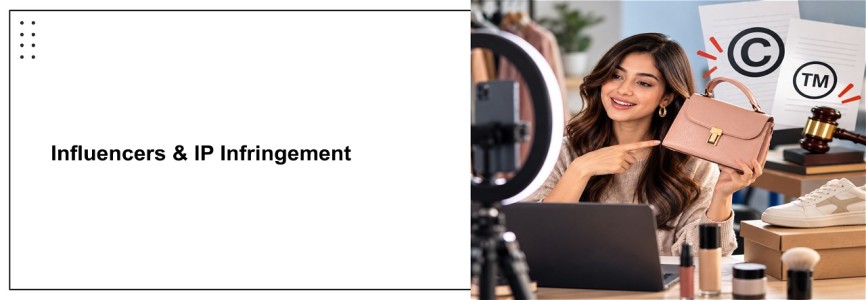



Influencer marketing has transformed social media from a platform for personal expression into a significant commercial marketplace. Influencers regularly create videos, photographs, reels, podcasts, product reviews and promotional content for audiences on platforms such as Instagram, YouTube and other social-media services. Brands increasingly rely on influencers not only to advertise products but also to create a personal and recognisable association between a product and its target audience.
This commercialisation raises an important legal question: Can an influencer infringe intellectual property rights while creating or publishing social-media content?
The answer is yes, but the analysis is highly fact-specific.
An influencer may potentially infringe copyright by using another person's protected photograph, video, artwork, music or other copyright-protected material without an appropriate legal basis. Trademark issues may arise where an influencer uses another party's mark in a manner falling within the statutory provisions on infringement. Product packaging, logos, designs and other creative elements may also create intellectual-property issues. At the same time, an influencer's content may itself be protected. Original videos, photographs, scripts, podcasts, branding and other qualifying works can become valuable intellectual-property assets, subject to questions of authorship, ownership, assignment and licensing.
Recent Delhi High Court litigation involving social-media influencers and digital creators demonstrates that influencer disputes can involve several overlapping areas of law, including copyright registration, trademark registration, passing off, personality/publicity rights, freedom of expression and the use of artificial intelligence. The legal challenge is therefore not simply to determine whether an influencer used someone else's material. The more precise question is what was used, how was it used, for what purpose, under what legal authority, and which legal right is actually engaged?
Why Influencers Create Intellectual Property Risks
Influencer content frequently combines several forms of intellectual property. A single social-media reel may contain:
-
an influencer's own video performance;
-
background music;
-
photographs;
-
a brand logo;
-
product packaging;
-
another person's artwork;
-
a film or television clip;
-
a trademarked slogan;
-
third-party photographs;
-
original graphics; and
-
AI-generated or AI-modified
Each element may have a different legal owner and may be protected under a different legal framework. Therefore, the fact that an influencer created a particular reel does not automatically mean that every element contained in that reel belongs to the influencer. Conversely, the mere appearance of another person's trademark or product in a genuine review does not automatically establish trademark infringement.
Copyright Infringement by Influencers
Copyright is one of the most obvious intellectual-property issues that can arise in influencer content. Depending on the nature of the work and the applicable statutory requirements, copyright may protect literary, dramatic, musical and artistic works, cinematograph films and sound recordings. An influencer may therefore face copyright-related issues when using:
-
photographs taken by professional photographers;
-
another creator's videos;
-
copyrighted music;
-
illustrations and artwork;
-
written scripts;
-
film or television clips;
-
product photographs;
-
advertising creatives; or
-
another creator's social-media
For example, if an influencer downloads a photographer's photograph from Instagram and incorporates it into a sponsored post without permission or another applicable legal basis, the fact that the photograph was publicly accessible online would not, by itself, make the photograph free for commercial use. Similarly, downloading another creator's video and re-uploading it to generate views or advertising revenue may raise copyright issues. The important question is not simply whether the material was found online, but whether the influencer had a legal basis to reproduce or otherwise exploit it.
"It Was on Instagram" Is Not a Copyright Defence
One of the most common misconceptions surrounding social-media content is that material publicly available online can automatically be copied and reused. That proposition is legally unsafe. Copyright does not ordinarily disappear merely because a work has been uploaded to Instagram, YouTube or another platform.
An influencer may have a lawful basis for using third-party material where, for example:
-
the influencer owns the relevant rights;
-
the copyright owner has granted permission;
-
an applicable licence covers the intended use;
-
the influencer has obtained contractual rights;
-
the use falls within an applicable statutory exception; or
-
another recognised legal basis permits the particular
The scope of a platform's own licence should also not be confused with permission to commercially reproduce every item appearing on that platform.
Music in Influencer Marketing
Music creates a particularly important copyright issue for influencers. A song being available through a social-media platform's music library does not necessarily mean that it can be used for every possible commercial purpose. The distinction between ordinary social-media use and commercial or sponsored advertising use can therefore be important.
For example, an influencer may use music in an ordinary personal reel under the terms applicable to that platform, while a paid brand campaign may require additional permissions depending on the relevant licence and rights involved. Influencers and agencies should therefore determine whether the relevant licence covers:
-
sponsored posts;
-
paid partnerships;
-
commercial advertisements;
-
branded content;
-
paid amplification; and
-
other intended
The safer approach is to verify the applicable licence rather than assume that platform availability equals unrestricted commercial permission.
Can an Influencer Infringe a Trademark?
Yes, the Trade Marks Act, 1999 provides protection against trademark infringement where its statutory requirements are satisfied. Section 29 contains several forms of infringement. Section 29(6), for example, identifies circumstances in which a person is treated as using a registered trademark, including certain uses in relation to advertising. Section 29(8) specifically addresses advertising of a registered trademark where the statutory requirements concerning unfair advantage, honest practices, distinctive character or reputation are satisfied.
However, not every reference to another person's trademark is automatically trademark infringement. Context is crucial. A genuine product review, news report, criticism or other legitimate reference may raise different legal considerations from an advertisement that falsely suggests an endorsement or commercial association.
When Does Use of a Brand Name Become Trademark Infringement?
Consider three different situations.
-
Situation A — Genuine Review : An influencer says: "I purchased Brand X's headphones and, in my experience, the battery life was poor." The mere reference to Brand X does not automatically establish trademark infringement. The complete factual and legal context would need to be considered.
-
Situation B — False Association: An influencer publishes: "Officially partnered with Brand X" when no such partnership exists. This may create serious issues concerning false association, passing off and trademark-related rights, depending on the circumstances.
-
Situation C — Authorised Sponsored Promotion: An influencer is engaged by Brand X and uses its trademark as part of an authorised promotional campaign. The use is fundamentally different because the brand has authorised the promotional activity.
Thus, the presence of a trademark in an influencer's content is not, by itself, sufficient to establish infringement.
False Endorsement and Passing Off
Influencer marketing makes endorsement particularly important. Consumers may associate a particular influencer with a product, service or commercial brand. If an unauthorised business uses the influencer's name, image, voice or content in a manner suggesting that the influencer has endorsed or partnered with the business, several legal issues may arise.
Depending on the facts, these may include:
-
passing off;
-
trademark infringement;
-
personality/publicity rights;
-
copyright infringement; and
-
other common-law
An Influencer's Name Can Become a Commercial Asset
Influencers increasingly operate through personal brands. An influencer may have:
-
a registered trademark;
-
a distinctive business name;
-
a podcast name;
-
a YouTube channel;
-
an online education brand;
-
a logo;
-
a catchphrase; or
-
other commercially distinctive
Trademark protection may therefore become relevant where the influencer or an associated business owns a registered mark or otherwise establishes enforceable rights. In the Warikoo litigation, the Court's interim order recorded registered "Warikoo" marks belonging to the second plaintiff and granted protection against specified unauthorised use. This illustrates an important point: an influencer's commercial identity may consist of several separate legal assets, rather than merely the person's popularity.
Copyright in an Influencer's Own Content
The analysis also operates in the opposite direction. An influencer may create copyright-protected works. For example, an original video, photograph, written script, artwork or podcast may contain protectable expression, subject to the requirements of copyright law. However, ownership should not automatically be assumed. An influencer may create content:
-
independently;
-
for a brand;
-
under an employment relationship;
-
through an agency;
-
jointly with another creator; or
-
pursuant to a contract assigning or licensing
Consequently, an influencer should examine authorship, first ownership, assignment and licence terms before asserting exclusive rights over commercial content. Suppose Influencer A creates an original product-review video and a third party downloads it, removes the watermark and uploads it elsewhere to generate advertising revenue. Depending on the ownership and other facts, the influencer or relevant rights-holder may have grounds to seek copyright remedies.
Raj Shamani and the Expanding Protection of Influencer Content
The Delhi High Court's proceedings involving content creator Raj Shamani demonstrate how multiple legal rights can converge in one dispute. Importantly, the Court separately observed that videos falling into categories such as parody, lampooning, satire or criticism should be dealt with separately because the applicable pleas and defences could materially differ.
This distinction is highly relevant to influencer litigation: not every use of an influencer's identity or content should automatically be treated as commercial infringement.
Can an Influencer Copy Another Influencer's Content?
Potentially, yes.
Social-media culture frequently involves trends, challenges, formats and recurring concepts. However, copyright generally protects qualifying expression rather than an abstract idea as such. For example, the general idea: "Ask strangers on the street five questions" does not automatically give one influencer a monopoly over that general concept.
But copying another influencer's actual:
-
script;
-
recorded footage;
-
photographs;
-
artwork;
-
original written expression; or
-
other copyright-protected expression
may create a different legal situation. The distinction between idea and expression therefore remains important in influencer disputes.
Influencers and Product Packaging
Influencers frequently display products in videos. A product package may contain:
-
trademarks;
-
artistic works;
-
designs;
-
photographs;
-
logos; and
-
distinctive get-up or packaging
Displaying a product during a genuine review is not automatically equivalent to infringing every IP right embodied in that product. However, deliberate reproduction or commercial exploitation of protected artwork, logos, packaging or other material may create legal issues depending on the relevant right, the manner of use and the statutory provisions involved.
The correct question is therefore: What exactly has been copied or used, and what is the legal purpose and effect of that use?
Influencer Reviews, Criticism and Freedom of Expression
One of the most difficult areas is the boundary between infringement and legitimate criticism. Influencers regularly review:
-
food;
-
cosmetics;
-
technology;
-
supplements;
-
automobiles;
-
hotels;
-
clothing; and
-
other commercial
A negative review does not automatically become trademark infringement simply because the brand dislikes it. This case is important because it demonstrates that a product review involving a brand's trademark or product images does not automatically become infringement.
Truth, Fair Comment and the Limits of the Article
San Nutrition also demonstrates the importance of distinguishing different causes of action. The Court considered the defences of truth and fair comment in the context of the claims before it and applied principles concerning freedom of speech and expression. It concluded at the interim stage that the impugned statements were not shown to be false or misleading or malicious in a manner that justified an injunction.
However, this should not be converted into a broad proposition that an influencer can say anything about a brand merely by calling it a "review". Factual assertions should have a reasonable evidentiary basis, particularly where serious allegations are made. Similarly, a sponsored competitor campaign making factual claims about another brand may require a different analysis from an independent consumer review.
Sponsored Content Creates Additional Risks
Influencers may receive:
-
money;
-
free products;
-
commissions;
-
affiliate revenue;
-
discounts;
-
equity;
-
travel;
-
services; or
-
other commercial
When an influencer promotes a product in exchange for commercial consideration, the relationship between the influencer and the brand becomes particularly important.
From an IP perspective, the parties should consider:
-
Who owns the creative material?
-
Who owns the campaign photographs?
-
Who owns the video?
-
Who owns the slogan?
-
Which trademarks may be used?
-
For how long may the content remain online?
-
Can the brand edit the influencer's content?
-
Can the brand reuse the influencer's image?
-
Can the influencer reuse campaign material?
-
Who bears responsibility if third-party material is incorporated?
These matters should preferably be addressed contractually.
Influencer Agreements and IP Ownership
Influencer contracts should ideally contain clear intellectual-property provisions. The agreement may specify:
-
whether copyright remains with the influencer;
-
whether the brand receives a licence;
-
whether the licence is exclusive or non-exclusive;
-
geographical scope;
-
duration;
-
platforms covered;
-
paid-advertising rights;
-
editing rights;
-
sublicensing rights;
-
reposting rights;
-
paid amplification or whitelisting rights; and
-
post-campaign
This becomes particularly important because an influencer may be both a creator and a commercial service provider. A brand may believe that paying for the creation of a video gives it unrestricted ownership, while the influencer may believe that payment only grants a limited promotional licence. Clear contractual drafting can prevent such disputes.
AI and Influencers
Artificial intelligence has introduced another layer of complexity. An influencer's:
-
face;
-
voice;
-
name;
-
photographs;
-
videos;
-
gestures; and
-
other distinctive personal attributes
may potentially be reproduced or manipulated through AI. The resulting dispute may involve:
-
personality/publicity rights;
-
trademark rights;
-
copyright;
-
passing off;
-
defamation; or
-
other applicable legal
The Warikoo and Raj Shamani proceedings demonstrate that Indian courts are already dealing with disputes involving alleged AI-generated or deepfake content concerning digital creators. However, it would be legally incorrect to say that every AI-generated imitation automatically constitutes copyright infringement. Different rights protect different subject matter.
For example:
-
Copyright may concern a protected photograph, video, artistic work or other copyright-protected expression.
-
Trademark law may concern use of a protected mark in the course of
-
Personality/publicity rights may concern unauthorised commercial exploitation of an individual's identity or persona.
The correct cause of action therefore depends on what has actually been copied or exploited.
Can an Influencer's Voice Be Protected?
Voice-related disputes require particular care. A person's voice may form part of their recognisable persona, and unauthorised commercial exploitation or imitation may potentially raise personality or publicity-right issues. But one should not automatically characterise every imitation of a voice as copyright infringement.
The legal basis may instead involve personality rights, passing off, defamation or another applicable doctrine, depending on the facts. The recent Delhi High Court proceedings involving digital creators illustrate the growing importance of this distinction.
Copyright and Trademark Protect Different Interests
Influencers should understand that copyright and trademark protect different subject matter and interests.
Copyright
Copyright generally protects qualifying creative expression. Examples may include:
-
photographs;
-
videos;
-
artwork;
-
music;
-
written works; and
-
other works falling within the statutory
Trademark
Trademark law primarily protects marks capable of distinguishing goods or services and the source-identifying function associated with those marks. Examples may include:
-
brand names;
-
logos;
-
device marks;
-
certain slogans; and
-
other marks satisfying the statutory
Therefore, copying a brand logo and copying a photograph may involve entirely different legal analyses.
A Practical IP Compliance Checklist for Influencers
Before publishing sponsored or commercial content, an influencer should ask:
Copyright
-
Did I create this material?
-
If not, do I have permission or a licence?
-
Is the music licensed for the intended commercial use?
-
Am I using somebody else's photograph?
-
Am I reproducing another creator's video?
Trademark
-
Am I using somebody else's brand name or logo?
-
Does the content imply an endorsement or affiliation?
-
Am I making a comparative claim?
-
Am I using a competitor's mark commercially?
-
Could the presentation create consumer confusion?
Personality/Publicity Rights
-
Am I using another person's face or voice?
-
Does the content create a false impression of endorsement?
-
Is an AI-generated representation involved?
Contract
-
Who owns the campaign content?
-
What rights has the brand obtained?
-
Can the brand reuse my image?
-
Can the influencer reuse the content?
-
How long does the licence last?
-
Are paid-advertising and whitelisting rights included?
Evidence
-
Keep invoices and
-
Preserve licence
-
Keep brand
-
Maintain original creative
-
Keep records of music
-
Preserve communications concerning ownership and permitted
The Emerging Legal Position in India
Indian law does not currently contain one comprehensive statute specifically governing "influencer intellectual property rights". Instead, influencer disputes may require the interaction of several legal frameworks, including:
-
Copyright Act, 1957;
-
Trade Marks Act, 1999;
-
Designs Act, 2000;
-
Contract law;
-
passing-off principles;
-
personality/publicity rights developed through case law;
-
constitutional freedom of speech principles; and
-
platform-specific contractual
This fragmented structure makes fact-specific legal analysis particularly important. The recent Delhi High Court cases involving influencers demonstrate that a single dispute may involve several overlapping rights.
Conclusion
Influencers are no longer merely social-media users. They are increasingly creators, advertisers, brand owners, performers and commercial enterprises. That creates corresponding intellectual-property responsibilities. An influencer may potentially infringe copyright by reproducing another person's protected content without a legal basis.
Trademark issues may arise through unauthorised commercial use of another party's mark. False endorsement may raise passing-off or personality/publicity-right concerns. AI-generated or deepfake content can introduce additional issues involving identity, reputation, trademarks and copyright. At the same time, influencers themselves may possess valuable intellectual-property and personality-related rights. Their original videos, photographs, podcasts, branding


_(b)_of_the_Trademark_Act,_1999_(1)_crop10_thumb.jpg)


_crop10_thumb.jpg)


_crop10_thumb.jpg)
_crop10_thumb.jpg)


_crop10_thumb.jpg)


_crop10_thumb.jpg)


_crop10_thumb.jpg)


_crop10_thumb.jpg)


_crop10_thumb.jpg)


_crop10_thumb.jpg)


_crop10_thumb.jpg)


_crop10_thumb.jpg)


_crop10_thumb.jpg)








_crop10_thumb.jpg)











































_crop10_thumb.jpeg)