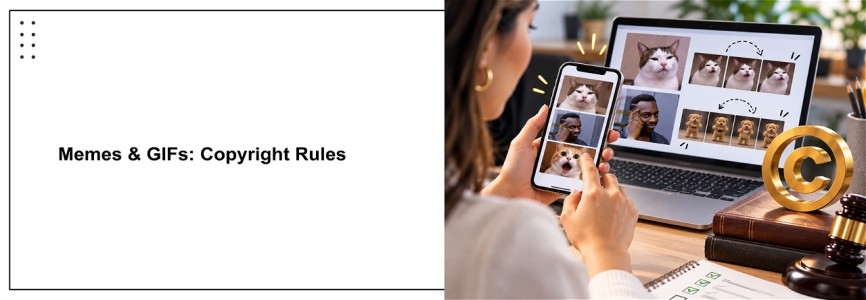



Memes and GIFs have become an integral part of digital communication. A reaction image, short video clip, humorous caption, or GIF taken from a popular film can circulate across Instagram, WhatsApp, X, Facebook and other platforms within minutes. For users, creating and sharing a meme may appear harmless. From a copyright registration perspective, however, many memes and GIFs are created by taking material from films, television programmes, photographs, interviews or other copyrighted works.
Indian copyright law does not contain a special statutory provision declaring that memes or GIFs are automatically lawful. The analysis ordinarily begins with the Copyright Act, 1957, including the exclusive rights under Section 14, infringement under Section 51, and the statutory exceptions in Section 52. The central question is therefore not whether something is called a meme or GIF, but what material was used, how much was taken, why it was used, whether the use is commercial, and whether a statutory exception or permission applies.
What Is a Meme from a Copyright Perspective?
There is no special statutory definition of a meme under the Copyright Act, 1957. A meme may consist of an original illustration, a photograph with added text, a screenshot from a film, a short video clip, a GIF, an edited celebrity photograph, or a combination of original and third-party material.
The legal analysis therefore depends on the underlying material. An entirely original meme may itself qualify for copyright protection if the statutory requirements are satisfied. By contrast, a meme using a still or clip from a copyrighted film may reproduce material protected as part of a cinematograph film or another protected work. Adding a humorous caption does not automatically extinguish the copyright owner's rights.
What Is a GIF?
A GIF may contain original animation or frames extracted from a film, television programme, interview, sporting event, photograph or other video. There is no general rule that a GIF is copyright-free merely because it is short or loops.
If a GIF reproduces frames from a protected audiovisual work, the underlying rights remain relevant. Duration and quantity may be relevant to a fair-dealing analysis, but Indian law does not establish a universal five-second or three-second safe harbour.
The Basic Copyright Framework
Section 14 of the Copyright Act sets out the exclusive rights constituting copyright, depending on the category of work. Section 51 addresses infringement. Section 52 contains statutory exceptions.
For memes and GIFs, Section 52(1)(a) is particularly important. It recognises fair dealing with a work, other than a computer programme, for specified purposes including private or personal use including research, criticism or review, and reporting of current events and current affairs, subject to the statutory language.
India Uses Fair Dealing, Not an Open-Ended US Fair-Use Doctrine
Indian copyright law should not be described as containing the broad, open-ended American fair-use doctrine. The Indian statute sets out specific fair-dealing exceptions in Section 52.
Accordingly, saying that a meme is transformative is not, by itself, a complete Indian-law defence. Transformation may be relevant to the factual analysis, but the creator should identify the applicable statutory exception or other legal basis.
Is Every Funny Meme Protected by Fair Dealing?
No. A meme is not automatically protected merely because it is funny, viral, non-commercial, satirical or transformative. For example, taking a film still and adding a joke may be capable of raising a criticism, review, parody or commentary argument depending on the facts. But humour alone is not a statutory exception. The purpose and manner of the use must be examined.
Parody, Satire and Copyright
Parody is particularly important in meme culture, but Indian law does not contain a simple rule stating that every parody is automatically lawful.
In Civic Chandran and Ors. v. C. Ammini Amma and Ors., 1996 SCC OnLine Ker 63 : (1996) 16 PTC 670 (Ker), the Kerala High Court considered a counter-drama that used material from an earlier drama for criticism. The Court examined the purpose and extent of copying and found the use to be fair dealing in the circumstances.
Civic Chandran therefore supports a contextual analysis; it should not be cited as a blanket statutory exemption for every parody.
The Difference Between Parody and Mere Copying
A meme that uses material from an existing work as part of genuine commentary on that work may present a stronger fair-dealing argument than a meme that simply reproduces the same material for entertainment. The relevant questions include: why was the material taken, how much was taken, what does the new content communicate, and does the use fall within a statutory exception?
The Purpose of the Meme Matters
Purpose is relevant to fair dealing. In Civic Chandran, the Court considered whether the defendant's use was genuinely connected with criticism rather than simply appropriating the earlier work. A meme commenting on a film, advertisement or public statement can therefore present a different issue from a business using the same image or GIF to sell a product.
Does Adding Text Make a Meme Original?
Not necessarily. If a person takes a copyrighted photograph and adds an original caption, the caption may contain original expression, but the underlying photograph may remain protected. Copyright in an original contribution does not automatically provide permission to reproduce another person's protected work. Meme copyright can therefore involve layered rights.
The Idea-Expression Distinction
Copyright protects qualifying expression rather than abstract ideas as such. General meme formats, jokes, themes and concepts do not automatically give their creator a monopoly over every later expression of that idea. However, copying the actual protected photograph, illustration, video or other expression can raise a separate copyright issue.
Does Non-Commercial Use Automatically Make a Meme Legal?
No. Non-commerciality is relevant to context but is not a blanket defence. Section 52(1)(a) identifies particular purposes for fair dealing. A private message between friends and a commercial advertisement are obviously different contexts, but the absence of profit does not by itself make every copying lawful.
What About a Brand Using a Meme?
Commercial use can create additional risks. If a company takes a movie scene or celebrity GIF and uses it to promote its product, the company may need to consider copyright, personality or publicity rights, trademark registration and passing-off issues, comparative advertising concerns, and licensing restrictions. The fact that a meme is already viral does not itself grant a commercial licence.
Celebrity Memes and Personality Rights
A meme can raise issues beyond copyright where it uses a celebrity's name, face, voice, likeness or other distinctive attributes. In Karan Johar v. Ashok Kumar/John Doe & Ors., CS(COMM) 974/2025, order dated 17 September 2025, the Delhi High Court dealt with claims concerning copyright, performer's rights, misappropriation of personality rights, publicity rights, passing off and other alleged misuse. The plaintiff's complaints included memes, social-media posts, AI manipulation, voice morphing, face morphing and GIFs.
The Court granted interim protection against specified commercial exploitation and directed various takedown and restraint measures. Importantly, however, the Court did not order blanket removal of all meme-related material: certain URLs were, on a prima facie view, considered to fall within parody, caricature and lampooning and were not directed to be taken down at that stage. The Court reserved the plaintiff's rights concerning those URLs for later consideration. This was an interim order and should not be presented as a final declaration that all celebrity memes are either lawful or unlawful.
Karan Johar: What the Order Actually Shows
The Karan Johar order should be used carefully. It is strong evidence that unauthorised commercial exploitation of a celebrity's persona through memes, GIFs, AI and related technologies can attract interim protection. It is not authority for the proposition that parody is an automatic copyright exception.
The order is more accurately described as showing that courts may distinguish commercial exploitation and misleading or unauthorised use from expressive material that, on a prima facie view, falls within parody, caricature or lampooning.
GIF Platforms and Intermediary Liability
Liability may differ between the person who creates a GIF, the person who uploads it, a platform that hosts or indexes it, and a person who commercially exploits it.
Intermediary status, notice-and-takedown mechanisms and statutory safe-harbour requirements may become relevant. A platform's hosting of a GIF should therefore not automatically be equated with the platform itself committing the underlying infringement.
Can a GIF Be an Infringing Copy?
Potentially, yes. If a GIF is made by extracting frames from a copyrighted film or other protected audiovisual work, the underlying copyright remains relevant.
The fact that the GIF contains only a few frames, loops, or has reduced resolution does not automatically make it lawful. The relevant question is whether the particular use is infringing or falls within an applicable exception.
Is Only Three Seconds a Legal Defence?
No automatic three-second rule exists under Indian copyright law.
Associated Broadcasting Company Limited v. Google LLC & Ors., CS(COMM) 9/2024, judgment dated 28 February 2026, is useful for the contextual nature of fair dealing. The Delhi High Court considered brief extracts used within news videos containing commentary and reporting, and on the facts declared the subject videos non-infringing. The decision applied fair-dealing and de minimis principles to the particular news-reporting use; it did not create a universal time-based safe harbour.
Accordingly, statements such as anything under five seconds is legal should not appear in a legal article on Indian copyright.
Reporting Current Events
Section 52(1)(a)(iii) recognises fair dealing for reporting current events and current affairs. A meme or GIF incorporated into genuine reporting or commentary on a current event may therefore require a different analysis from a GIF used merely for entertainment or advertising.
The connection between the copied material and the statutory reporting purpose remains important.
Meme, Criticism and Review
Criticism and review are expressly identified in Section 52(1)(a)(ii). A meme may potentially be part of criticism or commentary concerning a film, advertisement, public statement or other work. The safer legal approach is to identify the relationship between the copied material and the criticism rather than assume that any humorous reuse qualifies.
The Role of Fairness and Context
Fair dealing is not determined by a single numerical formula. The purpose, extent and manner of copying and the overall context can matter. Civic Chandran demonstrates a purpose-and-extent analysis. Associated Broadcasting Company v. Google illustrates that brief extracts used in a particular reporting context may be assessed differently from the same material used in another context. Therefore, there is no general Indian rule that one screenshot, one frame, ten per cent, or five seconds is automatically lawful.
What About Reaction GIFs?
Reaction GIFs may still reproduce protected audiovisual material. Their expressive function can be relevant, especially where they form part of criticism, commentary or parody, but reaction GIF is not itself a statutory defence. A court may need to consider the amount copied, the purpose, commerciality, relationship to the original work, and any additional personality or publicity-right issues.
What If the Meme Uses a Film Star's Face?
This can involve several layers of rights. The photograph or film frame may raise copyright questions, while use of the actor's identifiable persona may raise personality or publicity-right concerns. A private expressive meme and a company's advertisement using the same image should not be treated as legally identical.
What If the Meme Is Offensive?
Offensiveness and copyright infringement are separate legal questions. A meme can potentially raise copyright, defamation, personality-rights, trademark or other issues, but one cause of action should not automatically be treated as proof of another. The Karan Johar proceedings illustrate why the court considered both alleged misuse of personality and the relevance of parody, caricature and lampooning.
Can Memes Have Copyright Protection Themselves?
Yes, potentially. An original illustration, photograph, video, animation, graphic or other qualifying work created by a meme creator may attract copyright protection. But the creator cannot automatically claim exclusive rights over third-party material incorporated into the meme. Original contribution and rights in the underlying work must be analysed separately.
Copyright and Personality Rights Protect Different Interests
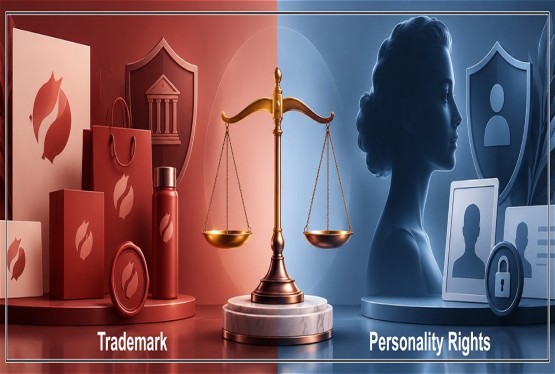
Copyright generally protects qualifying creative works such as photographs, films, videos, artwork, music and literary works. Personality or publicity rights, as developed through Indian case law, concern unauthorised commercial exploitation of identifiable aspects of a person's persona, such as name, likeness, image or voice. A celebrity GIF may therefore raise both categories of issue, but one right does not automatically establish the other.
Memes Used in Advertising
A brand using a viral meme in advertising should exercise particular caution. The brand should consider copyright ownership, licences, personality/publicity rights, trademark and passing-off implications, endorsement issues, platform terms, and rights belonging to the original meme creator. Commercial use is not automatically unlawful, but it can substantially change the legal risk profile.
A Practical Test for Meme Creators
Before publishing a meme or GIF containing third-party material, ask: Who owns the underlying material? What exactly have I copied? Why am I using it? Is the use criticism, review, commentary, reporting, parody, satire, entertainment or advertising? How much have I taken? Am I commercially exploiting it? Does it use another person's identity? Does it imply endorsement? Could the same joke be created with original material?
A Practical Test for Brands
Brands should not assume that a meme is free to use because it is viral. Before incorporating it into advertising, the brand should consider copyright, personality rights, trademark, endorsement, platform terms, and the rights of the original meme creator and the underlying work. A single meme may contain several layers of intellectual property.
Common Legal Myths
-
Myth: Everything on Google Images is free. Reality: online availability does not eliminate copyright.
-
Myth: Memes are automatically fair use. Reality: Indian law operates through statutory fair dealing rather than a general American-style fair-use doctrine.
-
Myth: Anything under five seconds is legal. Reality: there is no universal time-based rule.
-
Myth: Adding a caption makes copying legal. Reality: an original caption does not automatically extinguish rights in the underlying work.
-
Myth: If I make no money, there is no infringement. Reality: non-commerciality is not a blanket defence.
-
Myth: Parody always defeats copyright. Reality: parody may be relevant to fair dealing and expressive rights, but the statutory basis and facts matter.
-
Myth: Celebrities cannot object to memes. Reality: personality/publicity and other rights may become relevant, especially where there is commercial exploitation or misleading association.
What Indian Law Currently Permits
There is no single exhaustive list of legal memes. More defensible uses may include original memes; qualifying criticism or review; certain reporting of current events; and some parody, satire or caricature where the facts and applicable legal doctrines support the use.
Higher-risk situations include commercial use of copyrighted film clips, copying another creator's meme for monetisation, false endorsement, unauthorised commercial exploitation of celebrity persona, and reproduction of protected material merely for entertainment without an applicable exception. These are risk categories, not automatic findings of infringement.
Conclusion
Memes and GIFs sit at the intersection of copyright, internet culture, freedom of expression and increasingly personality or publicity rights. Indian law does not provide a blanket exemption for memes or GIFs. At the same time, copyright law does not mean that every meme containing copyrighted material is automatically unlawful. Section 52 contains important statutory exceptions, including fair dealing for criticism, review and reporting of current events.
Civic Chandran demonstrates that criticism and the purpose and extent of copying can matter. Associated Broadcasting Company v. Google illustrates the contextual nature of fair dealing and de minimis analysis in a specific news-reporting setting. Karan Johar v. Ashok Kumar/John Doe shows that memes and GIFs can also intersect with personality rights, while the Court's treatment of selected URLs shows that parody, caricature and lampooning may require separate consideration.
The safest legal proposition is therefore:
A meme is not automatically legal because it is a meme, and it is not automatically illegal because it contains copyrighted material.
The legality depends on the underlying work, the nature and extent of copying, the purpose and context, the commercial setting, the applicability of Section 52, permissions or licences, and any additional rights that may be engaged.


_(b)_of_the_Trademark_Act,_1999_(1)_crop10_thumb.jpg)


_crop10_thumb.jpg)


_crop10_thumb.jpg)
_crop10_thumb.jpg)


_crop10_thumb.jpg)


_crop10_thumb.jpg)


_crop10_thumb.jpg)


_crop10_thumb.jpg)


_crop10_thumb.jpg)


_crop10_thumb.jpg)


_crop10_thumb.jpg)


_crop10_thumb.jpg)


_crop10_thumb.jpg)








_crop10_thumb.jpg)















_crop10_thumb.jpeg)