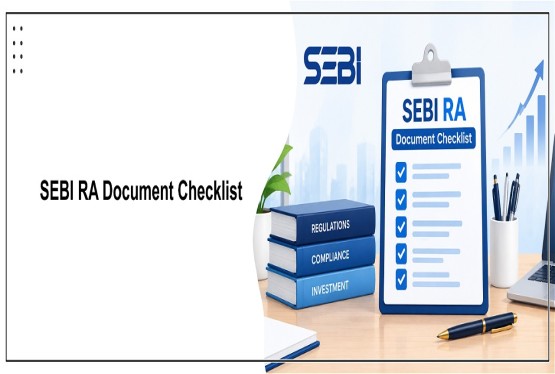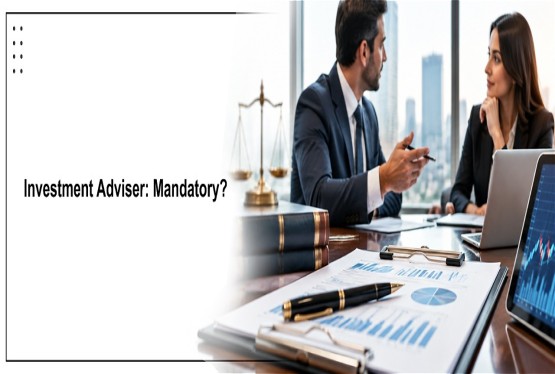




Investment Adviser registration in India asks each applicant to show who they are whether they are eligible how their business is set up and that they are ready to give investment advice. Making an application is not only about gathering identity documents and exam certificates. Applicants must also describe the way they plan to run their service, state who will give the advice and show how they will keep all necessary compliance in place.
The documents required vary according to whether the applicant's an individual partnership firm, Limited Liability Partnership, company or another eligible entity. Applicants should therefore use a checklist tailored to their circumstances and distinguish between application attachments, conditional documents and operational records needed before starting business.
Application Form and Basic Particulars
The application form gathers the information that the reviewing authority needs to assess the proposed investment advisory business. It should accurately state the applicant’s name, business constitution, address, contact details, proposed services and relevant personnel. Supporting documents must match these particulars so that the application presents a description of the applicant.
Before completing the application it is useful to prepare a master information sheet that contains the details that will appear repeatedly throughout the file. For example the applicant’s name and address may appear in declarations, authorisations, business plans and financial records. Checking these documents against one information sheet helps prevent inconsistencies. Applicants should also keep payment receipts, submission acknowledgements and application reference numbers for tracking and responding to queries.
Identity and Address Documents
PAN and Identity Proof
Identity documents establish who is applying for registration and who will hold responsibilities within the business. An individual applicant should prepare their PAN and other accepted identity evidence. An entity applicant may need the entity’s PAN with identification documents for its principal officer, partners, directors or other relevant persons according to the applicable checklist.
The legal name should be consistent across identity documents, educational qualifications, examination certificates and application particulars. Where a person’s name has changed suitable supporting evidence should explain the connection between the current records. Applicants should also ensure that scanned documents are complete and legible.
Address Proof
Address documents support the applicant’s registered office, business or correspondence address as applicable. Relevant individuals may also need to provide personal address evidence. The document types accepted and any recency requirements should be checked against the application instructions.
Where the registered office and operational office are different the application should distinguish between them clearly. A correspondence address should be one at which official communications can reliably be received. Applicants should resolve address discrepancies before submission. Provide an appropriate explanation supported by records.
Educational Qualification Documents
Qualification Certificates and Supporting Records
Educational documents establish the qualification route relied upon by the applicant principal officer or relevant advisory personnel. These may include degree certificates, professional qualifications, programme completion certificates and supporting records where necessary. Applicants should identify how their qualification corresponds to the regulatory eligibility provision.
A qualification certificate should not be evaluated by its title. Where recognition, subject coverage or equivalence is relevant additional evidence may be needed. A short explanatory note can help connect the qualification with the eligibility route being claimed. This is particularly useful where the credential’s name does not clearly communicate its content.
Specified NISM Programme Route
Applicants relying on a NISM programme should provide the relevant completion certificate and clearly identify the programme undertaken. The current framework recognises specified programme-based qualification routes, which may involve initial certification requirements from the standard examination route.
The application should explain the route accurately than assuming that every NISM course provides the same regulatory eligibility. Applicants must also understand the continuing certification requirements to their route. Programme completion evidence should therefore be maintained alongside a record of any renewal certification obligations.
Certification Documents
Investment Adviser Examination Certificates
Applicants following the examination route should prepare the applicable NISM Series X-A Investment Adviser Level 1 and NISM Series X-B Investment Adviser Level 2 certificates. These records demonstrate completion of the certification requirements for the roles concerned.
Each certificate should be checked for the holder’s name, certificate number and validity period. A certificate that has expired or belongs to another person does not establish the applicant’s compliance. Applicants should also avoid assuming that certification for a regulated activity, such, as research analysis automatically satisfies Investment Adviser requirements.
Certification According to Personnel Responsibilities
Certification requirements must be evaluated based on the tasks a person does. Those who give investment advice must be set apart from those who only do sales or other non-core work. The current framework offers a certification plan for people who qualify for non-core roles.
To help with this assessment the business should write role descriptions. A title like "relationship manager" or "client executive" alone is not enough because the person’s real duties may contain tasks. The staffing records, business plan and certification schedule must all show the distribution of responsibilities.
Certification Renewal Records
If a person has renewed a certification the proof of renewal must be kept. Applicants must keep a certification tracker that lists each person the certificate held, its expiry date and the renewal action needed.
This preparation helps both during registration and after approval. Certification compliance is a duty so the business should set up a process to watch for expiries instead of depending on people to remember them alone.
Professional Profile and Employment Information
A professional profile tells the story of the applicant’s background and the role the applicant wants in the investment advisory business. It must list qualifications, certifications, current job, past jobs, relevant duties and areas of professional knowledge. The profile must be factual. Backed by records when needed.
Employment certificates, appointment letters, role descriptions or other papers may help explain the applicant’s situation or answer a question. Their purpose must be seen in relation to the eligibility path. Applicants must not treat every experience requirement from a past checklist as automatically needed now. A good profile shows what the applicant really has done and how that background fits the proposed services. Wide claims of expertise without proof can make the application less clear.
Documents for Individual Applicants
An applicant must arrange records that cover identity, address, qualifications, certifications, professional background, planned business activities, infrastructure, relevant financial details and declarations. These papers must show both the applicant’s eligibility and the planned operating setup.
If the applicant wants to use a trade name the application must clearly separate that name from the applicant’s identity. A proprietorship name does not create an incorporated entity. All authorisations, declarations and business descriptions must therefore match the applicant category. The business plan must state whether the individual will work alone or hire staff. If more staff are suggested their duties and the required eligibility records must be handled consistently.
Additional Documents for Company Applicants
Incorporation and Constitutional Records
A company applicant must prepare its incorporation certificate, PAN, Memorandum of Association, Articles of Association and other papers required by the checklist. These documents prove the company’s existence, constitution and allowed activities.
The company must check whether its objects cover the proposed investment advisory business properly. If corporate changes are needed they must be. Shown in the records before the final application is sent. The business plan should describe activities that match the company’s documents.
Board Authorisation and Appointments
The company must create a board authorisation for the registration application and name the person allowed to send documents and make declarations for the company. Important appointments, such as the officer’s appointment must be backed by suitable records.
The authorisation must be clear enough to show the intended action and the signatory’s powers. Names and titles must match the application and personnel records. When responsibilities are set in papers those papers must work together without conflict.
Shareholding and Group Information
Ownership details show who controls the company and whether related businesses matter for the application. Applicants must prepare the required shareholding facts. Reveal any related regulated activities when needed.
If ownership includes entities a clear note or ownership chart can make the structure simpler to see. The goal is to give a picture of control, relationships and possible conflicts.
Additional Documents, for Partnerships and LLPs
A partnership applicant must prepare its partnership deed and related constitution papers. An LLP must prepare its incorporation papers, LLP agreement and any relevant amendments. These records show the entity’s structure allowed activities, partners’ interests and decision-making setup.
The application must state which partners will give advice, who will carry out duties and who is allowed to sign and send the application. Qualification and certification papers must line up with those roles. A partnership and an LLP must be handled according to their legal frameworks. Using the word "partner" in both does not make their registration paperwork the same.
Principal Officer and Personnel Records
The personnel file must identify the officer and other key persons linked to the proposed advisory business. It should explain each person’s appointment, qualifications, certifications, duties and reporting lines. A practical personnel schedule can match each individual to the documents that back their role.
For example the person shown as supervising activity in the business plan must carry that same responsibility in their appointment record and organisational chart. Staff who perform non-core tasks should be listed separately. Accurate role assignment helps decide which documents are needed and stops you from applying one certification to every employee without reason.
Financial Information and Deposit Evidence
Financial Disclosures
Applicants should gather the details required by the current application checklist. Depending on the situation these may include statements net-worth figures or other supporting information asked for during review.
Financial documents must clearly state the applicant and the period or date that the information covers. When professional certification is specifically required the prescribed format and supporting rules must be followed. Applicants should not present minimum net-worth conditions as if they were current unless they have checked the latest rules.
Regulatory Deposit Documents
The deposit requirement must be evaluated separately from the financial disclosures. Applicants should confirm the required amount, the arrangement and the application stage before setting up the deposit.
Supporting proof must show that the deposit follows the instructions, including any required beneficiary, lien or confirmation details. Keeping deposit records helps the applicant answer questions and watch ongoing compliance after registration.
Business Plan
The business plan tells how the proposed investment advisory practice will work. It should describe the target clients the products to be offered, the channels, for delivering service the staff, the fee structure and the systems that will be used. A good plan goes past marketing talk. It explains who will gather client information prepare advice, review recommendations talk with clients and keep records.
It should also show how the business intends to grow its operations within the limits of the proposed registration. Applicants must make sure the plan does not say that Investment Adviser registration automatically allows regulated activities. Any extra services should be evaluated on their own. Described accurately.
Risk-Profiling and Suitability Documents
Client Risk-Profiling Process
A proposed risk questionnaire shows how the adviser will evaluate the client’s situation and investment needs. The questionnaire will help create a well-groomed, time horizon, liquidity requirements, risk tolerance, and ability to absorb losses.
The questionnaire should be suitable for the intended clients and services. Collecting information without explaining how it affects the advisory process provides limited operational value.
Suitability Assessment Process
The suitability process should explain how recommendations will be matched to the client’s circumstances. It should connect the information collected during risk profiling with the proposed investment advice.
For example, a client’s need for near-term access to funds should influence recommendations involving illiquid or long-duration investments. The process should also explain how advice and its rationale will be recorded. Where these documents are requested in the application, they should reflect the actual business model rather than an unmodified generic template.
Infrastructure Records
Infrastructure information shows how the applicant will support its operations. A note might describe office set-ups, communication tools, software, information resources and ways to keep client records.
Premises evidence must be ready where the checklist or a scrutiny request asks for it. The business should also explain how electronic records will be stored, protected, retrieved and accessed by staff. The description should fit the size of the proposed practice. Applicants should show arrangements instead of exaggerating facilities or buying unnecessary systems just to make the application look bigger.
Declarations and Regulatory History
Declarations confirm facts and commitments that matter for registration. Applicants should use the prescribed formats and double-check the information that backs each declaration before signing. Questions may cover disputes, regulatory actions, earlier applications, other registrations, business ties and conflicts.
Answers should cover the question’s scope exactly. If a matter exists, a factual explanation and relevant records should explain its status. A declaration should not say "not applicable" just because disclosure is hard. Keeping a record of signed declarations and their supporting documents helps keep everything throughout the application.
Conditional Documents
Some documents are needed because of the applicant’s specific circumstances. These documents may include employer consent for a part-time arrangement permissions for banks or NBFCs records of other regulatory registrations or documents about foreign ownership.
Applicants who carry out additional activities should explain how those activities relate to the proposed advisory business. Where separation or conflict-management arrangements are needed the documents should describe how they will work in practice. Conditional documents should be checked one by one. Adding records does not make an application stronger while leaving out an applicable permission can create a big gap.
Final Review Before Submission
Before submission the applicant should compare the file with the current official checklist. Each required attachment should be complete, clear signed correctly and matched to the field in the application. A consistency review should confirm that legal names, addresses, personnel responsibilities, ownership details, qualifications and business descriptions match in all documents.
Applicants should also check that certifications are still valid and that declarations are backed by information. Operational policies should be ready for business. Their filing status must follow the checklist and any specific requests. This stops applicants from mixing preparation with a mandatory attachment.
Conclusion
Preparing documents for Investment Adviser registration needs an understanding of the applicant’s legal structure, eligibility path, personnel duties and proposed advisory model. A well-organized file makes these matters easier to assess and cuts down on clarification requests.
The best preparation combines identity and entity records with fitting qualification evidence, relevant certifications, financial and deposit documents and a realistic business plan. Keeping consistency over the application also builds a solid base for ongoing compliance after registration.
Frequently Asked Questions
Q1. What documents are required for Investment Adviser registration?
Ans. Applicants generally need proof of identity and address qualification records, relevant certifications, a business plan, infrastructure details, required declarations and pertinent financial information. Entity applicants also need documents, ownership information, authorisations and records of relevant personnel.
Q2. Are the documents different for company applicants?
Ans. Yes. Individual applicants mostly submit eligibility and proposed business records. Companies also provide incorporation documents, constitutional records, shareholding information, board authorisations and principal officer details. The final checklist depends on the applicant’s category and circumstances.
Q3. Is PAN required for Investment Adviser registration?
Ans. PAN is part of the applicant’s identification records. An entity should prepare its PAN and identification documents for the relevant individuals. Names should remain consistent across the application, qualifications, certifications and supporting records.
Q4. Which NISM certificates should applicants prepare?
Ans. Applicants who follow the exam route should prepare valid NISM Series X-A and X-B certificates. Different requirements may apply to qualification routes or qualifying non-core personnel. Certification should therefore be assessed based on eligibility and real responsibilities.
Q5. Is a business plan required for registration?
Ans. The application framework looks for information about the proposed business plan. It should explain clients, advisory services, product coverage, staffing, delivery channels and operating arrangements. Its contents should match the applicant’s documents, personnel records and proposed compliance processes.
Q6. What documents are needed for the officer?
Ans. Prepare the officer’s identity and address proof, qualification records, relevant certification, professional profile and appointment or authorisation documents. These records should prove eligibility. Clearly describe the person’s duties within the proposed advisory business.
Q7. Is a net-worth certificate compulsory for every applicant?
Ans. Applicants should follow the checklist instead of assuming old net-worth certificate rules still apply. Financial disclosures and regulatory deposit evidence serve purposes. Any certified financial document should be ready where it is specifically required.
Q8. Are risk-profiling and suitability documents necessary?
Ans. Applicants should explain how client risk profiles will be assessed and recommendations checked for suitability. Questionnaires and written procedures support this explanation. Whether particular documents must be uploaded at first depends on the checklist and any later requests.
Q9. Does every document need notarisation?
Ans. No universal notarisation requirement should be assumed. Follow the instructions, for each document, including any self-attestation, certification, signing or notarisation requirements. Incorrect execution can cause queries even if the information is accurate.
Q10. What commonly causes documentation-related delays?
Ans. Common issues arise when names or addresses are inconsistent certificates have expired authorisations are missing ownership disclosures are incomplete or personnel roles are unclear. Applications can also attract questions if the business plan conflicts, with supporting records or if declarations fail to cover the information.


_crop10_thumb.jpg)





_crop10_thumb.jpg)
_crop10_thumb.jpg)


_crop10_thumb.jpg)


_crop10_thumb.jpg)


_crop10_thumb.jpg)

_crop10_thumb.jpg)


-suratgujarat-section-158_crop10_thumb.jpg)
-suratgujarat_crop10_thumb.jpg)
-(33)_crop10_thumb.jpg)


-ahmedabad_crop10_thumb.jpg)
-learn_crop10_thumb.jpg)

-learnn_crop10_thumb.jpg)


_crop10_thumb.jpg)






_Guidelines_learn_crop10_thumb.jpg)


_learn_crop10_thumb.jpg)
_crop10_thumb.jpeg)


_crop10_thumb.jpg)


_Second_Amendment_Rules,_2025_learn_crop10_thumb.jpg)


_learn_crop10_thumb.jpg)












_learn_crop10_thumb.jpeg)














_learn_crop10_thumb.jpg)

_rd_roc_learn_crop10_thumb.jpg)






_learn_crop10_thumb.jpg)






_learn_crop10_thumb.jpg)
_Learn_crop10_thumb.jpg)
























_learn_crop10_thumb.jpg)


_learn_crop10_thumb.jpg)








_crop10_thumb.jpeg)











_crop10_thumb.jpg)










_crop10_thumb.jpg)