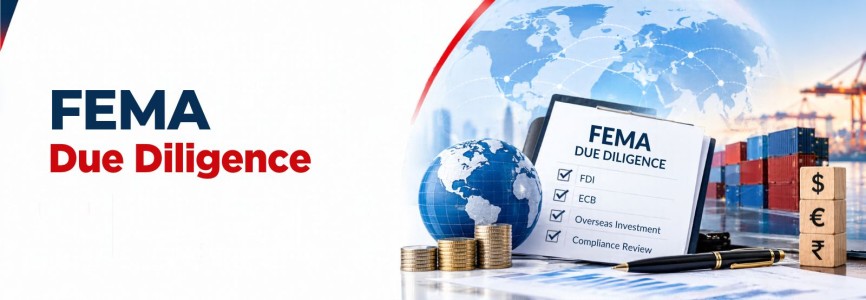



FEMA Due Diligence is an important legal and regulatory examination for businesses involved in foreign investments, international transactions, overseas acquisitions and cross-border financial activities. With Indian businesses expanding globally and foreign investors increasingly participating in the Indian economy, complying with the Foreign Exchange Management Act, 1999 (FEMA) has become essential.
Every company receiving Foreign Direct Investment (FDI), transferring shares to a foreign investor, raising funds overseas or making investments outside India must understand its obligations under FEMA. Even a minor reporting delay, incorrect valuation or failure to obtain regulatory approval can lead to penalties, regulatory complications and difficulties in completing future transactions.
A properly conducted FEMA Due Diligence helps businesses identify compliance gaps, review historical foreign exchange transactions, verify statutory filings and ensure that their activities comply with the regulations prescribed by the Reserve Bank of India (RBI) and the Central Government. This article explains the FEMA Due Diligence process in India, applicable legal provisions, documentation requirements, regulatory reporting, compliance checklist, penalties and important regulatory updates relevant to businesses in 2026.
What Is FEMA Due Diligence?
FEMA Due Diligence refers to the systematic examination of a company's foreign exchange transactions, foreign investments, regulatory approvals and statutory reporting obligations to determine whether its activities comply with the Foreign Exchange Management Act, 1999 and applicable rules, regulations and RBI directions.
Unlike a general financial audit, FEMA Due Diligence specifically concentrates on transactions involving Indian residents and persons resident outside India. These transactions may include Foreign Direct Investment, Overseas Direct Investment (ODI), External Commercial Borrowings (ECB), share transfers, foreign currency remittances, import-export payments and investments through overseas entities.
The primary purpose is to identify existing or potential violations, evaluate regulatory risks and recommend appropriate corrective measures before a transaction is completed or a regulatory issue becomes more serious. For example, an Indian company receiving foreign investment must verify the applicable sectoral limits, investment route, pricing requirements, beneficial ownership conditions and reporting obligations. If the company fails to submit Form FC-GPR within the prescribed period, FEMA Due Diligence can identify the delay and help determine the appropriate corrective procedure.
Legal Provisions Governing FEMA Due Diligence in India
The Foreign Exchange Management Act, 1999, which came into force on 1 June 2000, is the principal legislation regulating foreign exchange transactions in India. It replaced the Foreign Exchange Regulation Act, 1973 (FERA), with a framework designed to facilitate external trade, payments and the orderly development of India's foreign exchange market.
FEMA Due Diligence involves examining compliance with the parent legislation, subordinate rules, regulations, directions and applicable government policies. The relevant framework differs according to whether a transaction concerns foreign investment into India, investment overseas, borrowing, lending, exports or remittances.
Important Sections of the Foreign Exchange Management Act, 1999
- Section 3 – Dealing in Foreign Exchange: Section 3 restricts dealing in or transferring foreign exchange and foreign securities through persons other than authorised persons, except where permitted. It also addresses certain unauthorised payments, receipts and transactions involving foreign exchange. During due diligence, companies must establish that transactions were conducted through permitted channels and complied with applicable authorisations.
- Section 4 – Holding Foreign Exchange: Section 4 restricts persons resident in India from acquiring, holding, owning, possessing or transferring foreign exchange, foreign securities or immovable property situated outside India, except as permitted by FEMA. A review of overseas assets and investments is therefore particularly important.
- Section 5 – Current Account Transactions: This section generally permits current account transactions through authorised persons, subject to restrictions imposed under the Act and the Foreign Exchange Management (Current Account Transactions) Rules, 2000. Payments for services, imports and other current account purposes must be examined against the applicable restrictions.
- Section 6 – Capital Account Transactions: Section 6 provides the legal framework for capital account transactions, including foreign investments, overseas investments and borrowing or lending arrangements. Section 6(2A), together with the relevant rule-making provisions, forms part of the framework governing non-debt instruments.
- Sections 7 and 8 – Exports and Repatriation: Section 7 addresses export-related declarations and information, while Section 8 requires the realisation and repatriation of foreign exchange where applicable, subject to prescribed conditions and exceptions.
- Sections 10 and 11 – Authorised Persons and RBI Directions: Section 10 governs the authorisation of persons dealing in foreign exchange, while Section 11 empowers the RBI to issue directions to authorised persons. These provisions are relevant when examining the role of Authorised Dealer (AD) banks in handling foreign exchange transactions.
- Sections 13 and 15 – Penalties and Compounding: Section 13 sets out penalties for FEMA contraventions, while Section 15 provides for compounding of eligible contraventions. These provisions become relevant when due diligence identifies historical violations.
- Section 37A – Foreign Assets Held in Contravention: Section 37A deals with seizure of the value equivalent of certain foreign exchange, foreign securities or immovable property held outside India in contravention of Section 4, subject to statutory conditions.
The applicable statutory provisions should always be read together with the relevant rules and regulations, rather than interpreting FEMA sections in isolation.
Key FEMA Rules and Regulations Applicable to Due Diligence
One of the most important regulations for inward investment is the Foreign Exchange Management (Non-Debt Instruments) Rules, 2019, commonly called the NDI Rules. These rules regulate several categories of foreign investment in India, including equity instruments, investment routes, sectoral restrictions, pricing requirements and investment-related conditions.
The Foreign Exchange Management (Mode of Payment and Reporting of Non-Debt Instruments) Regulations, 2019, issued under FEMA 395, prescribe payment mechanisms and reporting obligations for applicable investments. For overseas investments, the Foreign Exchange Management (Overseas Investment) Rules, 2022, the Overseas Investment Regulations, 2022 and the RBI Master Direction on Overseas Investment are particularly relevant.
Other transactions may require examination under the Debt Instruments Regulations, 2019, the Borrowing and Lending Regulations, 2018, the Current Account Transactions Rules, 2000, and the applicable RBI directions on imports, exports, deposits and remittances.bThe relevant framework must be selected according to the actual transaction rather than applying one uniform checklist to every foreign exchange arrangement.
Why Is FEMA Due Diligence Important for Businesses?
FEMA Due Diligence helps businesses establish whether previous and proposed foreign exchange transactions have been undertaken legally. It identifies regulatory weaknesses that may otherwise remain unnoticed until a bank, investor, regulator or prospective acquirer seeks documentary verification.
For companies seeking foreign investment, due diligence provides greater transparency regarding ownership, compliance history and financial reporting. Investors frequently review whether previous foreign capital receipts were properly recorded, shares were issued within the stipulated period and the required RBI filings were completed.
It also becomes important during mergers and acquisitions. When a foreign investor acquires an Indian company, historical FEMA defaults may affect transaction negotiations, contractual indemnities, closing conditions and post-acquisition compliance obligations. Regular compliance reviews can also help companies maintain accurate records and respond more effectively to regulatory queries.
FEMA Due Diligence Process in India
Step 1: Understanding the Company's Business and Transaction History
The first stage involves understanding the company's legal structure, ownership pattern, business activities and international transactions. The reviewing professional examines whether the company has received FDI, made overseas investments, entered into foreign borrowing arrangements or undertaken cross-border payments. The scope of examination should cover the relevant financial years and identify each category of foreign exchange exposure. Particular attention is given to historical transactions because violations may remain unresolved even after ownership or management changes.
Step 2: Reviewing Foreign Investment and Ownership Structure
The next stage involves examining shareholding patterns, foreign investors, beneficial ownership and the applicable FDI entry route. The reviewer determines whether investments fall under the automatic route or require prior government approval. Sectoral caps, prohibited sectors, investment conditions and indirect foreign investment are also considered. The examination must assess investor nationality and beneficial ownership, including restrictions applicable under Press Note 3 of 2020 and corresponding provisions of the NDI Rules.
Step 3: Verification of Statutory Documents and RBI Filings
The professional reviews incorporation records, financial statements, share allotment documents, foreign investment agreements, valuation certificates, remittance evidence and FEMA reporting acknowledgements. Particular attention is given to Form FC-GPR, Form FC-TRS, Foreign Liabilities and Assets (FLA) returns and other transaction-specific filings. Merely submitting a form is not sufficient evidence that all requirements have been satisfied. The actual reporting status, bank observations, resubmissions and documentary consistency should also be examined.
Step 4: Examining Foreign Exchange Transactions
Bank statements and foreign inward remittance records are reconciled with accounting entries, agreements and securities issued or transferred. The examination determines whether funds were received and utilised for permitted purposes, whether outward remittances complied with applicable rules and whether the prescribed timelines were followed. Transactions involving overseas borrowing, export proceeds, import advances and intercompany payments require separate examination under their respective regulatory frameworks.
Step 5: Identifying Non-Compliance and Regulatory Risks
Once the records have been examined, the reviewer identifies non-compliance, incomplete filings, incorrect reporting, valuation deficiencies, unauthorised transactions and missing approvals. Each observation should be classified according to the relevant legal provision, transaction date, amount involved, potential exposure and available corrective procedure. This stage should distinguish between documentary discrepancies, reporting delays and substantive violations because different remedies may apply.
Step 6: Preparing the Due Diligence Report
The final report summarises the company's FEMA compliance position, identifies regulatory observations and recommends corrective action. A comprehensive report generally includes the transaction history, applicable legal framework, findings, risk assessment, outstanding reporting requirements and recommendations for remediation.
Where appropriate, the report may recommend filing pending returns, paying an applicable Late Submission Fee (LSF), approaching the AD bank, obtaining regulatory clarification or applying for compounding of an eligible contravention. The purpose is not merely to identify legal problems but to establish a practical framework for achieving and maintaining compliance.
FEMA Due Diligence Checklist for Companies
A FEMA Due Diligence checklist is essential for conducting a structured compliance review. Although the exact requirements depend on the company's business activities and foreign exchange exposure, certain areas require examination in most cases. Corporate and Shareholding Compliance: The review should begin with the Certificate of Incorporation, Memorandum of Association, Articles of Association, statutory registers, shareholding pattern, board resolutions and relevant MCA filings. These records help verify the company's legal identity, capital structure and authority to undertake foreign investment transactions.
Foreign Direct Investment Compliance: Where a company has received FDI, the reviewer must examine the applicable entry route, sectoral cap, beneficial ownership, pricing guidelines, investment agreements, share allotment records and regulatory approvals. Compliance with the NDI Rules, 2019, and applicable amendments must be verified.
RBI Reporting Compliance: The company should maintain records of applicable FC-GPR, FC-TRS, FLA Return , LLP Registration and downstream investment filings. The dates of transactions, reporting acknowledgements, resubmissions and final statuses should be reconciled to identify any reporting defaults.
Banking and Remittance Compliance: Foreign inward remittance certificates or equivalent bank confirmations, KYC documents, bank statements, remittance instructions and supporting agreements should be examined. The reviewer must verify that consideration was received or paid through permitted routes and within applicable timelines. Overseas Investment Compliance: Where an Indian entity has invested abroad, the checklist should include overseas investment declarations, Unique Identification Number (UIN), investment evidence, Annual Performance Reports (APR), disinvestment records and supporting approvals.
Borrowing and Export-Import Compliance: Companies with external commercial borrowings or international trade transactions must review the applicable ECB requirements, loan agreements, repayment schedules, export realisation records and import payment documentation. The checklist should also address previous regulatory notices, compounding orders, penalties, outstanding AD bank observations and unresolved foreign exchange transactions.
Documents Required for FEMA Due Diligence
The documents required for FEMA Due Diligence depend on the nature of the company's business activities, foreign investment transactions, overseas financial commitments and applicable regulatory requirements. Proper documentation plays an important role in verifying whether foreign exchange transactions have been conducted in accordance with the Foreign Exchange Management Act, 1999, RBI regulations and other applicable legal provisions.
During the FEMA Due Diligence process, businesses are required to provide relevant corporate records, financial statements, foreign investment documents, banking records and statutory filing acknowledgements. These documents help professionals identify reporting delays, regulatory discrepancies, unauthorised transactions and potential compliance risks.
The major categories of documents generally required for FEMA Due Diligence are explained below.
1. Corporate Registration and Legal Documents
Corporate documents are essential for verifying the legal status, ownership structure and business activities of an Indian company. These records help establish whether the company is eligible to undertake the relevant foreign exchange transactions.
The documents generally include:
-
Certificate of Incorporation: Confirms the legal existence and registration details of the company.
-
Memorandum of Association (MOA): Specifies the company's objectives and permitted business activities.
-
Articles of Association (AOA): Provides information about the company's internal management and governance provisions.
-
Permanent Account Number (PAN): Establishes the company's tax identification details.
-
Shareholding Pattern: Identifies resident and non-resident shareholders and their respective ownership percentages.
-
Board Resolutions: Records corporate approvals relating to foreign investments, share allotments, borrowings and overseas transactions.
These documents help determine whether the company's corporate structure and proposed transactions are consistent with applicable FEMA requirements.
2. Financial Statements and Accounting Records
Financial documents are necessary to verify foreign investment amounts, fund utilisation, outstanding liabilities and the accounting treatment of international transactions.
The required documents generally include:
-
Audited Financial Statements: Balance sheets, statements of profit and loss, cash flow statements and relevant notes to accounts.
-
General Ledger: Accounting records reflecting foreign exchange receipts, payments and investment transactions.
-
Bank Statements: Records showing inward and outward foreign currency transactions.
-
Foreign Investment Register: Details of foreign capital received, shares allotted and changes in foreign shareholding.
-
Supporting Accounting Records: Documents relating to foreign currency loans, intercompany transactions and overseas financial commitments.
The examination of these records helps identify differences between accounting entries, actual banking transactions and information reported to regulatory authorities.
3. Foreign Direct Investment (FDI) Documents
Companies receiving foreign investment must maintain documents demonstrating compliance with applicable FDI regulations, including the Foreign Exchange Management (Non-Debt Instruments) Rules, 2019.
Important documents include:
-
Share Subscription Agreement (SSA): Contains the terms and conditions under which a foreign investor subscribes to shares.
-
Share Purchase Agreement (SPA): Records the terms of acquisition or transfer of existing shares.
-
Valuation Certificate: Supports compliance with applicable pricing guidelines.
-
Share Allotment Records: Establish the number, category and value of equity instruments issued to foreign investors.
-
Foreign Investor KYC Documents: Help verify the investor's identity and relevant banking details.
-
Beneficial Ownership Declarations: Identify ultimate beneficial owners where required under applicable regulations.
-
Government Approval Letters: Provide evidence of approval where foreign investment falls under the government route.
These documents are important for verifying the legality of foreign investments, applicable sectoral limits, pricing conditions and ownership restrictions.
4. RBI Reporting and FEMA Compliance Documents
RBI reporting records are among the most important documents examined during FEMA Due Diligence. Companies must verify that applicable forms were submitted within the prescribed timelines and that the reported information matches the underlying transactions.
The relevant documents may include:
-
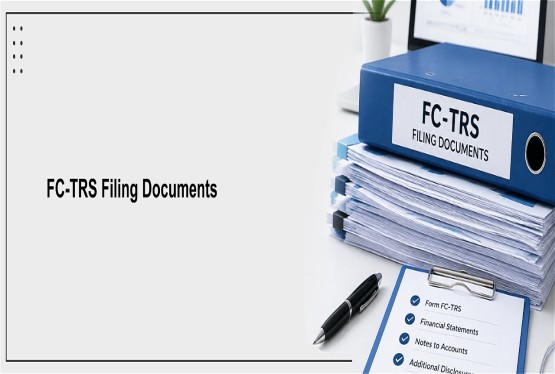
Form FC-GPR: Reporting of the issue of equity instruments by an Indian company to a person resident outside India.
-
Form FC-TRS: Reporting of specified transfers of equity instruments between residents and non-residents.
-
Foreign Liabilities and Assets (FLA) Return: Annual reporting of foreign liabilities and assets by entities covered under the applicable requirements.
-
Form DI: Reporting applicable downstream investment transactions.
-
Form LLP(I) and Form LLP(II): Reporting applicable foreign investment and transfer or disinvestment transactions involving LLPs.
-
FIRMS Portal Acknowledgements: Records of submissions, resubmissions, observations and reporting statuses.
Reviewing these records helps identify delayed submissions, incomplete reporting, incorrect transaction classifications and outstanding regulatory observations.
5. Banking and Foreign Remittance Documents
Banking documents provide evidence of the actual movement of foreign exchange between Indian and overseas entities. They help verify whether foreign currency transactions were undertaken through permitted banking channels and supported by appropriate documentation.
Important documents include:
-
Foreign Inward Remittance Certificates (FIRC) or Equivalent Bank Confirmations: Evidence of foreign funds received, where issued or available.
-
SWIFT Messages: Records of international banking transfers.
-
Bank Statements: Confirmation of transaction dates, amounts and account details.
-
KYC Reports: Identification and verification records relating to foreign investors or remitters.
-
Remittance Instructions: Details of the purpose, beneficiary and amount of international payments.
-
Authorised Dealer Bank Correspondence: Communications relating to foreign investments, reporting discrepancies and regulatory clarifications.
These documents help verify that foreign exchange transactions were processed through authorised channels and complied with the relevant FEMA requirements.
6. Overseas Direct Investment (ODI) Documents
Indian entities making investments in foreign companies must maintain proper overseas investment records under the Foreign Exchange Management (Overseas Investment) Rules, 2022, and applicable RBI regulations.
The relevant documents generally include:
-
Foreign Entity Incorporation Documents: Establish the legal existence and registration details of the overseas entity.
-
Overseas Investment Agreements: Record the terms, conditions and investment commitments.
-
Share Certificates or Investment Evidence: Confirm ownership or financial interest in the foreign entity.
-
Unique Identification Number (UIN): Identifies an overseas investment arrangement for regulatory reporting purposes.
-
Annual Performance Reports (APR): Provide applicable periodic information concerning overseas investments.
-
Foreign Entity Financial Statements: Help evaluate overseas financial performance and investment exposure.
-
Disinvestment and Repatriation Records: Establish whether sale proceeds and other amounts were repatriated in accordance with applicable requirements.
These documents enable professionals to examine overseas investment eligibility, financial commitments, reporting obligations and compliance with applicable regulations.
7. External Commercial Borrowing (ECB) Documents
Where an Indian company has obtained loans from overseas lenders, additional documents are required to evaluate compliance with the applicable External Commercial Borrowing requirements.
These generally include:
-
Foreign Loan Agreements: Specify borrowing amounts, interest rates, maturity periods and repayment conditions.
-
Loan Registration Number (LRN) Records: Provide evidence of applicable ECB registration.
-
ECB Reporting Returns: Include prescribed reporting forms and periodic filings.
-
Repayment Schedules: Establish principal and interest payment obligations.
-
End-Use Certificates and Supporting Records: Demonstrate utilisation of borrowed funds for permitted purposes.
-
Security and Guarantee Documents: Record security arrangements and guarantees associated with foreign borrowings.
These records help determine whether borrowing arrangements comply with applicable eligibility conditions, maturity requirements, end-use restrictions and reporting obligations.
8. Regulatory Approvals and Compliance Records
Certain foreign exchange transactions require prior approval or must satisfy additional regulatory conditions. Companies should therefore maintain copies of relevant approvals, regulatory communications and supporting records. These may include government approval letters, RBI permissions, AD bank correspondence, previous regulatory notices, compounding orders, Late Submission Fee payment confirmations and documents supporting the regularisation of historical FEMA contraventions. Such records are particularly important when a company has previously faced reporting delays, regulatory observations or violations under FEMA.
Importance of Proper Documentation in FEMA Due Diligence
Maintaining complete and accurate documentation is essential for effective FEMA Due Diligence. The reviewing professional should not examine documents individually but should reconcile the information contained in financial statements, investment agreements, bank records, statutory registers and RBI reporting forms.For example, the foreign investment amount recorded in the company's financial statements should correspond with the bank's inward remittance evidence, share allotment records and information reported through Form FC-GPR.
Similarly, transactions involving overseas investments should be supported by investment agreements, banking documents, shareholding evidence and applicable regulatory filings.Proper documentation helps companies identify compliance gaps, respond to regulatory queries, reduce legal risks and maintain transparency in cross-border transactions. It also provides reliable evidence during foreign investment reviews, mergers, acquisitions and regulatory examinations.
Note: The above document categories are indicative. Not every document applies to every company or transaction; the final checklist should be prepared according to the relevant FEMA provisions and transaction history.
FEMA Reporting Requirements and Important Deadlines
Timely reporting is a major component of FEMA compliance. The following are important reporting obligations under the applicable framework.
|
FEMA filing |
General reporting timeline |
|
Form FC-GPR |
Within 30 days from issue of equity instruments |
|
Form FC-TRS |
Generally within 60 days of transfer or receipt/remittance of consideration, whichever is earlier, where applicable |
|
FLA Return |
By 15 July every year, where applicable |
|
Form DI |
Within 30 days of allotment of equity instruments for reportable downstream investment |
|
ODI Annual Performance Report |
Generally by 31 December, subject to applicable exceptions and accounting-year provisions |
|
Form LLP(I) |
Within 30 days of receipt of consideration, where applicable |
|
Form LLP(II) |
Within 60 days of disinvestment or transfer, where applicable |
The Foreign Exchange Management (Mode of Payment and Reporting of Non-Debt Instruments) Regulations, 2019, and RBI directions prescribe the applicable investment reporting requirements. Overseas investment reporting follows a separate regulatory framework.
Companies must also distinguish between the timeline for issuing securities and the timeline for reporting them. Under the applicable foreign investment framework, equity instruments are generally required to be issued within 60 days of receiving consideration, with a further 15-day period for refund if the instruments are not issued within the prescribed period. Failure to meet these requirements may require additional regulatory examination, even where the underlying investment is otherwise permissible.
FEMA Due Diligence for FDI and Share Transfers
FEMA Due Diligence for FDI focuses on verifying the legality of foreign investment in an Indian entity. It requires consideration of the investor's residency, applicable sectoral restrictions, investment route, investment instruments and pricing conditions. Under the automatic route, eligible investments may proceed without prior government approval, provided all applicable conditions are satisfied. Under the government route, the necessary approval must be obtained before proceeding with the relevant investment.
Share transfers between residents and non-residents require additional examination. In applicable cases, pricing guidelines establish minimum or maximum permissible consideration depending on the direction of the transaction. Valuation requirements may differ according to whether the Indian company is listed or unlisted. A FEMA review should also examine whether indirect foreign investment and downstream investment provisions apply, particularly where an Indian entity with foreign ownership or control invests in another Indian entity.
FEMA Due Diligence for Overseas Direct Investment
Overseas Direct Investment allows eligible Indian residents and entities to invest in foreign businesses subject to applicable conditions. The Overseas Investment Rules, 2022, and Overseas Investment Regulations, 2022, establish the relevant framework for financial commitments, eligible investments, prohibited activities, reporting and repatriation.
FEMA Due Diligence for ODI examines whether the Indian investor was eligible, whether the financial commitment complied with applicable limits and conditions, and whether the necessary reporting was completed through the designated AD bank. The reviewer also verifies submission of investment evidence, periodic reporting and repatriation of amounts where required. Failure to submit applicable APRs or other overseas investment filings can create regulatory issues affecting subsequent overseas financial commitments.
FEMA Due Diligence for External Commercial Borrowings
External Commercial Borrowings enable eligible Indian borrowers to obtain financing from recognised non-resident lenders under the applicable RBI framework. A FEMA compliance review of ECB transactions examines the borrower's eligibility, recognised lender conditions, permitted borrowing amounts, minimum average maturity, all-in-cost requirements, end-use restrictions, security arrangements and reporting obligations.
The review must also consider whether the loan proceeds were used for permitted activities and whether repayment, interest payments and modifications complied with the rules applicable to the borrowing. ECB reporting requirements, including applicable loan registration and periodic returns, should be reviewed against the framework in force on the transaction date. Companies must be particularly careful when relying on historical ECB approvals because regulatory conditions may have changed over time.
Recent FEMA Regulatory Updates Relevant in 2026
FEMA compliance has undergone several important developments affecting investment structures, reporting procedures and resolution of contraventions. Businesses undertaking FEMA Due Diligence in 2026 should particularly consider the following verified regulatory changes.
Amendments to the Non-Debt Instruments Rules, 2024
The Foreign Exchange Management (Non-Debt Instruments) (Fourth Amendment) Rules, 2024, notified on 16 August 2024, introduced changes relating to the interpretation of control, investment arrangements and other provisions governing foreign investments. These amendments are particularly important for transactions involving ownership structures, transfers of equity instruments and cross-border investment arrangements. Companies should evaluate their investments against the amended rules rather than relying exclusively on the original 2019 provisions.
RBI Amendment to Investment Payment Rules, January 2025
The RBI issued the Foreign Exchange Management (Mode of Payment and Reporting of Non-Debt Instruments) (Third Amendment) Regulations, 2025, through Notification FEMA 395(3)/2025-RB dated 14 January 2025. The amendment updated the permitted modes of payment and remittance of proceeds for several categories of investments, including investments in Indian companies, LLPs, investment vehicles and certain portfolio investments.
It expressly addressed permitted remittances through banking channels and eligible repatriable foreign currency or rupee accounts, subject to the relevant regulatory conditions. This update makes it important to verify not only the amount and purpose of investment but also the actual payment mechanism used.
Foreign Exchange Compounding Rules, 2024
The Central Government notified the Foreign Exchange (Compounding Proceedings) Rules, 2024, on 12 September 2024, replacing the earlier rules governing compounding proceedings. The RBI subsequently issued revised directions on 1 October 2024. The framework provides a mechanism for eligible FEMA contraventions to be resolved through compounding, subject to statutory conditions and exclusions. It also establishes procedural requirements concerning applications, examination and payment. Compounding is not available for every FEMA violation and cannot substitute for regulatory approval where a substantive transaction is impermissible.
RBI Compounding Amendment, April 2025
On 22 April 2025, the RBI amended its compounding directions. Among the changes, it removed the earlier provision linking the compounding amount for certain repeat applications to an earlier compounding order.The RBI also introduced additional payment-identification details to facilitate reconciliation of compounding application fees and amounts paid.
These changes are relevant when businesses evaluate how to regularise eligible historical contraventions identified during due diligence. These are confirmed updates relevant to the 2026 compliance review. They should not be treated as an exhaustive list of every notification issued up to October 2026; transaction-specific amendments and subsequent circulars must also be checked.
Penalties for FEMA Non-Compliance
Section 13 of the Foreign Exchange Management Act, 1999, prescribes penalties for contraventions of the Act, rules, regulations, notifications, directions and applicable authorisation conditions. Where the amount involved in a contravention is quantifiable, the penalty upon adjudication may extend to three times that amount. Where the amount is not quantifiable, the penalty may extend to ?2 lakh. For continuing contraventions, an additional penalty of up to ?5,000 per day may apply after the first day for which the contravention continues. These are statutory maximum limits, not automatic penalties imposed for every error. The nature of the violation, applicable legal provisions and circumstances of the case must be examined.
FEMA Compounding and Regularisation of Non-Compliance
When FEMA Due Diligence identifies a historical violation, the company should first determine whether the issue concerns delayed reporting, an incorrect filing or a substantive contravention. Certain reporting delays may be addressed through payment of the applicable Late Submission Fee under RBI requirements. Other eligible contraventions may require a formal compounding application.
Section 15 permits compounding of eligible FEMA contraventions through the prescribed process. Applications must contain the necessary disclosures and supporting information. The applicable rules provide for completion of compounding proceedings within 180 days of receipt of a complete application. Under the 2024 framework, certain contraventions, including those falling within specified exclusions, are not eligible for RBI compounding. The competent authority and appropriate procedure must therefore be identified before proceeding. A business should not assume that paying a late fee or filing an application automatically cures every underlying violation.
Common FEMA Compliance Mistakes Businesses Should Avoid
One of the most frequent compliance mistakes is assuming that foreign investment is permissible simply because funds have been received through an authorised bank. A lawful payment route does not eliminate the need to comply with sectoral caps, pricing requirements and necessary approvals. Another common issue arises when businesses delay FC-GPR or FC-TRS filings, submit inconsistent information, fail to maintain valuation evidence or overlook annual reporting requirements.
Companies also sometimes fail to identify indirect foreign ownership or changes in beneficial ownership that may affect their eligibility under the applicable FDI framework. Other risks include incomplete ODI records, non-submission of APRs, improper utilisation of overseas borrowings and inadequate documentation of cross-border payments. A periodic FEMA compliance audit, supported by proper recordkeeping and a transaction-specific checklist, can significantly reduce these risks.
How Compliance Calendar LLP Assists with FEMA Due Diligence
Compliance Calendar LLP provides professional support to businesses seeking to examine their foreign exchange transactions and understand their regulatory obligations. Our FEMA Due Diligence assistance may cover the examination of foreign investment records, share allotments, RBI filings, foreign remittances, statutory documentation and applicable reporting requirements.
We assist businesses in identifying compliance gaps, reviewing historical transactions, coordinating documentation and understanding possible corrective measures under the relevant legal framework. Companies planning foreign investment, overseas expansion, cross-border acquisitions or corporate restructuring can benefit from a structured compliance examination before proceeding with major transactions.
Conclusion
FEMA Due Diligence is an important compliance exercise for Indian businesses engaged in foreign investment and international financial transactions. It helps companies verify that their operations comply with the Foreign Exchange Management Act, 1999, applicable RBI directions and investment-related regulations. A comprehensive review should examine investment eligibility, corporate ownership, valuation, foreign exchange payments, statutory reporting, overseas investment records and historical compliance.
With amendments introduced during 2024 and 2025 affecting foreign investment rules, payment mechanisms and compounding procedures, businesses should maintain updated compliance records and periodically review their foreign exchange exposure.bCompliance Calendar LLP assists companies with FEMA Due Diligence, foreign investment reporting, documentation reviews and related regulatory compliance matters, helping businesses identify risks and maintain a more reliable compliance framework.
Frequently Asked Question (FAQs)
Q1. What is FEMA Due Diligence in India?
Ans: FEMA Due Diligence is the process of examining a company's foreign exchange transactions, foreign investments and regulatory filings to ensure compliance with the Foreign Exchange Management Act, 1999. It helps identify violations, reporting delays and potential regulatory risks.
Q2. Why is FEMA Due Diligence important for companies?
Ans: FEMA Due Diligence helps companies identify compliance gaps and avoid regulatory penalties. It is particularly important for businesses receiving foreign investments, making overseas investments or undertaking cross-border transactions. It also helps maintain transparency and regulatory compliance.
Q3. Who is required to conduct FEMA Due Diligence?
Ans: FEMA Due Diligence is relevant for companies receiving Foreign Direct Investment (FDI), making Overseas Direct Investment (ODI), obtaining External Commercial Borrowings (ECB) or undertaking international transactions. It is also recommended during mergers, acquisitions and foreign investment transactions.
Q4. What documents are required for FEMA Due Diligence?
Ans: The documents generally include incorporation certificates, financial statements, shareholding records, foreign investment agreements, valuation reports, bank statements and RBI filing acknowledgements. Additional documents may be required depending on the nature of the transaction.
Q5. What is the FEMA Due Diligence process in India?
Ans: The FEMA Due Diligence process includes reviewing corporate records, verifying foreign investment transactions, examining RBI filings and checking compliance with applicable regulations. After identifying any discrepancies, a detailed report is prepared with recommendations for corrective action.
Q6. What are the penalties for FEMA non-compliance?
Ans: Under Section 13 of FEMA, penalties may extend to three times the amount involved in a quantifiable contravention. Where the amount is not quantifiable, penalties may extend to ?2 lakh. Continuing contraventions may attract additional penalties of up to ?5,000 per day.
Q7. What is the difference between FEMA Due Diligence and a FEMA Audit?
Ans: FEMA Due Diligence is generally a transaction-focused review conducted to identify regulatory risks, especially before investments or acquisitions. A FEMA compliance audit typically evaluates an organisation's existing compliance practices, reporting procedures and foreign exchange transactions over a defined period.
Q8. How long does FEMA Due Diligence take in India?
Ans: The timeline depends on the company's size, transaction history, documentation and complexity of foreign exchange activities. A straightforward review may take a few working days, while complex transactions involving multiple foreign investors or unresolved regulatory issues may require several weeks.
Q9. Can FEMA violations be regularised through compounding?
Ans: Yes, eligible FEMA contraventions may be regularised through the compounding mechanism under Section 15 of FEMA and the applicable Compounding Proceedings Rules, 2024. However, certain violations are excluded, and delayed reporting may follow a separate Late Submission Fee procedure.
Q10. How can Compliance Calendar LLP help with FEMA Due Diligence?
Ans: Compliance Calendar LLP provides professional assistance with FEMA Due Diligence, foreign investment compliance, RBI reporting and documentation reviews. Our team helps businesses identify compliance gaps, understand regulatory requirements and take appropriate corrective measures to maintain FEMA compliance.
Article last updated on : 22 Oct 2026.


































































_learn_crop10_thumb.jpg)