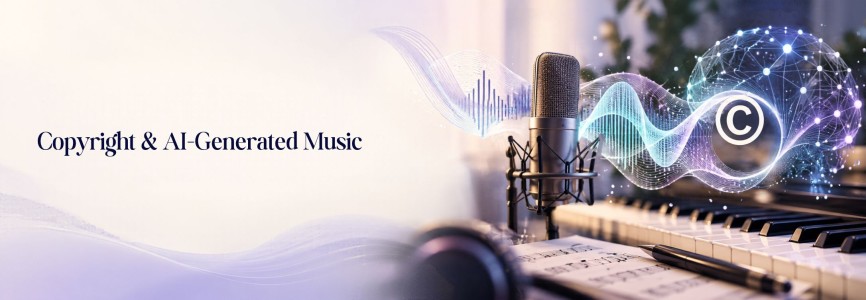



Music is not just entertainment; it often carries a creator’s emotions, hard work and identity. With artificial intelligence (AI), it is now possible to create new songs, make AI cover versions and imitate a singer’s voice using existing audio. These tools can be useful for musicians, but they also raise important questions. Who owns an AI-generated song? Can someone copy a singer’s voice without permission? And what happens when listeners believe that an artist has sung or approved a track when they have not? In India, these issues are mainly considered under existing intellectual property laws, especially the Copyright Act, 1957.
The law, however, was not written with today’s voice-cloning technology in mind. This means that courts and creators must apply existing rules to new situations while keeping in mind that copyright registration, performers’ rights and personality rights protect different things. AI music is not automatically illegal, but technology should not become a way to ignore the rights of composers, lyricists, singers and recording owners.
Understanding AI Covers and Voice Cloning
An AI cover is a version of a song created or changed with the help of AI. The tool might change the instruments or arrangement, or make the song sound as though it was sung by someone else. Voice cloning goes a step further by creating an artificial voice that closely resembles a real person’s voice. If a system uses recordings of a singer, it may produce new audio that listeners recognise as sounding like that artist.
A song can contain several different things that are protected: its lyrics, melody, recorded track, the singer’s performance and the singer’s recognisable identity. Different people or companies may own or control these rights. Permission to use a recording does not always include permission to use the underlying music, and permission to use the music does not automatically allow someone to clone the singer’s voice. This is one reason AI music disputes can become complicated.
Copyright Protection Under Indian Law
The Copyright Act, 1957 protects different kinds of creative work, including literary works, musical works and sound recordings. Under Section 2(p), a musical work consists of music, while words meant to be sung or spoken with it are treated separately. Lyrics may therefore be protected as literary works, while the recorded version of a song can have its own protection as a sound recording. Section 14 explains the rights copyright owners generally have, including the right to reproduce a work and communicate it to the public, subject to the Act.
Copyright concerns may arise when an AI cover uses protected lyrics or music, copies an existing recording, or shares a protected work without permission. Changing the voice digitally does not automatically make such use lawful. However, a song sounding similar to another does not always mean that infringement has taken place. The important questions are what material was used, who owns the relevant rights, whether permission was obtained and whether any legal exception applies. Questions also arise about who owns music made with AI. Indian law has not yet settled every issue relating to music generated entirely by a machine. If a composer, lyricist, producer or musician contributes original creative work, that contribution and any relevant contract matter. Simply using an AI tool does not give a person ownership of someone else’s song or recording.
Are AI Covers the Same as Traditional Cover Versions?
Indian copyright law already has a special rule for some cover versions. Section 31C of the Copyright Act sets out a licensing route for making a cover version of a literary, dramatic or musical work where a recording has previously been made with the copyright owner’s licence or consent. The section also sets conditions relating to notice, royalties, labelling, packaging and changes to the original work.
An AI cover does not automatically qualify under Section 31C. Its application depends on the facts and whether the statutory conditions are met. The section is not a general permission to copy the original recording or imitate the singer’s voice. Anyone planning to release an AI cover, particularly for commercial purposes, should check which permissions and licences are needed instead of assuming that calling it a ‘cover’ makes it lawful.
Performers’ Rights and the Singer’s Voice
Performers’ rights matter when AI tools use or imitate a singer’s performance. Section 38 of the Copyright Act recognises performers’ rights, while Section 38A gives performers certain exclusive rights over uses of their performances, subject to the Act. Section 38B provides moral rights, including, in appropriate circumstances, the right to be identified as the performer and to object to distortion or changes that harm their reputation. These provisions can be relevant where an AI system uses an actual recorded performance, reproduces it, alters it or presents a modified version to the public.
However, a key legal difficulty arises when an AI system creates a new vocal performance that sounds like a singer without directly copying a particular recording. The statutory language on performers’ rights is centred on a performance and its use. Whether it fully addresses a synthetic imitation that does not reproduce an identifiable original performance remains a developing question. A singer’s voice is often part of their public identity and livelihood. If an AI track is presented as an authorised release when it is not, listeners may be misled and the singer’s reputation or earning opportunities may suffer. This can matter even if the track is newly generated rather than copied from an existing recording. Copyright is therefore only one part of the legal picture; performers’ rights and personality rights may also be relevant.
Personality Rights, Consent and False Endorsement
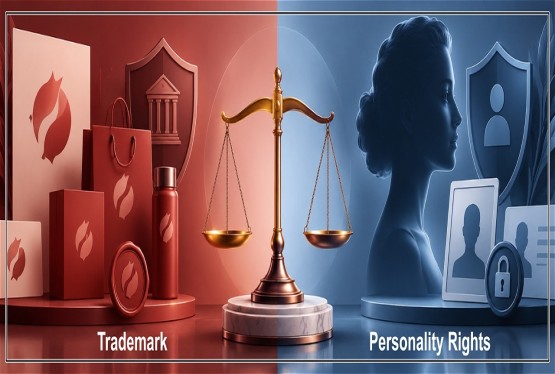
Personality rights relate to the use of a person’s identity, including their name, image, likeness and, in suitable cases, distinctive voice. Indian courts have offered protection against certain unauthorised commercial uses of identity through principles such as privacy and passing off. However, the law is still developing, and India does not yet have one comprehensive law specifically dealing with AI voice cloning in music. If a cloned voice makes people believe that a singer performed, approved or endorsed a song, the artist may be able to raise concerns about misrepresentation, passing off or personality rights.
The issue is especially serious when the voice is used in advertisements, political content or material that harms the artist’s reputation. Labelling content as AI-generated can help avoid confusion, but it does not replace permission where protected music or recordings have been used. Permission should be clear and informed. If a singer agrees to have a recording used in one song, film or advertisement, that should not automatically be treated as permission to train an AI voice model or create endless new performances. Contracts should explain how the voice may be used, for how long, on which platforms, what payment is due, whether AI training is allowed and how the singer will be credited.
Relevant Indian Judicial Developments
Indian courts have increasingly been asked to address unauthorised digital use of celebrity identity. In cases involving public figures and online misuse, courts have considered whether names, images, voices or other identifying features are being commercially exploited without permission. Such disputes are relevant to AI-generated music because a cloned voice can function as a recognisable marker of identity even where the performer did not participate in creating the track. Litigation concerning singers’ voices and personality rights, including proceedings associated with Arijit Singh and Asha Bhosle, reflects the growing concern about digital imitation and unauthorised exploitation of artists’ identities. These matters should be read according to the specific orders and claims in each case; they do not mean that every imitation of a voice is automatically unlawful. The wider lesson is that courts may examine the context, likelihood of deception, commercial use, reputation and the rights actually asserted.
Another important Indian AI-copyright development is the litigation brought by news agency ANI against OpenAI concerning the use of published material for AI training. Although that dispute concerns text rather than music, it illustrates broader questions about training data, copyright exceptions and the evidence required to establish infringement. Its reasoning should not be assumed to settle the law on music or voice cloning, but it shows that Indian courts are beginning to engage with the legal consequences of generative AI.
Challenges in Enforcement
One practical problem is finding out where an AI-generated voice came from. A track may be made using different tools, uploaded anonymously and shared widely in a short time. Artists may not know what recordings were used to train the system or who created and uploaded the result. If the service or uploader is based abroad, taking action can become even more difficult. It can also be difficult to prove exactly what has been copied.
Two voices sounding alike does not necessarily prove that a particular recording was reproduced. Technical evidence and expert analysis may be needed. Platforms must also respond to genuine complaints without automatically removing lawful parody, criticism or authorised fan projects. The aim should be to protect artists without treating every similarity in musical style as infringement.
Practical Measures for Artists, Labels and Platforms
Artists and labels can reduce risk by keeping clear records of ownership, licences and performer agreements. Contracts should specifically mention AI training and voice cloning instead of relying only on broad terms about recording or online distribution. If a singer’s voice is licensed for AI use, the agreement should set clear limits on the kinds of tracks that can be created and whether commercial use is permitted. Platforms can help by making it easy to report suspected misuse, responding to credible complaints and preserving evidence. Artists can use verified accounts to clarify whether a release is genuine. Anyone making an AI cover should check the rights in the music, lyrics and recording, obtain the necessary licences, avoid misleading artwork or titles, and seek permission before using a real singer’s voice commercially.
The Way Forward
India needs clearer guidance on how copyright and performers’ rights apply to AI-generated voice imitations. The law should distinguish between copying an existing recording, creating a new track that imitates a singer, and using AI with an artist’s informed consent. These situations are different and should not be treated as if they raise exactly the same issues. A balanced approach could include clearer consent rules, fair payment for licensed voice use, suitable disclosure of synthetic performances and practical ways to challenge deceptive or infringing content. At the same time, the law should leave room for creativity, parody, criticism and research where these are lawful. Musicians, labels, technology companies and policymakers should work together to develop rules that can be applied in practice.
Conclusion
AI covers and voice cloning are changing the way music is made and shared. They can give artists new ways to experiment, but they can also be used to copy protected material, mislead listeners or exploit a singer’s identity. Indian law already provides some protection through copyright in music and recordings, the rules on cover versions, performers’ rights and personality-rights principles.
Still, the law does not answer every question, especially when an AI creates a new voice that resembles a singer without copying a particular recording. The safest approach is to check each set of rights separately, obtain permission where needed and be honest about whether an artist was involved. As AI tools become more advanced, clearer rules and responsible platform practices will be important. New technology should support creativity, not take away the rights and livelihoods of the people who make music.
Frequently Asked Questions
Q1. Can I legally upload an AI cover of a popular Indian song?
Ans. Not automatically. You should assess the copyright in the lyrics and composition, the rights in any source recording used, and any applicable licence or statutory conditions. Commercial release requires particular care.
Q2. Does changing the singer’s voice avoid copyright infringement?
Ans. No. Changing a voice does not necessarily avoid infringement if protected music, lyrics or a sound recording are reproduced. Separately, an imitation may raise personality-rights or misrepresentation concerns.
Q3. Does Section 31C permit any AI-generated cover?
Ans. No. Section 31C provides a conditional statutory framework for certain cover versions. It should not be treated as a blanket permission for every AI-generated track or for cloning the original singer’s voice.
Q4. Can a singer object if an AI song imitates their voice but uses a new melody?
Ans. Potentially, depending on the facts. Performers’ rights, personality rights, passing off and other legal principles may be relevant, but the outcome depends on the nature of the imitation, how it is used and the evidence available.
Q5. Is AI-generated music always copyright-free?
Ans. No. An AI-generated track may incorporate protected material or involve rights belonging to human contributors and performers. The ownership and protection of purely AI-generated elements remain legally complex and fact-dependent.
Article last updated on : 19 Oct 2026.