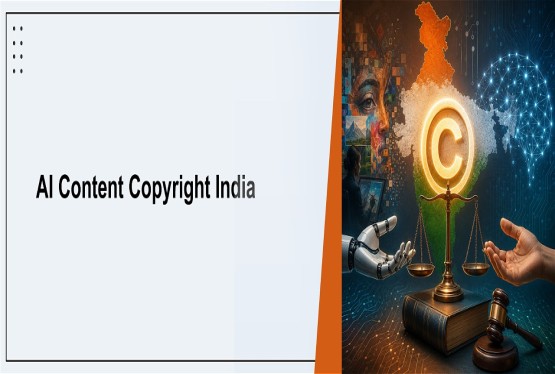



Artificial intelligence is no longer something people only read about in science-fiction stories. Today, a student can use an AI tool to prepare a first draft, a designer can generate an image from a short description, and a musician can experiment with a tune without using a traditional instrument. These tools can save time and open up new ways of working. However, they also raise a basic question that when a machine can produce something that looks creative, how should the law protect the people whose work helped make it possible?
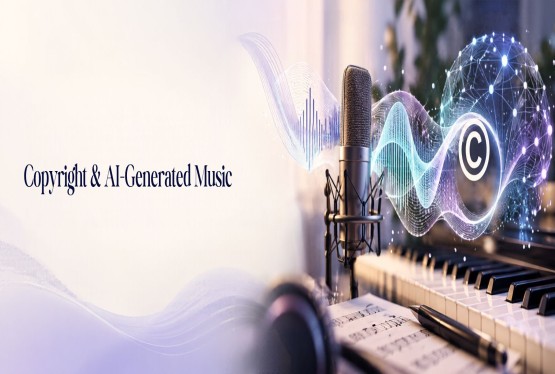
Copyright Registration and AI have become closely connected because many generative AI systems are trained using large collections of text, photographs, artwork, music and other material. Some of that material may be protected by copyright. At the same time, it is not always clear who owns the content produced by an AI tool or what happens if the output closely resembles an existing work. Indian copyright law was developed well before today’s generative AI tools became common, so applying its principles to these new situations is not always straightforward. The aim should be to encourage innovation while respecting the rights and efforts of human creators.
What Does Copyright Protect?
The Copyright Act, 1957 protects original works in categories such as literature, drama, music and art, as well as films and sound recordings. Copyright gives the owner certain exclusive rights, including rights relating to reproduction and communication of the work to the public. It does not normally give anyone ownership over a general idea, fact or style. For example, several writers may create stories about friendship or mystery, but the particular language and original expression in an individual story may be protected.
This difference matters when considering AI. A system may learn patterns from many existing works and then generate a new response. The central legal issue is not simply whether AI was involved. It is whether protected expression has been used in a way that the law permits, whether the resulting material contains sufficient human creativity for copyright protection, and who should be treated as the author.
Using Copyrighted Material to Train AI
AI models are often developed by processing very large datasets. These datasets may contain material that is openly licensed, in the public domain, obtained with permission or collected from publicly accessible websites. The fact that a work can be viewed online, however, does not automatically mean that anyone is free to copy it for any purpose.
Creators argue that their books, photographs, music and artwork should not be used to build commercial AI systems without permission or fair compensation. Their concern is understandable: a system trained on their work may later produce content that competes with their services, while they receive no payment or recognition. Developers respond that AI training requires access to large amounts of information and that seeking individual permission for every item may be difficult, especially where datasets contain millions of works.
Indian law offers some guidance, but it does not provide a complete, AI-specific answer to every training-data question. Section 14 of the Copyright Act sets out the rights associated with different types of copyrighted works, while Section 51 deals with copyright infringement. Section 52 lists particular acts that do not amount to infringement in specified circumstances. These include certain forms of fair dealing, such as use for private or personal purposes, research, criticism or review, and reporting current events, subject to the conditions in the provision. These exceptions should not be treated as a general licence for every commercial AI-training activity.
Whether a particular use of copyrighted material is lawful may depend on how the material was obtained, what copying or processing took place, the purpose of the activity, the relevant licence and the exception being relied upon. Until the law becomes clearer, developers should not assume that all training is unlawful, but neither should they assume that all training is automatically permitted.
India’s Policy Discussion on AI and Copyright
The Government of India has started examining how copyright rules should respond to generative AI. The Department for Promotion of Industry and Internal Trade (DPIIT) constituted a committee in 2025 to study the relationship between AI and copyright. On 9 December 2025, DPIIT published Part I of a working paper on the AI–copyright interface. The paper discussed different approaches, including licensing, collective arrangements and exceptions for text and data mining.
One proposal considered in the paper involves allowing AI developers to use lawfully accessed copyrighted material for training through a blanket licensing framework, with remuneration distributed to rights holders through a collective mechanism. Supporters may see this as a practical way to manage large-scale use of works. Others may worry that a collective system could limit a creator’s ability to decide whether their work should be used at all, or whether the payment received would be fair.
The proposal is part of a policy discussion; a working paper does not itself amend the Copyright Act or become binding law. The final approach may change after consultation and further government action. In the meantime, creators and businesses should check the law and licence terms that apply to their activities, rather than relying on proposals as if they were already in force.
Who Owns Content Created by AI?
Authorship becomes complicated when AI produces the final content. If a person writes a short story from beginning to end, identifying the author is relatively easy. But if someone enters a brief prompt and an AI system generates an entire story, image or song, it is less obvious who made the creative choices that copyright law is meant to protect.
Section 2(d) of the Copyright Act defines ‘author’ for different categories of work. In the case of a computer-generated literary, dramatic, musical or artistic work, the provision refers to the person who causes the work to be created. This wording may be relevant to AI-generated works, but it was not written specifically for modern generative AI systems. It does not automatically settle every question about who owns an output produced by a prompt-based tool.
A useful way to look at the issue is to distinguish between AI being used as an assistant and AI doing almost all the creative work. A person who carefully edits an AI draft, selects and arranges elements, rewrites sections or adds original expression may have a stronger claim to copyright in the human-created contribution. On the other hand, where the person gives only a simple instruction and the system produces the result independently, it may be harder to establish that the output reflects sufficient human authorship. Clearer legal guidance would help students, artists, publishers and businesses understand their rights.
Relevant Cases and International Guidance
In Thaler v. Perlmutter, the United States Court of Appeals for the District of Columbia Circuit considered a claim for copyright registration of an image generated autonomously by an AI system. Stephen Thaler had identified the AI system as the sole author. On 18 March 2025, the court upheld the refusal of registration, concluding that the US Copyright Act requires human authorship. The decision does not mean that every work created with AI is automatically excluded from copyright. Human contributions to AI-assisted work may still be protected, depending on the circumstances. The case interprets US law, so it is informative but not binding on Indian courts.
The US Copyright Office’s 2023 guidance on works containing AI-generated material also takes a fact-specific approach. It explains that copyright protection depends on whether a human has contributed sufficient original expression. A work may contain both protected human-created material and material generated by AI that is not independently protected. This approach supports looking carefully at how the work was made instead of assuming that all AI-assisted works should receive the same treatment.
In India, ANI Media Private Limited v. OpenAI, a proceeding before the Delhi High Court, has brought questions about the use of news content in AI training into focus. The dispute involves allegations concerning the use of copyrighted news material and raises wider questions about how existing copyright principles apply to AI services. It should not be taken as a final ruling that every form of AI training is either legal or illegal. The legal position must be assessed with reference to the relevant court orders and the progress of the case.
Can AI-Generated Content Infringe Copyright?
A separate question arises when an AI tool produces material that is very similar to an existing work. Even if an AI output does not qualify for copyright protection in its own right, that does not necessarily make it safe to use. If it reproduces a substantial part of a protected song, photograph, book or illustration without permission or a valid legal defence, it may lead to an infringement claim.
Similarity by itself does not always establish infringement. The analysis depends on the protected expression, the extent of copying and the circumstances of the case. An artist’s general style is not necessarily protected in the same way as a particular drawing or painting, but reproducing recognisable protected elements can create legal risk. Other issues, such as trademark infringement, passing off, privacy and personality rights, may also arise depending on how the AI output is used.
Recognition, Moral Rights and Fair Treatment of Creators
Copyright is not only about money. It can also be about recognition and the connection between a creator and their work. Section 57 of the Copyright Act recognises certain special rights of authors, commonly known as moral rights. These include the right to claim authorship and, in specified circumstances, to object to distortion or modification that harms the author’s honour or reputation.
AI can make these concerns harder to manage. A creator may discover that their work was used to train a system without their knowledge, or that generated content is wrongly attributed to them. Whether Section 57 applies in a particular situation depends on the legal requirements and facts, but the wider concern is clear: creators should not be left without practical ways to raise concerns about how their work is used.
Greater transparency could help. Developers can keep records of training-data sources, respect licences and provide clear processes for rights holders to raise complaints. Creators can make their licensing preferences clear and preserve evidence of original files, drafts and publication dates. These steps will not solve every dispute, but they can make rights easier to identify and enforce.
Practical Steps for Creators, Users and Developers
Creators should keep dated drafts and original files, read licensing agreements carefully and check whether a licence covers AI training, commercial use or redistribution. People and businesses using AI-generated content should review the result before publishing it, especially if it resembles a known artist’s work, a song, a brand or a news article. They should also check the AI platform’s terms and avoid uploading confidential or personal information without proper authority.
AI developers should pay attention to the source of their training data, comply with relevant licences and consider licensing arrangements where required. They should not treat online availability as proof that material is free to use. Organisations commissioning AI-assisted work should also clarify ownership, permitted uses and responsibility for infringement in their contracts. Keeping a record of human editing and creative decisions may be useful where ownership later becomes disputed.
The Way Forward
India needs rules that recognise both the value of human creativity and the benefits that AI can bring. A licensing or collective-payment system may be one possible solution, but its details will matter. The system would need to consider independent creators as well as large publishers and music companies, explain how payments are calculated, and provide transparency about who receives compensation. It should also consider whether creators need meaningful choices about the use of their work.
Clearer guidance is also needed on AI-assisted authorship, the role of human creative input, the use of copyrighted works in training and responsibility for infringing outputs. These rules should be developed after hearing from artists, writers, musicians, researchers, technology companies and the public. Since AI technology changes quickly, the legal framework should be clear enough to protect rights but flexible enough to remain useful as tools develop.
Conclusion
The debate over copyright and AI is not simply a choice between protecting artists and supporting technology. Both matter. AI can help people explore new ideas and create work in different ways, but its development should not make the effort of human creators invisible. Indian copyright law already contains important rules on authorship, exclusive rights, exceptions and moral rights, yet the application of those rules to modern AI systems still raises difficult questions. The DPIIT working paper is an important part of the policy discussion, but proposals must be distinguished from law that is actually in force. A balanced approach should allow responsible innovation while giving creators fair recognition, meaningful protection and appropriate remuneration.
Frequently Asked Questions (FAQs)
Q1. Does Indian law completely ban AI-generated content?
No. The main issues are whether the content qualifies for copyright protection, who may claim authorship and whether the output unlawfully uses someone else’s protected work.
Q2. Can I claim copyright over an image made with AI?
It depends on the facts and the extent of your own creative contribution. Human editing, selection or arrangement may be relevant, but simply entering a prompt does not guarantee ownership of the entire output.
Q3. Is it always illegal to train AI using copyrighted books or images?
Not necessarily, but it is not automatically lawful either. Permission, licence terms, the nature of the use and any applicable statutory exception must be considered.
Q4. Is the DPIIT working-paper proposal already law?
No. A working paper is part of policy development and does not, by itself, amend the Copyright Act.
Q5. What can a creator do if they think AI has copied their work?
They can preserve evidence, identify the original and allegedly copied material, use the platform’s reporting process and seek legal advice where appropriate.