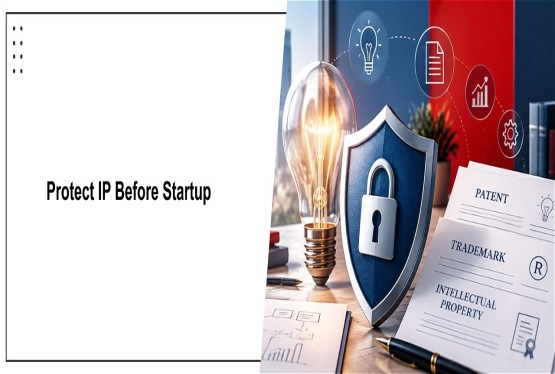



For a startup, intellectual property can be one of its most valuable assets. Source code, product designs, inventions, databases, business processes, marketing materials, technical know-how and documentation can become central to the company's valuation.
A common mistake is to assume that because an employee created something while working for the company, the company automatically owns every relevant right. A carefully drafted employment agreement should instead establish the ownership and transfer mechanism clearly.
Intellectual Property Ownership Clause
The agreement should clearly state which intellectual property created by an employee in the course of employment belongs to the company, subject to applicable law. Depending on the business, this may cover software and source code, inventions and discoveries, product designs, technical documentation, databases, drawings, specifications, business processes, written and visual content, branding concepts, improvements and other protectable rights.
Present and Future IP Assignment
Do not limit the agreement to IP that already exists. The agreement should contain an express mechanism for assigning relevant future rights to the company, to the extent permitted by applicable law.
Define “Company IP” Carefully
A definition of Intellectual Property may cover inventions, discoveries, patents and patent applications, copyright, software, source code, object code, databases, designs, trademarks, domain names, know-how, trade secrets, confidential information, documentation, algorithms, processes, methods and improvements. The definition should then be connected to the operative ownership and assignment provisions.
Pre-Existing / Background IP
An employee may already own software libraries, inventions, designs, content, patents, open-source projects or other IP. The agreement should require relevant pre-existing IP to be identified in a schedule or annexure. This creates a clean distinction between employee-owned Background IP and Company IP.
Side Projects and Personal Projects
The agreement should address independent projects without attempting to claim every piece of IP an employee creates throughout their personal life. Relevant factors may include whether company time, equipment, confidential information or personnel were used; whether the project relates to assigned duties; and whether it directly relates to the company's business.
Confidentiality and Trade Secrets
Employees may have access to valuable information that is not necessarily registered IP, including source code, product roadmaps, customer information, pricing strategies, business plans, algorithms, technical know-how, supplier information and unreleased products. Define Confidential Information and prohibit unauthorized use or disclosure. The Delhi High Court's decision in Resilient Innovations Pvt. Ltd. v. Ashneer Grover is a useful example of detailed contractual confidentiality and return/destroy obligations.
Return and Destruction of Company Materials
The agreement should require employees, on termination, to return or securely delete company property and information, including devices, source code, documents, customer data, credentials, cloud files, prototypes and confidential notes, with an appropriate confirmation where necessary.
Further-Assurances Clause
An employee may need to sign additional documents after leaving the company for example, to record an assignment, respond to an IP-office requirement, file or prosecute a patent, or assist with an acquisition. A reasonable further-assurances obligation can help the company perfect or record its rights.
Moral Rights
Copyright ownership and authors' special rights are not identical. Section 57 of the Copyright Act recognizes authors' special rights, including authorship and protection against certain prejudicial distortion or modification. Any contractual treatment of such rights should be drafted carefully and only to the extent legally permissible.
IP Disclosure and Invention Reporting
Employees involved in R&D; or product development should be required to promptly disclose potentially protectable inventions and developments, together with information reasonably needed for patent, design, copyright or other filings.
Open-Source and Third-Party IP
Technology companies should establish rules for introducing third-party code, libraries, datasets, images and other protected material. The agreement can require compliance with applicable licences, disclosure of third -party components and approval for higher-risk licence terms.
No Unauthorized Use of Third-Party IP
The employee can be required to represent that work delivered to the company does not knowingly infringe third-party IP, subject to reasonable qualifications. Avoid turning this into an unlimited personal indemnity for every possible third-party claim.
Post-Employment Confidentiality
Confidentiality obligations should survive termination where appropriate, while carving out information that becomes public without breach, was lawfully known already, is independently developed without use of company confidential information, or must be disclosed by law or valid legal process.
Do Not Confuse IP Protection With a Non-Compete
An IP agreement should protect genuine company IP, confidential information and trade secrets; it should not simply prohibit an employee from working for a competitor after leaving. Section 27 of the Indian Contract Act generally renders agreements in restraint of trade void to the relevant extent. Indian decisions such as Ambiance India Pvt. Ltd. v. Naveen Jain distinguish protection of confidential information from broad post-employment restraints.
Founder-Specific IP Assignment
Founders should separately address IP created before incorporation. A founder may have developed the original software, prototype, domain name, branding, patentable invention, database or documentation before the company existed. Those assets should be formally transferred or appropriately licensed to the company so that the chain of title is clear during investment, due diligence or an acquisition.
Practical Founder IP Checklist
-
Is Company IP clearly defined?
-
Is future IP dealt with through an express assignment mechanism?
-
Are copyright assignment formalities properly addressed?
-
Are patent-related assignments documented in writing and duly executed?
-
Has pre-existing / Background IP been identified?
-
Are employee side projects addressed?
-
Is Confidential Information defined with sufficient specificity?
-
Do confidentiality obligations survive termination where appropriate?
-
Is there a return/destruction obligation?
-
Does the employee have to provide reasonable further assistance for IP filings?
-
Are authors' special/moral-rights issues addressed where appropriate?
-
Are open-source and third-party IP rules included?
-
Is there an invention-disclosure obligation?
-
Does the agreement avoid an unnecessarily broad post-employment non-compete?
-
Has founder-created pre-incorporation IP been transferred or licensed to the company?
Key Legal Takeaway
A strong IP clause is not merely a sentence saying “all intellectual property belongs to the company.” For an Indian startup, the agreement should distinguish Company IP, Background IP, inventions, copyright, patents, confidential information, side projects and post-employment obligations, while creating a clear chain of title and a practical mechanism for future documentation.
Statutory points checked: Section 17(c) of the Copyright Act provides an employer-first-owner rule for certain works made in the course of employment under a contract of service, in the absence of an agreement to the contrary. Section 18 permits assignment of existing and future copyright, while Section 19 sets out formal requirements for assignments. Section 68 of the Patents Act requires patent assignments and certain other interests to be in writing and duly executed. Section 27 of the Contract Act addresses restraints of trade.