


FLA Return Filing is an important annual compliance requirement for Indian companies, Limited Liability Partnerships (LLPs) and other eligible entities having outstanding foreign investments or overseas investment positions. Under the Foreign Exchange Management Act, 1999 (FEMA), entities covered by the applicable requirements must report their foreign financial liabilities and assets to the Reserve Bank of India (RBI).
The Annual Return on Foreign Liabilities and Assets (FLA Return) provides information about foreign direct investment received by Indian entities and overseas direct investment made by them. It helps the RBI collect information about India's international investment position and foreign financial exposure. In India, FLA Return Filing is completed through the RBI's Foreign Liabilities and Assets Information Reporting (FLAIR) portal. The online system allows eligible businesses to register, enter financial information, submit the annual return and obtain an electronic acknowledgement.
For the financial year 2025–26, the ordinary FLA Return Filing deadline was 15 July 2026. Companies with outstanding FDI or ODI as of 31 March 2026 were required to assess their filing obligations, even if they had not received fresh foreign investment during that financial year. Failure to file the return within the prescribed period can result in FEMA non-compliance and may require payment of an applicable Late Submission Fee or other regulatory action.
What Is FLA Return Filing Under FEMA?
FLA Return stands for Annual Return on Foreign Liabilities and Assets. It is a regulatory return submitted to the RBI by eligible Indian-resident entities having outstanding inward foreign direct investment or overseas direct investment. The return provides information regarding foreign investment positions at the end of the reporting financial year. It also includes comparative information for the previous financial year.
For example, if an Indian private limited company received foreign investment in 2023 and the foreign shareholder continues to hold qualifying investment as of 31 March 2026, the company may be required to file the FLA Return for FY 2025–26, even if no additional foreign investment was received during that year.
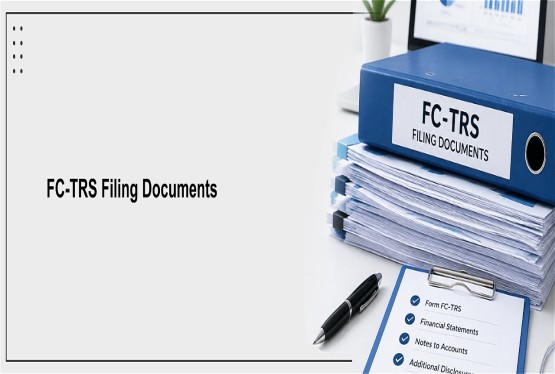
Similarly, an Indian company owning a qualifying overseas subsidiary may be required to report its overseas investment position in the annual return. The RBI uses the information collected through FLA returns in compiling India's Balance of Payments (BoP), International Investment Position (IIP) and other external sector statistics. Unlike Form FC-GPR or FC-TRS, the FLA Return primarily reports outstanding foreign investment positions rather than individual share allotments or transfers.
Legal Provisions Governing FLA Return Filing in India
FLA Return Filing is governed by FEMA and relevant regulations and RBI instructions.
Foreign Exchange Management Act, 1999
- Section 3 – Dealing in Foreign Exchange: This section restricts unauthorised dealings in foreign exchange and foreign securities. Foreign investment transactions must be undertaken through permitted arrangements.
- Section 6 – Capital Account Transactions: Section 6 regulates capital account transactions, including foreign investments in India and overseas investments made by eligible Indian residents.
- Section 10 – Authorised Persons: This section governs persons authorised to deal in foreign exchange, including banks handling relevant international investment transactions.
- Section 11 – RBI Directions: The RBI has powers under this section to issue directions to authorised persons concerning foreign exchange transactions.
- Section 13 – Penalties: This section prescribes penalties for contraventions of FEMA and applicable subordinate legal provisions.
- Section 15 – Compounding: This section allows eligible FEMA contraventions to be compounded in accordance with the prescribed procedure.
- Section 47 – RBI Regulations: This section empowers the RBI to make regulations within its statutory authority under FEMA.
RBI Circular Dated 15 March 2011
The RBI issued A.P. (DIR Series) Circular No. 45 dated 15 March 2011, concerning annual reporting of foreign liabilities and assets. The circular established important reporting requirements for Indian companies receiving foreign direct investment or making investments overseas.
FEMA 395/2019-RB
The Foreign Exchange Management (Mode of Payment and Reporting of Non-Debt Instruments) Regulations, 2019, contain provisions relating to foreign investment reporting. Regulation 4(2) prescribes annual FLA reporting for covered inward investments, including the ordinary deadline of 15 July. Applicable overseas investment reporting obligations must also be considered under the relevant RBI directions. The RBI's official FLA FAQs clarify the broader categories of reporting entities, including LLPs and certain other eligible entities.
Who Is Required to File the FLA Return in 2026?
FLA Return applicability depends on whether an Indian-resident entity has relevant outstanding foreign investment liabilities or overseas investment assets at the end of the reporting financial year. The return is not restricted to large companies. Smaller businesses and startups may also have filing obligations.
Indian Companies Receiving FDI
Private limited and public limited companies having qualifying outstanding FDI are generally required to submit the FLA Return. For example, an Indian startup that received foreign equity investment in an earlier year must examine its annual filing obligation for as long as the relevant foreign investment remains outstanding.
Limited Liability Partnerships
LLPs receiving qualifying foreign investment by way of capital contribution may be required to submit the annual FLA Return. The LLP must examine its foreign capital contribution and outstanding foreign investment position at the relevant year-end.
Indian Entities Making ODI
Indian entities making qualifying overseas direct investments may also be covered. For example, an Indian company holding equity in an overseas wholly owned subsidiary may have an annual FLA reporting obligation.
Other Eligible Entities
According to the RBI's FLA instructions, the relevant reporting categories can also include SEBI-registered Alternative Investment Funds (AIFs), partnership firms, public-private partnerships and other specified entities. However, the reporting method may differ for certain entity categories. Applicants should therefore follow the RBI instructions applicable to their legal form.
FLA Return Applicability Table
|
Entity or situation |
General FLA filing position |
|
Indian company with outstanding qualifying FDI |
Required |
|
LLP with outstanding qualifying foreign investment |
Required |
|
Indian entity with qualifying outstanding ODI |
Required |
|
Company with no fresh FDI but existing outstanding FDI |
Required |
|
Entity with no outstanding inward FDI or outward ODI |
Generally not required |
|
Entity holding only share application money without qualifying outstanding investment |
Generally not required |
|
Entity with only qualifying non-repatriable investment excluded from FDI |
Generally not required on that basis alone |
The RBI's FAQs expressly distinguish outstanding foreign investment from new investment received during the latest financial year.
When Is FLA Return Filing Not Required?
Not every company having an international business relationship must file an FLA Return. For example, an Indian company that exports goods or services abroad but has no qualifying outstanding FDI or ODI does not ordinarily become liable to file merely because it earns foreign currency revenue. Similarly, if all relevant foreign investors have transferred their holdings to Indian residents and no qualifying inward or outward direct investment remains outstanding at the relevant year-end, FLA filing may no longer be necessary.
An entity holding only foreign share application money, without any qualifying outstanding FDI or ODI, is also generally outside the filing requirement under the RBI's stated guidance. Investments held by qualifying NRIs or OCIs on a non-repatriation basis may be treated differently from ordinary FDI. Such investments should be examined under the applicable investment provisions before deciding whether they create an FLA reporting obligation. Businesses should not make exemption decisions simply because there were no foreign exchange transactions during the latest year. The outstanding position on 31 March is a key consideration.
FLA Return Filing Due Date for FY 2025–26
The Reserve Bank of India (RBI) requires eligible Indian companies, LLPs and other specified entities having outstanding Foreign Direct Investment (FDI) or Overseas Direct Investment (ODI) to submit the Annual Return on Foreign Liabilities and Assets (FLA Return) by 15 July every year. For the financial year 2025–26, the FLA Return was required to report the applicable foreign investment positions as of 31 March 2026. The prescribed filing deadline was 15 July 2026.
Important FLA Return Filing Dates
|
Particulars |
Details |
|---|---|
|
Financial Year |
2025–26 |
|
Reporting Reference Date |
31 March 2026 |
|
FLA Return Due Date |
15 July 2026 |
|
Filing Authority |
Reserve Bank of India (RBI) |
|
Filing Portal |
RBI FLAIR Portal |
|
Reporting Requirement |
Applicable outstanding FDI and ODI |
What Happens If the FLA Return Is Not Filed on Time?
The FLA Return filing deadline for FY 2025–26 has already passed. Businesses that missed the deadline should review the applicable RBI late-filing procedure and submit the pending return after obtaining the necessary permission, where required. Delayed filing may attract a Late Submission Fee (LSF) or other regulatory consequences under FEMA, depending on the circumstances. Companies should also remember that the FLA Return can be filed using provisional or unaudited financial statements if audited accounts are unavailable by the due date. This helps eligible entities comply with RBI reporting requirements without unnecessary delays.
How to Register on the RBI FLAIR Portal
The FLAIR portal is the RBI's web-based platform for filing the Annual Return on Foreign Liabilities and Assets.
The official portal is RBI FLAIR Portal.
Step 1: Open the FLAIR Portal
Visit the RBI FLAIR website and select the registration option for new entity users. The entity should confirm whether it already has an existing FLAIR registration before submitting a new registration request.
Step 2: Enter Entity Details
Provide the required information, including the entity's legal name, PAN, CIN or LLPIN where applicable, registered address and relevant authorised-person details. The information should match official company or LLP records.
Step 3: Prepare Registration Documents
The RBI's registration instructions refer to the submission of a Verification Letter and an Authority Letter. The documents establish the entity's identity and confirm the person authorised to submit FLA information.
Step 4: Submit the Registration
Complete the online registration and upload the required documents in the prescribed format. After successful registration, the authorised user receives login credentials through the registered email address.
Step 5: Log In to FLAIR
Use the registered credentials to access the portal and prepare the annual FLA Return. The RBI replaced the general Excel-based and email-based reporting process with web-based FLA filing from June 2019. Certain categories, such as AIFs, may be subject to special reporting instructions.
Step-by-Step FLA Return Filing Process Online in 2026
After completing registration, the eligible entity can prepare and submit the annual FLA Return through FLAIR. The filing involves entering financial and investment information for the latest and previous financial years.
Step 1: Select the Annual FLA Return
Log in to FLAIR and access the online FLA Return facility. Select the financial year for which reporting is required. For FY 2025–26, the return contains information for the relevant reference dates, including 31 March 2025 and 31 March 2026.
Step 2: Enter Entity Information
Verify the entity's legal details, business activity, identification numbers and other relevant information. The information should be consistent with the entity's financial statements and registration records.
Step 3: Provide Financial Information
Enter the financial particulars requested in the relevant sections of the return. These may include paid-up capital, reserves and surplus, profit or loss information and other prescribed financial details. The information should be based on the reporting entity's records for the appropriate financial year.
Step 4: Report Foreign Liabilities
Provide information regarding qualifying investments made by foreign investors in the Indian entity. Depending on the nature of the investment, the return may require details of equity capital, other capital and related foreign investment positions.
Step 5: Report Foreign Assets
Where the Indian entity has invested overseas, provide information about the relevant foreign direct investment assets. This may include investment positions in overseas subsidiaries, joint ventures and other qualifying foreign enterprises.
Step 6: Complete Other Applicable Sections
The FLA Return also contains sections covering other prescribed external financial positions and investment information. Applicants should complete each section according to its definitions rather than assuming that all foreign currency transactions must be included.
Step 7: Validate and Submit the Return
Review the financial information, reconcile it with the supporting records and complete the portal's applicable validation process. Once the information is correct, submit the return electronically.
Step 8: Download the Acknowledgement
After successful submission, FLAIR generates an acknowledgement. The RBI clarifies that the acknowledgement is generated at submission and that a separate acknowledgement email is not ordinarily issued. The entity should preserve this acknowledgement as evidence of filing.
Documents and Information Required for FLA Return Filing
The FLA Return is primarily an information-based RBI reporting requirement. Companies should therefore collect accurate financial and foreign investment records before starting the filing process.
Corporate Registration Records
These include the Certificate of Incorporation, PAN, CIN or LLPIN, registered address and details of the authorised person responsible for submitting the return. The information helps verify the reporting entity's identity.
Financial Statements
Companies should maintain the relevant balance sheets, profit and loss information and supporting financial schedules. Audited accounts should be used where available. Otherwise, provisional or unaudited information may be used within the permitted procedure.
Foreign Investment Documents
Entities receiving FDI should maintain share allotment records, foreign investor information, capital contribution records and relevant investment agreements. These documents support the foreign liabilities reported in FLA.
Overseas Investment Records
For entities making ODI, the relevant records may include foreign entity financial statements, shareholding information, remittance evidence and prescribed ODI reporting acknowledgements.
Previous FLA Returns
The prior year's FLA submission can help reconcile opening and closing investment positions and identify changes during the latest financial year.
Document Checklist
|
Documents or records |
Why they are useful |
|
PAN and entity registration details |
Entity identification |
|
Audited or provisional financial statements |
Financial information |
|
Shareholding records |
Foreign investment ownership |
|
FDI investment records |
Outstanding foreign liabilities |
|
ODI investment records |
Outstanding overseas assets |
|
Prior FLA acknowledgement |
Comparative year verification |
|
Relevant FC-GPR and FC-TRS records |
Reconciliation of inward investments |
|
Overseas investment financial statements |
Reporting of foreign investment positions |
|
Authority and Verification Letters |
FLAIR registration |
Important: The RBI's FLA FAQs clarify that balance sheets and profit and loss statements are not required to be uploaded as attachments with the ordinary FLA Return. They should nevertheless be available for preparing and verifying the reported figures.
Latest FLA Return Updates and RBI Instructions in 2026
Entities preparing the FLA Return in 2026 should review the latest official reporting instructions and distinguish them from changes affecting other FEMA filings.
Updated RBI Guidance in 2026
FLA guidance republished with update dates of 25 March 2026 and 1 July 2026 describes the continued use of the FLAIR portal, the eligibility requirements and the reporting of outstanding FDI and ODI positions. The guidance confirms the importance of assessing foreign investment balances at the financial year-end rather than focusing exclusively on new investments received during the year. The general 15 July filing deadline also remains central to the reporting process.
Annual Reporting Through FLAIR
FLAIR continues to be the designated electronic facility for the ordinary annual FLA Return. Entities should use the current portal instructions and registration manuals rather than older procedures involving general email submission or standalone Excel returns. Certain special entity categories may follow a different method when instructed by the RBI.
RBI Guidance on Unaudited Financial Statements
The RBI permits FLA filing using unaudited or provisional figures when audited accounts are unavailable by the due date. Once audited figures become available, the entity can request permission for revision through the portal. This facility enables companies to complete annual reporting without waiting for statutory audit finalisation.
Reporting of Outstanding Investments
An important continuing requirement in 2026 is that companies must consider their outstanding foreign investment positions. An entity that received FDI several years earlier may remain liable to file even when it has not received new investment during FY 2025–26.
FLA Reporting and Other FEMA Amendments
Amendments issued under FEMA concerning foreign investments, overseas investment and payment arrangements may affect how an entity's transactions are recorded and classified. However, changes to FC-GPR, FC-TRS or other transaction-based reporting rules should not automatically be interpreted as changes to the FLA Return. The applicable annual FLA reporting obligation must be determined using the relevant RBI instructions.
FLA Return Filing Fees, Late Fees and FEMA Penalties
The RBI does not prescribe a standard government filing fee for the ordinary timely submission of an FLA Return through FLAIR. However, businesses may incur professional service charges for financial reconciliation, document review, filing assistance and correction of reporting discrepancies.
Late Submission of FLA Return
Where an eligible entity fails to submit its FLA Return by the prescribed deadline, it should examine the RBI's procedure for obtaining permission to file a delayed return. Late filing may attract a Late Submission Fee under applicable RBI directions. The RBI's circular dated 30 September 2022 provides instructions relating to the Late Submission Fee mechanism for specified FEMA reporting delays. The applicable fee and regularisation procedure should be checked rather than assuming that every delay attracts the same statutory penalty.
Penalties Under Section 13 of FEMA
Section 13 prescribes penalties for FEMA contraventions. Where the amount involved is quantifiable, a penalty may extend to three times that amount. Where the amount is not quantifiable, the penalty may extend to Rs 2 lakh. For a continuing contravention, an additional penalty of up to ?5,000 per day after the first day may apply. These are statutory maximums and not automatic amounts imposed for every delayed filing.
Compounding of FEMA Contraventions
Section 15 permits compounding of eligible FEMA contraventions. The Foreign Exchange (Compounding Proceedings) Rules, 2024, and applicable RBI directions govern the process. The need for compounding depends on the nature of the violation. A reporting delay eligible for regularisation through an LSF procedure should be distinguished from a substantive breach of investment regulations.
How to Revise or File a Previous Year's FLA Return
The RBI provides a procedure for requesting permission to revise previously submitted FLA Returns or file returns for earlier years. This facility is useful when a company identifies an error in its financial information or needs to update provisional figures after statutory audit completion.
Revising the Return
The entity should log in to the FLAIR portal and open the online FLA form facility. The RBI's published instructions provide an option for requesting permission to fill a revised form or submit a form after the due date. The applicant selects the relevant year and submits the request. Once permission is granted, the entity can access the permitted filing or revision facility and submit the corrected information.
Reporting Historical Defaults
If a company identifies that it failed to file the FLA Return for a previous financial year, it should first verify whether the filing was actually mandatory for that year. Where required, the company should follow the prescribed RBI late-filing process and determine whether any LSF or additional action applies. Submitting a delayed FLA Return does not automatically resolve unrelated FC-GPR, FC-TRS or ODI reporting defaults.
Difference Between FLA Return, FC-GPR and ODI APR
Businesses often confuse FLA reporting with other foreign investment returns. Although these forms may concern the same foreign investment, they serve different purposes.
|
Particulars |
FLA Return |
FC-GPR |
ODI APR |
|
Purpose |
Annual foreign liabilities and assets positions |
Reporting qualifying new FDI equity issues |
Annual performance of relevant overseas foreign entities |
|
Filing frequency |
Annually, where applicable |
Transaction-based |
Annually, subject to exceptions |
|
General deadline |
15 July |
Within 30 days of issue |
Generally 31 December |
|
Filing mechanism |
RBI FLAIR |
RBI FIRMS |
Applicable ODI reporting through AD bank |
|
Main focus |
Outstanding inward and outward investment positions |
New equity instrument issue |
Performance of overseas investment |
A company may be required to file both an FLA Return and an ODI APR if both sets of conditions apply. The RBI expressly clarifies that filing an FLA Return does not replace a separately applicable APR obligation.
Common FLA Return Filing Mistakes to Avoid
Companies sometimes fail to identify their annual FLA obligation because they assume that reporting is required only when new foreign funds are received. However, outstanding FDI or ODI can trigger the annual requirement even without a fresh investment during the financial year. Another common mistake is waiting for audited financial statements and missing the 15 July deadline. The RBI permits provisional financial figures, subject to subsequent revision where necessary.
Entities may also incorrectly report domestic assets and liabilities as foreign positions, use inconsistent financial year-end figures or fail to reconcile foreign shareholding information with their accounting records. Some businesses confuse FLA filing with FC-GPR, FC-TRS or APR reporting and assume that completion of one form satisfies all FEMA obligations. Companies should review their foreign investment records, confirm applicability and verify financial information before submitting the annual return.
Why Choose Compliance Calendar LLP for FLA Return Filing?
Compliance Calendar LLP provides professional assistance with FLA Return Filing, RBI FLAIR Registration, FDI and ODI Reporting, and FEMA Compliance in India. Our team helps eligible Indian companies, startups, LLPs and other businesses understand annual reporting obligations and prepare accurate foreign investment information.
Our FLA Return Filing Services
- FLA Applicability Review: Assistance in determining whether the entity must file the annual return based on outstanding FDI or ODI.
- FLAIR Portal Registration: Support with entity registration, authorised user information and required documents.
- Financial Data Review: Assistance in reconciling relevant financial statements, foreign investment records and prior reporting information.
- Online FLA Filing: Support in preparing and submitting the prescribed annual return through the RBI FLAIR portal.
- FLA Return Revision: Assistance in identifying differences between provisional and audited information and following the applicable revision procedure.
- Delayed FLA Filing: Guidance concerning past-year filing, late submissions and applicable regulatory requirements.
- Related FEMA Compliance: Assistance with FC-GPR, FC-TRS, ODI compliance and other prescribed foreign investment reporting obligations.
Professional support can help businesses identify documentation discrepancies and understand their reporting obligations before submission.
Frequently Asked Questions (FAQs)
Q1. What is FLA Return Filing under FEMA?
Ans: FLA Return is an annual report submitted to the RBI by eligible Indian entities having outstanding Foreign Direct Investment (FDI) or Overseas Direct Investment (ODI). It provides details of foreign financial liabilities and assets.
Q2. Who is required to file the FLA Return in 2026?
Ans: Indian companies, LLPs and other eligible entities with outstanding FDI or ODI as of 31 March 2026 generally need to file the FLA Return. Filing may be mandatory even if no fresh foreign investment was received during the year.
Q3. What is the due date for FLA Return Filing in 2026?
Ans: The FLA Return for FY 2025–26 was due on 15 July 2026. Eligible entities must submit their annual foreign liabilities and assets information through the RBI FLAIR portal within the prescribed deadline.
Q4. How to file FLA Return online through the RBI FLAIR portal?
Ans: Visit the RBI FLAIR portal, register or log in, and select the relevant financial year. Enter the required financial and foreign investment details, validate the information and submit the return online.
Q5. Is FLA Return Filing mandatory if there is no foreign investment?
Ans: FLA Return Filing is generally not required if an entity has no qualifying outstanding FDI or ODI at the relevant financial year-end. However, companies with existing foreign investments may still need to file even without new transactions.
Q6. What documents are required for FLA Return Filing?
Ans: Important records include PAN, company registration details, financial statements, foreign shareholding information and FDI or ODI investment records. Previous FLA acknowledgements may also help verify the reported figures.
Q7. Can FLA Return be filed without audited financial statements?
Ans: Yes, the RBI permits eligible entities to file the FLA Return using provisional or unaudited financial figures when audited accounts are unavailable. The return can subsequently be revised through the prescribed procedure.
Q8. What happens if FLA Return Filing is delayed?
Ans: Delayed FLA Return Filing may attract a Late Submission Fee under applicable RBI directions. Depending on the circumstances, additional regulatory action may be necessary to regularise the non-compliance.
Q9. What is the difference between FLA Return and FC-GPR Filing?
Ans: FLA Return reports qualifying outstanding foreign liabilities and assets annually, while FC-GPR reports specified issues of equity instruments to non-resident investors. Both are separate FEMA reporting requirements with different filing deadlines.
Q10. How can Compliance Calendar LLP help with FLA Return Filing?
Ans: Compliance Calendar LLP assists businesses with FLAIR registration, FLA Return preparation, financial data review and online submission. Our team also provides support for delayed filings, return revisions and related FEMA compliance requirements.
Article last updated on : 29 Oct 2026.










































































_learn_crop10_thumb.jpg)