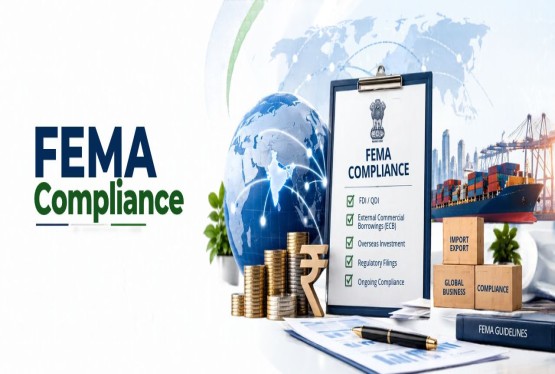



India's growing participation in international trade, foreign investment and cross-border business transactions has made foreign exchange compliance an important responsibility for companies, startups, investors and multinational businesses. Whether an Indian company receives foreign investment, establishes a subsidiary overseas, borrows funds from an international lender or makes payments to foreign service providers, it must understand the applicable legal requirements under the Foreign Exchange Management Act, 1999 (FEMA).
FEMA Advisory Consultants in India help businesses understand foreign exchange regulations, identify compliance obligations, prepare regulatory documentation and manage reporting requirements prescribed by the Reserve Bank of India (RBI) and the Central Government. Their role is particularly important because a transaction that is commercially acceptable may still require regulatory approval, specific documentation or reporting within a prescribed period.
As of 2026, India's foreign exchange regulations continue to evolve through amendments relating to foreign investment, borrowing, guarantees, deposits and international trade. Businesses must therefore consider both the original FEMA provisions and the latest applicable notifications rather than relying on outdated compliance practices. Professional FEMA advisory services assist organisations in structuring transactions correctly, maintaining statutory records and identifying potential regulatory violations before they result in financial penalties or operational complications.
What Are FEMA Advisory Services in India?
FEMA advisory services refer to professional legal, regulatory and compliance assistance relating to transactions involving foreign exchange, foreign securities, foreign investments and financial dealings between residents and non-residents. The principal legislation governing such transactions is the Foreign Exchange Management Act, 1999, which came into force on 1 June 2000, replacing the Foreign Exchange Regulation Act, 1973 (FERA). FEMA was introduced to facilitate external trade and payments while supporting the orderly development and maintenance of India's foreign exchange market.
A FEMA consultant examines the nature of a transaction, determines the relevant statutory provisions and assists the business in complying with applicable requirements. These may include the Foreign Exchange Management (Non-Debt Instruments) Rules, 2019, Overseas Investment Rules, 2022, RBI Master Directions and sector-specific foreign investment policies. FEMA consultancy is not limited to filing forms. It also involves examining transaction eligibility, investment routes, pricing requirements, ownership structures, remittance procedures, regulatory permissions and the consequences of non-compliance.
Legal Provisions Governing FEMA Compliance in India
The Foreign Exchange Management Act, 1999 provides the primary legal basis for regulating foreign exchange transactions in India. Different sections of the Act address restrictions, permissible transactions, authorised dealers, reporting obligations and penalties.
Important Sections of FEMA, 1999
|
Section |
Legal provision |
|
Section 3 |
Restrictions on dealing in foreign exchange except as permitted |
|
Section 4 |
Restrictions on holding foreign exchange, foreign securities and certain foreign assets |
|
Section 5 |
Current account transactions |
|
Section 6 |
Capital account transactions |
|
Section 7 |
Export declarations and related obligations |
|
Section 8 |
Realisation and repatriation of foreign exchange |
|
Section 10 |
Authorisation of persons dealing in foreign exchange |
|
Section 11 |
RBI's powers to issue directions to authorised persons |
|
Section 13 |
Penalties for FEMA contraventions |
|
Section 15 |
Compounding of eligible contraventions |
The legal treatment of a transaction depends on whether it is classified as a current account or capital account transaction. Current account transactions are generally permitted subject to applicable restrictions, whereas capital account transactions must satisfy the conditions prescribed by relevant rules and regulations.
In addition to FEMA, businesses may need to consider the Companies Act, 2013, applicable income-tax provisions, anti-money-laundering requirements, sectoral licensing conditions and the foreign direct investment policy. Compliance with one law does not automatically establish compliance with another.
Key FEMA Advisory Services Offered by Consultants in India
Foreign Direct Investment (FDI) Advisory
Foreign Direct Investment is one of the major areas of FEMA compliance. Indian companies receiving investment from foreign individuals, companies or other eligible non-resident investors must comply with the applicable investment rules, sectoral restrictions and reporting obligations. FEMA Advisory Consultants assist businesses in identifying whether foreign investment is permitted under the automatic route or requires government approval. They also examine sectoral caps, investment instruments, valuation requirements, beneficial ownership considerations and the conditions applicable to the proposed investment.
Key services generally include:
- Reviewing FDI eligibility and sector-specific conditions.
- Evaluating investment under the automatic or government approval route.
- Advising on permissible equity instruments and pricing guidelines.
- Assisting with Form FC-GPR and related reporting.
- Reviewing foreign investment documentation and share allotments.
- Examining downstream investment and indirect foreign ownership.
Foreign investment in Indian entities is principally governed by the Foreign Exchange Management (Non-Debt Instruments) Rules, 2019, as amended, together with the relevant RBI regulations and government policy.
FEMA Reporting and RBI Filing Services
FEMA compliance involves various reporting obligations that businesses must complete after undertaking specified foreign exchange transactions. The applicable form depends on the nature of the investment, transfer, financial commitment or other transaction. For example, when an Indian company issues equity instruments to a non-resident investor, Form FC-GPR may be required. Similarly, transfers of equity instruments between residents and non-residents may trigger Form FC-TRS reporting.
FEMA consultants assist with preparing forms, checking supporting documents, coordinating with Authorised Dealer (AD) banks and resolving reporting discrepancies. Where applicable, relevant submissions are made through RBI's FIRMS portal and its Single Master Form (SMF) reporting facility.
Common reporting obligations include:
|
Form / Return |
Purpose |
|
Reporting issue of equity instruments to non-residents |
|
|
Reporting specified transfers of equity instruments |
|
|
Annual reporting of foreign liabilities and assets |
|
|
LLP(I) |
Reporting foreign investment in an LLP |
|
LLP(II) |
Reporting specified transfers involving LLP capital contribution or profit share |
|
Form DI |
Reporting applicable downstream investments |
|
Form CN |
Reporting eligible convertible-note transactions |
|
Form ECB |
Reporting applicable external commercial borrowing details |
|
APR |
Annual Performance Report for applicable overseas investments |
The applicable reporting obligations should be determined from the transaction facts and current RBI directions, rather than assuming that every form applies to every business.
Overseas Direct Investment (ODI) Advisory
Indian businesses expanding into international markets frequently establish wholly owned subsidiaries, joint ventures or other permitted foreign entities. Such investments are governed by FEMA and the Overseas Investment Rules and Regulations, 2022, along with RBI's related directions. FEMA consultants help Indian companies determine whether their overseas investment qualifies as Overseas Direct Investment (ODI) or Overseas Portfolio Investment (OPI). They also review financial commitment limits, eligibility conditions, guarantees, funding structures and reporting requirements.
Important consultancy activities include evaluating proposed foreign entities, coordinating Form FC submissions, obtaining a Unique Identification Number (UIN), where applicable, and monitoring continuing obligations such as the Annual Performance Report (APR). Certain restructuring, disinvestment and financial commitment transactions may also require additional regulatory review. Professional advice is especially valuable when a company proposes to acquire an overseas business, invest in multiple subsidiaries or provide financial support to a foreign entity.
External Commercial Borrowing (ECB) Advisory
External Commercial Borrowings allow eligible Indian borrowers to obtain financing from recognised lenders outside India, subject to applicable FEMA and RBI conditions. However, foreign borrowing cannot be treated in the same manner as an ordinary domestic bank loan. FEMA advisory consultants examine whether the borrower and lender satisfy prescribed eligibility requirements. They also review borrowing limits, permitted end use, maturity conditions, all-in-cost restrictions and reporting obligations under the rules applicable to the borrowing.
Consultants may assist with loan documentation, regulatory reporting, loan registration and coordination with the designated AD bank. They also assess whether changes in repayment schedules, lenders, borrowing terms or utilisation of funds require regulatory action. Because India's borrowing and lending regulations were amended in 2025 and 2026, companies should verify the currently applicable provisions before entering into new foreign currency or cross-border borrowing arrangements.
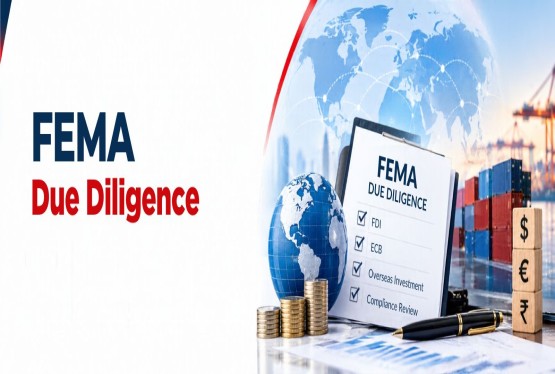
FEMA Due Diligence and Compliance Review
FEMA due diligence involves examining historical and proposed foreign exchange transactions to identify violations, incomplete filings, outstanding obligations and regulatory risks. It is particularly important during mergers, acquisitions, foreign investment rounds, corporate restructuring and investor due diligence. Consultants review capital structures, foreign investment records, share allotments, valuation reports, overseas investments and regulatory submissions to determine whether transactions complied with the applicable requirements at the relevant time.
A FEMA compliance review may cover:
- Historical FDI and ODI transactions.
- RBI reporting acknowledgements and pending filings.
- Shareholding records and foreign investment registers.
- Remittance documentation and banking records.
- Valuation reports and share transfer agreements.
- Overseas financial commitments and annual reporting.
- Potential contraventions requiring corrective action.
A thorough review helps management understand outstanding regulatory matters and decide whether rectification, late reporting, approval or compounding may be required.
FEMA Advisory for Import and Export Transactions
Businesses engaged in international trade must comply with foreign exchange regulations governing import payments, export proceeds, advance remittances and settlement arrangements. FEMA advisory consultants help exporters and importers understand how payments should be received or transferred through authorised banking channels.
Exporters are responsible for complying with applicable requirements relating to declaration, realisation and repatriation of export proceeds. Importers must maintain appropriate transaction documents and comply with the conditions governing international payments. Consultants assist businesses with import-export documentation, outstanding export proceeds, payment discrepancies and coordination with AD banks. They may also advise on Export Data Processing and Monitoring System (EDPMS) and Import Data Processing and Monitoring System (IDPMS) matters, where applicable.
FEMA Compounding and Regulatory Representation
A FEMA contravention occurs when an individual or business fails to comply with an applicable provision of FEMA or a rule, regulation, notification or direction issued under it. Common examples include delayed reporting of foreign investment, non-compliance with pricing requirements, unauthorised capital account transactions and breaches of applicable overseas investment conditions.
Under Section 15 of FEMA, certain contraventions may be compounded through the prescribed legal procedure. FEMA consultants can assist with identifying violations, completing necessary corrective action, preparing supporting documents and submitting compounding applications to the competent authority. However, not every violation is eligible for RBI compounding. Eligibility depends on the nature of the contravention and applicable statutory restrictions.
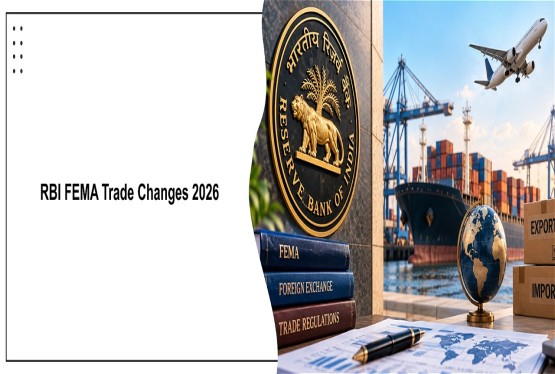
Latest FEMA Rules and Regulatory Developments in 2026
Foreign exchange compliance in India underwent several important regulatory developments during 2026. Businesses dealing with foreign investors, international lenders, exporters and overseas subsidiaries should review these changes against their existing transactions.
Regulatory position reviewed through 30 October 2026.
|
Date |
Regulatory development |
Compliance significance |
|
12 January 2026 |
FEMA (Guarantees) Regulations, 2026 |
Review cross-border guarantees and related obligations |
|
16 January 2026 |
FEMA (Export and Import of Goods and Services) Regulations, 2026 |
Reassess applicable international trade requirements |
|
16 February 2026 |
FEMA (Borrowing and Lending) First Amendment Regulations, 2026 |
Review foreign borrowing and lending arrangements |
|
5 June 2026 |
FEMA (Cross Border Merger) Amendment Regulations, 2026 |
Check conditions applicable to international corporate restructuring |
|
15 June 2026 |
FEMA (Mode of Payment and Reporting of Non-Debt Instruments) Amendment Regulations, 2026 |
Revisit applicable foreign investment payment and reporting procedures |
|
29 June 2026 |
FEMA (Deposit) Sixth Amendment Regulations, 2026 |
Review applicable non-resident deposit and account arrangements |
These regulations and amendments appear in RBI's official FEMA notification records. Their specific commencement provisions, transitional arrangements and operative requirements must be examined before applying them to a transaction.
Reserve Bank of India
What Do These Developments Mean for Businesses?
The 2026 developments demonstrate why FEMA compliance cannot be treated as a one-time documentation exercise. A company may structure an investment or borrowing transaction under one set of applicable provisions but face different requirements when undertaking a subsequent transaction.
For example, an Indian company borrowing from a foreign lender must review the borrowing conditions applicable on the relevant transaction date. Similarly, businesses issuing shares to foreign investors need to examine the current payment and reporting regulations rather than automatically following procedures used for earlier investments. Companies should review their regulatory obligations when entering into new transactions, modifying existing arrangements, restructuring foreign ownership or establishing overseas entities.
Important FEMA Reporting Timelines in India
Timely reporting is a major part of RBI FEMA compliance. Some commonly applicable reporting deadlines are outlined below.
|
FEMA filing |
General reporting timeline |
|
Form FC-GPR |
Within 30 days from issue of equity instruments |
|
Form FC-TRS |
Generally within 60 days of the relevant transfer or receipt/remittance of consideration, whichever is earlier, where applicable |
|
FLA Return |
By 15 July every year |
|
Form DI |
Generally within 30 days of allotment for applicable downstream investment |
|
Annual Performance Report |
Generally by 31 December, subject to applicable overseas investment provisions |
The deadline for a particular transaction must be checked against the governing notification and any subsequent amendments. Special transaction categories, exemptions and revised regulatory requirements can affect filing responsibility and timelines.
Documents Required for FEMA Advisory and Compliance Services
The documentation required for FEMA advisory depends on the transaction being reviewed. Foreign investment, overseas investment, external borrowing and export-related transactions involve different regulatory requirements. Businesses commonly need to provide incorporation records, ownership details, financial statements, bank remittance documents and relevant commercial agreements.
Typical documents include:
-
Certificate of Incorporation, PAN and constitutional documents.
-
Shareholding pattern and beneficial ownership details.
-
Board resolutions and shareholder approvals, where required.
-
Foreign investment agreements and share subscription documents.
-
Foreign Inward Remittance Certificates or equivalent banking evidence.
-
KYC documents and valuation certificates.
-
Share allotment records and transfer agreements.
-
Audited financial statements and previous RBI filing acknowledgements.
-
Overseas investment documents or borrowing agreements, where applicable.
Proper documentation supports regulatory verification and reduces the likelihood of reporting inconsistencies. It also helps businesses respond effectively to clarification requests from AD banks or regulatory authorities.
Step-by-Step FEMA Advisory and Compliance Procedure
A structured FEMA advisory process helps businesses understand legal requirements, complete necessary documentation and comply with RBI regulations while conducting international financial transactions.
Step 1: Transaction Assessment
FEMA consultants examine the nature and purpose of the foreign exchange transaction. They review the parties involved, their residential status and the source of funds. This helps determine whether the transaction is classified as a current account or capital account transaction under FEMA.
Step 2: Regulatory Eligibility Review
The consultant reviews applicable FEMA regulations, RBI guidelines and sector-specific restrictions. They check whether the proposed transaction is permitted under the automatic route or requires regulatory approval. This helps businesses understand the legal conditions before proceeding.
Step 3: Documentation and Approval
Businesses prepare the required agreements, financial records, declarations and supporting documents. FEMA consultants review these documents to ensure they meet applicable regulatory requirements. If approval is necessary, they assist with preparing and submitting the application to the appropriate authority.
Step 4: Filing and Reporting
The consultant assists businesses in submitting applicable FEMA forms and returns through RBI reporting systems or authorised banking channels. They check filing details, supporting documents and prescribed deadlines. Any queries or discrepancies raised during processing are addressed through the appropriate procedure.
Step 5: Ongoing Compliance Monitoring
FEMA compliance continues even after the transaction is completed. Consultants help businesses monitor reporting deadlines, regulatory amendments and changes in foreign investments or ownership. Regular compliance reviews help identify potential violations and maintain accurate statutory records.
Penalties for Non-Compliance Under FEMA, 1999
Non-compliance with FEMA can result in significant financial consequences and regulatory complications. Section 13 of FEMA prescribes penalties for contraventions of the Act and the rules, regulations, notifications, directions or orders issued under it. Where the amount involved in a contravention is quantifiable, the penalty upon adjudication may extend to three times that amount. Where the amount is not quantifiable, the penalty may extend to ?2 lakh. In the case of a continuing contravention, an additional penalty of up to ?5,000 for every day after the first day may also apply. These are statutory maximums under the relevant provision, not automatic penalties for every violation. The actual consequences depend on the nature and circumstances of the contravention.
FEMA Compounding Procedure
Eligible contraventions may be addressed through compounding under the Foreign Exchange (Compounding Proceedings) Rules, 2024 and RBI's directions dated 1 October 2024. The process generally involves identifying the violation, completing necessary corrective action, preparing the application, submitting supporting documents and paying the prescribed application fee. The RBI's published guidance specifies an application fee of ?10,000 plus applicable GST.
Eligible applications are ordinarily required to be disposed of within 180 days from receipt of a complete application. If a compounding order is issued, the specified amount must generally be paid within 15 days. Compounding is voluntary and involves admission of the contravention. Therefore, professional assessment is important before deciding whether it is the appropriate legal course of action.
Why Do Businesses Need FEMA Advisory Consultants?
Foreign exchange transactions often involve overlapping regulatory, banking, accounting and corporate law requirements. A business may successfully receive foreign funds but still encounter compliance issues if it fails to satisfy investment eligibility conditions or submit the relevant reports. FEMA Compliance Consultants help organisations identify these obligations at the planning stage. This is particularly useful for startups receiving international funding, Indian businesses establishing overseas subsidiaries, foreign companies entering the Indian market and businesses undertaking cross-border restructuring.Professional advisory assistance also helps companies maintain transaction records, monitor reporting timelines and address historical compliance gaps. Instead of treating FEMA as a filing requirement alone, businesses can incorporate regulatory review into their investment and international expansion decisions. A competent consultant should be familiar with relevant legislation, RBI directions, banking procedures and reporting systems. Businesses should also assess whether a proposed engagement requires specialist legal representation or services from another appropriately qualified professional.
How to Choose the Right FEMA Advisory Consultant in India
Selecting a FEMA consultant requires more than comparing professional fees. Since international transactions can involve substantial financial exposure, businesses should consider the consultant's technical knowledge, relevant experience and ability to provide clear transaction-specific advice. A suitable consultant should be able to explain the legal basis for the proposed transaction, identify applicable approvals and clarify which filings are mandatory. Familiarity with RBI reporting procedures, foreign investment regulations, overseas investment rules and FEMA compounding can be especially valuable. Businesses should also confirm the scope of services in writing. Advisory work, document preparation, regulatory filing assistance, due diligence and representation may involve separate professional responsibilities and charges.Conclusion
FEMA Advisory Consultants in India play an important role in helping businesses manage foreign exchange transactions while complying with Indian laws and RBI regulations. As international investment, overseas expansion and cross-border financing become increasingly common, understanding FEMA requirements is essential for responsible business operations.
The regulatory developments introduced during 2026 reinforce the importance of reviewing current rules before undertaking foreign investment, overseas borrowing, international guarantees or trade-related transactions. Companies should focus on transaction eligibility, accurate documentation, timely reporting and appropriate corrective measures wherever compliance gaps are identified.
By obtaining qualified professional guidance and maintaining reliable regulatory records, businesses can reduce compliance risks, support smoother international transactions and make informed decisions about their cross-border operations.
Frequently Asked Questions (FAQs)
Q1. What does a FEMA advisory consultant do?
Ans: A FEMA advisory consultant helps businesses and individuals understand foreign exchange regulations in India. They provide guidance on foreign investments, RBI reporting, overseas transactions and regulatory requirements. Their services help businesses maintain compliance with the Foreign Exchange Management Act, 1999.
Q2. Is FEMA compliance mandatory for Indian companies?
Ans: Yes, FEMA compliance is mandatory for Indian companies undertaking transactions covered by FEMA regulations. These may include foreign investments, overseas business activities, external commercial borrowings and international payments. Companies must follow applicable RBI rules, reporting requirements and prescribed deadlines.
Q3. Is RBI approval required for every foreign investment in India?
Ans: No, RBI approval is not required for every foreign investment. Many investments are permitted under the automatic route, subject to applicable sectoral limits and conditions. Certain investments require government approval, while specific transactions may require separate regulatory permissions.
Q4. What is the difference between FC-GPR and FC-TRS filing?
Ans: Form FC-GPR is generally used when an Indian company issues equity instruments to a non-resident investor. Form FC-TRS is used for reporting specified transfers of equity instruments between residents and non-residents. Both forms have separate reporting requirements and deadlines under FEMA regulations.
Q5. What happens if a company delays FEMA reporting?
Ans: Delayed FEMA reporting may result in regulatory consequences, including applicable late submission fees or other proceedings. Depending on the violation, corrective filing or compounding may be necessary. FEMA consultants assist businesses in identifying the appropriate procedure and completing outstanding compliance requirements.
Q6. Who is required to file the FLA Return in India?
Ans: Indian entities with reportable outstanding foreign investment liabilities or overseas investment assets are generally required to file the Foreign Liabilities and Assets (FLA) Return. The usual annual filing deadline is 15 July. The return provides RBI with information about qualifying foreign investments and financial positions.
Q7. Can an Indian company establish a wholly owned subsidiary abroad?
Ans: Yes, eligible Indian companies can establish wholly owned subsidiaries outside India under the applicable Overseas Investment Rules, 2022. Such investments must satisfy prescribed conditions relating to eligibility, financial commitments and reporting. FEMA consultants help businesses review investment structures, prepare documentation and complete regulatory filings.
Q8. What is the difference between FEMA advisory and FEMA due diligence?
Ans: FEMA advisory provides guidance on foreign exchange laws, investment transactions and ongoing regulatory compliance. FEMA due diligence involves reviewing existing transactions, documents and reporting records to identify potential violations. Both services help businesses understand legal obligations and reduce foreign exchange compliance risks.
Q9. What are the penalties for violating FEMA regulations in India?
Ans: Under Section 13 of FEMA, penalties may extend to three times the amount involved where the contravention is quantifiable. If the amount cannot be quantified, the penalty may extend to ?2 lakh. Continuing contraventions may attract additional daily penalties, while eligible violations may be considered for compounding.
Q10. How can FEMA advisory consultants help foreign investors in India?
Ans: FEMA advisory consultants help foreign investors understand India's FDI regulations, sectoral restrictions, investment routes and reporting requirements. They assist with transaction documentation, investment structuring, applicable RBI filings and compliance reviews. Professional guidance can help investors identify regulatory risks before investing in Indian businesses.
Article last updated on : 30 Oct 2026.

























































_learn_crop10_thumb.jpg)