


A franchise is a business arrangement in which a franchisor permits a franchisee to operate a business using an established brand, system or business model, subject to contractual conditions and usually in return for fees or royalties. The commercial value of the arrangement may depend on trademarks, logos, copyrighted manuals, recipes, software, designs, confidential information and technical know-how.
India does not have one comprehensive statute governing every aspect of franchising. The relationship is therefore shaped by the agreement, applicable intellectual property legislation, contract law and other relevant regulatory regimes. A sound agreement must identify what is licensed, who owns each asset, how it may be used, how quality is maintained and what happens when the relationship ends.
Trademark ownership, licensing and quality control
Trademark registration are often central to a franchise because they help consumers identify the source of goods or services. The Trade Marks Act, 1999 is the principal legislation governing registered marks. Section 28 addresses rights conferred by registration; Section 29 concerns infringement; Sections 48 and 49 address registered users and the procedure for registration as a registered user. Whether and how those provisions apply depends on the arrangement and the parties’ legal status.
The agreement should list the licensed marks and identify the permitted goods or services, territory, duration, channels of use, advertising permissions and restrictions on sublicensing. It should state that a licence does not transfer ownership unless a legally effective transfer is expressly intended and documented. It should also set out brand standards, approval processes, inspection rights and proportionate remedies for non-compliance.
A practical drafting issue is the difference between a contractual licence and registration of a permitted or registered user under the Trade Marks Act. The parties should not assume that every franchisee is automatically a registered user or has an independent right to bring infringement proceedings. Section 53 specifically restricts a permitted user from instituting infringement proceedings in its own name; Section 52 addresses proceedings by a registered user, subject to the statutory conditions.
Copyright in manuals, training materials and software
Franchise systems may use operating manuals, training videos, photographs, marketing content, website copy, graphic designs, software and other materials capable of copyright registration. The Copyright Act, 1957 is relevant to the scope and ownership of these rights. Section 14 defines the meaning of copyright in relation to different categories of works; Section 17 deals with first ownership, subject to statutory exceptions; Sections 18 and 19 concern assignment; and Section 30 concerns licences granted by copyright owners.
The agreement should distinguish pre-existing material owned by the franchisor from material independently created or commissioned during the franchise. It should specify whether the franchisee may reproduce, display, distribute or adapt each category of material, and whether any new material is assigned or licensed to either party. Payment of franchise fees alone should not be treated as an automatic transfer of copyright ownership.
Copyright generally protects qualifying expression rather than an abstract idea, method or business concept as such. The protection available therefore depends on the work and the right asserted. Any assignment or licence should be drafted to satisfy the applicable statutory requirements.
Confidential information, trade secrets and know-how
Recipes, supplier terms, customer strategies, pricing models, manufacturing processes, internal procedures and technical know-how may be commercially valuable even where they are not registered intellectual property. India does not have a single comprehensive, generally applicable trade secrets statute. Depending on the facts, protection may arise from contractual obligations, equitable principles and other applicable laws.
Confidentiality clauses should define protected information and sensible exclusions, including information already public, independently developed without breach, or lawfully received from a third party without a confidentiality restriction. The agreement should regulate access, permitted use, disclosure, security, return or destruction of records, and continuing obligations after termination.
Contractual language alone is not a complete security strategy. Franchisors should consider access controls, staff confidentiality undertakings, document marking, audit trails and procedures for reporting suspected disclosure. The duration of confidentiality obligations should be drafted in a way appropriate to the type of information and applicable law.
Patents, designs and technical improvements
Some franchises, particularly those involving manufacturing, food processing, healthcare, biotechnology or specialist equipment, may include patented technology, technical processes or registered designs. The Patents Act, 1970 and Designs Act, 2000 provide the relevant statutory. The agreement should identify the rights actually available and specify permitted use, territory, duration, purpose, restrictions and responsibility for maintaining or enforcing relevant registrations.
Not every operational method or business model is patentable. Patentability must be assessed under the statutory requirements and exclusions, including Section 3 of the Patents Act. A contract cannot create patent registration rights that the law does not recognise.
Improvements developed during the franchise also require attention. The parties should distinguish pre-existing technology, independently developed improvements and jointly developed inventions. The agreement should deal with disclosure, ownership, assignment, licensing, filing decisions, costs and compensation where appropriate.
Digital assets, domains and data-related responsibilities
Franchising increasingly uses websites, mobile applications, online ordering, social media, digital advertising and customer databases. The agreement should identify who owns and controls relevant domain names and accounts, who may publish content, how branding is approved, and how access and credentials are handed over at termination.
Intellectual property ownership does not, by itself, determine whether a party may lawfully collect, access, use or disclose personal data. Where personal data is involved, the parties should separately allocate responsibilities under applicable data-protection and cybersecurity law, including relevant consent, security, retention and incident-response obligations.
The agreement should also address locally created digital content, online reviews, advertising accounts, software access and the permitted use of customer-facing materials after the relationship ends. It should avoid assuming that every account, dataset or item of content necessarily belongs to one party without examining the facts and applicable law.
Infringement, enforcement and remedies
Potential disputes include unauthorised use of a mark, copying of protected materials, disclosure of confidential information, imitation of branding and continued use of licensed assets after termination. The agreement should set out how suspected trademark infringement is reported, who leads enforcement, how the parties cooperate, how evidence is preserved and how reasonable costs are allocated.
The franchisee should not assume it can independently sue for infringement of a mark owned by the franchisor. The right to bring proceedings depends on the statute, the party’s status and the facts. Contractual remedies may include termination, recovery of unpaid fees, indemnification and damages where legally available. Injunctive relief may also be sought where the applicable legal requirements are met. A breach of contract and statutory infringement are not identical causes of action. The agreement should avoid implying that a contractual breach automatically establishes infringement, or that a contract can guarantee a remedy that the law does not provide.
Termination and post-termination use
Termination is a common flashpoint in franchise disputes. The agreement should specify when the licence ends and what steps must follow, including cessation of unauthorised mark use, removal of signage and branding, treatment of inventory, return or destruction of manuals, revocation of software access and transfer or cancellation of domain names and accounts where appropriate.
It should identify which obligations survive termination, including confidentiality, payment obligations, record retention and dispute-resolution provisions. Any continuing restrictions should be drafted with regard to enforceability and applicable law. The franchisee should be permitted to retain records where required by law, while protecting the franchisor’s legitimate confidential information.
The agreement should include a workable de-branding timetable and a clear process for dealing with customer communications, online listings and outstanding orders. These operational details can be as important as the general statement that the licence ends.
Judicial decisions
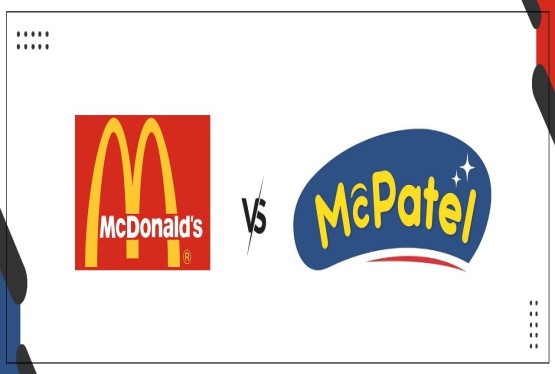
McDonald's India Pvt. Ltd. v. Commissioner of Trade and Taxes, New Delhi
Court: Delhi High Court. Decision: 17 May 2017. Case reference: ST.APPL. 26/2013 and connected matters.
The Delhi High Court considered whether consideration under certain franchise agreements amounted to a transfer of the right to use goods, including the McDonald’s system and associated intellectual property, for purposes of the relevant Delhi sales-tax and VAT legislation. The Court examined the agreements as composite arrangements involving trademarks and other elements such as know-how, recipes, training, manuals and operating systems. It held, on the facts and under the tax provisions in issue, that the relevant arrangements did not amount to the taxable transfer of the right to use goods as found by the Tribunal.
Relevance and limitation: The case illustrates why the substance and wording of a franchise agreement matter when characterising the rights granted. It was a tax/VAT decision, not a general ruling that resolves every question of trademark ownership, infringement or licence validity. It should not be cited as a blanket rule for all franchise agreements.
Geetanjali Studio Private Limited & Anr. v. Rahul Mamtani
Court: Delhi High Court. Decision: 31 October 2022. Case reference: CS(COMM) 539/2021. Neutral citation: 2022/DHC/004612.
The plaintiffs sought protection of GEETANJALI-related marks used for salon services. The defendant had entered into a franchise agreement permitting use of the mark, and the plaintiffs alleged unpaid franchise fees and continued use after termination. The defendant did not appear at the final hearing. The Court restrained the defendant in terms of the relevant prayers and decreed 7,50,000 towards damages and costs.
Relevance and limitation: This decision is directly useful for discussing the risk of continued use of franchise marks after termination. However, the defendant’s absence is an important procedural fact. The judgment should not be represented as a fully contested ruling on every possible defence or as establishing that the same damages will follow in other cases.
Practical drafting checklist
-
IP due diligence: Verify ownership, registration status, scope and the franchisor’s authority to grant the proposed rights.
-
Define the licence: Identify each asset, permitted use, territory, duration, exclusivity, fees and sublicensing limits.
-
Separate ownership categories: Distinguish pre-existing IP from material or improvements created during the relationship; document assignments and licences properly.
-
Protect confidential information: Use clear confidentiality terms supported by practical security controls.
-
Set brand standards: Provide quality requirements, approval mechanisms, inspection rights and proportionate corrective measures.
-
Allocate digital responsibilities: Deal expressly with websites, domains, social accounts, software and data-related duties.
-
Plan termination: Specify de-branding, access revocation, return of materials, surviving obligations and transition arrangements.
-
Establish enforcement procedures: Allocate responsibility for monitoring, notices, litigation decisions, cooperation and costs.
-
Review periodically: Update the agreement when the business model, technology, legal requirements or licensed assets change.
Conclusion
Intellectual property is often one of the principal assets supporting a franchise relationship. Trademarks establish brand identity; copyright may protect manuals and other creative materials; confidentiality arrangements safeguard valuable know-how; and patent or design rights may support specialised products and processes. The legal position depends on the rights actually held, the scope of the licence, the contract and the applicable statutory regime.
A carefully drafted agreement should distinguish ownership from authorised use, set practical quality and security controls, address digital assets and improvements, and provide a clear termination and enforcement process. These safeguards can reduce disputes while allowing both parties to operate within a predictable commercial framework.
Article last updated on : 27 Oct 2026.