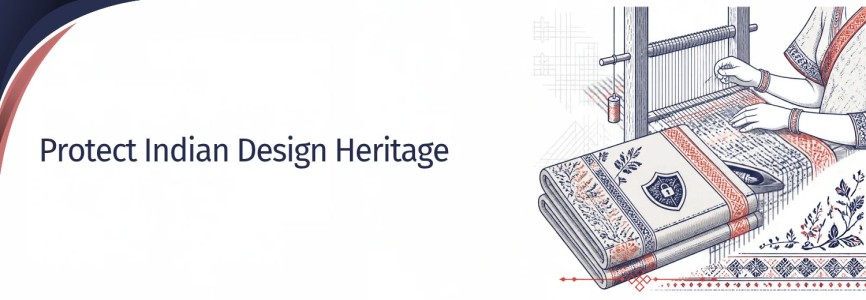



India possesses a rich and diverse tradition of artistic craftsmanship, reflected in textiles, embroidery, pottery, paintings, jewellery, woodwork and other handicrafts. Traditional art forms such as Madhubani painting, Warli art, Kalamkari, Kantha embroidery and regional weaving traditions carry cultural meaning as well as economic value. They embody skills and visual expressions preserved and adapted by communities across generations.
Commercialisation creates difficult questions when businesses reproduce traditional motifs at scale, fail to acknowledge their origins, or use regional reputations to sell products that do not meet the relevant standards.
The legal challenge is that cultural importance does not, by itself, establish an exclusive intellectual property right. A careful analysis must distinguish traditional cultural expressions from new artistic works, registrable industrial designs, geographical indications and commercial signs.
Understanding Traditional Designs and Commercial Copying
Traditional designs may include recurring motifs, decorative patterns, textile arrangements, embroidery styles and other visual expressions associated with a community or tradition. Commercial copying may raise legal concerns where it infringes an existing right, breaches a contract, misuses a protected geographical indication or misleads consumers about origin or authenticity. Not every use of a traditional motif is unlawful.
A long-established motif may be in the public domain, while a new, original artistic work incorporating or adapting that motif may be protected in its original expression. Likewise, a product inspired by traditional craftsmanship does not automatically infringe a registered design or geographical indication. The facts, the right relied upon and the scope of that right are decisive.
Copyright under the Copyright Act, 1957
Section 13 recognises copyright registration in specified categories of works, including original artistic works. Section 2(c) defines an “artistic work” to include paintings, sculptures, drawings, engravings, photographs and works of artistic craftsmanship, irrespective of artistic quality, subject to the statutory definition.
An artisan who creates an original painting or a new illustration based on a traditional motif may hold copyright in the original expression, if the statutory requirements are met. That protection does not automatically extend to the traditional style, idea or pre-existing motif itself. Section 17 generally identifies the author as the first owner, subject to statutory exceptions and relevant arrangements; ownership therefore depends on the circumstances, including any applicable employment, commission or contractual terms.
Section 57 provides certain authors’ special rights, including rights concerning authorship and remedies in relation to specified prejudicial distortions or modifications, subject to the section’s requirements.
Section 15 is especially important where artwork is applied to products. Copyright does not subsist under the Copyright Act in a design registered under the Designs Act, 2000. Where a design is capable of registration under the Designs Act but is not registered, copyright in that design ceases once an article to which it has been applied is reproduced more than fifty times by an industrial process by the copyright owner or with the owner’s licence. The application of this rule depends on the statutory facts; it should not be simplified into a claim that every artwork loses copyright after fifty copies.
Industrial Design Protection under the Designs Act, 2000
The Designs Act, 2000 protects qualifying visual features applied to an article by an industrial process or means. Section 2(d) covers features such as shape, configuration, pattern, ornament or composition of lines or colours that, in the finished article, appeal to and are judged solely by the eye. The Definition excludes, among other things, an artistic work as defined in the Copyright Act.
Sections 4 and 5 address registrability and applications for registration. A design that is not new or original, has been previously published, or otherwise fails the statutory requirements may not be registrable. Section 6 concerns registration in respect of particular articles.
Under Section 11, registered design protection lasts for an initial ten years and may be extended by five years in accordance with the Act.
Section 22 addresses piracy of registered designs and specified unauthorised commercial applications or dealings involving the registered design or a fraudulent or obvious imitation, subject to the statutory conditions.
A contemporary product pattern inspired by traditional craftsmanship may be eligible for registration only if it independently meets the legal requirements, including novelty and originality. An ancient or previously published motif cannot be made registrable merely by seeking registration.
Design registration is therefore better suited to eligible new commercial designs than to claiming exclusive ownership over inherited cultural material.
Geographical Indications and Regional Identity
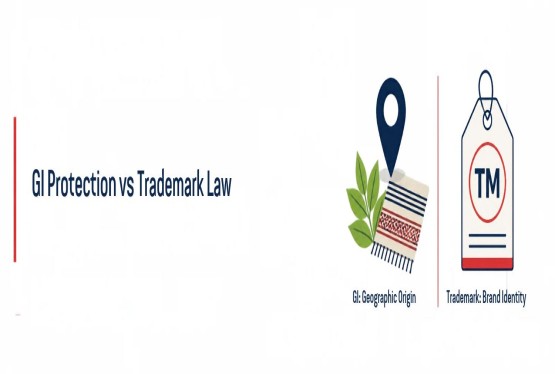
The Geographical Indications of Goods (Registration and Protection) Act, 1999 protects indications identifying goods as originating in a territory, region or locality where a given quality, reputation or other characteristic is essentially attributable to geographical origin. Traditional craft and textile products can be relevant to this framework.
Examples of registered Indian geographical indications include Banaras Brocades and Sarees, Kanchipuram Silk and Pochampally Ikat. The legal scope of each GI depends on its registration, specification, the goods covered and the applicable law. Section 21 sets out rights associated with registration and authorised use; Section 22 addresses infringement of registered GIs.
A GI can help eligible producer communities and authorised users challenge unauthorised use of a protected indication and certain misleading uses that exploit the reputation of the goods. It does not grant one artisan or association exclusive ownership over every motif, pattern or visual style associated with a region.
GI protection concerns the registered indication and covered goods, not a blanket monopoly over all regional cultural expression.
Trade Marks, Collective Marks and Certification Marks
The Trade Marks Act, 1999 can complement other IP rights by helping consumers distinguish authentic commercial sources. A distinctive brand or sign used by an artisan organisation may be registrable if it satisfies the statutory requirements.
Collective marks can distinguish goods or services of members of an organisation, while certification marks can indicate that goods meet certified characteristics under the applicable legal. An artisan cooperative may, for example, use a distinctive brand and enforce clear rules concerning membership, quality and authorised use.
Trademark registration does not ordinarily create exclusive rights over a traditional decorative motif simply because it appears on a product. The sign must qualify for protection, and the rights depend on the registration and applicable law. Trade marks are primarily useful for protecting commercial identity and source-related reputation.
Traditional Cultural Expressions and the Limits of Existing IP Law
The World Intellectual Property Organization (WIPO) uses the term “traditional cultural expressions” (TCEs) for forms of cultural expression such as art, designs, handicrafts, symbols and other expressions transmitted within communities. Such expressions may evolve collectively over generations and may not have a single identifiable author.
Conventional IP systems often focus on identifiable creators, defined ownership, originality and limited periods of protection. As a result, some traditional expressions may not fit easily within individual-rights models.
That does not mean every related commercial practice is lawful: copyright in a new work, GI rights, trade mark rights, contractual obligations and rules against misleading conduct may still be relevant, depending on the facts.
WIPO has facilitated international discussions about whether existing IP systems adequately protect TCEs and whether additional or sui generis measures are appropriate. These discussions should not be presented as if they automatically create enforceable rights under Indian law.
Any proposed reform would need to define community representation, the scope and duration of rights, exceptions and safeguards against inappropriate monopolisation of shared cultural heritage.
Practical Measures to Reduce Misappropriation
-
Documentation and evidence: Artisan groups can maintain dated photographs, sketches, production records, historical materials and evidence of community practice. Documentation may help establish provenance or challenge claims of novelty, but it does not, by itself, create exclusive IP rights.
-
Choose the appropriate legal tool: Consider copyright for qualifying original artistic expression, design registration for eligible new designs, GI protection for qualifying regional goods and trade marks for distinctive commercial signs. The correct route depends on the subject matter and the right being claimed.
-
Written commercial agreements: Where original artwork or new designs are licensed to manufacturers, agreements should address permitted use, duration, territory, attribution, royalties, quality control, adaptations and further licensing. Ownership and authority to license should be checked before signing.
-
Collective organisation: Cooperatives, producer organisations and artisan associations can improve bargaining power and help members with documentation, licensing and enforcement. Collective arrangements should respect the rights of individual creators and the applicable rules governing ownership.
-
Online monitoring and enforcement: Preserve evidence of allegedly copied products, advertisements and listings; identify the seller and marketplace; and obtain legal advice on whether the facts support a cease-and-desist notice, platform complaint, negotiation or civil proceedings. A legal remedy should be asserted only where its elements can be established.
-
Fair commercial practice: Businesses drawing on traditional craftsmanship should consider consultation, accurate attribution, fair contracting and benefit-sharing where appropriate. Such practices can be ethically important even where the law does not confer an automatic exclusive right over the underlying tradition.
The Way Forward
India needs a balanced approach that combines enforcement of existing rights with the preservation of cultural heritage. Greater IP awareness, accessible legal assistance, stronger producer organisations and responsible licensing can help artisans obtain better recognition and commercial returns.
Policy discussions about a possible sui generis framework should consider meaningful community participation, clear representation, proportionate consent and benefit-sharing mechanisms, and safeguards for customary use and cultural transmission. The framework should distinguish commercial misappropriation from legitimate inspiration, research, education and cultural exchange, and should avoid giving a private party control over material that communities themselves need to continue using.
Conclusion
Protecting traditional Indian designs from commercial copying requires more than a single registration or a blanket claim of ownership. Copyright can protect qualifying original artistic expression; design law can protect eligible new industrial designs; geographical indications can safeguard registered regional product identities; and trade marks can distinguish authentic commercial sources.
Each mechanism has a distinct purpose and scope. None automatically confers comprehensive ownership over every traditional motif, artistic style or cultural expression preserved by a community. A sustainable approach must combine appropriate legal protection with documentation, collective organisation, fair licensing, effective enforcement and respect for the communities that maintain India’s cultural heritage. The objective should be to keep traditional craftsmanship culturally meaningful, economically viable and capable of being transmitted to future generations.
Article last updated on : 02 Nov 2026.