


Investing money is not always easy. People often want to invest in shares, mutual funds, bonds and other financial products, but they may not know which options are suitable for them. Some investors want to save for retirement, while others are planning for their children's education, buying a house or building wealth over time. This is where a professional investment adviser can help. An investment adviser helps people make financial decisions based on their goals, income, savings and ability to take risks. However, giving investment advice as a professional service is a regulated activity in India. A person cannot simply start charging clients for regulated investment advice without meeting the applicable legal requirements.
The Securities and Exchange Board of India (SEBI) regulates investment advisers to protect investors and promote responsible financial advice. Professionals who want to establish an investment advisory business must understand the RIA License Requirements under SEBI Law, including qualifications, certification, registration fees, deposit requirements and ongoing compliance.
What Is an RIA License in India?
An RIA License refers to registration as a Registered Investment Adviser with the Securities and Exchange Board of India. The official term is SEBI Investment Adviser Registration, although people commonly call it an RIA License. A SEBI Registered Investment Adviser provides investment advice to clients concerning securities and investment products. The advice may cover financial planning, suitable investment options, asset allocation, portfolio reviews and investment strategies.
For example, suppose a person earns Rs 70,000 every month and wants to save money for retirement. They are confused about how much to invest in equity mutual funds, debt instruments or other products. A registered investment adviser can study their financial position, goals and risk tolerance before recommending a suitable investment approach. The important point is that an investment adviser must act in the client's interest. The adviser should not recommend a product simply because it provides a higher commission or some other personal benefit. RIA registration is governed primarily by the SEBI (Investment Advisers) Regulations, 2013, as amended. Important regulatory references for 2026 include the amendments made in November 2025 and the SEBI Master Circular for Investment Advisers dated 6 February 2026.
Who Needs an RIA License under SEBI Law?
People who offer personalised investment advice relating to securities as a business generally need SEBI registration unless a specific exemption applies. The requirement may apply to individual financial advisers, financial planning businesses, investment advisory firms, LLPs and companies providing regulated investment advisory services.
For example, if an individual regularly advises paying clients about which shares or mutual funds may suit their personal financial goals, the activity may fall under SEBI's investment adviser regulations.
However, not every discussion about investing requires an RIA licence. A person explaining general financial concepts, publishing certain educational material or providing incidental advice within a legally recognised exemption may be treated differently. Similarly, mutual fund distributors, stockbrokers and certain professionals may have exemptions for advice that is incidental to their permitted primary activities. These exemptions are subject to conditions and do not provide unlimited permission to operate a separate investment advisory business.
RIA License Eligibility Criteria under SEBI Law
SEBI has prescribed eligibility conditions to ensure that registered investment advisers have suitable qualifications, knowledge and professional standards. Before applying, a person should determine whether they want to register as an individual adviser, partnership firm, LLP or company.
Educational Qualification
An individual investment adviser or the principal officer of a non-individual adviser must meet the applicable qualification requirements under Regulation 7. As per SEBI's updated 2025 regulations, applicants must have a graduate degree in any discipline from a recognised university and valid NISM-Series-X-A and NISM-Series-X-B certifications to meet the standard educational and certification requirements for RIA registration. SEBI has also recognised specified professional programmes offered by the National Institute of Securities Markets (NISM), including qualifying programmes in investment advisory and financial planning. People associated with providing investment advice have their own prescribed qualification requirements.
For example, a commerce graduate planning to become an investment adviser should check whether their degree satisfies Regulation 7 and what additional certification is required. A graduate from an unrelated discipline should not assume they are eligible for individual RIA registration merely because they hold a degree. The qualification rules were updated during 2025, so applicants should rely on the current regulations rather than older articles referring to a universal five-year experience requirement.
NISM Certification Requirements
Most applicants must also satisfy the applicable NISM certification requirements. Commonly relevant examinations include:
- NISM-Series-X-A: Investment Adviser (Level 1)
- NISM-Series-X-B: Investment Adviser (Level 2)
These certifications assess knowledge relating to financial planning, investment products, risk management and investment advisory responsibilities. However, the certification rules contain specific provisions for people holding certain recognised NISM postgraduate qualifications. Such applicants may receive an exemption from initial entry-level certification, subject to the conditions prescribed by SEBI, while remaining responsible for applicable renewal certification. Applicants must therefore check the requirements that apply to their particular educational qualification.
Fit and Proper Criteria
SEBI also examines whether the applicant satisfies the applicable fit and proper requirements. This means the regulator considers whether the person or entity is suitable to operate a regulated financial business. Relevant factors may include the applicant's integrity, regulatory history, financial soundness and other matters prescribed under SEBI's intermediary regulations. A person with the necessary qualification and examination certificates is not automatically entitled to registration. All relevant eligibility conditions must be satisfied.
Suitable Business Arrangements
A registered investment adviser must have appropriate arrangements for operating the business, maintaining records, protecting client information and handling complaints. For non-individual applicants, suitable supervision by the principal officer and compliance with requirements applicable to persons associated with investment advice are particularly important.
Types of RIA Registration in India
SEBI permits investment advisers to operate under different structures, subject to meeting the conditions applicable to each.
|
Registration type |
Who it is suitable for |
|
Individual Investment Adviser |
A qualified professional advising clients independently |
|
Partnership Firm |
Eligible partners operating an advisory business |
|
LLP |
A professionally managed advisory business with a limited liability structure |
|
Company |
A business planning to provide investment advisory services through a corporate entity |
|
Part-Time Investment Adviser |
Eligible professionals undertaking permitted advisory activity alongside other qualifying work |
Can a Part-Time Professional Become an RIARs
Yes. SEBI introduced provisions allowing eligible individuals and partnership firms to register as part-time investment advisers.
For example, an eligible practising professional may be able to provide regulated investment advisory services alongside an existing permitted professional activity, provided the applicable restrictions and separation requirements are satisfied. Part-time investment advisers must meet prescribed qualification and certification conditions. They must also make appropriate disclosures and clearly distinguish their investment advisory work from other activities. This does not mean that every employee or business owner can automatically register as a part-time RIA. The nature of their other occupation must be examined against SEBI's rules.
RIA License Deposit Requirements in 2026
One of the important requirements for SEBI Investment Adviser Registration is maintaining the prescribed regulatory deposit. Under the revised rules introduced in December 2024 and implemented through subsequent SEBI guidelines, the deposit requirement is linked to the investment adviser's number of clients.
SEBI RIA Deposit Amount
|
Number of clients |
Required deposit |
|
Up to 150 clients |
Rs 1 lakh |
|
151–300 clients |
Rs 2 lakh |
|
301–1,000 clients |
Rs 5 lakh |
|
1,001 or more clients |
Rs 10 lakh |
The amount is determined using the maximum number of clients on any day during the previous financial year. The deposit must be maintained in the manner specified by SEBI and marked as a lien in favour of the Investment Adviser Administration and Supervisory Body (IAASB). The applicable amount may need to be revised by 30 April of the following financial year when the relevant client threshold changes.
Is the RIA Deposit a Government Fee?
No. The regulatory deposit is different from the application fee and registration fee. A deposit serves a regulatory purpose and is maintained under the prescribed arrangements. It is not simply paid to SEBI as a non-refundable registration charge.
For example, a new individual investment adviser expecting to serve 50 clients falls within the first deposit category of Rs 1 lakh. The adviser must also pay the applicable application, registration and administrative charges separately. Older online guides may still mention minimum net tangible assets of Rs 5 lakh for individuals or net worth of Rs 50 lakh for non-individual advisers. Those figures reflect the earlier capital requirement and should not be presented as the current general registration deposit requirement.
SEBI RIA Registration Fees in 2026
Applicants must pay the prescribed SEBI fees when applying for registration. Fees differ according to whether the applicant is an individual, partnership firm, LLP or company.
Official SEBI Fee Structure
|
Applicant category |
Application fee |
Registration fee |
Subsequent five-year fee |
|
Individual and partnership firm |
Rs 2,000 |
Rs 3,000 |
Rs 1,000 |
|
Body corporate, including LLP |
Rs 10,000 |
Rs 15,000 |
Rs 5,000 |
These are SEBI fees stated in its published investment adviser FAQs. Applicants must also consider the applicable IAASB administrative fees, certification costs, regulatory deposit and any professional consultancy charges. The certificate of registration remains valid unless suspended or cancelled by SEBI, subject to payment of applicable periodic fees and continued compliance with registration conditions. Applicants should confirm current charges before payment because SEBI and IAASB may revise administrative procedures and charges.
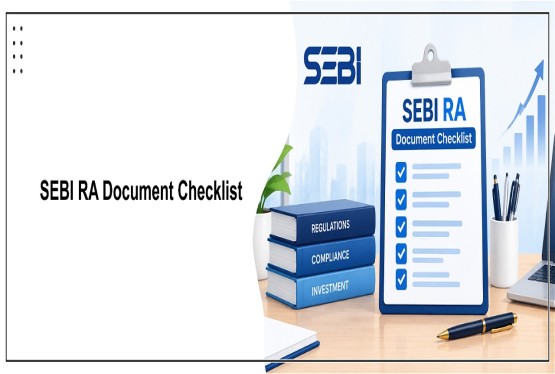
Documents Required for RIA License Registration
Proper documentation is necessary for completing the RIA registration application. The required documents depend on the applicant's legal structure and professional background.
Generally, an applicant should prepare the following information:
-
PAN and valid identity details of the applicant.
-
Address proof and contact information.
-
Educational qualification certificates.
-
Applicable NISM certificates or documents supporting a recognised qualification exemption.
-
Details of the proposed advisory business and services.
-
Partnership deed, LLP agreement or incorporation documents, where applicable.
-
Details of partners, directors, principal officers and relevant employees.
-
Fit and proper declarations and prescribed undertakings.
-
Evidence of the required regulatory deposit arrangement.
-
Additional documents and declarations prescribed by IAASB or requested during scrutiny.
A non-individual applicant may need to provide further information about its ownership, management, advisory division and internal policies. It is important to review each document before submission. A mismatch in names, incomplete qualification records or missing declarations can create unnecessary delays.
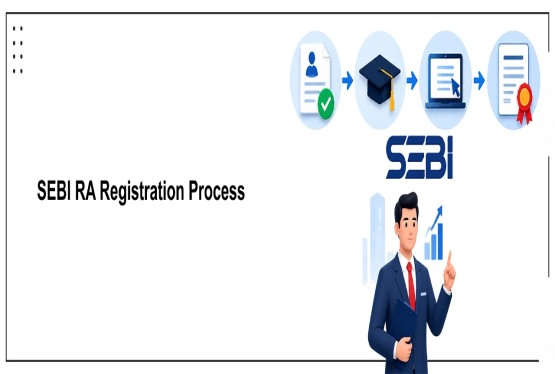
Step-by-Step RIA License Registration Process
Obtaining an RIA licence involves more than clearing the NISM examinations. Applicants must also complete the required formalities and obtain registration approval from SEBI.
Step 1: Check Your Eligibility
The first step is to verify the applicant's educational qualifications, certification requirements and professional suitability. Applicants should also decide whether an individual, partnership, LLP or company structure is most suitable for their intended business.
Step 2: Complete the Required Certification
Applicants should obtain the applicable NISM certifications or establish eligibility under an authorised qualification-based exemption. They should ensure that all required certificates are valid and meet SEBI's current conditions.
Step 3: Prepare Documents and Deposit Arrangements
The applicant should gather identity, educational, business and regulatory documents. The applicable deposit arrangements must also be completed according to the requirements in force. For a non-individual applicant, proper identification of the principal officer and relevant advisory personnel is important.
Step 4: Submit the Application to IAASB
Applications for SEBI Investment Adviser Registration are submitted through the Investment Adviser Administration and Supervisory Body, currently BSE Limited. The official application portal identified in SEBI's guidance is BSE IAASB Registration Portal. Applicants must complete the prescribed application, upload required documents and pay applicable charges.
Step 5: Application Review
IAASB reviews the application and supporting documents. If any information is missing or unclear, the applicant may be asked to provide corrections or additional explanations. Once the application satisfies the applicable conditions, IAASB recommends it to SEBI for consideration.
Step 6: Obtain SEBI Registration
SEBI considers the application and, if satisfied, grants registration as an investment adviser. After registration, the adviser must comply with all applicable SEBI rules before and while providing regulated investment advisory services.
Important SEBI Rules for Registered Investment Advisers
Getting an RIA licence is only the first step. Once registered, an investment adviser must follow SEBI's rules while dealing with clients. These requirements help protect investors from misleading recommendations, hidden charges and unsuitable financial products.
Understand the Client Before Giving Advice
An investment adviser should not recommend a financial product without understanding the client's financial situation. The adviser must carry out the required risk profiling and suitability assessment.
For example, suppose a 60-year-old retired person depends on savings for monthly expenses. Advising that person to invest most of their money in highly risky shares without considering their circumstances would raise serious suitability concerns. The adviser should consider the client's income, financial goals, investment knowledge, time horizon and ability to bear losses.
Explain Fees Clearly
Registered investment advisers must disclose their charges to clients and follow the applicable SEBI fee limits and charging methods. SEBI permits prescribed fee models, including a fixed-fee model and an assets-under-advice-based model, subject to applicable conditions. Clients should understand how much they are paying, what services they will receive and whether any additional charges apply. An adviser should not impose hidden costs or charge more than the permitted limits.
Avoid Conflicts of Interest
Investment advisers must act in their clients' interests. They should not make recommendations merely to earn commissions or other benefits from investment product providers. Where advisory and distribution activities exist within the same group or permitted business structure, applicable client-level segregation and conflict-management requirements must be followed.
Maintain Proper Client Records
Investment advisers must maintain the records prescribed by SEBI. These may include client information, risk assessments, advice provided, agreements, disclosures and fee records. Proper records help establish what advice was given and why it was considered suitable for the client.
Do Not Guarantee Investment Returns
No registered investment adviser should promise guaranteed stock market profits or make misleading claims about investment performance. Financial markets involve risk, and even a carefully prepared investment strategy may result in losses. Advisers must communicate risks clearly and avoid creating unrealistic expectations.
Follow Investor Complaint Procedures
Investment advisers must maintain suitable arrangements for receiving and resolving investor complaints. They must also comply with applicable requirements relating to the SEBI SCORES platform and online dispute resolution mechanisms. SEBI updated the Investor Charter for investment advisers on 2 June 2025. The revised requirements address investor rights, responsibilities, complaint handling and disclosures.
Latest RIA License Requirements and SEBI Updates for 2026
Investment advisory regulations have undergone important changes in recent years. These developments are particularly relevant for individuals planning to enter the investment advisory profession.
Revised Qualification Rules
SEBI's November 2025 amendments introduced further changes concerning educational qualifications and recognised NISM programmes. Applicants should carefully check the current qualification and certification provisions before starting the application. The changes are important because some older online articles continue to describe qualification and experience conditions that no longer reflect the complete current position.
Transition from Individual to Non-Individual Registration
An individual registered investment adviser must initiate the prescribed transition process when either of the following occurs:
- The number of clients exceeds 300 at any time.
- The advisory fee collected during a financial year exceeds Rs 3 crore.
The adviser must inform IAASB and follow the applicable process for transitioning to non-individual registration.
Updated SEBI Master Circular
SEBI issued a Master Circular for Investment Advisers on 6 February 2026. It brings together important operational and regulatory instructions applicable to investment advisers. Registered advisers and new applicants should consult this circular along with the latest amended Investment Advisers Regulations and subsequent SEBI instructions.
Difference Between an Investment Adviser and a Research Analyst
People often confuse a SEBI Registered Investment Adviser with a SEBI Registered Research Analyst. Both professions work in the securities market, but they perform different functions.
|
Basis |
Investment Adviser (RIA) |
Research Analyst (RA) |
|
Main activity |
Personalised investment advice |
Securities research and recommendations |
|
Client risk profiling |
Required for applicable advisory services |
Not generally the same personalised suitability obligation |
|
Main focus |
Individual client needs and financial goals |
Analysis of securities, companies and markets |
|
Regulation |
SEBI Investment Advisers Regulations |
SEBI Research Analysts Regulations |
|
Registration |
SEBI IA registration |
For example, a research analyst might publish a report evaluating a listed company's financial performance. An investment adviser may consider that research while deciding whether the investment is appropriate for a particular client's objectives. An individual or partnership firm may be permitted to hold both registrations, subject to applicable SEBI conditions. Separate compliance responsibilities and proper segregation of services must be maintained.
Common Mistakes to Avoid When Applying for an RIA License
Many applicants focus mainly on obtaining NISM certificates and assume that registration will be straightforward. However, certification is only one part of the eligibility process. Some applicants choose a business structure without considering the long-term nature of their services. Others rely on outdated information about qualifications, deposit requirements or registration fees. These mistakes can create difficulties during the application process.
Another common issue is providing investment advice before receiving the necessary registration. Professionals should also avoid advertising themselves as SEBI-registered advisers until registration has actually been granted. It is advisable to review eligibility, business activities, documents and compliance arrangements before submitting an application.
How Compliance Calendar LLP Can Help with RIA Registration
Understanding SEBI regulations can be challenging, especially for individuals entering the financial advisory profession for the first time. Applicants must identify the appropriate registration structure, check educational requirements, prepare documents and understand their responsibilities after registration.
Compliance Calendar LLP provides professional assistance with SEBI Investment Advisor Registration in India. Our team helps applicants understand the prescribed requirements, organise necessary documents and prepare for the registration procedure. We also provide guidance on applicable regulatory obligations and related compliance requirements. Our objective is to make the process easier for professionals and businesses while ensuring that registration decisions remain subject to SEBI's approval.
Frequently Asked Questions
Q1. What is an RIA License?
Ans. An RIA License is SEBI registration that allows eligible individuals and firms to provide regulated investment advice in India.
Q2. Who can apply for an RIA License?
Ans. Eligible individuals, partnership firms, LLPs and companies meeting SEBI's requirements can apply.
Q3. Is NISM certification mandatory for RIA registration?
Ans. Generally, yes. Relevant NISM certifications are required, subject to prescribed exemptions.
Q4. What is the minimum deposit for an RIA License?
Ans. The minimum deposit starts at Rs 1 lakh and increases according to the number of clients.
Q5. What are the SEBI RIA registration fees?
Ans. For individuals and partnership firms, the application fee is Rs 2,000 and the registration fee is ?3,000.
Q6. Can a graduate apply for RIA registration?
Ans. Yes, if the graduate meets SEBI's prescribed qualification, certification and eligibility requirements.
Q7. Can a Chartered Accountant become an RIA?
Ans. Yes, a Chartered Accountant can apply after meeting the applicable SEBI registration requirements.
Q8. Can an RIA guarantee investment returns?
Ans. No. Registered Investment Advisers cannot promise guaranteed profits or risk-free investment returns.
Q9. How long is an RIA License valid?
Ans. Registration generally remains valid unless suspended or cancelled, subject to periodic fees and compliance.
Q10. Is SEBI registration mandatory for investment advisers?
Ans. Yes, for regulated investment advisory services, unless a specific exemption applies under SEBI regulations.
Article last updated on : 02 Nov 2026.
































































_learn_crop10_thumb.jpg)