


Foreign exchange transactions have become a regular part of business operations in India. Startups receive investments from international investors, Indian companies establish overseas subsidiaries, exporters receive payments from foreign customers, and individuals transfer money abroad for education, travel and other permitted purposes.
However, not every international transaction follows the same legal requirements. Depending on the transaction, businesses and individuals may need to comply with the Foreign Exchange Management Act, 1999 (FEMA), Reserve Bank of India (RBI) regulations, government rules and prescribed reporting requirements.
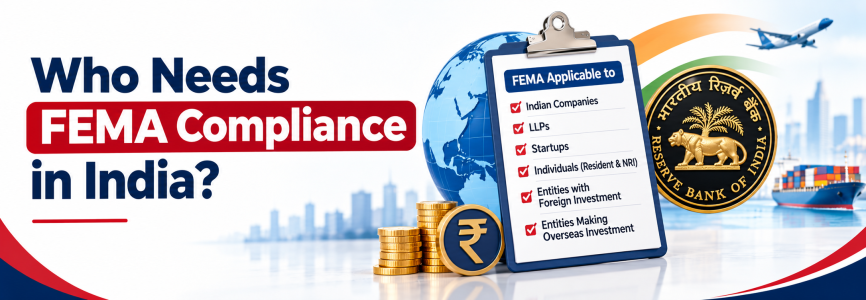
FEMA Compliance applies to persons and entities undertaking transactions regulated under India's foreign exchange laws. This includes Indian companies receiving Foreign Direct Investment (FDI), businesses making Overseas Direct Investment (ODI), eligible entities obtaining foreign loans, importers, exporters, NRIs and resident individuals conducting specified cross-border transactions.
The exact requirements depend on the residential status of the parties, purpose of the transaction, investment structure, amount involved and applicable regulatory conditions. In 2026, businesses must also consider relevant RBI amendments concerning foreign guarantees, borrowing and lending, export-import transactions and foreign investment reporting.
What Is FEMA Compliance in India?
FEMA Compliance means following the legal requirements applicable to foreign exchange transactions under the Foreign Exchange Management Act, 1999, and relevant rules and RBI directions. FEMA regulates transactions involving foreign exchange, foreign securities, capital account transactions, international payments and other specified financial arrangements between Indian residents and non-residents.
Its objective is to facilitate external trade and payments while supporting the orderly development and maintenance of India's foreign exchange market. FEMA applies to qualifying transactions undertaken by individuals, companies, LLPs, partnership firms and other entities. It can also apply to certain overseas branches, offices or agencies owned or controlled by persons resident in India, as provided under the Act.
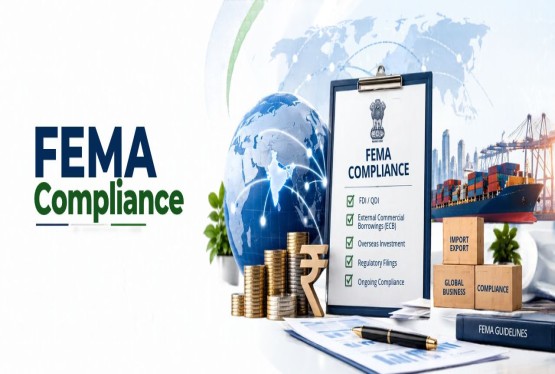
Major Areas Covered Under FEMA
-
Foreign Direct Investment: Investments made by eligible non-residents in Indian businesses.
-
Overseas Direct Investment: Investments made by Indian residents in qualifying foreign entities.
-
External Commercial Borrowings: Eligible borrowing arrangements involving recognised foreign lenders.
-
Foreign Remittances: International transfers for permitted personal or business purposes.
-
Export and Import Transactions: Foreign exchange receipts and payments relating to international trade.
-
Foreign Guarantees: Cross-border guarantees subject to applicable regulatory conditions.
-
Foreign Assets and Accounts: Permitted ownership and operation of foreign assets or accounts.
-
RBI Reporting: Mandatory filings relating to specified investments and transactions.
An important distinction is that being subject to FEMA does not mean a person must obtain RBI approval for every transaction. Some transactions are generally permitted, while others require specific conditions, reporting or prior approval.
Who Needs FEMA Compliance in India?
FEMA Compliance is relevant to several categories of businesses and individuals. A company does not need to be large or publicly listed to become subject to FEMA requirements. For example, a newly incorporated Indian startup receiving foreign investment may have reporting obligations even if the investment amount is relatively small. Similarly, a resident individual purchasing overseas securities or transferring funds abroad must examine the relevant remittance and investment rules.
Entities and Individuals Who May Require FEMA Compliance
|
Category |
Example transaction |
Important compliance considerations |
|
Indian companies receiving FDI |
Foreign investor subscribes to shares |
FDI eligibility, pricing, reporting |
|
Startups |
International fundraising |
Investor eligibility, instruments, FC-GPR |
|
Indian companies investing abroad |
Establishing a foreign subsidiary |
ODI eligibility, Form FC, APR |
|
LLPs |
Foreign capital contribution |
Sectoral eligibility, relevant LLP reporting |
|
Importers |
Paying overseas suppliers |
Import documentation and payment rules |
|
Exporters |
Receiving international payments |
Export declaration and realisation requirements |
|
Indian borrowers |
Raising foreign loans |
ECB eligibility and reporting |
|
Resident individuals |
Overseas investments or remittances |
LRS and applicable investment rules |
|
NRIs and OCIs |
Property, investments or remittances |
Residential status and transaction-specific rules |
|
Foreign companies operating in India |
Establishing a branch or liaison office |
Approval and operational conditions |
The requirements must be determined separately for each transaction. Businesses should not assume that a particular FEMA return applies merely because they conduct international operations.
FEMA Rules and Legal Provisions Applicable in 2026
The Foreign Exchange Management Act, 1999, is the principal legislation governing foreign exchange transactions in India. It operates alongside rules issued by the Central Government, regulations issued by the RBI and directions applicable to authorised persons and regulated transactions.
Important Sections of FEMA, 1999
-
Section 3 – Dealing in Foreign Exchange: This section restricts dealing in or transferring foreign exchange and foreign securities outside legally permitted arrangements.
-
Section 4 – Holding Foreign Exchange and Assets: It regulates the acquisition, holding, ownership and transfer of foreign exchange, foreign securities and specified foreign assets by persons resident in India, subject to permitted exceptions.
-
Section 5 – Current Account Transactions: This section addresses current-account transactions, subject to applicable restrictions and approval requirements.
-
Section 6 – Capital Account Transactions: It deals with transactions that alter assets or liabilities across borders, including relevant foreign investments.
-
Section 7 – Export of Goods and Services: This section establishes important requirements concerning export-related declarations and information.
-
Section 8 – Realisation and Repatriation: It addresses obligations concerning the realisation and repatriation of certain foreign exchange amounts.
-
Section 13 – Penalties: It provides for monetary penalties in cases of FEMA contraventions.
-
Section 15 – Compounding: It enables eligible FEMA contraventions to be compounded under the prescribed procedure.
These provisions form the legal foundation of FEMA Compliance in India.
Important Rules and Directions
The following instruments are particularly relevant to businesses:
-
Foreign Exchange Management (Non-Debt Instruments) Rules, 2019.
-
Foreign Exchange Management (Mode of Payment and Reporting of Non-Debt Instruments) Regulations, 2019, as amended.
-
Foreign Exchange Management (Overseas Investment) Rules, 2022.
-
Foreign Exchange Management (Overseas Investment) Regulations, 2022.
-
RBI Master Direction on Foreign Investment in India.
-
RBI Master Direction on Overseas Investment, issued on 24 July 2024.
-
Relevant borrowing, lending, guarantee and international trade regulations.
The applicable provisions should always be assessed based on the specific transaction rather than applying one set of rules to every foreign exchange activity.
FEMA Compliance for Indian Companies Receiving FDI
Foreign Direct Investment is one of the most common situations requiring FEMA Compliance. When a non-resident investor acquires qualifying equity instruments of an Indian company, the investment may be subject to FDI conditions concerning entry routes, sectoral limits, pricing, ownership and reporting. For example, if an Indian technology company issues equity shares to a Singapore-based investor, it must determine whether the investment is permitted under the applicable sectoral rules and complete the required reporting.
Important FDI Compliance Requirements
-
Check FDI Eligibility: The Indian company must verify whether foreign investment is permitted in its business sector. Certain sectors permit investment under the automatic route, while others require government approval or are subject to restrictions.
-
Verify Pricing Guidelines: Applicable equity issues and transfers must satisfy relevant FEMA pricing requirements. Valuation documentation may be necessary depending on the nature of the transaction.
-
Complete FC-GPR Filing: Form FC-GPR is generally required for qualifying issues of equity instruments to persons resident outside India. The ordinary reporting deadline is within 30 days from the date of issue of the relevant instruments.
-
Complete FC-TRS Filing: Form FC-TRS may apply to qualifying transfers of equity instruments between residents and non-residents. The general timeline is 60 days from the transfer or receipt/remittance of consideration, whichever is earlier, subject to applicable provisions.
-
Maintain Foreign Investment Records: Companies should preserve share allotment documents, investor details, valuation reports, remittance records and reporting acknowledgements.
-
File the Annual FLA Return Where Applicable: An Indian company with qualifying outstanding FDI may need to file the Annual Return on Foreign Liabilities and Assets. The FLA Return is separate from transaction-based reporting such as FC-GPR and FC-TRS. The RBI's Foreign Investment Master Direction explains the legal basis for foreign investment under the Non-Debt Instruments Rules, 2019.
FEMA Compliance for Startups and LLPs
Indian startups frequently raise capital from foreign venture capital funds, overseas angel investors and international business groups. Such investments can create FEMA reporting obligations depending on the type of instrument issued and the investor's residential status. Startups should review foreign investment conditions before receiving funds, issuing shares or entering into convertible investment arrangements.
FEMA Requirements for Startups
-
Investor Eligibility: Verify whether the foreign investor can invest under the applicable rules.
-
Investment Instrument: Determine the legal treatment of shares, compulsorily convertible instruments and other permitted arrangements.
-
Pricing Conditions: Check whether the investment terms comply with applicable valuation requirements.
-
Regulatory Approvals: Identify government approval requirements, where applicable.
-
RBI Reporting: Complete relevant transaction-based filings within prescribed deadlines.
-
Ongoing Compliance: Maintain foreign investment records and assess annual reporting obligations.
FEMA Compliance for LLPs
LLPs can receive foreign investment subject to the eligibility conditions prescribed under the applicable Non-Debt Instruments Rules. Foreign investment in LLPs is generally permitted under the automatic route in sectors where 100% FDI is allowed under the automatic route and where no FDI-linked performance conditions apply, subject to other applicable requirements.
An eligible LLP receiving foreign capital contribution must consider applicable reporting requirements, including the relevant LLP reporting forms. LLPs may also be required to file the annual FLA Return where qualifying outstanding foreign investment exists. A startup or LLP should not assume that the absence of a company-style share allotment automatically removes its FEMA obligations.
FEMA Compliance for Indian Companies Investing Abroad
Indian businesses expanding internationally may establish overseas subsidiaries, acquire foreign companies or invest in joint ventures. These investments are generally examined under the Overseas Investment Rules, 2022, Overseas Investment Regulations, 2022, and applicable RBI directions.
For example, an Indian software company establishing a wholly owned subsidiary in Dubai must examine the permitted overseas investment route, financial commitment limits, documentation and reporting requirements. The RBI Master Direction on Overseas Investment, issued on 24 July 2024, provides important operational instructions for such transactions.
Important ODI Compliance Requirements
-
Investment Eligibility: Verify whether the Indian investor can undertake the proposed overseas investment.
-
Permitted Business Activity: Ensure that the foreign entity satisfies applicable business activity conditions.
-
Financial Commitment: Calculate relevant equity, debt and guarantee commitments under the prescribed rules.
-
Form FC Reporting: Submit the required information through the designated Authorised Dealer (AD) bank.
-
Unique Identification Number: Obtain the applicable UIN through the prescribed reporting procedure.
-
Investment Evidence: Submit investment evidence within the relevant regulatory deadline.
-
Annual Performance Report: Complete APR filing where required.
-
Repatriation and Disinvestment: Follow the applicable rules for receiving dues, transferring investments or exiting the foreign entity.
Under the general automatic-route provisions, an Indian entity's aggregate overseas financial commitment is ordinarily subject to a limit of 400% of its eligible net worth, along with other conditions and exceptions.
Is ODI Compliance Required Every Year?
Certain overseas investors must submit an Annual Performance Report for each relevant foreign entity. The ordinary APR deadline is 31 December, subject to applicable exemptions and reporting provisions. An Indian company should not assume that ODI compliance ends once the initial remittance is completed. Additional investments, loans, guarantees, restructuring and overseas subsidiary changes can create further regulatory obligations. Businesses can explore WOS Compliance for assistance with overseas subsidiary requirements.
FEMA Compliance for Importers and Exporters
Importers and exporters regularly undertake transactions involving foreign currency payments and receipts. Although these are generally related to international trade rather than equity investments, they remain subject to applicable FEMA requirements. An Indian exporter receiving payments from overseas customers must comply with relevant export declarations, payment realisation and reporting conditions. Similarly, an importer paying a foreign supplier must examine permitted payment arrangements, supporting documents and applicable banking requirements.
FEMA Requirements for Exporters
Exporters should maintain export invoices, shipping documentation, relevant bank records and supporting agreements.
Important responsibilities may include:
-
Declaring export transactions where required.
-
Receiving export proceeds through permitted payment arrangements.
-
Meeting applicable realisation and repatriation requirements.
-
Monitoring outstanding export receivables.
-
Coordinating with AD banks regarding applicable export reporting.
-
Seeking appropriate extensions or regularisation where permitted.
FEMA Requirements for Importers
Importers should ensure that payments to overseas suppliers comply with the applicable import and foreign exchange provisions. Important records may include supplier invoices, purchase agreements, Bills of Entry and bank remittance information. Businesses making advance import payments or dealing with delayed import settlements should examine the specific regulatory conditions.
Relevant 2026 Changes
The RBI listed the Foreign Exchange Management (Export and Import of Goods and Services) Regulations, 2026, on 16 January 2026, together with an export-related amendment dated 5 June 2026. Businesses should verify the commencement and transitional provisions of the applicable notifications before using them for a particular shipment or payment.
FEMA Compliance for Foreign Loans and Guarantees
Indian companies seeking finance from overseas lenders may enter into External Commercial Borrowing arrangements where permitted. These borrowings can provide access to international funding, but they are subject to specific regulatory conditions. The applicable requirements may concern eligible borrowers, recognised lenders, loan maturity, permitted uses, borrowing costs, security arrangements and reporting.
Important ECB Compliance Requirements
-
Borrower and Lender Eligibility: The Indian borrower and non-resident lender must satisfy the relevant conditions applicable to the borrowing arrangement.
-
Loan Agreement: Businesses should maintain appropriate loan documentation specifying the amount, currency, interest, maturity and repayment terms.
-
Permitted End Use: Borrowed funds must be used according to the conditions applicable to the particular ECB.
-
Reporting and AD Bank Requirements: Relevant registration and reporting obligations must be completed under the operative RBI regulations and directions.
-
Ongoing Compliance: Changes to loan terms, repayments and outstanding borrowings may create additional reporting requirements.
Foreign Guarantees
Cross-border guarantees may be issued or received in connection with eligible loans, overseas subsidiaries and international commercial arrangements. Guarantees may create financial exposure even when no funds are immediately transferred.
Consequently, businesses must examine the eligibility of the guarantor and beneficiary, the underlying obligation, permitted guarantee structure and relevant reporting conditions. The RBI notified the Foreign Exchange Management (Guarantees) Regulations, 2026, on 12 January 2026. Borrowing and lending amendments were also listed on 16 February 2026. These developments make it important to verify the operative rules rather than relying only on older ECB and guarantee guidance.
FEMA Compliance for NRIs and Resident Individuals
FEMA is not limited to companies. Individuals may also have foreign exchange obligations when sending money abroad, investing in foreign assets, maintaining overseas accounts or undertaking property transactions. A person's residential status under FEMA is particularly important. FEMA residential status is not necessarily the same as residential status under the Income-tax Act. It depends on the definitions and conditions contained in FEMA.
Resident Individuals
Resident individuals may undertake permitted outward remittances under the Liberalised Remittance Scheme (LRS), subject to applicable conditions. The general LRS limit is USD 250,000 per financial year for an eligible resident individual, subject to current RBI rules, eligible purposes and restrictions.
Transactions may include:
- Overseas education and related expenses.
- Permitted travel and medical expenditure.
- Gifts and maintenance of eligible relatives abroad.
- Eligible investments in overseas securities.
- Permitted overseas assets and financial arrangements.
Certain investments and transactions may also attract additional overseas investment or reporting requirements.
NRIs and OCIs
Non-Resident Indians and Overseas Citizens of India may undertake permitted transactions involving Indian bank accounts, securities, immovable property and repatriation of eligible funds. The applicable conditions depend on the person's legal status, transaction purpose and investment route. NRE, NRO and FCNR(B) accounts are governed by the relevant deposit regulations and banking requirements. A transaction permitted for an NRI may not necessarily be permitted on identical terms for a resident individual.
Mandatory FEMA Reporting Forms and Deadlines
FEMA Compliance may involve transaction-based reporting, periodic reporting or annual returns. A company receiving foreign investment may need to file FC-GPR, while an entity holding outstanding FDI may additionally need to submit an annual FLA Return. Similarly, overseas investment reporting can involve Form FC and Annual Performance Reports.
Important FEMA Reporting Requirements
|
FEMA filing |
Who may need it? |
General reporting deadline |
|
FC-GPR |
Indian companies issuing qualifying equity instruments to non-residents |
Within 30 days of issue |
|
FC-TRS |
Relevant resident/non-resident equity transfers |
Generally within 60 days of the relevant trigger |
|
FLA Return |
Eligible entities with outstanding FDI or ODI |
15 July annually |
|
ODI Form FC |
Eligible overseas investors making financial commitments |
As prescribed for the transaction |
|
ODI APR |
Relevant overseas investors |
Generally 31 December |
|
ODI investment evidence |
Relevant overseas investors |
Generally within six months |
|
ECB reporting |
Eligible borrowers |
Under current applicable borrowing directions |
|
Other applicable FEMA filings |
Transaction-specific entities |
According to the relevant rules |
The RBI Master Direction on Reporting under FEMA consolidates various reporting requirements. Applicants must verify the version and requirements applicable on the transaction date, particularly where amendments have been introduced.
Why Are FEMA Reporting Deadlines Important?
Late reporting can create compliance problems even when the underlying transaction is otherwise permitted. Businesses should maintain a compliance calendar covering their investments, loans, foreign subsidiaries and annual reporting obligations. For example, an Indian company that received FDI in an earlier year may need to file the FLA Return for FY 2025–26 if qualifying foreign investment remained outstanding as of 31 March 2026. The ordinary FLA deadline for that financial year was 15 July 2026.
FEMA Compliance Process: Step-by-Step
The FEMA Compliance Process in India involves reviewing foreign exchange transactions, verifying applicable RBI regulations, preparing documents and completing mandatory reporting. Following these steps helps businesses meet legal requirements and avoid compliance delays.
Step 1: Identify the Foreign Exchange Transaction: Identify whether the transaction involves Foreign Direct Investment (FDI), Overseas Direct Investment (ODI), foreign borrowing, guarantees or international payments. Verify the residential status of the parties, transaction amount, currency and purpose to determine the applicable FEMA requirements.
Step 2: Examine Applicable FEMA Rules: Review the relevant FEMA provisions and RBI regulations to determine whether the transaction is permitted under the automatic route or requires regulatory approval. Check applicable sectoral limits, pricing guidelines, investment restrictions and reporting obligations before proceeding.
Step 3: Prepare Supporting Documents: Collect the necessary documents, including company registration records, board resolutions, investment agreements, valuation certificates, financial statements and bank remittance details. Ensure the information is accurate and consistent with the applicable FEMA requirements.
Step 4: Coordinate with the AD Bank: Submit the required transaction documents to the designated Authorised Dealer (AD) Category-I bank, where applicable. The bank reviews the information and may request additional documents or clarification before processing the transaction or related regulatory reporting.
Step 5: Complete Prescribed RBI Filings: Prepare and submit applicable FEMA forms, such as FC-GPR, FC-TRS, ODI reporting or other prescribed returns, within the relevant deadlines. Maintain filing acknowledgements, supporting documents and transaction records for future compliance verification.
Step 6: Monitor Continuing FEMA Obligations: Track ongoing requirements such as annual FLA Returns, ODI Annual Performance Reports, additional investments, ownership changes and foreign loan repayments. Regularly review applicable RBI updates and maintain accurate compliance records to identify reporting obligations and avoid delays.
Latest FEMA Rules and RBI Updates in 2026
Several important changes to FEMA regulations were notified during 2026. Businesses should examine these developments alongside the existing provisions governing foreign investment, overseas investment, international payments and borrowing arrangements.
Key FEMA Regulatory Developments in 2026
|
Date |
Regulatory development |
Relevant transactions |
|
12 January 2026 |
FEMA Guarantees Regulations, 2026 |
Cross-border guarantees |
|
16 January 2026 |
Export and Import of Goods and Services Regulations, 2026 |
International trade |
|
16 February 2026 |
Borrowing and Lending First Amendment Regulations, 2026 |
Eligible borrowing and lending arrangements |
|
5 June 2026 |
Export of Goods and Services First Amendment Regulations, 2026 |
Export-related transactions |
|
5 June 2026 |
Cross Border Merger Amendment Regulations, 2026 |
Qualifying corporate restructuring |
|
15 June 2026 |
Non-Debt Instruments Reporting Amendment Regulations, 2026 |
Specified foreign investment reporting |
These notifications appear in the RBI's official FEMA notification register. Their precise application depends on their operative provisions, commencement dates and the nature of the transaction.
What Should Businesses Do in 2026?
Businesses should review whether their existing compliance procedures reflect the amendments applicable to their transactions. For example, an Indian company negotiating a cross-border guarantee should examine the 2026 guarantee regulations. A business raising foreign debt should verify the applicable borrowing and lending provisions.
Similarly, businesses undertaking foreign equity transactions should check whether the latest reporting amendments affect the prescribed form or procedure. The important point is that not every 2026 FEMA amendment applies to every business. Transaction-specific legal review remains essential.
Penalties for FEMA Non-Compliance in India
Non-compliance with FEMA can arise from unauthorised foreign exchange transactions, incorrect reporting, delayed filings, failure to obtain required approvals or violations of investment conditions. Section 13 of FEMA, 1999, provides for monetary penalties when a contravention is established.
FEMA Penalty Provisions
-
Quantifiable Contraventions: A penalty may extend to three times the amount involved.
-
Non-Quantifiable Contraventions: A penalty may extend to Rs 2 lakh.
-
Continuing Contraventions: An additional penalty of up to Rs 5,000 per day after the first day may apply.
These are statutory maximums. The actual consequences depend on the circumstances, legal provisions and applicable adjudication or regularisation process.
Can Delayed FEMA Filings Be Regularised?
Yes. Certain delayed reporting obligations may qualify for regularisation through payment of a Late Submission Fee (LSF), subject to applicable RBI directions. However, an LSF does not automatically resolve every substantive FEMA violation. Where necessary, businesses may need to consider compounding under Section 15 of FEMA and the Foreign Exchange (Compounding Proceedings) Rules, 2024. The appropriate corrective procedure should be identified after reviewing the original transaction, nature of the contravention and applicable regulatory provisions.
Common FEMA Compliance Mistakes Businesses Should Avoid
FEMA compliance problems often arise when companies complete international transactions without examining the regulatory requirements in advance. One common mistake is assuming that funds received through a banking channel automatically satisfy all foreign investment obligations. Although banking records are important, separate pricing, approval and reporting requirements may still apply. Another mistake is treating all foreign investments as automatically permitted. Sectoral conditions, investor eligibility and the nature of the proposed instrument can affect the transaction.
Important Mistakes to Avoid
-
Missing FC-GPR or FC-TRS Deadlines: Transaction-based foreign investment reporting must be completed within the prescribed period.
-
Ignoring Annual FLA Reporting: Outstanding foreign investment may create annual obligations even without fresh investment.
-
Incorrect Investment Classification: FDI, ODI and portfolio investments may be governed by different provisions.
-
Incomplete Valuation Records: Applicable pricing requirements should be verified before issuing or transferring relevant instruments.
-
Overlooking ODI Reporting: Overseas subsidiaries may create annual and transaction-based obligations.
-
Using Outdated RBI Instructions: Regulatory changes may affect payment, borrowing or reporting procedures.
-
Assuming All Delays Can Be Corrected by LSF: Certain violations require additional corrective measures.
Businesses can reduce compliance risks by maintaining accurate records and reviewing applicable FEMA requirements before completing transactions.
Why Choose Compliance Calendar LLP for FEMA Compliance?
Compliance Calendar LLP provides professional RBI FEMA Compliance in India to businesses dealing with foreign investments, overseas subsidiaries, international financial arrangements and regulatory reporting. Understanding the applicable FEMA requirements is particularly important because different transactions may involve different approval routes, documents, reporting systems and timelines. Our services assist businesses in identifying applicable requirements, preparing regulatory documents and managing relevant compliance obligations.
Our FEMA Compliance Services Include
-
FDI Compliance Assistance: Support with applicable foreign investment documentation, FC-GPR and FC-TRS reporting.
-
ODI and WOS Compliance: Assistance with eligible overseas investments, foreign subsidiary reporting and applicable APR requirements.
-
FLA Return Filing: Support for annual foreign liabilities and assets reporting.
-
RBI Reporting: Preparation and review of transaction-specific FEMA filings.
-
ECB and Foreign Borrowing Compliance: Assistance with applicable borrowing documentation and reporting requirements.
-
FEMA Due Diligence: Review of foreign exchange transactions, investment records and potential compliance discrepancies.
-
Delayed Filing Assistance: Support for eligible reporting regularisation and compounding-related documentation.
Whether a business is receiving its first international investment, expanding overseas or reviewing pending regulatory filings, identifying the applicable FEMA requirements early can help reduce delays and compliance risks.
Conclusion
FEMA Compliance in India applies to businesses and individuals undertaking foreign exchange transactions regulated under Indian law. Indian companies receiving foreign investments, startups raising international funding, businesses establishing overseas subsidiaries, importers, exporters, foreign borrowers, NRIs and resident individuals may all have FEMA obligations.
However, the required compliance differs according to the transaction. A business receiving FDI may need to complete FC-GPR reporting, while an Indian company investing overseas may need to submit Form FC and Annual Performance Reports. Exporters, importers and individual remitters must examine separate regulatory provisions.
The RBI's 2026 amendments concerning guarantees, borrowing and lending, trade transactions and foreign investment reporting make it important to verify current requirements before undertaking cross-border transactions. Proper documentation, timely filing, regulatory awareness and professional review can help businesses maintain compliance with FEMA and applicable RBI directions. Compliance Calendar LLP assists Indian businesses with FEMA Compliance, RBI Reporting, FDI, ODI and related foreign exchange regulatory requirements.
Frequently Asked Questions (FAQs)
Q1. Who needs FEMA Compliance in India?
Ans: FEMA Compliance is required for Indian companies, LLPs, startups, foreign investors, NRIs and individuals undertaking regulated foreign exchange transactions. It applies to activities such as foreign investments, overseas business expansion, international borrowing and remittances. The specific requirements depend on the transaction and applicable RBI rules.
Q2. Is FEMA Compliance mandatory for all Indian companies?
Ans: FEMA Compliance is mandatory for Indian companies undertaking transactions covered by the Foreign Exchange Management Act, 1999. Companies receiving FDI, making ODI or obtaining eligible foreign loans must follow applicable RBI regulations. Businesses conducting only domestic transactions generally do not have separate FEMA reporting obligations.
Q3. What FEMA filings are required for foreign investment in India?
Ans: Companies receiving foreign investment may need to submit Form FC-GPR, FC-TRS, applicable LLP investment forms and the Annual FLA Return. The required filing depends on the investment instrument, nature of the transaction and prescribed reporting conditions. Each form has separate applicability requirements and deadlines.
Q4. Does a startup receiving foreign investment need RBI approval?
Ans: Not every startup receiving foreign investment requires prior RBI or government approval. Eligible investments may proceed under the automatic route, provided they satisfy sectoral limits, pricing guidelines and other applicable conditions. However, prescribed FEMA reporting must still be completed within the relevant deadlines.
Q5. Is FEMA Compliance required for overseas subsidiaries?
Ans: Yes, Indian companies establishing or acquiring qualifying overseas subsidiaries must comply with applicable Overseas Direct Investment (ODI) regulations. These requirements may include investment eligibility checks, financial commitment limits, Form FC reporting and Annual Performance Reports. Additional obligations may arise when ownership or investments change.
Q6. What is the FLA Return due date in 2026?
Ans: The ordinary FLA Return filing deadline for FY 2025–26 was 15 July 2026. Eligible Indian entities with qualifying outstanding Foreign Direct Investment (FDI) or Overseas Direct Investment (ODI) must assess their annual reporting obligations. Filing may be required even when no fresh foreign investment occurred during the financial year.
Q7. Is FEMA applicable to NRIs in India?
Ans: Yes, FEMA applies to relevant financial and property transactions involving Non-Resident Indians (NRIs). These may include Indian bank accounts, investments, property transactions and international remittances. The applicable conditions depend on the individual's residential status under FEMA, the type of transaction and the relevant RBI regulations.
Q8. What is the penalty for FEMA non-compliance in India?
Ans: Under Section 13 of FEMA, penalties may extend to three times the amount involved in a quantifiable contravention or ?2 lakh where the amount cannot be quantified. Continuing contraventions may attract additional daily penalties. Certain reporting delays may also qualify for regularisation through the applicable Late Submission Fee procedure.
Q9. Can delayed FEMA reporting be corrected in India?
Ans: Yes, certain delayed FEMA filings can be regularised through payment of a Late Submission Fee (LSF), subject to RBI requirements. Other violations may require corrective reporting, additional documentation or compounding under Section 15 of FEMA. The appropriate procedure depends on the nature of the default and the applicable regulations.
Q10. How can Compliance Calendar LLP help with FEMA Compliance?
Ans: Compliance Calendar LLP provides professional assistance with FEMA Compliance, RBI reporting, FDI and ODI filings, documentation reviews and delayed reporting matters. Our team helps businesses understand applicable legal requirements, prepare regulatory submissions and coordinate with Authorised Dealer banks. These services support timely and accurate compliance with relevant FEMA regulations.
Article last updated on : 02 Nov 2026.































































_learn_crop10_thumb.jpg)