


Fashion is a commercially valuable and highly competitive industry in which creativity is expressed through clothing, footwear, jewellery, accessories, prints, patterns, logos, labels and distinctive product presentation. These elements may attract different forms of intellectual property (IP) protection. Indian law does not provide one single right that protects every aspect of a fashion product. The appropriate protection depends on the nature of the creation, how it is used, whether it is distinctive or original, and whether statutory requirements have been met.
This article explains the principal legal routes available to fashion designers and businesses in India, including design registration, copyright, trade marks, passing off, geographical indications and contracts.
Industrial Design Protection under the Designs Act, 2000
The Designs Act, 2000 protects the visual features of articles produced through an industrial process. Section 2(d) defines a “design” by reference to features of shape, configuration, pattern, ornament or composition of lines or colours applied to an article, in two-dimensional or three-dimensional form, by an industrial process or means, which in the finished article appeal to and are judged solely by the eye. The definition excludes, among other things, a trade mark, an artistic work as defined under the Copyright Act, and certain purely functional or mechanical features.
To qualify for registration, a design must satisfy the statutory requirements, including that it be new or original and not previously published in India or elsewhere before the relevant filing date. Sections 4 and 5 govern registrability and applications.
Registration gives the registered proprietor statutory copyright in the design for an initial period of ten years, extendable by five years under Section 11. Section 22 provides remedies against piracy of a registered design.
Designers should consider filing before publicly displaying or commercially launching a new design, because prior publication can defeat novelty. Design protection is directed at the visual appearance of the article, not the underlying idea, method of construction or technical function.
Copyright Protection for Fashion-Related Artistic Works
The Copyright Act, 1957 may protect original artistic works used in fashion, such as drawings, sketches, illustrations, textile artwork and certain graphic works. Section 2(c) defines “artistic work”; Section 13 provides for copyright in original artistic works, and Section 14(c) sets out the rights applicable to artistic works. Copyright generally arises automatically when an original work is created and fixed in a tangible form; registration is not a precondition to subsistence, although it may be useful evidentially.
Section 15 addresses the relationship between copyright and designs. Under Section 15(1), copyright under the Copyright Act does not subsist in a design registered under the Designs Act. Under Section 15(2), where a design is capable of being registered under the Designs Act but has not been registered, copyright in that design ceases as soon as an article to which the design has been applied has been reproduced more than fifty times by an industrial process by the copyright owner or, with the owner's licence, by another person.
Section 15(2) does not extinguish copyright in every fashion sketch or artwork merely because it is used commercially. The statutory conditions matter: the design must be capable of registration, must not have been registered, must be applied to an article, and the relevant industrial reproduction threshold must be crossed. Designers should distinguish between copyright in an original artistic work and design protection for the appearance of an article manufactured industrially.
Trade Mark Protection: Names, Logos and Brand Identity
The Trade Marks Act, 1999 protects signs capable of distinguishing the goods or services of one undertaking from those of another. Section 2(1)(zb) defines a trade mark. Fashion businesses commonly seek protection for brand names, logos, labels, distinctive word marks and, where legal requirements are met, non-traditional marks such as shapes or other source-identifying features.
Registration is not automatic. Absolute grounds under Section 9 and relative grounds under Section 11 may prevent registration, including where a mark lacks distinctiveness, is descriptive, or conflicts with earlier rights. Registration confers statutory rights under Section 28, subject to the Act and applicable limitations. Section 29 addresses infringement.
Fashion businesses should conduct clearance searches before adopting a brand name or logo and file in appropriate classes based on the goods and services actually offered or intended. Consistent use, proper ownership records and timely renewal are also important.
Trade Dress and Passing Off
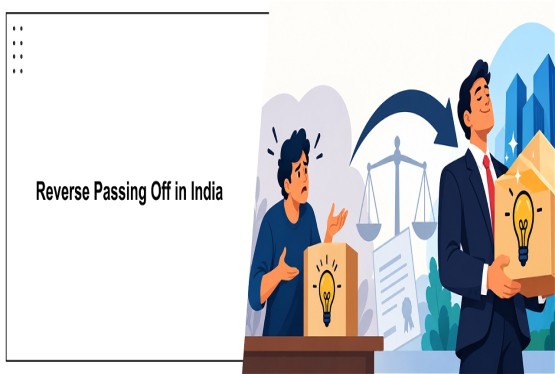
Trade dress generally refers to the overall visual presentation of a product or business, which may include packaging, colour combinations, layout, get-up and other distinctive features. Indian trade mark law does not create a separate, standalone registration category called “trade dress”. Depending on the facts, particular elements may be registrable as trade marks, while protection for the overall get-up may be pursued through the common-law action of passing off.
Section 27(2) of the Trade Marks Act preserves the right to bring an action for passing off. Broadly, a claimant must establish goodwill, a misrepresentation likely to lead the relevant public to believe that the defendant's goods or business are associated with the claimant, and damage or a real likelihood of damage. Businesses should preserve dated catalogues, advertising, sales records, packaging samples and evidence of market recognition.
Relevant Judicial Decisions
In Microfibres Inc. v. Girdhar & Co. & Anr., RFA (OS) No. 25 of 2006 (Delhi High Court, Division Bench, decided 28 May 2009), the Court considered the relationship between copyright in artistic works and designs applied industrially to articles, including the operation of Section 15 of the Copyright Act. The decision is frequently discussed in the context of the copyright-design interface. Its application must be understood in light of the statutory language and the particular facts.
In Ritika Private Limited v. Biba Apparels Private Limited, CS(OS) No. 182 of 2011 (Delhi High Court, decided 23 March 2016), the Court dealt with claims concerning garment designs and copyright, in proceedings that included an application under Order XII Rule 6 of the Code of Civil Procedure. The decision is relevant to the practical limits of relying on copyright to protect designs used in the fashion trade. It should not be treated as establishing that every garment design is automatically outside copyright protection; Section 15 and the facts remain material.
Geographical Indications and Traditional Fashion Products
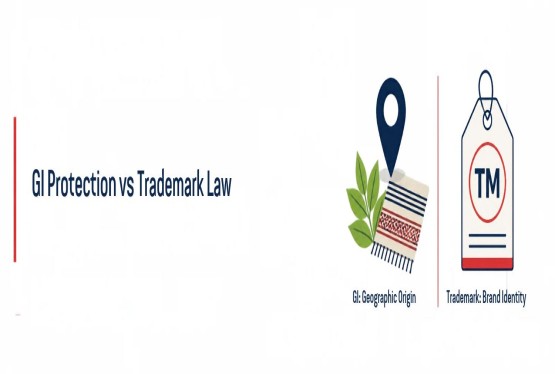
The Geographical Indications of Goods (Registration and Protection) Act, 1999 may be relevant where a fashion or textile product derives its qualities, reputation or other characteristics from a particular geographical origin. A registered GI can help protect the collective reputation of qualifying goods and prevent unauthorised use in accordance with the Act.
GI protection is not a substitute for an individual designer's copyright, design or trade mark rights. Nor does it ordinarily confer exclusive ownership of a traditional motif or cultural expression on one private designer. For products linked to a recognised geographical tradition, businesses should examine the registered GI, its authorised users and the applicable product specification before using GI claims in marketing.
Contracts, Licensing and Ownership
Contracts are essential where designers work with manufacturers, photographers, models, stylists, freelance illustrators, influencers, retailers or collaborators. Written agreements should address ownership of designs and artwork, assignment or licensing of copyright, permitted uses, territory, duration, exclusivity, payment, credit, confidentiality, sample handling, approval rights and termination.
Under the Copyright Act, Sections 17 and 19 are relevant to first ownership and assignments. Parties should ensure that any assignment is in writing and identifies the work and rights assigned, together with duration, territorial extent and royalty or other consideration as required by law. A business should not assume that paying a freelancer or manufacturer automatically transfers all IP rights. Separate written provisions should address trade mark use, design filings, portfolio use and responsibility for infringement claims.
Practical IP Strategy for Fashion Designers
A practical strategy should begin with an IP audit. Identify which elements are original artwork, which are industrial designs, which function as brand identifiers, and which may form part of a distinctive product get-up. Consider design registration before disclosure; copyright ownership and chain of title for artwork; trade mark clearance and registration for brand assets; and evidence preservation for passing-off claims.
Designers should monitor marketplaces and social media for copying, retain dated source files and development records, use written agreements with collaborators, and seek advice before sending legal notices or commencing proceedings. The right response depends on the specific right available, evidence of ownership and use, scale of copying and commercial objective.
Conclusion
Fashion designers in India can use a combination of design registration, copyright, trade marks, passing off, geographical indications and contractual safeguards to protect their creations and commercial identity. No single form of IP protection covers every feature of a fashion product. The most effective approach is to identify each protectable element early, select the correct legal mechanism, document ownership and use, and act promptly when infringement is suspected.
Article last updated on : 03 Nov 2026.