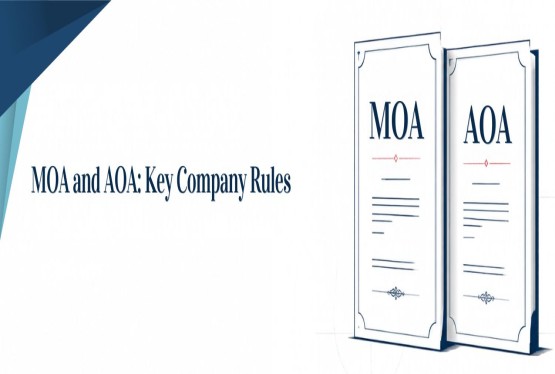




Starting a company involves more than obtaining a Certificate of Incorporation. Certain companies must also complete commencement of business requirements before starting business operations or exercising borrowing powers. One important requirement is filing Form INC-20A, the declaration of commencement of business.
A Commencement of Business Consultant in India helps companies understand applicability, prepare documents and complete the filing process. This assistance is useful for founders who are unfamiliar with post-incorporation requirements or need help reviewing subscriber payments, registered office records and regulatory approvals.
What Is Commencement of Business?
Commencement of business refers to the requirements applicable to certain companies under Section 10A of the Companies Act, 2013. The provision requires a director to file a declaration confirming that every subscriber to the Memorandum of Association has paid the value of the shares agreed to be taken.
The company must also have filed verification of its registered office under Section 12(2). The commencement declaration is submitted through Form INC-20A within 180 days of incorporation. This process connects the commitments made during incorporation with the company’s actual funding records. Before signing the declaration, the director should have reliable evidence that all subscribers have paid their agreed subscription amounts.
What Does a Commencement of Business Consultant Do?
A commencement of business consultant assists with reviewing company records and coordinating the filing. The work may include checking applicability, calculating the deadline, reconciling subscription payments and preparing the form. For example, a company may have received money from its founders without clearly identifying which payment relates to each subscriber.
A consultant can help organise the records and identify discrepancies before the declaration is prepared. General filing assistance must be distinguished from statutory certification. Under Rule 23A of the Companies (Incorporation) Rules, 2014, the contents of INC-20A must be verified by a Company Secretary, Chartered Accountant or Cost Accountant in practice. The director remains responsible for the declaration signed on behalf of the company.
Which Companies Need to File INC-20A?
Companies Incorporated with Share Capital
The requirement generally applies to companies incorporated on or after 2 November 2018 that have share capital. This can include private limited company, public limited company and One Person Company falling within the statutory scope. Applicability should be checked using the company’s incorporation date and legal structure. A company should not assume that it is exempt simply because it has few shareholders, limited capital or a small business plan.
Companies That Have Not Started Operations
A company that has not earned revenue must still assess its INC-20A obligation. The filing deadline is linked to incorporation rather than the date of the first sale, invoice or customer payment. Founders who plan to delay their commercial launch should therefore maintain a post-incorporation compliance calendar. Waiting to start operations does not automatically postpone the statutory deadline.
LLPs, Partnerships and Proprietorships
INC-20A is a company-law declaration. An LLP, partnership firm or sole proprietorship does not file this form merely because it is starting a business. These businesses may have separate registration, tax and licensing obligations. Their compliance requirements should be assessed according to their legal structure and activities.
Difference Between Incorporation and Commencement of Business
Incorporation creates the company as a legal entity. Commencement compliance concerns the additional conditions applicable to starting business and exercising borrowing powers under Section 10A. A Certificate of Incorporation should therefore be followed by a review of the company’s remaining obligations.
Banking arrangements, subscriber payments, registered office compliance and applicable licences should be addressed during this stage. Obtaining a CIN, PAN or GST registration does not independently establish that commencement requirements have been completed. Each registration or filing serves a separate legal purpose.
When Should a Company Appoint a Consultant?
A company should preferably arrange assistance shortly after incorporation. Early preparation provides time to collect documents, resolve payment discrepancies and address registered office issues. The company can begin by sharing its incorporation records and proposed activities with the consultant.
It should then arrange its banking facilities, collect subscription amounts and maintain clear payment evidence. The 180-day period is a filing deadline, not permission to conduct business without complying with Section 10A during that period. Applicable companies must satisfy the statutory conditions before commencing business or exercising borrowing powers.
Documents Required for Commencement of Business Filing
Certificate of Incorporation and Company Records
The Certificate of Incorporation establishes the company’s identity and incorporation date. The Memorandum of Association and subscriber records help determine who agreed to take shares and the value of those commitments. These documents should be reviewed together. The information used in the declaration must be consistent with the company’s incorporation records.
Subscription Payment Evidence
The company should maintain reliable evidence showing payment of the agreed subscription amounts. Bank statements, transaction references and supporting explanations can help reconcile each subscriber’s payment. For example, where two subscribers agreed to take shares worth Rs.60,000 and Rs.40,000, the records should establish payment of both commitments.
An unexplained total credit of Rs.1 lakh should not replace a subscriber-wise review. Unusual payment arrangements should be examined before filing. Supporting records must reflect the actual transactions and should never be backdated or altered to create an appearance of compliance.
Registered Office Records and Photographs
The registered office details should match the company’s MCA records. The prescribed filing requirements include photographs showing the external building and inside office, including at least one director or key managerial personnel. The company should prepare clear photographs and check that its registered office particulars have been appropriately recorded. If the office has changed, the relevant compliance should be addressed separately.
Board Authorisation
The director signing the form should have the required board authorisation. The resolution details must be accurately recorded in the filing. Board authorisation also provides an opportunity to review readiness. The company should confirm that subscription payments, office records and applicable approvals have been checked before the declaration is signed.
Digital Signature Certificate
The signing director must have a valid Digital Signature Certificate, or DSC. The applicable professional certification must also be completed using the required digital-signature arrangements. Checking DSC validity and MCA association early helps avoid technical delays when the form is ready for submission.
Sectoral Approvals
Where the company’s objects require registration or approval from a sectoral regulator, the relevant approval must be obtained and addressed in accordance with Rule 23A. For example, a company proposing regulated financial activities must examine the applicable regulatory requirements. Filing INC-20A does not replace an approval required from RBI, SEBI or another regulator.
Process for Filing INC-20A
Step 1: Confirm Applicability and Deadline
The consultant reviews the incorporation date, company structure and share capital position to determine applicability. The filing deadline should then be recorded in the company’s compliance calendar. The proposed business activities should also be reviewed. Identifying sectoral approval requirements early helps prevent complications later in the process.
Step 2: Review Subscriber Payments
The company’s payment records are compared with the share commitments recorded in the Memorandum of Association. Every subscriber’s payment should be identifiable and supported. Missing payments or unexplained differences should be resolved before the declaration is prepared. The director must have a reasonable basis for confirming that the subscription requirements have been fulfilled.
Step 3: Check Registered Office Compliance
The registered office particulars and supporting records are reviewed for consistency. The company should also prepare the required photographs. If an address discrepancy or an unreported office change is identified, appropriate corrective action should be taken. INC-20A should not be treated as a substitute for separate registered office filings.
Step 4: Prepare and Review the Form
The form is prepared using verified company information. Subscriber details, payment particulars, authorisation and regulatory information should be checked carefully. The director should review the completed particulars before signing. This helps identify errors that might otherwise remain unnoticed until after submission.
Step 5: Complete Certification and Submission
The practising professional verifies the form as required, and the authorised director digitally signs it. The applicable submission, upload and payment steps must then be completed through the MCA system. Generating a Service Request Number, or SRN, alone should not be treated as completion. The company should confirm that the entire filing workflow has been successfully completed.
Step 6: Retain the Filing Records
The company should retain the filed form, supporting attachments, payment acknowledgement and final filing-status records. Keeping these documents together makes later compliance reviews and due diligence easier. Any pending issue should be clearly explained and tracked until resolved.
Government Fees and Professional Charges
Government fees and consultant charges are separate components of the total cost. The applicable filing fee should be checked under the relevant fee rules and the MCA portal calculation. Professional charges depend on the scope of work.
A straightforward filing with complete records may involve less work than a delayed case requiring payment reconciliation, document correction or assistance with notices. The quotation should clearly explain whether document review, form preparation, professional certification, government fees and responses to filing queries are included.
What Happens If INC-20A Is Filed Late?
A company that misses the deadline should promptly assess its filing position and outstanding requirements. It should also review whether business or borrowing activity occurred before the statutory conditions were fulfilled. Section 10A provides a base penalty of Rs.50,000 for the company and Rs.1,000 for each day of continuing default for every officer in default, subject to a maximum of Rs.1 lakh. The actual liability must be assessed after considering applicable relief provisions and the facts of the case.
Additional filing fees are separate from statutory penalties. Paying an additional fee does not automatically settle every consequence of the default. Where the declaration remains unfiled beyond the prescribed period and the Registrar has reasonable cause to believe that the company is not carrying on business or operations, action for removal of the company’s name may also be initiated. This is not an automatic consequence immediately after the deadline.
Common Mistakes to Avoid
-
Waiting Until the Deadline Approaches: Last-minute preparation leaves little time to correct missing payments, incomplete photographs or digital-signature problems. An earlier internal target gives the company time to resolve these matters.
-
Checking Only the Total Bank Balance: A sufficient bank balance does not, by itself, establish that every subscriber has paid the agreed share amount. The review should reconcile each commitment with genuine payment evidence.
-
Assuming the Consultant Takes Over All Responsibility: A consultant helps organise and complete the process, but the company must provide accurate records. Directors should understand and review the declaration they sign.
-
Confusing Different Registrations: Company incorporation, GST registration, sectoral licences and INC-20A have different purposes. Completion of one should not be treated as completion of the others.
-
Keeping Only a Draft Form: A draft or unsigned form does not establish successful filing. The company should retain the final submitted documents, payment evidence and status records.
How to Choose a Commencement of Business Consultant
Choose a consultant who reviews the company’s records before promising completion. The engagement should identify the practising professional responsible for statutory verification. Clear communication is equally important. The consultant should provide a practical document checklist, transparent charges and realistic timelines.
Where records contain discrepancies, the proposed solution should involve genuine evidence and appropriate correction. The company should also receive a complete handover of filing records and an explanation of any remaining obligations.
How Compliance Calendar LLP Can Help
Compliance Calendar LLP assists companies with understanding commencement requirements, organising documents and coordinating the INC-20A filing process with the appropriate practising professional.
Support can include reviewing incorporation records, reconciling subscriber payment information, checking filing readiness and identifying missing documents. Early review helps founders address gaps before signing the declaration. Companies seeking assistance should share complete and accurate records. This allows the filing process to be planned around the company’s actual circumstances.
Conclusion
A commencement of business consultant helps companies understand and complete the requirements associated with filing Form INC-20A. The process involves reviewing incorporation records, confirming receipt of subscription money from every subscriber, checking registered office compliance and preparing accurate supporting documents. Board authorisation and applicable sectoral approvals must also be addressed before submission. Professional assistance can help identify discrepancies early, organise records and coordinate the necessary verification. However, directors remain responsible for ensuring that the declaration reflects the company’s actual position.
Founders should make commencement compliance an early priority after incorporation rather than wait until the filing deadline approaches. Timely preparation provides an opportunity to resolve missing payments, incorrect particulars and digital signature issues before they disrupt submission. Maintaining complete filing records also supports future compliance reviews and due diligence. A planned approach helps companies fulfil their obligations, reduce avoidable errors and prepare for business operations with greater clarity and administrative control.
Frequently Asked Questions (FAQ’s)
Q1. What is Form INC-20A?
Ans. Form INC-20A is a declaration of commencement of business filed by applicable companies under Section 10A of the Companies Act, 2013. It confirms that every subscriber has paid the agreed share subscription amount and that registered office requirements are fulfilled.
Q2. What is the deadline for filing INC-20A?
Ans. An applicable company must file INC-20A within 180 days of incorporation. However, this period does not permit unrestricted business activity before compliance. Companies should complete subscription payments, registered office verification and filing requirements before commencing business or exercising borrowing powers.
Q3. Can a company start business before filing INC-20A?
Ans. A company covered by Section 10A cannot commence business or exercise borrowing powers before fulfilling the prescribed conditions. These include filing the commencement declaration and registered office verification. Founders should complete these requirements before beginning commercial operations or undertaking borrowing.
Q4. Is INC-20A an annual filing?
Ans. INC-20A is generally a one-time commencement declaration for an applicable company, rather than an annual filing. However, filing it does not replace annual returns, financial statement filings or other recurring obligations. Companies must maintain a separate calendar for ongoing compliance.
Q5. Is filing required if the company has no revenue?
Ans. A company having no revenue must still examine INC-20A applicability. The requirement depends on its incorporation date and share capital status, rather than turnover. Delaying commercial operations or having no customers does not automatically extend the filing deadline or exemption.
Q6. Who signs INC-20A?
Ans. An authorised director digitally signs INC-20A on behalf of the company. The director should review the declaration and supporting records before signing. Board authorisation, valid digital signature arrangements and accurate company information are important for completing the filing process correctly.
Q7. Who verifies INC-20A?
Ans. The contents of INC-20A must be verified by a Company Secretary, Chartered Accountant or Cost Accountant in practice, as prescribed under Rule 23A. General filing assistance alone does not qualify someone to provide this statutory verification without appropriate professional eligibility.
Q8. Must every subscriber pay the agreed subscription amount?
Ans. Yes, every subscriber must pay the value of shares agreed to be taken before the director makes the declaration. The company should maintain reliable payment evidence and reconcile individual commitments. An unexplained aggregate deposit does not establish subscriber-wise payment compliance.
Q9. Does an LLP need to file INC-20A?
Ans. An LLP does not file INC-20A merely because it is starting business. This declaration applies to companies covered by Section 10A. LLPs must instead meet their applicable incorporation, contribution, annual filing, taxation and licensing requirements according to their individual circumstances.
Q10. Does GST registration replace INC-20A?
Ans. GST registration does not replace INC-20A because the two requirements serve different legal purposes. GST concerns indirect tax obligations, while INC-20A addresses commencement requirements under company law. An applicable company must complete both where its activities and circumstances require them.
Article last updated on : 02 Nov 2026.




















































_learn_crop10_thumb.jpg)