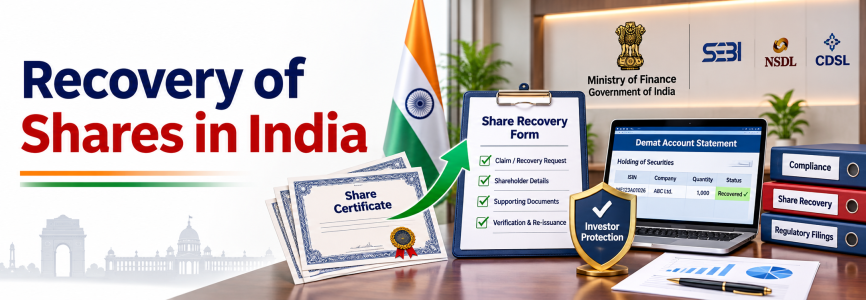



Many investors in India purchase shares for long-term financial security but later lose track of their investments. This may happen because of changes in residential addresses, lost physical share certificates, outdated bank accounts, the death of a shareholder or a lack of communication with the company. When dividends remain unclaimed for several years, the shares associated with those dividends may eventually be transferred to the Investor Education and Protection Fund (IEPF), subject to the conditions prescribed under the Companies Act, 2013.
However, shares transferred to the IEPF are not permanently lost. Eligible shareholders, legal heirs, nominees and other authorised claimants can recover their shares and unpaid dividends by following the prescribed claim procedure. The recovery process involves identifying the investment, verifying ownership, preparing supporting documents, submitting Form IEPF-5 through the Ministry of Corporate Affairs (MCA) portal and obtaining verification from the concerned company.
In 2026, the Investor Education and Protection Fund Authority (IEPFA) has also been working on improvements to the digital claim process, including a proposed Integrated IEPFA Portal 2.0, digital KYC facilities and simplified verification procedures. This article explains Recovery of Shares in India, including IEPF claim eligibility, legal provisions, required documents, online filing procedures, legal-heir claims, government fees, timelines and important developments relevant to 2026.
What Is Recovery of Shares in India?
Recovery of shares may involve old physical share certificates, unclaimed dividends, missing shareholder records or investments transferred to IEPF. The process depends on the reason the shares became inaccessible and the documents available with the claimant. Investors who need professional support can explore our Recovery of Shares services for assistance with document preparation, company verification and IEPF claim filing.
Types of Share Recovery in India
-
IEPF Share Recovery: Recovering eligible shares already transferred to the IEPF Authority.
-
Unclaimed Dividend Recovery: Claiming unpaid dividend amounts from the company or IEPF, depending on their status.
-
Lost Share Certificate Recovery: Completing the applicable procedure for lost physical securities.
-
Legal-Heir Share Recovery: Establishing entitlement to shares belonging to a deceased shareholder.
-
Old Physical Share Recovery: Resolving legacy folios, ownership records and dematerialisation requirements.
-
Unclaimed Investment Identification: Locating shareholdings using available company, folio and investor records.
These categories may overlap, but not every share recovery case requires Form IEPF-5.
What Is the Investor Education and Protection Fund (IEPF)?
The Investor Education and Protection Fund is a statutory fund established under Section 125 of the Companies Act, 2013. It receives specified unpaid or unclaimed amounts, including eligible unpaid dividends, and shares transferred under the provisions of Section 124. The fund is administered by the Investor Education and Protection Fund Authority under the Ministry of Corporate Affairs. Its responsibilities include administering the fund, facilitating refunds to eligible claimants and promoting investor education and protection.
Why Are Shares Transferred to IEPF?
Many investors lose track of their investments because of changes in address, outdated bank details or missing shareholding records. When dividends remain unclaimed for the prescribed period, the related shares may be transferred to IEPF under the applicable legal provisions. Investors can learn more about identifying and claiming these investments through our guide on How to Recover Unclaimed Shares and Dividends from IEPF.
Legal Provisions Governing IEPF Share Recovery
Recovery of shares from IEPF is governed primarily by the Companies Act, 2013, and the Investor Education and Protection Fund Authority (Accounting, Audit, Transfer and Refund) Rules, 2016, as amended.
Section 124: Unpaid Dividend and Transfer of Shares
Section 124 prescribes the treatment of unpaid or unclaimed dividends. Where a dividend has been declared but remains unpaid or unclaimed for 30 days, the company must transfer the relevant amount to an Unpaid Dividend Account within seven days after that period. If an amount remains unpaid or unclaimed in that account for seven years, it must be transferred to the IEPF in accordance with Section 124(5). Section 124(6) separately governs the transfer of shares associated with dividends that have not been paid or claimed for seven consecutive years.
Section 125: Investor Education and Protection Fund
Section 125 establishes the IEPF and provides for its administration and permitted purposes. Eligible persons may apply for refunds of amounts and shares transferred to the fund according to the prescribed procedure.
IEPF Authority Rules, 2016
The IEPF Authority (Accounting, Audit, Transfer and Refund) Rules, 2016, prescribe requirements relating to the transfer of shares, submission of refund claims, company verification and release of eligible shares and amounts. Rule 7 is particularly important because it deals with refunds to claimants from the IEPF. It covers online applications, verification by the company, refund processing and additional procedures for certain claimants.
Who Can Claim Shares from IEPF in 2026?
An IEPF share recovery application may be made by a person legally entitled to the transferred shares or unpaid amounts. The claimant must establish ownership or another valid legal entitlement and complete the applicable verification process.
Eligible Claimants
-
Original Shareholders: The registered shareholder can apply for recovery of eligible shares and dividends transferred to IEPF.
-
Legal Heirs: Where the registered shareholder has died, an eligible legal heir may pursue recovery after completing the applicable transmission or entitlement requirements.
-
Nominees: A registered nominee may initiate the prescribed process, subject to the relevant company and securities regulations and any competing legal entitlement.
-
Successors or Administrators: A legally authorised successor, executor or administrator may apply after establishing the necessary authority and completing the relevant preliminary procedures.
-
Joint Shareholders: Surviving joint holders may be entitled to pursue recovery, subject to the applicable holding records, transmission requirements and supporting documents.
The documents required differ according to the claimant's relationship with the registered shareholder. For legal-heir and similar cases, Rule 7 requires the necessary transmission-related procedure to be completed before the IEPF claim is filed.
How to Check Unclaimed Shares Transferred to IEPF
Before submitting Form IEPF-5, an investor should confirm whether the shares have actually been transferred to the IEPF Authority. This is important because shares still held by the company, its RTA or the investor's depository account may require a different procedure.
-
Step 1: Identify the Company : Find the name of the company in which the original investment was made. Old share certificates, dividend warrants, annual reports, investment statements and correspondence may help identify the company.
-
Step 2: Collect Shareholding Details : Gather the folio number, certificate number, distinctive numbers or demat account details, where available. These records can help the company or RTA locate the shareholding.
-
Step 3: Check the Company's Website : Listed companies commonly publish information concerning unpaid dividends and shares transferred or proposed to be transferred to IEPF. Check the investor relations section for relevant records.
-
Step 4: Contact the Registrar and Transfer Agent : The RTA may help verify whether the investor's shares are held in physical form, demat form or have been transferred to IEPF. It may also identify outstanding KYC or document requirements.
-
Step 5: Verify the Claim Position : Once the shares and outstanding dividends are identified, confirm the claimant's entitlement and the appropriate recovery procedure. For example, the investor relations website of IndianOil provides a facility for checking specified IEPF-transferred shareholdings using folio or demat details.
Step-by-Step IEPF Claim Process Online in 2026
Filing Form IEPF-5 is an important step in recovering shares and unpaid dividends transferred to IEPF. Applicants must provide accurate shareholder details, company information, bank details and demat account records to avoid delays. They must also complete the required verification process with the concerned company. For further information about the filing procedure and supporting documents, investors can read our guide on IEPF-5 Recovery of Unclaimed Shares and Dividends.
-
Step 1: Verify the Shares and Unclaimed Dividends: Before submitting the application, contact the concerned company or its RTA to confirm the number of shares and dividend amounts transferred to IEPF. Collect the relevant folio details, investor identification records and entitlement information. This helps prevent errors in the claim form.
-
Step 2: Prepare the Required Documents: Gather the shareholder's PAN, identity proof, demat account information, bank account details and supporting shareholding records. Where the claim involves a deceased shareholder, additional legal-heir or transmission documents may be required.
-
Step 3: Register on the MCA Portal: Visit the official Ministry of Corporate Affairs Portal and log in using valid user credentials. Navigate to MCA Services, select Company e-Filing and access the IEPF Services section. Choose Form IEPF-5 for claiming unpaid amounts and shares.
-
Step 4: Complete Form IEPF-5: Enter the required details, including the claimant's information, concerned company, folio or demat details, number of shares and relevant unpaid amounts. The information should match the records maintained by the company, RTA and depository participant.
-
Step 5: Submit the Online Application: Review the form and submit it through the prescribed MCA filing facility. After successful submission, a Service Request Number (SRN) is generated. The acknowledgement and relevant indemnity bond are also generated through the filing process. Preserve the SRN for future reference.
-
Step 6: Submit Supporting Documents: Follow the applicable instructions for signing and dispatching the required documents to the concerned company's Nodal Officer. These may include the acknowledgement, indemnity bond, identity information and other supporting records. The MCA instructions also provide for submitting postal dispatch proof in the relevant online facility.
-
Step 7: Company Verification: The company's Nodal Officer examines the claim and checks the claimant's entitlement against the company's shareholding and dividend records. The company then submits an electronic verification report to the IEPF Authority, along with the required supporting documents.
-
Step 8: Approval and Recovery of Shares: The IEPF Authority examines the claim and verification report. If the claim is approved, the eligible shares are credited to the claimant's demat account and refundable amounts are transferred through the prescribed electronic payment process. The claimant should verify the credit and preserve the final claim records.
Documents Required for Recovery of Shares from IEPF
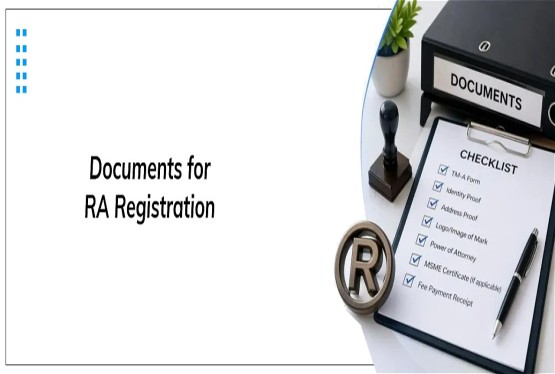
Documents are an important part of the IEPF claim process because the Authority must verify whether the applicant is legally entitled to receive the shares or amounts claimed. The exact checklist depends on whether the original shareholder is alive, the shares were held physically or electronically, and whether the applicant is a legal heir or nominee.
Important IEPF Claim Documents
|
Document |
Purpose |
|
PAN card |
Verification of claimant identity |
|
Aadhaar or other permitted identity proof |
Identity and address verification |
|
Form IEPF-5 acknowledgement |
Confirmation of online application |
|
Original or supporting shareholding records |
Evidence of share ownership |
|
Client Master List (CML) |
Verification of claimant's demat account |
|
Cancelled cheque or bank proof |
Verification of bank account |
|
Indemnity bond |
Required declaration and undertaking |
|
Share certificate or supporting proof |
Verification of physical shareholding, where applicable |
|
Death certificate |
Verification of deceased shareholder status |
|
Succession or transmission documents |
Establishing legal entitlement where required |
Why Is the Client Master List Important?
The Client Master List contains relevant details of the investor's demat account, including account holder information and identification details. It helps verify the account into which recovered shares should be credited. The claimant's name and PAN should be consistent with the supporting records or be accompanied by the necessary documents explaining any differences.
What if the Shareholder's Name Has Changed?
A name mismatch may arise because of marriage, a legal name change or differences in older company records. The claimant may need to provide an affidavit, marriage certificate, Gazette notification or another relevant supporting document. Similarly, address discrepancies should be corrected or explained through the applicable company and RTA procedures. The IEPF Authority's published FAQs specifically discuss documentation for name, address, demat and bank account mismatches.
How to Recover Shares from IEPF After the Death of a Shareholder
Filing Form IEPF-5 is an important step in recovering shares and unpaid dividends transferred to IEPF. Applicants must provide accurate shareholder details, company information, bank details and demat account records to avoid delays. They must also complete the required verification process with the concerned company. For further information about the filing procedure and supporting documents, investors.
Important Requirements for Legal Heirs
-
Death Certificate: Establishes the death of the original registered shareholder.
-
Claimant Identity Documents: Verify the identity and details of the person seeking recovery.
-
Transmission Documents: Establish the right to have the securities transmitted under the applicable company and SEBI procedures.
-
Succession Certificate or Probate: May be required depending on the facts, value of the securities and applicable rules.
-
Affidavit and Indemnity: May be necessary under the relevant transmission procedure.
-
Consent or No-Objection Documents: May be required from other legal heirs in specified circumstances.
-
Demat Account Information: Identifies the eligible account for receiving recovered shares.
The need for a succession certificate, probate or other document is not identical in every case. It depends on the holding structure, applicable transmission thresholds and legal circumstances. Where there are competing inheritance claims, the applicant may need additional legal documentation before the company can confirm entitlement.
Can Lost Physical Share Certificates Be Recovered?
Yes. Lost physical share certificates may be recoverable, but the correct procedure depends on whether the shares remain with the company or have already been transferred to IEPF. If the shares have not been transferred to IEPF, the shareholder should generally approach the company or RTA for the applicable procedure concerning lost securities.
For listed companies, current SEBI requirements may involve prescribed documentation and the issuance of a letter of confirmation for obtaining securities in demat form. Where shares have already been transferred to IEPF, the claimant must also comply with the applicable IEPF claim requirements.
Read Releated Article: Why Do Physical Shares Need More Attention.
Common Documents for Lost Share Cases
-
Shareholder identity and PAN records.
-
Folio number and available share certificate details.
-
Relevant declaration or affidavit concerning loss.
-
Indemnity documents, where applicable.
-
Supporting evidence of original ownership.
-
Additional documents required by the RTA or company.
-
Demat account information for eligible securities.
A missing physical certificate does not automatically mean that the investor has lost legal ownership of the shares. However, the investor must establish entitlement through the prescribed procedure before the securities can be restored.
IEPF Share Recovery Fees and Processing Time in 2026
IEPF claimants often want to know how much recovery will cost and how long the procedure will take.
Is There a Government Fee for Form IEPF-5?
The ordinary Form IEPF-5 claim filing is generally available without a government filing fee. However, a claimant may incur separate expenses for obtaining documents, notarisation, stamp duty where applicable, transmission-related formalities or professional assistance. These expenses depend on the complexity of the claim and should not be confused with an official IEPF filing charge.
What Is the IEPF Claim Processing Time?
The processing period depends on the completeness of the documents, the company's verification and the Authority's review. Under Rule 7, the company is ordinarily required to submit its online verification report within 30 days of receiving the claim. The Rules also provide a 60-day period for the Authority to dispose of a duly verified and complete claim after receipt of the company's verification report. Delays beyond the prescribed period must be recorded and communicated as required.
These are regulatory processing periods rather than a guarantee that every claimant will receive the shares within a fixed number of days. Claims involving missing records, name mismatches, deceased shareholders or incomplete documents may require additional verification.
Latest IEPF Rules and Developments in 2026
An important development in 2026 concerns the proposed modernisation of IEPF claim processing.
Integrated IEPFA Portal 2.0
On 7 August 2026, the Ministry of Corporate Affairs announced that the IEPF Authority had conducted a stakeholder engagement session concerning the Integrated IEPFA Portal 2.0. The proposed portal improvements included:
-
Digital KYC Integration: Intended to simplify claimant identity verification.
-
Pre-Filled Form IEPF-5: Intended to reduce repeated manual data entry.
-
Entitlement Search Facility: Designed to help claimants identify relevant entitlements.
-
Simplified e-Verification Reports: A proposed three-step process for company Nodal Officers.
-
Improved Digital Processing: Intended to strengthen efficiency and transparency during claim verification.
The published implementation roadmap included testing in August 2026, stakeholder training in September, pilot implementation in October and a planned launch in November 2026. As of 3 November 2026, the August announcement establishes a planned rollout, not a confirmed live launch. Claimants should check the official MCA and IEPFA websites for the currently operational filing process. The fundamental entitlement to claim eligible shares and unpaid amounts continues to arise under the Companies Act, 2013, and the applicable IEPF Rules.
Common Mistakes That Delay IEPF Share Recovery
IEPF claims can be delayed when information submitted by the claimant does not match company records or the supporting documents are incomplete. Many difficulties can be identified before filing through a review of the company's shareholding records and the claimant's KYC information.
Important Mistakes to Avoid
-
Incorrect Folio Information: Entering a wrong folio number or shareholding details can create verification discrepancies.
-
PAN and Name Mismatches: Differences between identity records and old share certificates may require additional documentation.
-
Incomplete Demat Information: An incorrect or unsuitable demat account can delay the transfer of recovered shares.
-
Missing Legal-Heir Documents: Claims concerning deceased shareholders may require prior transmission formalities.
-
Failure to Dispatch Documents: Not completing the applicable supporting-document submission can leave the application incomplete.
-
Ignoring Company Observations: Delayed responses to verification queries can prolong the claim.
-
Filing Before Confirming Entitlement: Applicants should first verify the shares and unpaid amounts actually available for claim.
Claimants should maintain copies of all documents, acknowledgements and correspondence with the company and IEPF Authority.
Why Choose Compliance Calendar LLP for Recovery of Shares?
Compliance Calendar LLP provides professional assistance with Recovery of Shares in India, IEPF Claim Filing, Unclaimed Dividend Recovery and Share Transmission Documentation. Share recovery may involve old company records, missing certificates, identity mismatches and coordination with RTAs and company Nodal Officers. Understanding the applicable requirements before filing can help reduce avoidable errors.
Our Share Recovery Assistance Includes
-
Shareholding Verification: Assistance in identifying shares and outstanding dividends.
-
IEPF Claim Documentation: Support with preparing information and documents required for Form IEPF-5.
-
Unclaimed Dividend Recovery: Guidance concerning unpaid dividends held by companies or transferred to IEPF.
-
Legal-Heir Share Recovery: Assistance with identifying applicable succession and transmission requirements.
-
Lost Share Certificate Matters: Documentation support for prescribed lost-security procedures.
-
Company and RTA Coordination: Assistance with relevant verification requests and discrepancies.
-
IEPF Claim Follow-Up: Support in reviewing claim status and responding to documentation queries.
Our aim is to help shareholders and eligible claimants understand the legal process and prepare accurate records for recovering their investments.
Conclusion
Recovery of Shares in India is an important legal process for investors whose shares or dividends have become unclaimed or have been transferred to the Investor Education and Protection Fund. Under Sections 124 and 125 of the Companies Act, 2013, eligible shareholders and legally entitled claimants can seek recovery by following the prescribed IEPF procedure. The process generally involves identifying the investment, confirming entitlement, submitting Form IEPF-5, providing supporting documents and completing verification through the concerned company.
Investors should also distinguish between IEPF-transferred shares and lost physical shares that remain with the company, as different recovery procedures may apply. The proposed digital improvements to IEPF claim processing in 2026 may simplify the procedure as they become operational. However, accurate ownership records and proper verification remain essential. Compliance Calendar LLP assists investors with IEPF share recovery, documentation reviews, unclaimed dividend claims and related share recovery procedures in India.
Frequently Asked Questions (FAQs)
Q1. How can I recover shares transferred to IEPF in India?
Ans: Shareholders can recover shares transferred to the Investor Education and Protection Fund (IEPF) by filing Form IEPF-5 through the MCA portal. The concerned company verifies the claim and submits its verification report to the IEPF Authority. After approval, eligible shares are credited to the claimant's demat account.
Q2. What is the IEPF-5 claim process in 2026?
Ans: The IEPF-5 claim process involves identifying unclaimed shares, collecting required documents and submitting the online application through the MCA portal. The claimant must also provide supporting documents to the concerned company. The IEPF Authority processes the claim after company verification and applicable regulatory checks.
Q3. Can shares transferred to IEPF be recovered after seven years?
Ans: Yes, shareholders can recover eligible shares even after they have been transferred to IEPF following seven consecutive years of unpaid or unclaimed dividends. The transfer does not permanently cancel the shareholder's entitlement. The claimant must establish ownership and complete the prescribed IEPF refund procedure.
Q4. What documents are required for IEPF share recovery?
Ans: Important documents include PAN, identity proof, demat account Client Master List (CML), bank account proof and shareholding records. Claimants may also need an indemnity bond and Form IEPF-5 acknowledgement. Additional legal documents may be required for deceased shareholders, legal heirs or ownership discrepancies.
Q5. How long does it take to recover shares from IEPF?
Ans: Under the applicable IEPF Rules, the company ordinarily has 30 days to submit its verification report after receiving the claim. The Authority generally has 60 days to dispose of a complete, duly verified claim after receiving the verification report. Actual processing may take longer if documents are incomplete or additional verification is required.
Q6. Is there any government fee for filing Form IEPF-5?
Ans: Generally, there is no government filing fee for submitting Form IEPF-5 to recover eligible shares or unclaimed dividends. However, claimants may incur expenses for notarisation, stamp duty where applicable, legal documentation or professional assistance. These charges depend on the complexity of the claim.
Q7. Can legal heirs recover shares belonging to a deceased shareholder?
Ans: Yes, eligible legal heirs, nominees or successors can claim shares belonging to a deceased shareholder after establishing their legal entitlement. Required documents may include a death certificate, succession certificate, probate or other applicable transmission records. The necessary transmission procedure must be completed before filing the IEPF claim.
Q8. How can I recover lost physical share certificates in India?
Ans: To recover lost physical share certificates, shareholders should contact the concerned company or its Registrar and Transfer Agent (RTA). The procedure may require identity verification, loss declarations, indemnity documents and demat-related formalities. If the shares have already been transferred to IEPF, Form IEPF-5 may also be required.
Q9. How can I check my IEPF claim status online?
Ans: Claimants can check their IEPF claim status through the relevant MCA or IEPF online facility using their application reference or Service Request Number (SRN). They can also contact the company's Nodal Officer for verification updates. Keeping the acknowledgement and supporting documents readily available helps with follow-up.
Q10. How can Compliance Calendar LLP help with IEPF share recovery?
Ans: Compliance Calendar LLP provides professional assistance with IEPF share recovery, Form IEPF-5 documentation, unclaimed dividend claims and legal-heir share recovery. Our team helps identify required documents, review ownership records and coordinate with companies or RTAs. These services help eligible claimants complete the prescribed share recovery procedure more efficiently.
Article last updated on : 03 Nov 2026.



























































_learn_crop10_thumb.jpg)