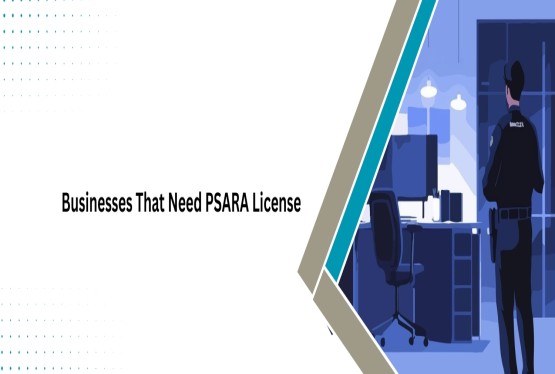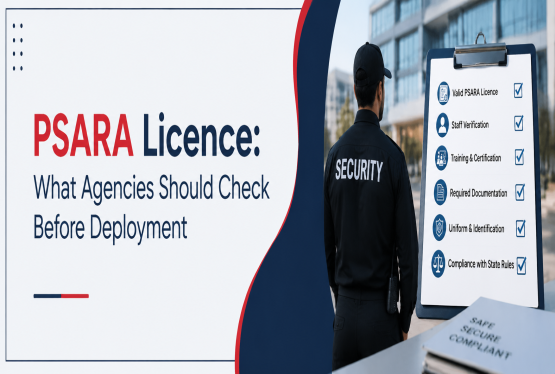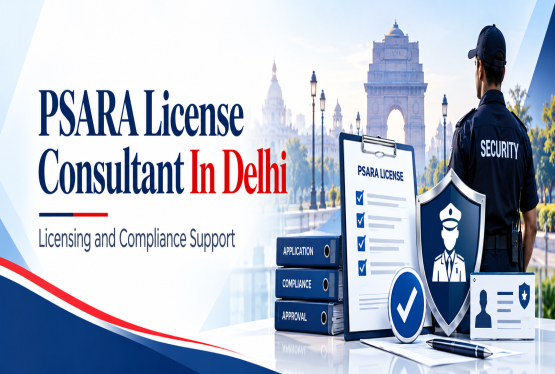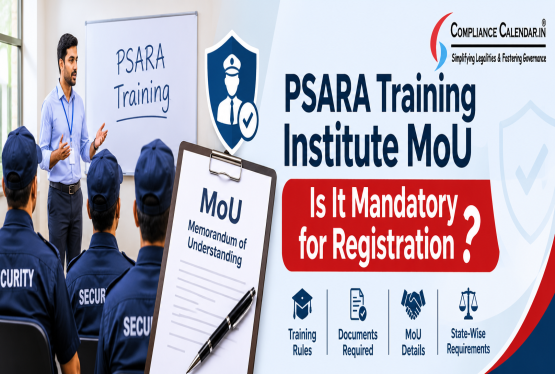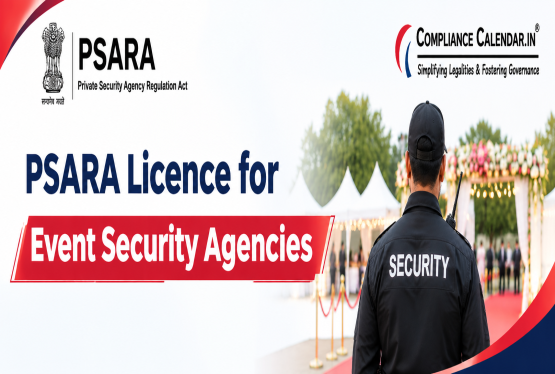



ATMs are used by people every day to withdraw cash and carry out banking work. Banks and ATM operators take steps to protect these machines from theft, damage and other security risks. One common step is to place a security guard at or near the ATM. Businesses that provide security guards to banks and ATM operators must understand the rules under the PSARA License. If a business runs a private security agency and supplies guards to ATM locations, it generally needs a licence under the Private Security Agencies (Regulation) Act, 2005.
This licence allows a private security agency to provide security services in the area approved by the concerned authority. In this article, we explain when an ATM security agency needs a PSARA License, what its guards do, which requirements apply and how the agency can apply.
Why Do ATM Locations Need Security Guards?
ATMs are often placed in busy markets, shopping areas, office buildings and other public places. People may use them during the day and at night. Since ATMs contain cash and banking equipment, they need suitable safety arrangements. A security guard can watch the ATM area, report suspicious activity and help customers maintain order. The guard can also inform the bank or police if someone tries to damage the machine or create trouble at the location.
Banks and ATM operators may hire private security agencies to provide these guards. The agency must understand its legal responsibilities before accepting such work. It should also make sure that the guards are trained, verified and suitable for the duties assigned to them.
Does every ATM legally need a security guard?
Not necessarily. The requirement for security arrangements depends on the applicable banking, ATM and security instructions. The presence of an ATM does not automatically mean that a guard must be posted there at all times.
Why Does an ATM Security Agency Need a PSARA License?
A company that provides security guards to another business is generally treated as a private security agency under the PSARA Act, 2005. Section 4 of the Act does not allow a person or private security agency to carry on the business of providing private security guards without the required licence. For example, suppose a company enters into an agreement with a bank to provide 20 guards at different ATM locations. The company is providing private security services to another business. It must obtain the required PSARA License before carrying out this work.
The licence is issued by the Controlling Authority appointed by the concerned State or Union Territory Government. The agency must follow the licence conditions and operate only in the approved area.
Does the ATM owner need a separate PSARA License?
No, not simply because the ATM has a security guard. The licence requirement generally applies to the business providing private security services. If a bank or ATM operator hires an outside security agency, it should check that the agency has the required licence.
A business that directly employs guards only for its own premises is not automatically a private security agency. The actual nature of its work matters.
If you want to understand the basic law and licensing rules , read our guide : PSARA Licence: Complete Guide for Private Security Agencies.
What Are the Duties of an ATM Security Guard?
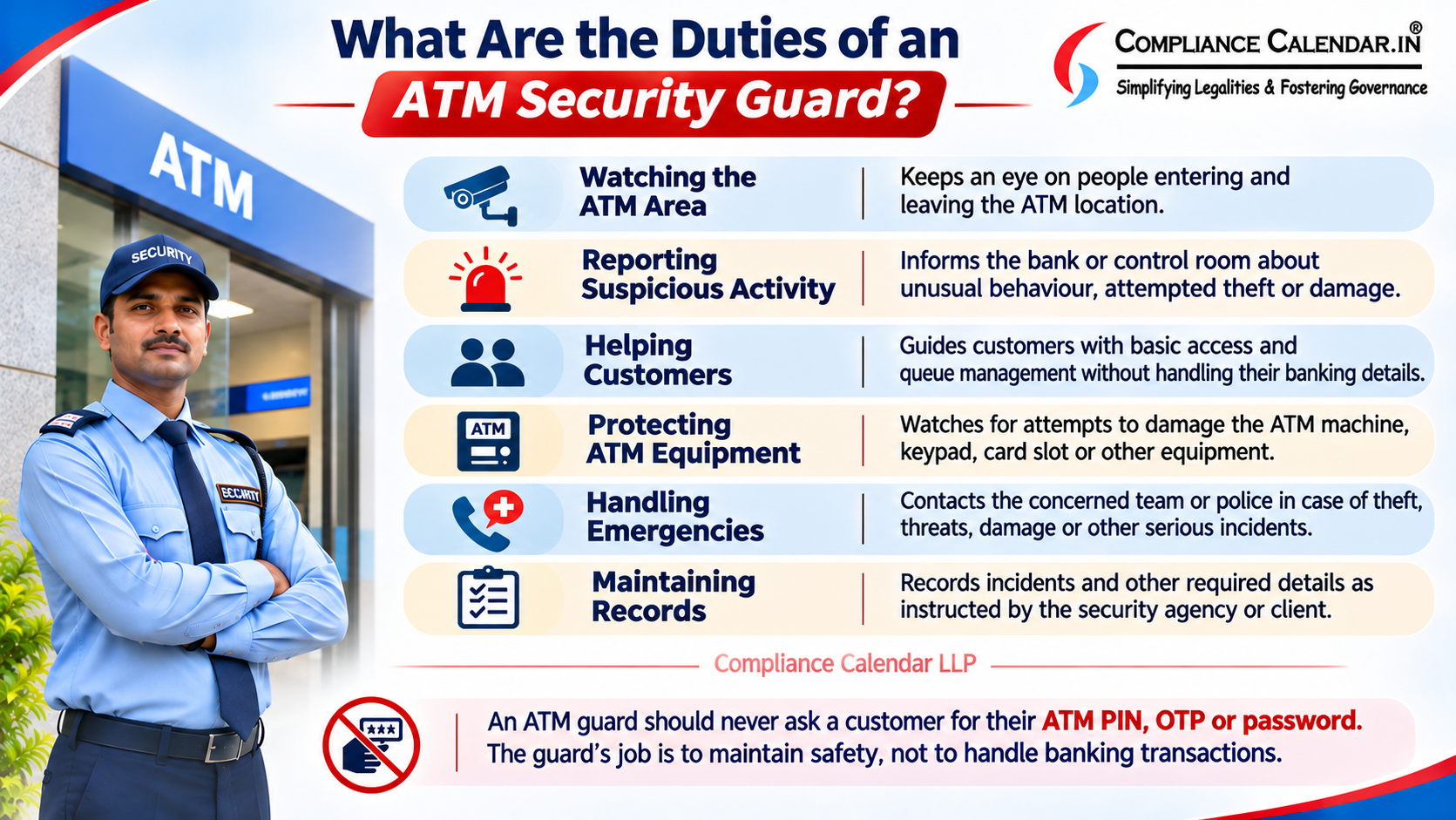
An ATM security guard helps keep the ATM area safe. The bank, ATM operator or security agency may give the guard specific instructions according to the location and security needs.
|
Duty |
What the Security Guard Does |
|
Watching the ATM area |
Keeps an eye on people entering and leaving the ATM location. |
|
Reporting suspicious activity |
Informs the bank or control room about unusual behaviour, attempted theft or damage. |
|
Helping customers |
Guides customers with basic access and queue management without handling their banking details. |
|
Protecting ATM equipment |
Watches for attempts to damage the ATM machine, keypad, card slot or other equipment. |
|
Handling emergencies |
Contacts the concerned team or police in case of theft, threats, damage or other serious incidents. |
|
Maintaining records |
Records incidents and other required details as instructed by the security agency or client. |
Note : An ATM guard should never ask a customer for their ATM PIN, OTP or password. The guard's job is to maintain safety, not to handle banking transactions.
The agency should explain these duties before assigning a guard to an ATM location. Guards should also know whom to contact if they notice a problem.
Which Businesses Need a PSARA License for ATM Security Services?
The PSARA licence requirement mainly applies to businesses that provide private security guards to other people or organisations. A company does not need a PSARA License just because it works with ATMs. The type of service it provides is important.
|
Business Type |
When PSARA Applies |
|
ATM security guard agency |
When it supplies private security guards to ATM locations. |
|
Bank security agency |
When it provides private security guards to bank branches or other premises. |
|
Security manpower company |
When it supplies guards as a private security service to banks or ATM operators. |
|
Private security contractor |
When it takes responsibility for providing and managing guards for ATM locations. |
|
Multi-location security agency |
When it provides private security services across several districts or States. |
For example, a company that installs ATM machines or repairs them does not need a PSARA License only because it works with ATMs. But if the same company starts providing private security guards to banks or ATM operators, it must check the PSARA licensing requirements.
What Is the Difference Between ATM Security and ATM Cash Transportation?
ATM security and cash transportation are two different services. Both help protect ATMs, but the work involved is not the same.
ATM security mainly involves placing guards at or near ATM locations. These guards watch the area, report suspicious activity and help maintain safety.
ATM cash transportation involves moving cash from one place to another. For example, a cash transportation company may collect money from a bank or cash centre and deliver it to an ATM for replenishment.
|
ATM Security Services |
ATM Cash Transportation |
|
Guards are posted at ATM locations. |
Cash is moved between banks, cash centres and ATMs. |
|
Main work is watching the ATM area. |
Main work is protecting cash during movement. |
|
Guards report suspicious activity and security problems. |
Staff manage cash handling, vehicles and secure transportation. |
|
General PSARA requirements apply to the private security agency. |
PSARA requirements and additional cash transportation rules apply to the relevant services. |
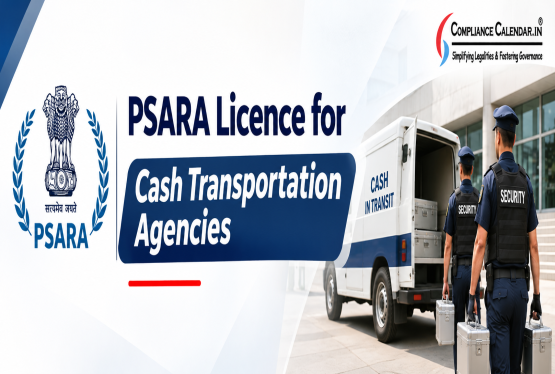
The Private Security Agencies (Private Security to Cash Transportation Activities) Rules, 2018 set additional requirements for agencies involved in cash transportation. These include rules about vehicles, staff and security arrangements.
An agency that only provides guards at ATM locations should not assume that it is carrying out cash transportation work. If it provides both services, it must check the additional rules that apply to its cash transportation activities.
For more details, read our article: PSARA License for Cash Transportation Agencies.
What Are the Main Requirements for an ATM Security Agency?
A business planning to provide ATM security guards must meet the requirements under the PSARA Act and the applicable State or Union Territory rules.
Some important requirements include:
- Business Registration
The applicant should have a suitable business structure, such as a proprietorship, partnership firm or company, as applicable. The business details must be ready for the licence application.
- Applicant's Eligibility
The applicant and the people connected with the agency must meet the eligibility conditions under the PSARA Act. Certain people may not be eligible to receive a licence under the law.
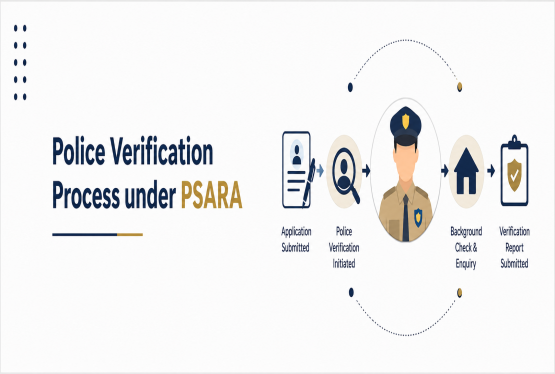
- Police Verification
The authority carries out the required checks on the applicant. The agency must also follow the rules for checking the background of its security guards and supervisors.
- Security Guard Training
The agency must arrange the required training for its guards and supervisors. Guards should understand their duties, public behaviour, basic safety and how to respond to emergencies.
- Proper Employee Records
The agency must maintain the required information about its guards, supervisors and other employees. It should also provide identity cards and follow the applicable rules for uniforms and supervision.
- Licence for the Correct Area
The agency must apply for the licence covering the area where it plans to provide security services. A licence for one State should not be treated as permission to operate in every other State.
Documents Required for an ATM Security Agency's PSARA License
The applicant must prepare the documents required by the concerned Controlling Authority. The exact list can differ from one State to another and may depend on the business structure.
Common documents and information include:
|
Document |
Why Is It Needed? |
|
PAN Card |
To identify the applicant or business. |
|
Identity proof |
To confirm the applicant's identity. |
|
Business registration proof |
To show the legal details of the business. |
|
Office address proof |
To provide the business address. |
|
Details of directors or partners |
To identify the people managing the business. |
|
Applicant's photographs |
For the application and verification process. |
|
Required affidavits and declarations |
To provide the statements asked for by the authority. |
|
Training arrangement details |
To show how the agency will arrange the required training. |
|
Other State-specific documents |
To meet additional requirements of the concerned authority. |
The applicant should check the latest application form and document list before filing. Submitting an incomplete application can lead to questions and delays.
For more information, kindly visit : Important Documents of PSARA License
How to Apply for a PSARA License for ATM Security Services?
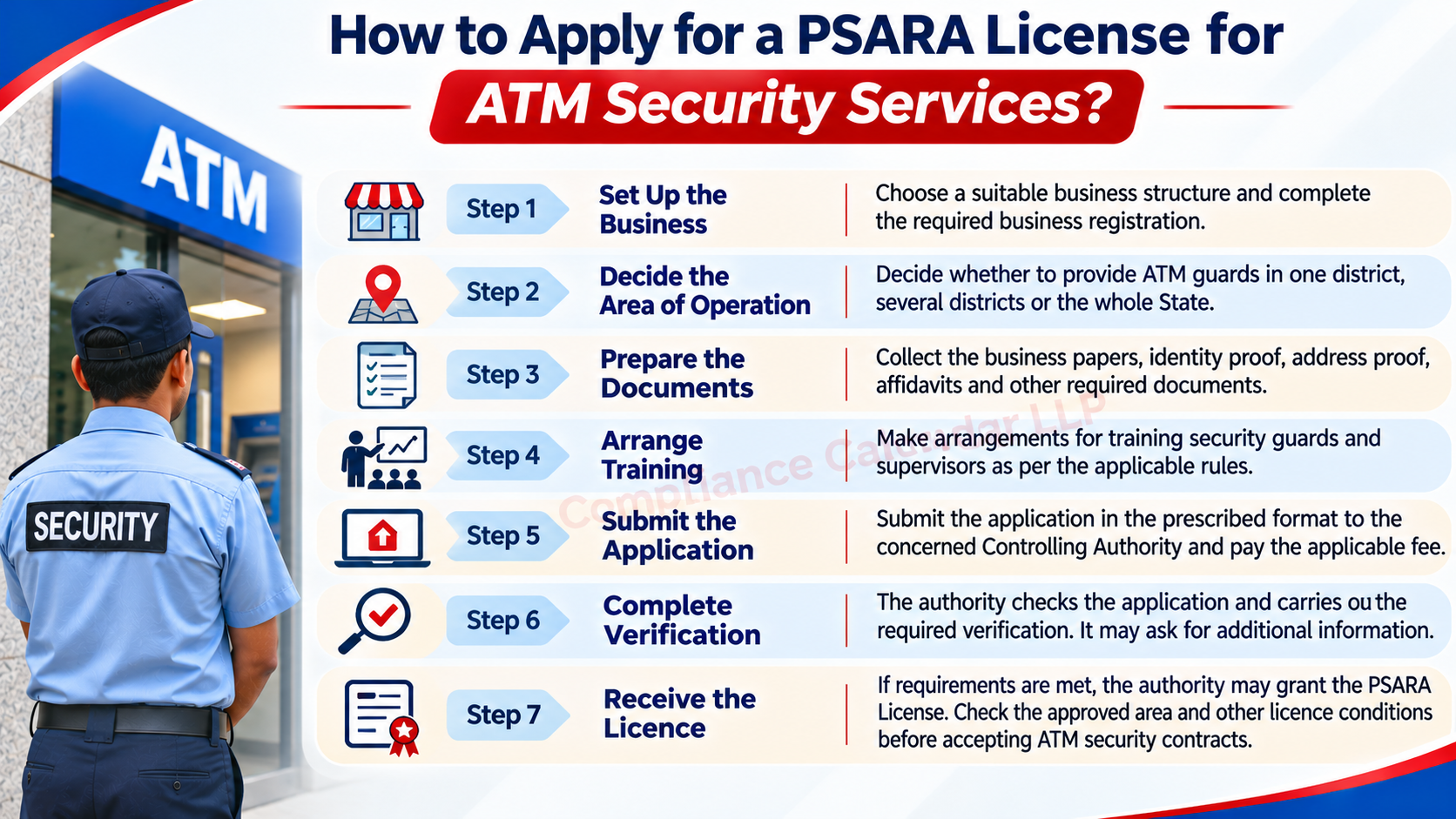
An ATM security agency must apply to the Controlling Authority of the State or Union Territory where it plans to provide private security services.
Step 1: Set Up the Business
Choose a suitable business structure and complete the required business registration. Keep the applicant's details and office address ready.
Step 2: Decide the Area of Operation
Decide whether the agency plans to provide ATM guards in one district, several districts or the whole State. The licence application should match the planned area of work.
Step 3: Prepare the Documents
Collect the business papers, identity proof, address proof, affidavits and other documents required by the authority.
Step 4: Arrange Training
Make the required arrangements for training security guards and supervisors. The agency must follow the applicable training rules.
Step 5: Submit the Application
Submit the application in the prescribed format to the concerned Controlling Authority. Pay the applicable fee and provide the required details.
Step 6: Complete Verification
The authority checks the application and carries out the required verification. It may ask for additional information or documents.
Step 7: Receive the Licence
If the applicant meets the requirements, the authority may grant the PSARA License. Before accepting ATM security contracts, the agency should check the approved area and other licence conditions.
For a complete explanation of the application steps, read: PSARA Licence Registration: Complete Process Guide.
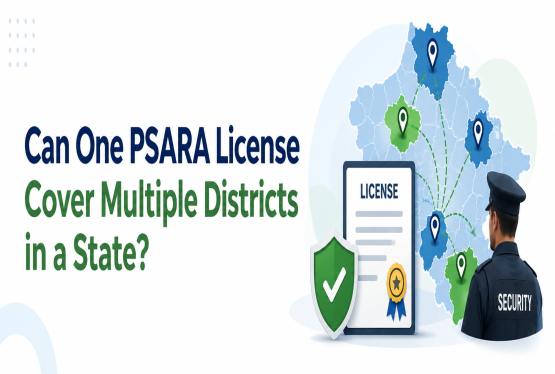
Can an ATM Security Agency Work in More Than One State?
Yes, an agency can provide ATM security services in more than one State, but it must have the required licence coverage for each State where it operates.
For example, suppose an agency has its main office in Delhi and receives a contract to provide guards at ATMs in Delhi, Haryana and Uttar Pradesh. It should check the licensing requirements in all three States and obtain the required licences before starting work there.
A licence issued for one State does not automatically allow the agency to provide services throughout India. The agency should also check whether its licence covers the districts where it plans to place guards.
This is especially important for agencies that work with banks or ATM operators that have locations in several States.
Responsibilities of an ATM Security Agency After Getting a PSARA License
Getting the licence is only the beginning. The agency must continue to follow the rules while providing security services.
|
Responsibility |
What the Security Agency Must Do |
|
Provide trained guards |
Ensure that guards complete the required training and meet the eligibility conditions. |
|
Check employee backgrounds |
Complete the required background verification before assigning guards to ATM locations. |
|
Issue identity cards |
Give guards the required photo identity cards. |
|
Maintain employee records |
Keep proper records of guards, supervisors and other staff. |
|
Arrange supervision |
Ensure that guards receive the supervision required under the applicable rules. |
|
Follow licence conditions |
Provide security services only in the approved area and follow all licence conditions. |
|
Renew the licence |
Apply for licence renewal before it expires. |
|
Report required changes |
Inform the concerned authority about changes wherever required by law or applicable rules. |
The agency should also keep clear records of guard duties, attendance and incidents. Good record-keeping helps the agency manage its work and respond to questions from clients or the licensing authority.
How Can Compliance Calendar Help with a PSARA License?
Starting an ATM security agency involves more than finding guards and getting contracts. The business must understand the licensing rules, prepare the required documents and arrange training and verification.
Compliance Calendar LLP helps businesses understand the PSARA requirements and prepare for the application process. Our assistance includes:
- Explaining the PSARA licensing requirements.
- Helping check the applicant's basic eligibility.
- Guiding the applicant on the required documents.
- Assisting with the application preparation.
- Helping identify the correct licensing area.
- Providing guidance on follow-up and additional information requested by the authority.
Whether you are starting a new security agency or planning to provide guards at ATM locations, our team can help you understand the steps involved.
Need assistance with a PSARA License for your ATM security guard agency? Contact Compliance Calendar at +91 9988424211 or email info@ccoffice.in for expert guidance.
Frequently Asked Questions (FAQs)
1. Is a PSARA License required for an ATM security guard agency?
Yes. A business that provides private security guards to banks or ATM operators generally needs a PSARA License under the Private Security Agencies (Regulation) Act, 2005.
2. Does every ATM need a separate PSARA License?
No. The licence is generally required by the private security agency providing the guards. An ATM does not need a separate PSARA License simply because a guard is posted there.
3. Can one security agency provide guards at multiple ATMs?
Yes. An agency can provide guards at multiple ATM locations if its licence covers the areas where it operates and it follows the applicable rules.
4. Can a bank hire an ATM security agency without a PSARA License?
A bank or ATM operator should check that the private security agency holds the required licence for the area where it provides guards.
5. Can an ATM security agency work in different States with one licence?
The agency must have the required licence coverage for each State where it provides private security services. A licence for one State does not automatically cover all other States.
6. What is the difference between ATM security and cash transportation?
ATM security involves guards watching the ATM area and reporting security problems. Cash transportation involves moving cash between banks, cash centres and ATMs. Cash transportation activities have additional rules under the 2018 Rules.
7. What documents are needed for an ATM security agency's PSARA License?
Common documents include business registration proof, PAN, identity proof, office address proof, applicant details, affidavits and training arrangement details. The exact list depends on the State.
8. Can a new company apply for a PSARA License for ATM security services?
Yes. A new eligible business can apply after meeting the requirements under the PSARA Act and the applicable State rules.
9. How long is a PSARA License valid?
A PSARA License is generally valid for five years, unless it is suspended or cancelled earlier. The agency must follow the renewal process before expiry.
10. Can Compliance Calendar help with a PSARA License for ATM security services?
Yes. Compliance Calendar LLP can help applicants understand the requirements, prepare documents and complete the application process. The final decision on granting the licence rests with the concerned Controlling Authority.
Article last updated on : 10 Nov 2026.










_learn_crop10_thumb.jpg)