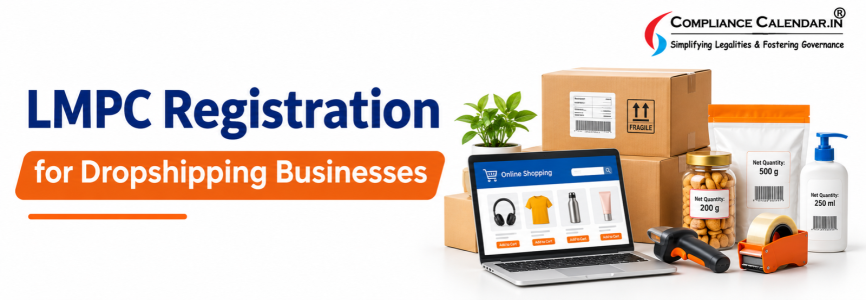



Dropshipping has made it easier to start an online business without maintaining a warehouse or purchasing large quantities of stock. An entrepreneur can create a Shopify store, list products from suppliers and arrange direct delivery to customers. However, selling products without physically handling them does not automatically remove legal responsibilities.
Consider a Delhi-based entrepreneur selling imported kitchen accessories through a dropshipping website. The supplier handles packaging and shipping, while the entrepreneur manages advertisements, customer orders and payments. When a customer complains about missing MRP and importer details, an important question arises: who is legally responsible for the product information? This is where LMPC Registration for Dropshipping Businesses becomes important.
Under the Legal Metrology Act, 2009 and the Legal Metrology (Packaged Commodities) Rules, 2011, certain manufacturers, packers and importers must obtain registration and ensure that pre-packaged products carry accurate declarations. Online sellers may also have separate responsibilities concerning product listings and consumer information.
What is LMPC Registration for Dropshipping Businesses?
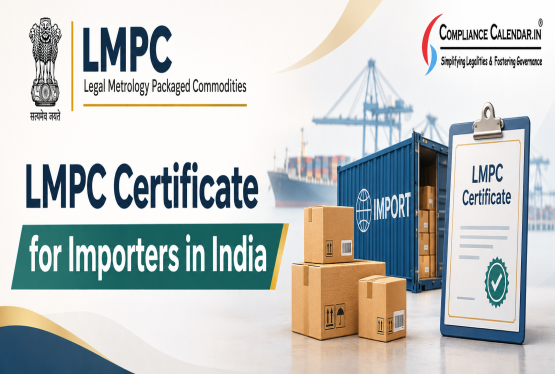
LMPC Registration stands for Legal Metrology Packaged Commodities. Registration under Rule 27 of the Legal Metrology (Packaged Commodities) Rules, 2011 applies to covered businesses that manufacture, pre-pack or import commodities intended for sale, distribution or delivery.
A dropshipping business generally accepts customer orders and forwards them to a supplier, who dispatches the products directly to customers. However, the legal requirement depends on the seller's actual role rather than the dropshipping business model.
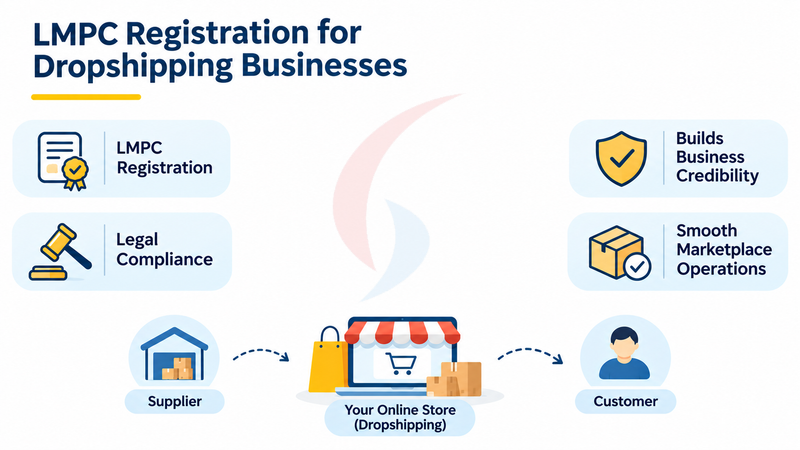
For example, a seller purchasing properly labelled products from an Indian supplier and reselling them unchanged may not need separate Rule 27 registration merely because the products are sold through Shopify. In contrast, a business importing pre-packaged products into India or arranging retail packing under its own responsibility may need registration.
For a broader understanding, read our LMPC Registration: Legal Metrology Compliance Guide.
Is LMPC Registration Mandatory for Dropshipping in India?
LMPC Registration is not automatically mandatory for every dropshipping seller. The requirement depends on who imports, manufactures or packs the products and how responsibility is allocated under the applicable law.
|
Dropshipping Business Model |
LMPC Registration Position |
|
Domestic Reselling |
Not automatically required when properly labelled Indian products are resold unchanged. |
|
International Dropshipping |
Importer registration may be required where the business is the importer of covered pre-packaged goods. |
|
Private-Label Dropshipping |
Depends on who manufactures, packs, imports and is identified on the package. |
|
Repacking Products |
Registration generally applies where the business undertakes covered retail packing or repacking. |
|
Marketplace Dropshipping |
Depends on actual business activities, not merely selling through Amazon or Flipkart. |
A business should review supplier agreements, import documents, invoices and product labels before determining whether Rule 27 registration applies.
Laws and Legal Provisions Governing Dropshipping LMPC Compliance
The legal requirements arise mainly from the Legal Metrology Act, 2009 and the Packaged Commodities Rules, 2011, as amended.
|
Applicable Provision |
Legal Requirement |
|
Governs declarations on prescribed pre-packaged commodities. |
|
|
Legal Metrology Act, 2009 |
Addresses offences concerning non-standard packages and related declarations. |
|
Specifies mandatory package declarations. |
|
|
Rule 6(10) |
Governs display of prescribed declarations on e-commerce platforms. |
|
Rule 27 |
Prescribes registration of covered manufacturers, packers and importers. |
|
Rule 32 |
Addresses specified contraventions of the Packaged Commodities Rules. |
|
Establishes applicable consumer protection duties for e-commerce entities and sellers. |
|
|
Applies to relevant import declarations and customs clearance. |
A common mistake is treating LMPC Registration as a general e-commerce licence. It is a specific registration requirement for covered business activities. Even where separate registration is unnecessary, package labels and online listings may still need to comply with Legal Metrology rules.
A Practical Example: Dropshipping Through Shopify
Imagine UrbanNest Store, a fictional Jaipur-based business selling home organisation products through Shopify. Initially, UrbanNest partners with an Indian manufacturer. The supplier packs the goods, provides compliant labels and ships products directly to customers. UrbanNest does not import or repack the goods.
In this arrangement, the business is not automatically required to obtain a separate Rule 27 certificate simply because it operates the website. Six months later, UrbanNest starts importing storage organisers from China in its own name. Its role has changed from domestic reseller to importer.
The business must now examine importer registration, country-of-origin declarations, MRP labelling and customs documentation before selling the imported products in India. This example demonstrates why LMPC compliance should be reviewed whenever the supply chain changes.
Documents Required for LMPC Registration
The documents depend on whether the dropshipping business applies as an importer, manufacturer or packer.
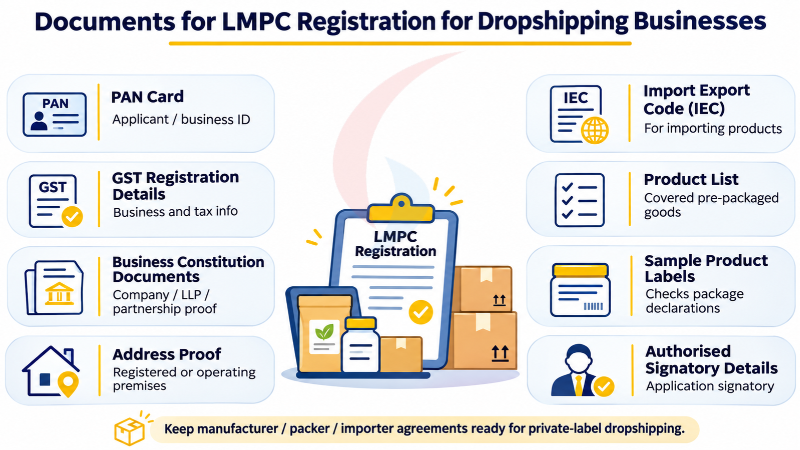
|
Required Document |
Purpose |
|
PAN Card |
Identifies the applicant or business. |
|
GST Registration Details |
Confirms applicable business and tax information. |
|
Business Constitution Documents |
Establishes company, LLP or partnership status. |
|
Address Proof |
Verifies the registered or operating premises. |
|
Relevant for businesses importing products. |
|
|
Product List |
Identifies the covered pre-packaged commodities. |
|
Sample Product Labels |
Helps verify mandatory package declarations. |
|
Authorised Signatory Details |
Identifies the person submitting the application. |
A private-label dropshipping business should also retain agreements identifying the manufacturer, packer and importer. These records help establish responsibility when products are manufactured and dispatched by third parties.
LMPC Registration Process for Dropshipping Businesses
The registration process depends on the applicant's activities and the procedure followed by the competent Central or State Legal Metrology authority.
|
Step |
Registration Procedure |
|
1. Identify Business Activity |
Determine whether the business imports, manufactures, packs or only resells products. |
|
2. Check Product Applicability |
Verify whether the commodities fall under the Packaged Commodities Rules. |
|
3. Prepare Documents |
Collect business records, IEC where applicable, product details and labels. |
|
4. Review Packaging |
Check MRP, net quantity, importer details and other mandatory declarations. |
|
5. Submit Application |
Apply through the appropriate Legal Metrology authority or available government portal. |
|
6. Pay Fees |
Pay the applicable government registration charge. |
|
7. Obtain Registration |
Respond to queries and receive the certificate after approval. |
The National Single Window System may provide access to relevant registration services where available. Applicants should follow the current procedure of the authority handling their application.
LMPC Registration Fees, Timeline and Validity
Rule 27 prescribes a government registration application fee of Rs 500 and an alteration fee of Rs 100 under the applicable provisions. The rule generally provides a 90-day period for a covered business to apply after commencing the relevant pre-packing or importing activity. However, product labelling obligations should be checked before offering goods for sale.
Processing time varies according to the authority and completeness of the application. The 2026 amendments also changed the Rule 27 validity arrangements, with registration intended to continue until cancellation, subject to applicable requirements. Applicants should verify current portal instructions and certificate conditions before relying on older renewal guidance. Professional consultancy charges are separate from government fees.
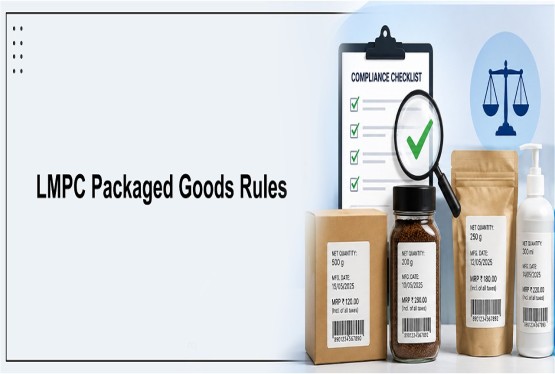
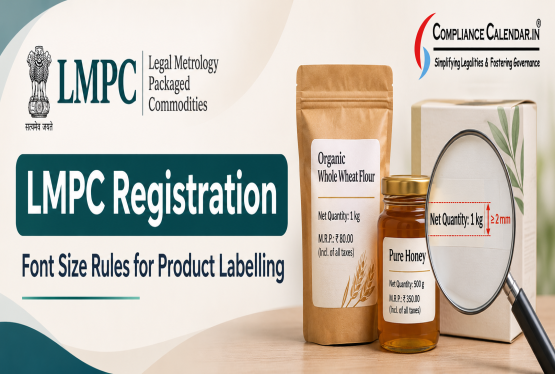
Mandatory Labelling Requirements for Dropshipping Products
Even if a supplier dispatches an order directly, covered retail packages must carry the declarations prescribed under Rule 6. Dropshipping sellers should check the actual packaging and not rely only on photographs supplied by wholesalers.
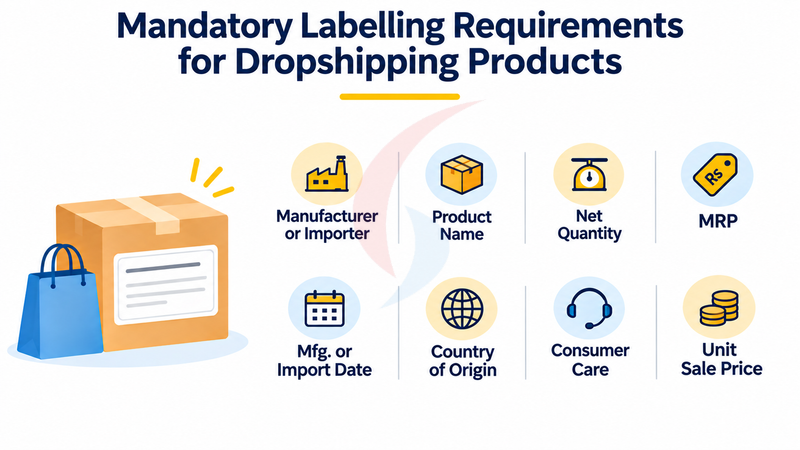
|
Mandatory Declaration |
Requirement |
|
Manufacturer or Importer |
Name and address of the responsible business, as applicable. |
|
Product Name |
Common or generic name of the commodity. |
|
Net Quantity |
Weight, volume, length or number of units, as applicable. |
|
MRP |
Maximum Retail Price inclusive of applicable taxes. |
|
Manufacturing or Import Date |
Prescribed month and year details, where applicable. |
|
Country of Origin |
Required for imported packaged commodities. |
|
Consumer Care |
Required contact information for consumer complaints. |
|
Unit Sale Price |
Required wherever the relevant provisions apply. |
Rule 6(10) also requires applicable product declarations to appear on the e-commerce platform, except the month and year of manufacture or packing specified in that provision.
For additional guidance, read Legal Metrology Registration for Startups and D2C Brands.
Latest LMPC and Dropshipping Updates in 2026
Several Legal Metrology developments affect online sellers and businesses importing packaged goods.
|
2026 Update |
Importance for Dropshippers |
|
Introduced country-of-origin search and sorting requirements for e-commerce entities selling imported products, effective 1 July 2026. |
|
|
Provided for mandatory declarations at specified bonded warehouses operated by eligible AEO Tier-2 and Tier-3 operators. |
|
|
Introduced specified vegetarian and non-vegetarian origin marking requirements for covered cosmetics and toiletries. |
|
|
Addressed uniform implementation of mandatory package declaration requirements. |
|
|
Introduced procedural reforms and an Improvement Notice mechanism for specified first-time contraventions. |
These developments do not mean every dropshipping business needs a new certificate. Their relevance depends on the products, supplier arrangements and applicable legal obligations.
Example: Imported Skincare Products
Suppose a Mumbai entrepreneur sells imported face creams under a private label. The overseas supplier prints the packaging, while the entrepreneur imports and markets the products in India. The business must review LMPC importer requirements, country-of-origin declarations and applicable cosmetics regulations. Depending on the packaging, relevant 2026 amendments may also require changes to product labels.
If the products use plastic packaging, separate Extended Producer Responsibility obligations may arise. Read our guide on EPR Registration for Importers.
Why Choose Compliance Calendar LLP ?
At Compliance Calendar LLP, we assist dropshipping businesses, online sellers, importers and D2C brands with Legal Metrology documentation and registration requirements.
|
Our Services |
How We Help |
|
Applicability Assessment |
Identify whether the business requires Rule 27 registration. |
|
Document Preparation |
Assist with registration records and supporting documents. |
|
Packaging Review |
Guide businesses on applicable MRP, quantity and label declarations. |
|
Application Support |
Assist with LMPC filing and regulatory queries. |
|
Ongoing Compliance |
Provide guidance on changes to product categories and business details. |
At Compliance Calendar LLP, we provide professional guidance on eligibility, documentation, application procedures, and Legal Metrology requirements. Explore our LMPC Registration Services for expert assistance with your registration and compliance needs.
For personalised support, contact Compliance Calendar LLP via 9988424211 or email us at info@ccoffice.in.
Frequently Asked Questions (FAQs)
Q1. Is LMPC Registration mandatory for dropshipping in India?
Ans: LMPC Registration is required when a dropshipping business undertakes covered manufacturing, packing or importing activities under Rule 27. Businesses that only resell properly labelled products from Indian suppliers may not need separate registration. The actual business arrangement determines the requirement.
Q2. Can I start a dropshipping business without an LMPC certificate?
Ans: Yes, depending on your business activities. If you only resell legally packaged products from Indian suppliers without importing or repacking them, separate Rule 27 registration may not be necessary. However, you must still follow applicable labelling and consumer protection requirements.
Q3. Do Shopify dropshipping stores need LMPC Registration?
Ans: Shopify stores are not automatically required to obtain LMPC Registration merely because they sell online. The requirement depends on whether the business imports, manufactures or packs covered products. Online listings must also contain applicable mandatory product declarations.
Q4. Is LMPC Registration required for international dropshipping?
It may be required when the Indian dropshipping business acts as the importer of covered pre-packaged goods. Businesses should examine customs documents, supplier arrangements and importer responsibilities. Other import and product-specific regulations may also apply.
Q5. What documents are required for LMPC Registration?
Ans: Common documents include PAN, GST details, business registration proof, address proof, product information and sample labels. Importers generally need an IEC. Additional records may be required depending on the applicant's business category and registration authority.
Q6. What is the government fee for LMPC Registration?
Ans: Rule 27 prescribes a registration application fee of Rs 500 and an alteration fee of Rs 100 under the applicable provisions. Other government services or professional assistance may involve additional charges. Applicants should confirm the payable amount before applying.
Q7. Who is responsible for LMPC compliance in dropshipping?
Ans: Responsibility depends on who manufactures, packs, imports and markets the goods and how the product is labelled. A supplier's registration does not automatically cover every seller. Businesses should review their contractual arrangements and applicable legal obligations.
Q8. What are the mandatory labelling requirements for dropshipping products?
Ans: Covered packages generally require the product name, manufacturer or importer details, net quantity, MRP and consumer care information. Additional declarations may apply depending on the commodity. Relevant product information must also appear on e-commerce listings.
Q9. What are the latest LMPC updates for dropshipping businesses in 2026?
Ans: Important developments include country-of-origin filtering for imported goods sold online, changes relating to specified imported packages and cosmetics labelling, and Jan Vishwas procedural reforms. Businesses should assess the amendments applicable to their products and operations.
Q10. Can Compliance Calendar LLP help with LMPC Registration for dropshipping?
Ans: Yes. Compliance Calendar LLP assists dropshipping businesses with registration applicability, documentation, packaging compliance reviews and application support. Businesses can explore our LMPC Registration Services or contact our team for guidance.
Article last updated on : 17 Nov 2026.










_learn_crop10_thumb.jpg)