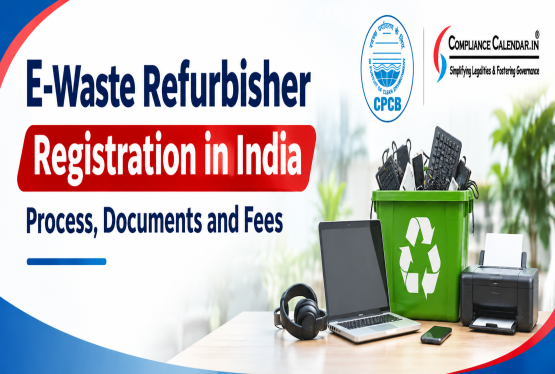
Imagine an Indian company importing premium headphones from South Korea. Each headphone comes wrapped in a thin plastic film, placed inside a moulded plastic tray, packed in a printed cardboard box and finally protected by plastic wrapping during transportation. The importer receives the shipment, clears Customs and sells the products through online marketplaces.
- But what happens to all this packaging after the customer opens the box?
- Who is responsible for its collection and recycling?
- Does every layer need separate EPR reporting?
These questions are important because EPR for Imported Products with Multiple Packaging is regulated under India's Plastic Waste Management Rules, 2016, as amended.
Extended Producer Responsibility (EPR) requires covered importers to meet prescribed waste-management obligations for plastic packaging introduced into the Indian market. A single imported product may contain several packaging materials, each requiring a different classification. In 2026, changes to recycled-content obligations and CPCB's registration system have made accurate packaging records even more important.
What is EPR for Imported Products with Multiple Packaging?
EPR for imported products with multiple packaging refers to the environmental responsibility arising when goods enter India with plastic packaging in one or more forms.
For example, an imported skincare product may contain a plastic bottle, plastic cap, shrink sleeve, protective film and secondary plastic wrapping. Although these materials arrive with one product, they do not necessarily fall under the same plastic packaging category.
Under Schedule II of the Plastic Waste Management Rules, the relevant packaging must be identified, classified and accounted for when calculating the importer's applicable obligations.
Multiple packaging does not automatically mean multiple EPR registrations. One eligible importing entity may report different plastic packaging categories under its applicable registration. However, each packaging material must be assessed correctly.
Businesses importing packaged products can also read our guide on EPR Plastic Registration for Importers and Brands to understand the registration requirements.
Who is Responsible for EPR on Imported Products?
Under the EPR Guidelines, an importer includes a person importing plastic packaging or products packed in plastic. Therefore, EPR responsibility is not limited to companies importing empty plastic bottles or packaging materials. An electronics importer, cosmetics distributor or online retailer bringing covered packaged products into India may also have obligations.
|
Business Model |
EPR Responsibility |
|
Direct Importer |
Responsible for applicable plastic packaging EPR obligations on imported goods. |
|
Importer of Plastic Packaging |
Must account for eligible packaging material imported into India. |
|
Indian Brand Owner |
May have separate obligations for packaging introduced under its brand. |
|
Foreign Manufacturer |
May supply packaging information, but this does not automatically replace the Indian importer's obligations. |
|
Marketplace Seller |
Responsibility depends on whether it imports goods, owns the brand or performs another regulated activity. |
The importer should identify who appears as the importer on customs records and who is legally responsible for introducing the packaging into India. Where the importer supplies packaging or packaged products to another registered entity, any permissible adjustment or transfer of obligations must follow the applicable CPCB provisions. The same packaging quantity should not be deducted or claimed twice without a valid legal basis.
Laws and Legal Provisions Governing EPR for Imported Packaging
The principal requirements arise under the Environment (Protection) Act, 1986 and the Plastic Waste Management Rules, 2016, as amended.
|
Applicable Law or Provision |
Key Requirements |
|
Environment (Protection) Act, 1986 |
Sections 3, 6 and 25 provide environmental protection and rulemaking powers; Section 15 addresses applicable contraventions. |
|
Plastic Waste Management Rules, 2016 |
Establish requirements for plastic waste management and regulated entities. |
|
Rule 9 |
Deals with Extended Producer Responsibility for plastic packaging. |
|
Rule 13 |
Governs registration requirements for specified entities. |
|
Schedule II – EPR Guidelines |
Prescribes packaging categories, EPR targets, recycling, reuse and reporting obligations. |
|
Plastic Waste Management Amendment Rules, 2024 |
Introduced changes to regulated entities, definitions and packaging requirements. |
|
Plastic Waste Management Amendment Rules, 2026 |
Revised recycled-content obligations and related compliance conditions. |
|
Customs Act, 1962 |
Sections 17 and 46 address customs assessment and Bills of Entry. |
The EPR Guidelines for plastic packaging were notified on 16 February 2022 and subsequently amended. Businesses should apply the updated rules rather than relying only on the original 2016 notification.
Understanding Different Plastic Packaging Categories
One of the biggest challenges for importers is identifying which packaging material belongs to which category. NSchedule II distinguishes rigid, flexible, multilayered and specified compostable or biodegradable plastic packaging.
|
EPR Category |
Packaging Type |
Examples |
|
Category I |
Rigid plastic packaging |
Plastic bottles, jars, trays and containers |
|
Category II |
Flexible plastic packaging |
Plastic films, pouches, wrappers and plastic-only laminated sheets |
|
Category III |
Multilayered packaging containing plastic and non-plastic material |
Plastic-aluminium laminates and paper-plastic composite packaging |
|
Category IV |
Specified compostable plastic packaging |
Certified compostable packaging materials |
|
Category V |
Specified biodegradable plastic packaging |
Qualifying biodegradable plastic materials under amended provisions |
An important distinction is that several layers of different plastics can still fall under Category II. Category III applies where the packaging contains at least one plastic layer and at least one layer of material other than plastic.
Also, a cardboard box without a plastic component is not automatically plastic packaging. However, a cardboard-plastic laminate may require Category III assessment. The classification should follow the actual material composition, not merely the packaging's appearance.
Practical Example: A Delhi Electronics Importer
Consider TechBridge Imports, a fictional Delhi company importing 10,000 wireless speakers from China. Each speaker arrives with a rigid plastic protective tray, flexible plastic wrapping and a cardboard box. The company initially records only the flexible wrapping because it assumes the cardboard box and inner tray are secondary packaging.
During a compliance review, the company discovers that the plastic tray also needs assessment. The business prepares a packaging material breakdown from its overseas supplier and separates the rigid plastic trays from flexible plastic films.
This gives the importer a more accurate record of the plastic packaging introduced into India. The example shows why an importer should examine every packaging component rather than treating the entire shipment as one packaging category.
How to Calculate EPR Obligations for Multiple Packaging
Packaging quantities are generally calculated by identifying the plastic packaging weight associated with imported products and applying the relevant Schedule II requirements.
For a product containing several packaging types, the importer should calculate the category-wise quantities separately.
Consider this illustrative example:
|
Packaging Component |
Weight per Product |
EPR Category |
|
Rigid plastic tray |
40 grams |
Category I |
|
Flexible plastic wrapper |
15 grams |
Category II |
|
Plastic-aluminium laminate pouch |
10 grams |
Category III |
|
Ordinary cardboard box |
60 grams |
Not counted as plastic packaging if it contains no plastic |
For 10,000 imported units, the packaging quantities would be 400 kg of Category I, 150 kg of Category II and 100 kg of Category III material.
For Category III, further material composition records may be necessary because certain obligations are calculated by reference to the weight of the plastic layers.
Important: This example illustrates packaging measurement, not the final statutory EPR target. The actual obligation depends on the relevant entity category, applicable reference data, exemptions and Schedule II calculation provisions.
Documents Required for EPR Registration of Imported Products
Importers should maintain documents establishing business identity, import activities and the type and quantity of plastic packaging involved.
|
Required Document |
Purpose |
|
PAN and GST Certificate |
Verify business identity. |
|
Certificate of Incorporation or Partnership Deed |
Establish legal constitution. |
|
Establish importer identification. |
|
|
Authorised Signatory Details |
Identify the person handling registration. |
|
Bills of Entry and Import Invoices |
Support import quantities and shipment records. |
|
Product and Packaging Details |
Identify packaging components, materials and weights. |
|
Supplier Packaging Specifications |
Establish category-wise material composition. |
|
Previous EPR Records |
Support historical declarations and compliance verification. |
|
Relevant Business Address Details |
Identify registered premises and operating locations. |
A supplier's packing list may describe the number of cartons but not the actual weight of plastic packaging. Importers should therefore obtain additional packaging specifications where necessary.
For related compliance requirements, read our guide on EPR Registration for Importers.
EPR Registration Process for Imported Products
EPR Registration is completed through the Central Pollution Control Board's designated electronic system. Since 28 June 2026, the previous standalone plastic EPR portal has been discontinued, and its data migrated to the new Common EPR Portal.
|
Step |
Registration Procedure |
|
Step 1: Identify Applicability |
Check whether the business qualifies as an importer under the Plastic Waste Management Rules. |
|
Step 2: Classify Packaging |
Separate rigid, flexible, multilayered and other applicable packaging categories. |
|
Step 3: Prepare Documents |
Collect IEC, PAN, GST, import invoices and packaging information. |
|
Step 4: Access CPCB Portal |
Visit the Common EPR Portal. |
|
Step 5: Complete Application |
Enter business details and category-wise packaging quantities. |
|
Step 6: Upload Documents |
Submit the prescribed records and declarations. |
|
Step 7: Pay Government Fees |
Pay the applicable registration charges. |
|
Step 8: Obtain Registration |
Respond to queries and obtain the registration after approval. |
Importers should complete applicable registration formalities before undertaking regulated import activities. Customs authorities may verify EPR registration for relevant consignments.
EPR Registration Fees for Importers in 2026
CPCB's published fee schedule for Producers, Importers and Brand Owners (PIBOs) provides the following registration charges.
|
Annual Plastic Waste Quantity |
Published Application Fee |
|
Below 1,000 tonnes |
Rs 10,000 |
|
1,000–10,000 tonnes |
Rs 20,000 |
|
Above 10,000 tonnes |
Rs 50,000 |
The published schedule also provides for annual processing charges of 25% of the application fee. These amounts come from CPCB's registration guidance. Applicants should verify the current fee displayed on the Common EPR Portal because processing arrangements and applicable charges may change.
Latest EPR Updates for Imported Packaging in 2026
The Plastic Waste Management (Amendment) Rules, 2026, notified through G.S.R. 237(E), dated 31 March 2026, introduced important changes concerning mandatory recycled content in plastic packaging.
For importers, the amended Schedule II specifies the following category-wise requirements:
|
Packaging Category |
FY 2025–26 |
FY 2026–27 |
|
Category I – Rigid Plastic |
30% |
40% |
|
Category II – Flexible Plastic |
10% |
10% |
|
Category III – Multilayered Plastic |
5% |
5% |
These figures concern the recycled-content obligation, not the recycling target for waste collection.
Under the amended importer provisions, recycled plastic already present in imported packaging cannot be counted directly towards fulfilment of this obligation. Instead, the importer must fulfil the quantitative obligation through the prescribed purchase of equivalent certificates from eligible entities with excess recycled-content compliance, using the CPCB mechanism when available.
The amendment also provides an exemption where recycled plastic use is prohibited by applicable law, mandatory Indian Standards or specified regulatory requirements. The legal basis for claiming such an exemption must be submitted in the annual return.
For Category III, the recycled-content target is limited to the weight of plastic layers within the multilayered packaging.
Example: Imported Food Products with Multiple Packaging
Suppose a Mumbai company imports premium chocolates packed in plastic trays, laminated wrappers and printed cardboard boxes. The importer must classify the packaging correctly and assess the recycled-content obligations for the applicable categories.
However, materials that directly contact food must also comply with applicable FSSAI requirements. If an applicable law prohibits recycled content in a particular packaging application, the importer must examine the statutory exemption and maintain supporting evidence. The business cannot automatically claim an exemption merely because the product is food.
Other Important 2026 Compliance Developments
The migration to the Common EPR Portal is another significant operational change.
|
Development |
Importance for Importers |
|
31 March 2026 Amendment |
Revised category-wise recycled-content obligations and related compliance provisions. |
|
28 June 2026 Portal Migration |
The standalone plastic EPR portal was discontinued, with data moved to the Common EPR Portal. |
|
Packaging Verification |
Importers must maintain reliable material composition and quantity records. |
|
Annual Compliance |
Registered importers must fulfil applicable targets and reporting obligations. |
|
Customs Verification |
Relevant plastic EPR registration details may be examined during import clearance. |
Importers should use the new CPCB portal for current application instructions and regulatory notices rather than relying on outdated screenshots of the previous system.
Why Choose Compliance Calendar LLP for EPR Registration?
Businesses importing products with multiple packaging materials often face difficulties identifying the correct EPR categories and preparing accurate quantity records.
At Compliance Calendar LLP, we assist importers, brand owners and other regulated businesses with EPR registration and related compliance documentation
|
Our Services |
How We Help |
|
EPR Applicability Assessment |
Identify registration requirements for imported packaged products. |
|
Packaging Classification |
Assist with understanding rigid, flexible and multilayered packaging categories. |
|
Documentation Support |
Help prepare importer details, product information and packaging records. |
|
CPCB Registration |
Support applications through the Common EPR Portal. |
|
Annual Compliance Guidance |
Assist with reporting requirements and applicable EPR records. |
|
Regulatory Updates |
Help businesses understand relevant changes to plastic waste rules. |
For professional assistance, explore our EPR Plastic Waste Registration Services or EPR Registration Guide for 2026.
Contact Compliance Calendar LLP: 9988424211 or info@ccoffice.in
Frequently Asked Questions (FAQs)
Q1. Is EPR Registration mandatory for imported products with plastic packaging?
Ans: Importers bringing covered plastic packaging or products packed in plastic into India are generally required to obtain EPR Registration under the Plastic Waste Management Rules. The requirement can apply even when the imported product itself is not made of plastic. Applicability depends on the actual business activity and relevant regulations.
Q2. Do importers need separate EPR Registration for each packaging layer?
Ans: No, separate registration is not automatically required for every packaging layer. An importer may report multiple plastic packaging categories under its applicable registration. However, each packaging component must be classified and recorded accurately for EPR reporting and target calculations.
Q3. Which EPR categories apply to imported multilayer packaging?
Ans: Category I covers rigid plastic, Category II covers flexible plastic packaging, and Category III covers multilayered packaging containing plastic and non-plastic materials. Specified compostable and biodegradable packaging falls under other applicable categories. Classification depends on material composition rather than appearance alone.
Q4. Is cardboard packaging included in plastic EPR calculations?
Ans: Ordinary cardboard packaging without plastic is not generally counted as plastic packaging under the Plastic Waste Management Rules. However, cardboard combined with plastic layers may fall within Category III. Importers should examine the actual material composition before excluding any packaging component.
Q5. How are EPR targets calculated for imported products with multiple packaging?
Ans: The importer must identify the relevant packaging categories and calculate the applicable quantities under Schedule II. Different categories may attract different recycling, processing and recycled-content requirements. Accurate supplier specifications and import records are important for calculating obligations correctly.
Q6. What documents are required for EPR Registration of imported products?
Ans: Common documents include IEC, PAN, GST registration, business constitution records, import invoices and authorised signatory details. Importers also need information about packaging materials, categories and quantities. Additional records may be required depending on the applicable portal procedure.
Q7. What are the EPR Registration fees for importers in 2026?
Ans: CPCB's published application fee schedule lists Rs 10,000, Rs 20,000 and Rs 50,000 based on annual plastic waste quantity slabs. Annual processing charges are separately prescribed. Importers should verify the payable amount through the current Common EPR Portal.
8. What are the latest EPR updates for imported plastic packaging in 2026?
Ans: The March 2026 amendment revised mandatory recycled-content targets, including 40% for Category I, 10% for Category II and 5% for Category III for FY 2026–27. The former standalone plastic EPR portal was also discontinued in June 2026, with data moved to the Common EPR Portal.
Q9. Can recycled plastic already used in imported packaging meet EPR requirements?
Ans: Under the amended 2026 importer provisions, recycled content present in imported plastic packaging does not directly count towards the prescribed recycled-content obligation. The rules instead provide for purchasing equivalent certificates through the specified mechanism. Applicable statutory exemptions must be properly supported.
Q10. Can Compliance Calendar LLP assist with EPR Registration for imported products?
Ans: Yes. Compliance Calendar LLP assists importers with EPR applicability assessment, documentation, packaging classification and CPCB registration procedures. Businesses can also seek guidance on category-wise reporting and compliance requirements.
Article last updated on : 18 Nov 2026.











_learn_crop10_thumb.jpg)