


A cosmetic brand in Delhi may sell thousands of shampoo bottles every month without owning a manufacturing unit. The products are manufactured by a factory in Haryana, packed in plastic bottles supplied by another company, and distributed under the brand owner's name. The arrangement makes commercial sense, but it raises an important legal question: who is responsible for the plastic waste generated after customers use the products?
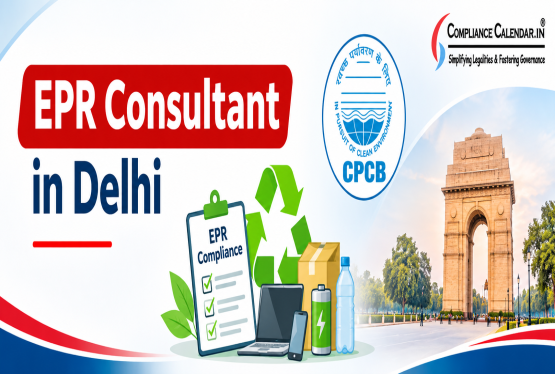
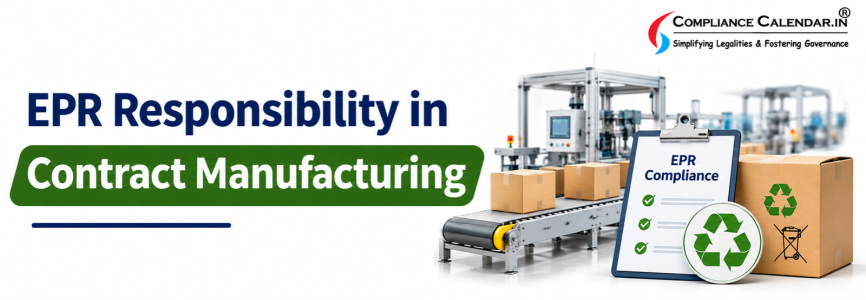
This is where Extended Producer Responsibility (EPR) in contract manufacturing becomes important. Under India's Plastic Waste Management Rules, businesses cannot assume that outsourcing production automatically transfers their environmental obligations to another company.
The brand owner, contract manufacturer, plastic packaging producer and importer may each have responsibilities depending on their actual activities. The 2024 amendments expressly included certain contract manufacturing arrangements within the definition of a producer, while CPCB guidance also addresses the allocation of EPR liability between third-party manufacturers and brands.
What is EPR Responsibility in Contract Manufacturing?
Extended Producer Responsibility is a legal obligation requiring specified businesses to take responsibility for the environmentally sound management of waste associated with products or packaging they introduce into the market.
Contract manufacturing refers to an arrangement in which one business hires another company to manufacture or package products on its behalf. It is common in cosmetics, pharmaceuticals, food products, electronics, personal care and FMCG businesses.
Under the Plastic Waste Management Rules, 2016, as amended, EPR responsibility must be determined by examining the role of each participant. A brand owner may have obligations for plastic packaging sold under its brand, while the contract manufacturer may separately qualify as a producer under the applicable definition.
The important point is that a private manufacturing agreement cannot automatically cancel statutory EPR obligations. This article primarily addresses plastic packaging EPR. Contract-manufactured electronic equipment, batteries and other regulated products may also attract separate waste-management requirements.
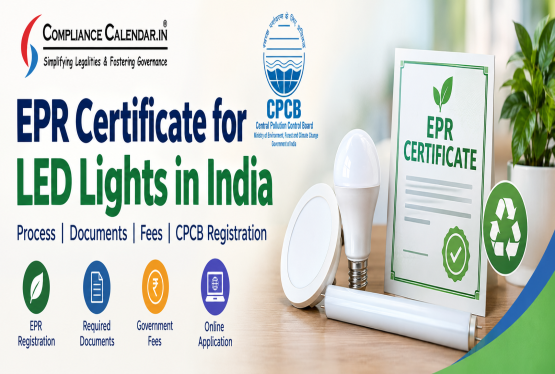
For a general introduction, read our guide on EPR Registration in India: Process and Documents 2026.
Laws and Legal Provisions Governing EPR in Contract Manufacturing
EPR obligations for plastic packaging are principally governed by the Environment (Protection) Act, 1986 and the Plastic Waste Management Rules, 2016, together with subsequent amendments.
|
Applicable Law or Provision |
Important Requirements |
|
Sections 3, 6 and 25 provide powers relating to environmental protection and rulemaking; Section 15 addresses prescribed contraventions. |
|
|
Establish responsibilities for plastic packaging, waste management and regulated entities. |
|
|
Rule 3 |
Defines producers, brand owners and other relevant participants, including specified contract manufacturing arrangements. |
|
Rule 9 |
Addresses EPR and responsibility for plastic packaging introduced into the market. |
|
Govern applicable registration and EPR compliance requirements. |
|
|
Introduced detailed targets, registration, recycling obligations, certificates and reporting provisions. |
|
|
Expanded producer definitions and registration responsibilities. |
|
|
Revised recycled-content, marking, auditing and related compliance provisions. |
The EPR Guidelines were introduced through the Plastic Waste Management (Amendment) Rules, 2022. The detailed requirements are contained in Schedule II and must be read together with later amendments.
Importance of the 2024 Amendment
The 14 March 2024 amendment changed the definition of a producer to include persons engaged in manufacturing plastic packaging, intermediate materials used for packaging, and persons involved in contract manufacturing of products using plastic packaging for brand owners or similar arrangements.
This change is particularly relevant because a factory cannot assume that contract manufacturing has no regulatory consequences merely because the products are sold under another company's trademark.
However, the specific EPR target must still be assessed under Schedule II, CPCB guidance, transaction records and the applicable entity category.
Who is Responsible for EPR: Brand Owner or Contract Manufacturer?
The division of responsibility depends on who manufactures the packaging, who uses it, who imports it and who introduces the packaged products into the Indian market.
|
Business Entity |
EPR Responsibility |
|
Brand Owner |
Generally responsible for applicable EPR obligations relating to products sold under its brand using plastic packaging. |
|
Contract Manufacturer |
May qualify as a producer under the amended rules; registration and target obligations require assessment of its activities. |
|
Plastic Packaging Manufacturer |
Has producer responsibilities for applicable plastic packaging manufacturing activities. |
|
Importer |
Responsible for applicable EPR obligations relating to imported packaging and covered packaged products. |
|
Plastic Waste Processor |
Must fulfil applicable registration, waste-processing, certificate and reporting requirements. |
CPCB's published FAQs clarify that where a third-party manufacturer does not have an associated brand name, the relevant EPR liability is to be taken by the concerned brand owners or producers to whom the products are sold.
This clarification is important, but it should not be interpreted as a blanket exemption from registration for every contract manufacturer. The amended legal definition, manufacturing activities and registration requirements must also be considered.
Practical Example: A Cosmetic Brand and Its Contract Manufacturer
Imagine GlowPure Cosmetics, a fictional skincare business operating in Delhi. GlowPure develops its products, owns the brand and sells moisturisers through online marketplaces. Manufacturing is outsourced to Shakti Formulations, a facility in Haryana.vShakti Formulations fills the moisturisers into plastic jars and dispatches finished products to GlowPure's distributors. The jars are purchased from another plastic packaging supplier.
Who must manage the resulting plastic packaging waste?
GlowPure must assess its obligations as the brand owner introducing the packaged moisturisers into the market. Shakti Formulations must separately assess whether its activities bring it within the producer definition and registration requirements.
The plastic jar manufacturer also needs to evaluate its own producer responsibilities. Both businesses should reconcile packaging records and identify how the relevant quantities will be reported under the CPCB system. If the parties simply assume that the other company is handling EPR, they risk missing registration or reporting requirements.
Documents Required for EPR Registration
A contract manufacturing arrangement usually involves records from both the brand owner and manufacturing unit.
|
Documents |
Purpose |
|
PAN and GST Certificate |
Verify the business identity. |
|
Certificate of Incorporation or Partnership Deed |
Establish the legal constitution. |
|
Authorised Signatory Documents |
Identify the person responsible for filing. |
|
Contract Manufacturing Agreement |
Establish the parties' commercial responsibilities. |
|
Product and Brand Details |
Identify products and brands using plastic packaging. |
|
Packaging Material Records |
Show packaging type, weight and quantity. |
|
Purchase and Sales Invoices |
Support packaging reconciliation and reporting. |
|
Factory Details and Applicable Consents |
Establish manufacturing activities and relevant pollution control permissions. |
|
Previous EPR Records |
Support historical data and compliance verification. |
The contract manufacturing agreement is especially useful because it identifies who supplies the packaging, who owns the materials and who sells the finished goods.
However, an agreement alone does not determine statutory liability. The actual business activities and applicable rules remain decisive.
EPR Registration Process for Contract Manufacturing Businesses
EPR Registration for plastic packaging is completed through the CPCB online system.
|
Step |
Registration Procedure |
|
1. Determine Applicability |
Identify producer, importer, brand owner or other regulated activities. |
|
2. Create Portal Login |
Register through the relevant CPCB EPR portal. |
|
3. Enter Business Details |
Provide PAN, GST, address and authorised representative information. |
|
4. Declare Packaging |
Enter category-wise plastic packaging details and relevant quantities. |
|
5. Upload Documents |
Submit prescribed business and manufacturing documents. |
|
6. Pay Registration Fee |
Pay the applicable government processing charge. |
|
7. Complete Verification |
Respond to clarification requests and obtain the applicable registration. |
|
8. Maintain Compliance |
Fulfil targets, maintain records and submit required returns. |
Registration is only the beginning. A business must continue tracking its packaging quantities and applicable EPR obligations after receiving approval.
Businesses can also read our guide on EPR Plastic Registration for Importers and Brands to understand category selection and online registration requirements.
EPR Targets, Packaging Categories and Contractual Responsibility
The quantity of plastic packaging introduced into the Indian market plays an important role in determining EPR obligations. Businesses must identify the packaging material, calculate its weight, and classify it into the appropriate category under Schedule II.
|
Packaging Category |
Examples |
|
Category I |
Rigid plastic packaging, including bottles, jars and containers |
|
Category II |
Flexible plastic packaging, including films, wrappers and pouches |
|
Category III |
Multilayered packaging containing plastic and at least one non-plastic material layer |
|
Category IV |
Specified compostable plastic packaging |
|
Category V |
Specified biodegradable plastic packaging introduced through subsequent amendments |
For contract manufacturing businesses, accurate packaging data is particularly important because materials may be purchased by one company, used by another and sold under a third company's brand.
For example, a brand owner may supply 20,000 plastic bottles to a contract manufacturer. The manufacturer fills them, applies labels and dispatches the finished goods. Both businesses need records showing the quantity purchased, used, rejected, returned and introduced into the market.
The responsible entities must calculate their obligations under the current Schedule II provisions and applicable CPCB procedures. They should also prevent incorrect attribution or duplication of EPR quantities.
EPR Registration Fees in India
CPCB's published plastic EPR FAQs provide the following registration fee slabs for Producers, Importers and Brand Owners (PIBOs).
|
Plastic Waste Generation |
Published Registration Fee |
|
Less than 1,000 tonnes per annum |
Rs 10,000 |
|
1,000–10,000 tonnes per annum |
Rs 20,000 |
|
More than 10,000 tonnes per annum |
Rs 50,000 |
The same FAQ lists annual processing charges at 25% of the application fee and renewal charges equal to the registration fee. These are published CPCB fee references, not a separately confirmed November 2026 revision. Applicants should verify their current fee slab and portal-generated demand before payment.
Latest EPR Responsibility Updates in 2026
The Plastic Waste Management (Amendment) Rules, 2026, notified through G.S.R. 237(E) on 31 March 2026, introduced important changes affecting plastic packaging producers and other obligated entities. One significant development concerns the use of recycled plastic content in packaging.
|
Packaging Category |
Mandatory Recycled Content for FY 2026–27 |
|
Category I – Rigid Plastic |
40% |
|
Category II – Flexible Plastic |
10% |
|
Category III – Multilayered Plastic |
5% |
These are the prescribed producer targets under the amended Schedule II. They should not be applied indiscriminately to every brand owner or imported product without reviewing the relevant provisions. The rules also recognise exemptions where recycled plastic cannot be used because of applicable legislation, mandatory standards or requirements issued by authorities such as FSSAI or CDSCO. Such exemptions must be supported by the required legal justification in annual returns. Other 2026 changes address marking of recycled plastic packaging, environmental auditing and related waste-management provisions.
Practical Example: A Food Brand Using Contract Manufacturing
Suppose a snack manufacturer in Noida produces packaged food for a Mumbai-based brand. The food is supplied in flexible plastic pouches. The brand wants to replace part of the packaging with recycled plastic to meet sustainability goals. However, food-contact packaging must also comply with applicable FSSAI regulations.
Before approving the change, both parties must verify whether the proposed recycled material is legally permitted for the intended food-contact application. The contract manufacturer cannot simply use recycled plastic because an EPR target exists. Food safety requirements and applicable exemptions must be considered together.
Why Choose Compliance Calendar LLP ?
At Compliance Calendar LLP, we assist manufacturers, brand owners, importers and businesses involved in contract manufacturing with EPR registration and related compliance requirements.
|
Our Services |
How We Help |
|
EPR Applicability Assessment |
Identify applicable registration categories and business responsibilities. |
|
Documentation Support |
Assist with business records, packaging details and application documents. |
|
CPCB Registration |
Support online EPR registration applications and clarification responses. |
|
Packaging Classification |
Guide businesses in identifying relevant plastic packaging categories. |
|
Annual Compliance |
Assist with packaging data, EPR returns and related compliance procedures. |
|
Contract Manufacturing Review |
Help identify potential documentation and responsibility gaps between businesses. |
Our approach considers the actual supply chain, not merely the company's designation in an agreement. Understanding EPR requirements is important for businesses involved in manufacturing, importing and managing products covered under environmental regulations. Proper registration and timely compliance help businesses avoid penalties and meet their legal responsibilities.
For professional assistance with EPR Registration and compliance requirements, connect with Compliance Calendar LLP Contact Us: 9988424211 or info@ccoffice.in
Frequently Asked Questions (FAQs)
Q1. Who is responsible for EPR in contract manufacturing in India?
Ans: EPR responsibility depends on the actual activities of the brand owner, contract manufacturer, importer and packaging producer. A brand owner generally has obligations for relevant plastic packaging introduced under its brand. The contract manufacturer may also have registration responsibilities under the amended producer definition.
Q2. Is EPR Registration mandatory for contract manufacturers?
Ans: EPR Registration may be mandatory where the contract manufacturer's activities fall within a regulated category under the Plastic Waste Management Rules. The 2024 amendment expressly includes specified contract manufacturing arrangements in the producer definition. The business should assess registration and target obligations separately.
Q3. Can a brand owner transfer EPR liability to a contract manufacturer?
Ans: A contract can allocate responsibilities for documentation, reporting costs and practical compliance activities. However, it cannot automatically remove statutory obligations imposed on the brand owner. The legal position depends on the Plastic Waste Management Rules, CPCB guidance and the actual supply chain.
Q4. Does a third-party manufacturer need separate EPR Registration?
Ans: A third-party manufacturer must assess whether its manufacturing or packaging activities fall within the amended producer definition. CPCB guidance addresses situations where products are manufactured without the third party's brand name. Registration requirements should not be confused with the allocation of EPR targets.
Q5. Which law governs EPR responsibility in contract manufacturing?
Ans: Plastic packaging EPR is governed by the Plastic Waste Management Rules, 2016, issued under the Environment (Protection) Act, 1986. Schedule II contains detailed EPR requirements. The 2022, 2024 and 2026 amendments are particularly important for determining current obligations.
Q6. What documents are required for EPR Registration in contract manufacturing?
Ans: Common documents include PAN, GST details, business registration records, authorised signatory information, product details and packaging quantity records. Manufacturing facilities may also need relevant pollution control consents. Contract manufacturing agreements help establish the parties' business arrangements and reporting responsibilities.
Q7. How are EPR targets calculated for contract-manufactured products?
Ans: EPR targets depend on the applicable entity category, plastic packaging quantity, packaging classification and relevant Schedule II provisions. Businesses should maintain accurate records of packaging manufactured, purchased, used and introduced into the market. Proper reconciliation helps prevent reporting errors.
Q8. What are the latest EPR updates for contract manufacturers in 2026?
Ans: The Plastic Waste Management (Amendment) Rules, 2026, notified on 31 March 2026, revised mandatory recycled-content requirements for specified packaging categories. They also introduced related marking and compliance provisions. Businesses must review their obligations for FY 2026–27.
Q9. What happens if a contract manufacturer fails to comply with EPR rules?
Ans: Applicable violations may attract environmental compensation, regulatory notices and other enforcement action. The consequences depend on the specific failure, including non-registration, incorrect reporting or unmet EPR targets. Contractual arrangements do not automatically prevent regulatory action against a legally responsible entity.
Q10. Can Compliance Calendar LLP assist with EPR Registration for contract manufacturing?
Ans: Yes. Compliance Calendar LLP provides assistance with EPR applicability assessments, registration documentation, CPCB application procedures and annual compliance guidance. Businesses can contact our team to understand obligations arising from their manufacturing arrangements and plastic packaging activities.
Article last updated on : 17 Nov 2026.











_learn_crop10_thumb.jpg)