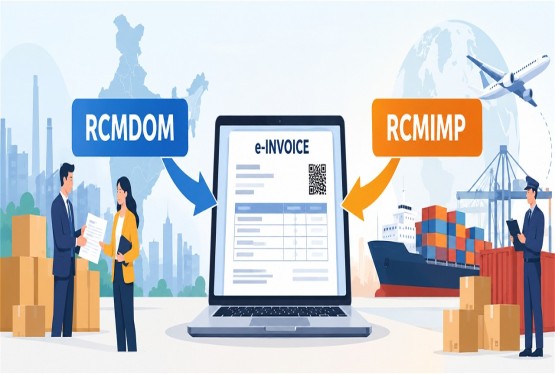



An importer in Delhi orders 2,000 kitchen appliances from China. The supplier dispatches the goods, the shipment arrives at the Indian port, and the customs broker begins preparing the Bill of Entry. Everything seems ready until a question arises: does the importer have the necessary Legal Metrology registration?
This situation is common among first-time importers. Some businesses assume that an Import Export Code (IEC), GST registration and customs documents are enough to release any imported product. Others believe that every shipment requires an LMPC certificate, regardless of the commodity or its intended use.
Customs clearance without LMPC Registration may be possible in certain circumstances, particularly where the relevant registration requirement does not apply. However, an importer cannot simply ignore Rule 27 when importing covered pre-packaged commodities.
The correct approach is to identify the product, examine its packaging, determine its intended use and check the applicable provisions of the Legal Metrology Act, 2009 and the Legal Metrology (Packaged Commodities) Rules, 2011.
What is LMPC Registration for Customs Clearance?
LMPC Registration generally refers to registration under Rule 27 of the Legal Metrology (Packaged Commodities) Rules, 2011. It applies to covered manufacturers, packers and importers of pre-packaged commodities. A pre-packaged commodity is a product placed in packaging without the purchaser being present, with a predetermined quantity. The legal definition does not depend entirely on whether the packaging is sealed.
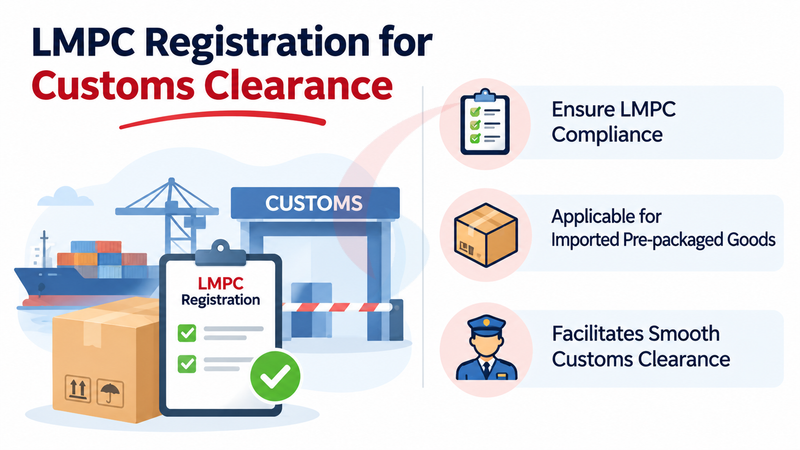
For example, imported headphones sold in individual retail boxes may fall within the packaged commodities requirements. Industrial machinery imported for installation in a factory may have a different legal position. LMPC Registration establishes the relevant manufacturer's, packer's or importer's registration particulars. It does not replace customs clearance, product certification or mandatory package declarations.
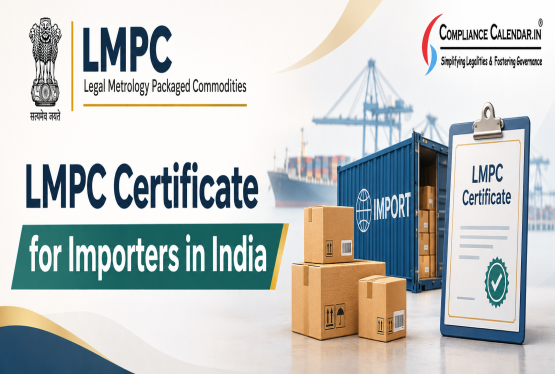
Businesses importing retail products can read our guide on LMPC Certificate for Importers in India for the registration procedure and documentation requirements.
Can Goods Be Cleared Without LMPC Registration?
There is no universal exemption allowing every importer to clear packaged goods without LMPC Registration. However, the requirement must be assessed according to the applicable law and the actual nature of the shipment.
|
Import Situation |
Legal Position |
|
Covered Retail Packages |
Rule 27 registration and applicable labelling requirements must be examined. |
|
Goods Outside Packaged Commodity Coverage |
Rule 27 may not apply to the particular import activity. |
|
Qualifying Industrial or Institutional Packages |
Specified exemptions may apply under Rule 3, subject to conditions. |
|
Packages Covered by Rule 26 Exemptions |
Relevant exemptions may apply to the specified requirements. |
|
Registered Importer with Missing Labels |
Registration alone does not resolve separate labelling deficiencies. |
|
Goods Detained for Missing Registration |
The importer must address the objection through the competent authorities. |
An exemption from certain packaging declarations does not automatically establish an exemption from every registration requirement. Importers should prepare documentary evidence supporting their position rather than relying on a verbal claim that their goods are exempt.
Laws and Legal Provisions Governing Customs Clearance Without LMPC
Customs clearance of imported packaged goods is governed by the Legal Metrology Act, 2009, the Legal Metrology (Packaged Commodities) Rules, 2011, and the Customs Act, 1962.
|
Applicable Act / Rules |
Important Provisions |
Legal Requirements |
|---|---|---|
|
Sections 18, 19 and 36 |
Governs package declarations, registration of importers of weights and measures, and penalties for specified violations. |
|
|
Rules 3, 6, 26 and 27 |
Covers applicability, mandatory labelling, exemptions, and registration of manufacturers, packers and importers. |
|
|
Sections 46, 47, 110 and 111 |
Governs Bills of Entry, customs clearance, seizure, and confiscation of goods. |
Important: Under Section 47 of the Customs Act, 1962, imported goods may be cleared after applicable customs requirements are satisfied. Where LMPC provisions apply, importers must also comply with them or establish a valid exemption.
When Can Customs Clearance Be Possible Without LMPC Registration?
Certain imported goods may qualify for customs clearance without LMPC Registration if the relevant provisions of the Legal Metrology (Packaged Commodities) Rules, 2011 do not apply. However, importers must verify the product category, packaging, intended use, and applicable exemptions before claiming relief.
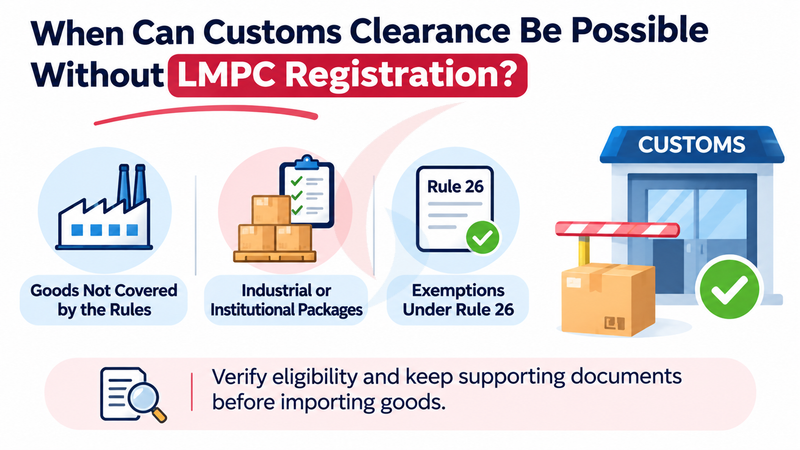
The following situations may allow customs clearance without LMPC Registration:
-
Goods Not Covered by Packaged Commodities Rules: Products falling outside the applicable scope of the Packaged Commodities Rules may not require Rule 27 registration. For example, industrial machinery imported for installation in a factory may have different requirements from consumer-ready retail goods.
-
Industrial or Institutional Consumer Packages: Rule 3 provides exclusions for qualifying packages intended for industrial or institutional consumers. Importers should maintain purchase orders, end-use declarations, and supporting documents to establish eligibility. Simply labelling a product "industrial use only" does not automatically qualify it for exemption.
-
Exemptions Under Rule 26: Certain commodities and packages may qualify for exemptions under Rule 26, subject to the prescribed conditions. However, an exemption from particular packaging declarations does not automatically remove every registration obligation.
For a detailed explanation of product-specific exemptions, read our article on LMPC Registration Exemptions in India to understand eligibility conditions and applicable Legal Metrology requirements.
Practical Example: An Industrial Machinery Importer
Consider PrecisionTech Industries, a fictional manufacturing company in Pune importing specialised machinery from Germany for installation in its factory. The equipment arrives in large wooden crates used only for transportation. When Customs raises an LMPC-related query, the company reviews the product's classification, packaging, and industrial use instead of assuming registration is mandatory.
The importer submits its purchase agreement, technical specifications, and supporting end-use documents to establish whether the relevant Legal Metrology provisions apply. If the shipment falls outside the applicable requirements, Customs may permit clearance after verification, subject to other legal conditions.
Key Takeaway: Customs clearance without LMPC Registration depends on the applicable legal provisions and supporting evidence. Importers should confirm exemption eligibility before shipping goods to India.
What Happens if Customs Stops Goods for Missing LMPC Registration?
An importer may face a customs query where the consignment appears to contain covered retail packages but the relevant Legal Metrology documentation is missing. Depending on the circumstances, Customs may request additional information, examine the goods or refer the matter to the appropriate Legal Metrology authority.
|
Customs Issue |
Possible Action |
|
LMPC Certificate Not Available |
Determine Rule 27 applicability and provide the registration or legally supported explanation. |
|
Incorrect Importer Details |
Submit accurate registration and business records for verification. |
|
Missing MRP Declaration |
Review permissible labelling correction procedures. |
|
Country of Origin Missing |
Examine the applicable declaration requirements and lawful correction options. |
|
Industrial-Use Exemption Claimed |
Provide purchase contracts, end-use records and relevant supporting evidence. |
|
Additional Documents Requested |
Respond to the customs query through the authorised filing process. |
An importer should not assume that submitting a pending LMPC application guarantees the release of detained goods. Where a violation has already occurred, subsequent registration may not automatically cure the earlier contravention. The competent authority must determine the appropriate action.
How to Resolve LMPC Issues During Customs Clearance
If a shipment is held due to LMPC-related objections, importers must identify the exact issue and take appropriate corrective action. Missing Rule 27 registration and incorrect packaging declarations require different solutions.
|
Step |
Procedure |
Key Requirements |
|---|---|---|
|
Step 1 |
Examine Customs Query |
Identify the objection, relevant product, and applicable legal provision. |
|
Step 2 |
Confirm LMPC Applicability |
Check product classification, packaging, intended use, and available exemptions. |
|
Step 3 |
Collect Documents |
Prepare IEC, Bill of Entry, invoice, packing list, product labels, and supporting records. |
|
Step 4 |
Apply for LMPC Registration |
If Rule 27 applies, submit the registration application to the competent authority. |
|
Step 5 |
Correct Labelling Issues |
Obtain necessary permissions before correcting MRP, importer details, or other declarations. |
|
Step 6 |
Respond to Customs |
Submit explanations, relevant certificates, and supporting documents through the prescribed process. |
|
Step 7 |
Obtain Customs Clearance |
Goods may be released after the proper officer verifies compliance with applicable requirements. |
Importers should ensure that all customs documents are accurate and complete to avoid unnecessary delays, additional charges, and clearance-related complications.
Importers can also explore our guide on ICEGATE Registration for Import Export Business to understand electronic customs filing, document submission, and import clearance procedures.
Documents Required for LMPC Registration and Customs Clearance
The required documents depend on the product category, the registration authority and the nature of the customs objection.
|
Document |
Purpose |
|
Establishes importer identity. |
|
|
PAN and GST Details |
Verifies business particulars. |
|
Business Registration Documents |
Confirms the legal constitution. |
|
Bill of Entry |
Provides customs import declaration details. |
|
Commercial Invoice and Packing List |
Identifies the goods, quantities and packaging. |
|
Product Label or Packaging Artwork |
Supports verification of mandatory declarations. |
|
Manufacturer and Importer Details |
Identifies responsible businesses. |
|
Supporting Exemption Documents |
Establishes the legal basis for any claimed exemption. |
|
Authorisation Letter |
Identifies the person handling the application. |
For importers that need a new certificate, these documents can support the application and related verification. Customs may request additional records depending on the imported commodity.
LMPC Registration Process and Government Fees
Where Rule 27 registration applies, importers must follow the procedure prescribed by the competent Legal Metrology authority. The process generally involves submitting business details, relevant importer information, product particulars and the applicable fee.
|
Particulars |
Requirements |
|
Applicable Rule |
Rule 27 of the Legal Metrology (Packaged Commodities) Rules, 2011 |
|
Registration Application Fee |
Rs 500 |
|
Alteration Fee |
Rs 100 |
|
Application Authority |
Competent Director or Controller of Legal Metrology |
|
Registration Validity |
Valid until cancelled under the 2026 amendment |
|
Annual Information Update |
Required for applicable company or firm particulars |
The registration application fee is separate from customs duty, storage charges, demurrage and professional fees. Importers should verify the actual filing requirements and amounts with the competent authority.
Mandatory Labelling Requirements for Imported Goods
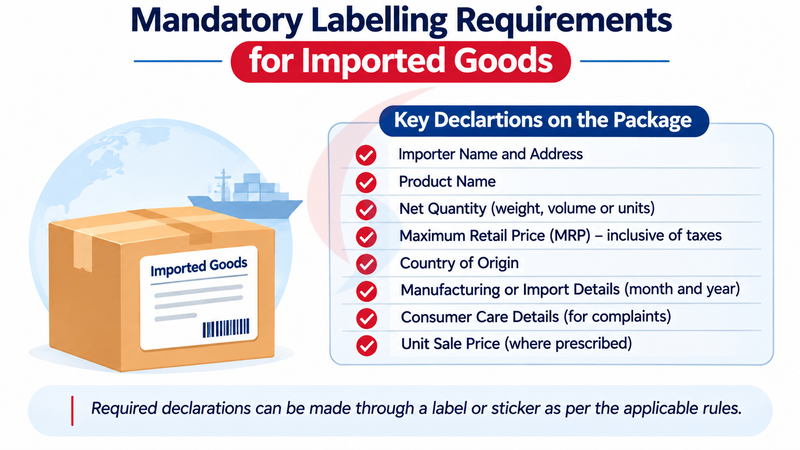
Even where an importer holds LMPC Registration, the imported retail packages must comply with the applicable declaration requirements. Rule 6 generally requires prescribed information to be displayed clearly on covered packages.
|
Mandatory Declaration |
Key Requirement |
|
Importer Name and Address |
Identifies the responsible importer. |
|
Product Name |
Common or generic description of the commodity. |
|
Net Quantity |
Correct weight, volume or number of units. |
|
Maximum Retail Price |
MRP inclusive of applicable taxes. |
|
Country of Origin |
Identifies the country where the product originates. |
|
Manufacturing or Import Details |
Prescribed month and year information, where applicable. |
|
Consumer Care Details |
Required contact information for complaints. |
|
Unit Sale Price |
Applicable where prescribed by the rules. |
Importers may use permissible labels or stickers for required declarations in accordance with the relevant provisions.
However, the timing, location and method of making declarations must comply with the law. An importer should not assume that unrestricted relabelling is permitted after the goods have entered the country.
Our guide on LMPC Labelling Rules: Mandatory Declarations on Packaged Goods explains these requirements in greater detail.
Latest LMPC and Customs Clearance Updates in 2026
Several amendments introduced during 2026 are relevant to importers. The distinction between an amendment being notified and becoming effective is important.
|
2026 Development |
Important Details |
|
29 May 2026 – G.S.R. 418(E) |
Permits prescribed declarations at qualifying AEO Tier-2 and Tier-3 bonded warehouses before packages leave those warehouses. |
|
Rule 27 Validity Amendment |
Registration certificates remain valid until cancelled. |
|
Annual Registration Updates |
Companies and firms must update applicable particulars through the prescribed online facility. |
|
27 April 2026 – G.S.R. 312(E) |
Revised the country-of-origin search and sorting requirement for imported e-commerce products, with commencement on 1 July 2027. |
|
9 September 2026 – G.S.R. 789(E) |
Amended Consumer Protection (E-Commerce) Rules, with commencement specified as 1 January 2027. |
|
October 2026 Government Communication |
Addressed uniform implementation of mandatory declarations on imported packages. |
The revised country-of-origin filter obligation under Rule 6(10A) is scheduled to take effect on 1 July 2027, not July 2026, following the April amendment.
Why Choose Compliance Calendar LLP for LMPC Registration?
At Compliance Calendar LLP, we assist importers and businesses dealing in pre-packaged products with Legal Metrology documentation and registration requirements.
|
Our Services |
How We Help |
|
Applicability Assessment |
Review whether Rule 27 registration applies to the business. |
|
Exemption Guidance |
Assist with identifying applicable Legal Metrology provisions and documentation. |
|
LMPC Registration |
Support preparation and filing of registration applications. |
|
Packaging Compliance |
Guide businesses on MRP, importer details and required declarations. |
|
Customs Documentation Support |
Assist with organising relevant registration and supporting records. |
|
Ongoing Compliance |
Provide guidance on annual updates and changes in business particulars. |
For professional assistance, explore our LMPC Registration Services.
You can also contact Compliance Calendar LLP through 9988424211 or email info@ccoffice.in for assistance with LMPC-related documentation and compliance.
Frequently Asked Questions (FAQs)
Q1. Can Customs clear imported goods without LMPC Registration?
Ans: Yes, where Rule 27 registration is not applicable or the relevant legal provisions permit clearance without it. The importer must establish the basis for exemption or non-applicability. For covered retail packaged commodities, missing registration may lead to customs queries or delays.
Q2. Is LMPC Registration mandatory for every importer in India?
Ans: No. Rule 27 applies to covered manufacturers, packers and importers of pre-packaged commodities. The requirement depends on the goods, their packaging and the nature of the importing activity. Importers should verify applicability rather than assuming every product is treated identically.
Q3. What happens if goods arrive without an LMPC certificate?
Ans: Customs may request further documents or refer the matter to the competent authority where Legal Metrology compliance is in question. The importer must address the applicable registration or declaration requirements. Submitting a new application does not automatically guarantee clearance.
Q4. Can industrial goods be imported without LMPC Registration?
Ans: Certain industrial or institutional packages may qualify for exclusions under Rule 3, subject to the relevant conditions. However, industrial use alone does not establish a universal exemption. Importers should maintain purchase orders, end-use records and supporting documents.
Q5. What documents are required for LMPC-related customs clearance?
Ans: Common documents include IEC, Bill of Entry, commercial invoice, packing list, product labels and business details. The LMPC certificate may be required where Rule 27 applies. Additional evidence is necessary where the importer claims an exemption.
Q6. Can imported products be labelled after arriving in India?
Ans: The law permits specified methods of making declarations, subject to applicable conditions. The May 2026 amendment expressly allows declarations at qualifying AEO Tier-2 and Tier-3 bonded warehouses before packages leave. This does not automatically authorise relabelling at every warehouse.
Q7. What is the government fee for LMPC Registration in 2026?
Ans: Rule 27 prescribes an application fee of Rs 500 and an alteration fee of Rs 100. Customs charges, storage expenses and professional fees are separate. Importers should verify the current payable amount with the competent authority before filing.
Q8. What is the validity of an LMPC certificate in 2026?
Ans: Under the Legal Metrology (Packaged Commodities) Third Amendment Rules, 2026, registration certificates remain valid until cancelled. Companies and firms must also update applicable particulars annually. Certificate validity does not remove ongoing registration and labelling obligations.
Q9. Can Customs seize goods for Legal Metrology violations?
Ans: Depending on the facts and applicable law, non-compliance can result in detention, seizure or other regulatory action. However, these consequences are not automatic for every missing document. The competent authorities must act according to the relevant statutory provisions.
Q10. Can Compliance Calendar LLP assist with LMPC Registration and customs compliance?
Ans: Yes. Compliance Calendar LLP assists importers with LMPC applicability reviews, registration documentation, packaging declarations and related compliance requirements. Businesses can contact our team at info@ccoffice.in for professional guidance.
Article last updated on : 18 Nov 2026.










_learn_crop10_thumb.jpg)