


Acquiring an existing insurance broking company can be a business opportunity for investors, entrepreneurs and financial service providers who want to enter the insurance sector. Instead of applying for a fresh insurance broker registration, an investor may acquire shares in an existing IRDAI-registered company. However, an insurance broker takeover in India requires compliance with specific regulatory approval requirements. The Insurance Regulatory and Development Authority of India (IRDAI) regulates insurance brokers to protect policyholders and maintain transparency in the insurance industry. When an insurance broking company undergoes changes in ownership, shareholding or control, prior IRDAI approval may be mandatory depending on the nature of the transaction.
For example, if an investor plans to purchase 75% of an existing insurance broking company, signing a share purchase agreement is not sufficient to complete the acquisition. The parties must first examine the applicable IRDAI approval requirements and obtain permission before implementing the transaction. This article explains IRDAI Approval for Insurance Broker Takeover, including legal provisions, eligibility, share transfer limits, required documents, approval procedures, timelines and post-takeover compliance requirements applicable in 2026.
What is IRDAI Approval for Insurance Broker Takeover?
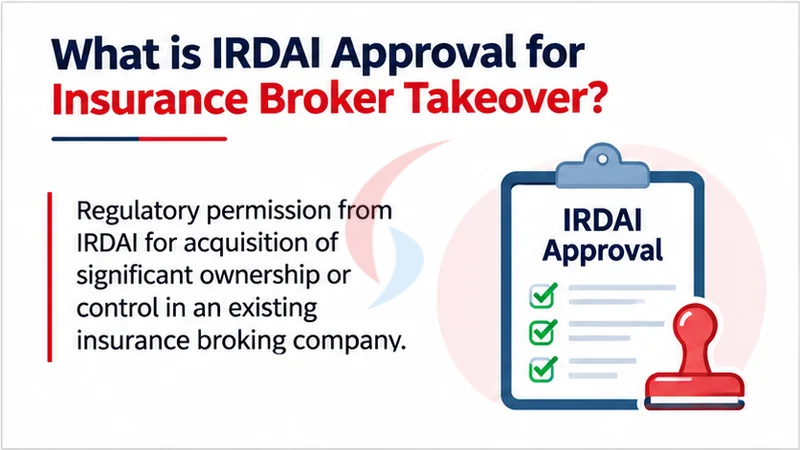
IRDAI Approval for Insurance Broker Takeover refers to regulatory permission required for certain acquisitions involving an existing insurance broking company registered with IRDAI. An insurance broker acts as an intermediary between insurance companies and customers. It assists clients in selecting insurance policies, arranging insurance coverage and receiving claims-related support.A takeover generally occurs when an individual, investor or company acquires a significant ownership interest or controlling stake in an existing insurance broker.
Such transactions may involve a transfer of shares, fresh equity investment, change in promoters, merger or transfer of an insurance broking business. Since the company operates under an IRDAI registration, the proposed takeover must comply with the IRDAI (Insurance Brokers) Regulations, 2018, as amended. The main objective of regulatory approval is to ensure that the proposed acquisition does not adversely affect policyholders, regulatory compliance or the financial stability of the insurance broker.
To understand how an insurance broking company obtains its initial registration, read our detailed guide on Insurance Broker Registration in India
Why is IRDAI Approval Required for Insurance Broker Takeover?
IRDAI examines ownership changes because an insurance broker's activities directly affect policyholders and insurance distribution. A new promoter may influence how the business operates, how customers receive services and how the company meets its regulatory obligations. Prior approval enables IRDAI to examine whether the proposed buyer is financially capable, appropriately qualified and suitable to control or acquire the insurance broking business. The regulator may examine the source of acquisition funds, financial statements, beneficial ownership, existing business relationships and regulatory compliance history.
For example, if an acquiring company is already associated with another insurance intermediary, IRDAI may examine whether the proposed ownership arrangement creates a conflict of interest. The approval process therefore helps maintain transparency and accountability in the insurance broking industry.
Legal Provisions Governing Insurance Broker Takeover in India
Insurance broker takeovers are primarily governed by the Insurance Act, 1938, the IRDAI Act, 1999 and the IRDAI (Insurance Brokers) Regulations, 2018, as amended. Several provisions are particularly relevant to ownership changes and business acquisitions.
| Legal provision | Relevance to insurance broker takeover |
| Section 42D, Insurance Act, 1938 | Registration and regulation of insurance intermediaries |
| Section 14, IRDAI Act, 1999 | Regulatory powers and functions of IRDAI |
| Regulation 25 | Ownership and control of shares in insurance brokers |
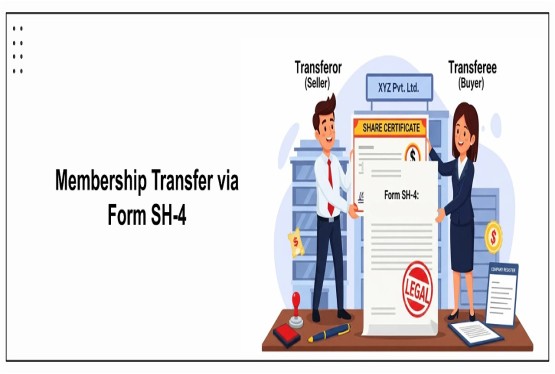
| Schedule II – Form T | Approval procedure for qualifying share transfers |
| Form TA and Form TB | Application and proposed transferee details |
| Regulation 40 | Approval and disclosure of changes in registered particulars |
| Regulation 41 | Amalgamation, merger, acquisition and transfer of business |
| Schedule II – Form Y | Approval procedure for schemes involving business transfers |
For a better understanding of the eligibility conditions and regulatory requirements, explore our guide on Requirements and Procedure for Insurance Broker License
When is IRDAI Approval Mandatory for Insurance Broker Takeover?
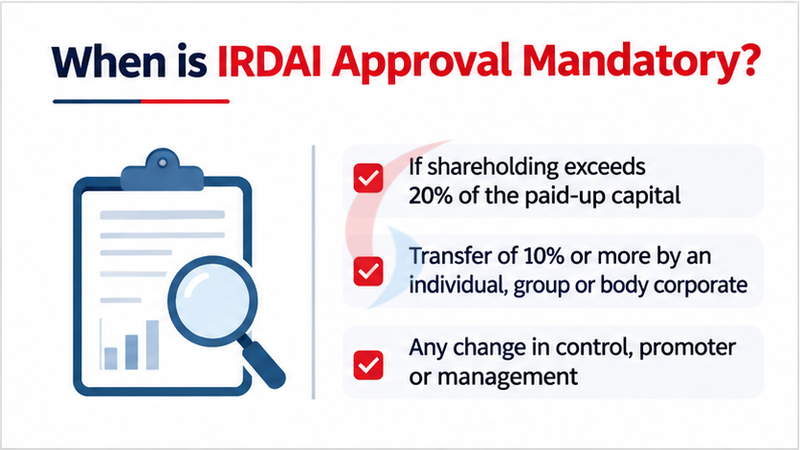
The approval requirement depends on the shareholding percentage, nature of the transaction and whether ownership or control changes. Under Schedule II – Form T, prior IRDAI approval is required for a share transfer or equity issuance resulting in a shareholding change where:
- The proposed transferee's total holding after the transaction is likely to exceed 20% of the broker's paid-up capital.
- The nominal value of shares proposed to be transferred by an individual, group or body corporate under the same management, jointly or severally, exceeds 10% of paid-up capital.
These thresholds are important when planning the transaction.
| Takeover situation | IRDAI approval requirement |
| Investor acquires 15% through a qualifying share transfer | Prior approval generally required |
| Investor acquires 25% of company shares | Prior approval required |
| Existing shareholder increases holding to 30% | Prior approval generally required |
| Investor acquires a 75% controlling stake | Prior approval required |
| Two insurance brokers merge | Prior written approval required |
| Insurance broking business is transferred | Prior written approval required |
Transactions below these thresholds may still trigger other approval, ownership or disclosure requirements. Therefore, the parties should review the complete transaction structure before transferring shares.
Eligibility Criteria for Insurance Broker Takeover
Before submitting a takeover application, the acquiring person or entity should establish that the proposed acquisition meets applicable regulatory requirements.
1. Financial Capability
The buyer must have sufficient financial resources to acquire and operate the insurance broking company. IRDAI may review audited financial statements, net worth and the source of investment funds. This helps ensure that the buyer can maintain the company's financial stability after the takeover.
2. Fit-and-Proper Requirements
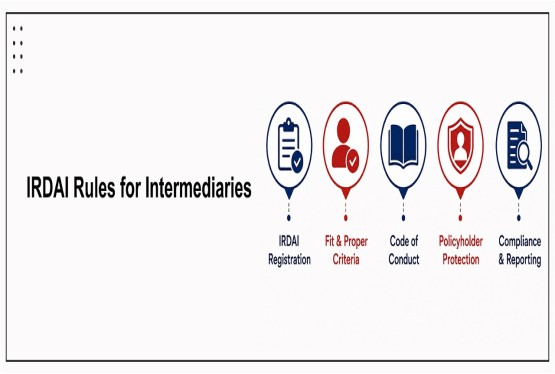
The proposed promoters, shareholders and management personnel must satisfy applicable fit-and-proper requirements. IRDAI may examine their professional background, financial credibility, integrity and regulatory history. This helps ensure that the insurance broker is controlled by suitable and responsible individuals.
3. Ownership and Control Compliance
The proposed takeover must comply with IRDAI's ownership, shareholding and control requirements. The buyer must disclose the proposed shareholding structure and ultimate beneficial owners. Prior IRDAI approval must be obtained wherever the transaction triggers the prescribed regulatory requirements.
4. Existing Broker Compliance
The insurance broker must continue meeting applicable capital, net-worth and operational requirements. It should maintain qualified personnel, professional indemnity insurance and necessary regulatory records. The buyer should examine pending regulatory observations and compliance issues before completing the acquisition.
5. Foreign Investment Compliance
If a foreign investor acquires shares in an insurance broking company, the transaction must comply with applicable foreign investment rules. The investor must follow relevant FEMA provisions, IRDAI regulations and ownership disclosure requirements. Businesses must also ensure proper Foreign Investment Compliance to meet the applicable regulatory requirements. Any necessary approvals and reporting obligations must be completed as prescribed.
Buyers planning an acquisition can learn more about broker categories, capital requirements and qualified personnel in our article on IRDAI-Registered Insurance Brokers in India
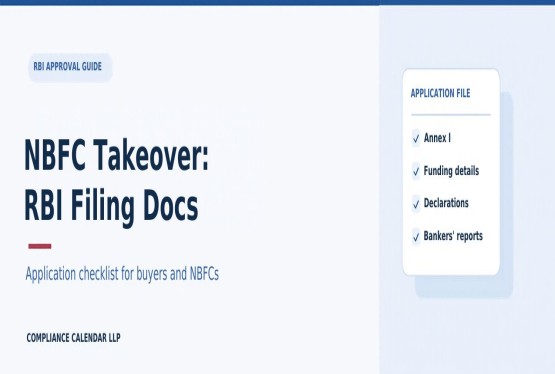
Documents Required for IRDAI Approval for Insurance Broker Takeover
Proper documentation is one of the most important parts of the takeover approval process.
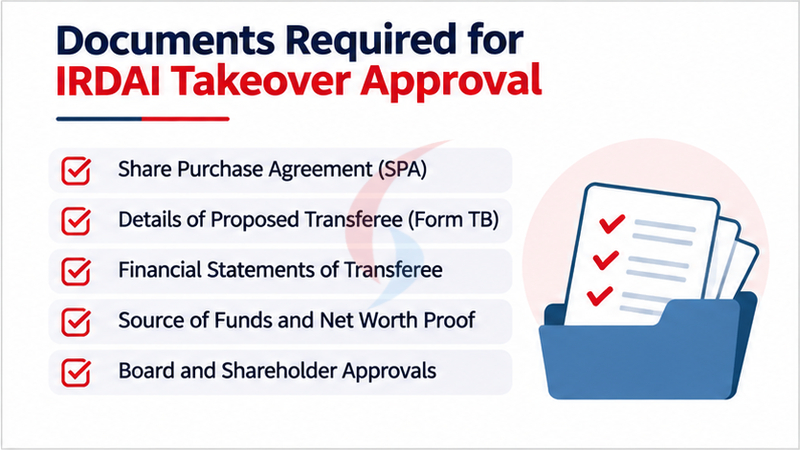
| Required document | Purpose |
| IRDAI registration certificate | Confirms the existing broker's registration |
| Form TA | Application for qualifying share transfer approval |
| Form TB | Details of the proposed transferee |
| Board resolutions | Authorise the proposed transaction |
| Existing shareholding pattern | Identifies current shareholders |
| Proposed shareholding pattern | Shows ownership after acquisition |
| Draft share purchase agreement | Records proposed acquisition terms |
| Audited financial statements | Establish financial position |
| PAN and incorporation documents | Verify the buyer's identity |
| Source-of-funds declaration | Explains acquisition funding |
| Promoter and director details | Supports background verification |
| Fit-and-proper declarations | Supports regulatory suitability assessment |
| Foreign investment documents | Required where applicable |
For a merger or transfer of business, additional documents under Schedule II – Form Y may include the draft business transfer agreement, relevant balance sheets, transaction summary and a report explaining how policyholders' interests will be protected. IRDAI may request further information depending on the transaction.
To understand the basic registration documents and eligibility conditions of an insurance broking company, read Requirements for Registering as an Insurance Broker Company
Step-by-Step Process for IRDAI Approval for Insurance Broker Takeover
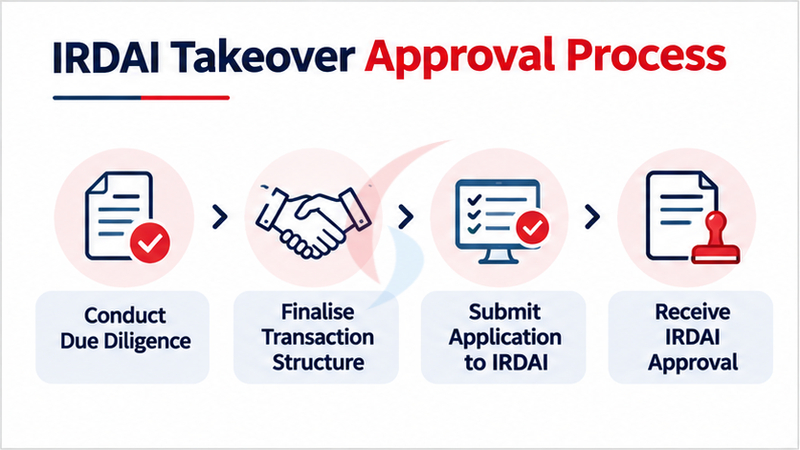
Step 1: Conduct Due Diligence of the Existing Broker
Before acquiring shares, the buyer should examine the broker's registration status, financial statements, pending regulatory notices, statutory liabilities and compliance history. This helps identify potential risks that may affect the acquisition.
Step 2: Finalise the Takeover Structure
The buyer and seller should determine the proposed shareholding percentage, acquisition consideration and ownership structure after completion. The parties should identify all proposed promoters, beneficial owners and controlling shareholders.
Step 3: Obtain Board Approval
The relevant companies should pass necessary board resolutions approving the proposed acquisition and authorising submission of regulatory documents. Shareholder approval should also be obtained wherever required under the Companies Act, 2013, or constitutional documents.
Step 4: Prepare the Share Purchase Agreement
A share purchase agreement should set out the agreed purchase consideration, number of shares, completion conditions, warranties and responsibilities of both parties. Where IRDAI prior approval is required, the agreement should make transaction completion conditional on obtaining that approval.
Step 5: Prepare Form TA and Form TB
For qualifying share transfers, the insurance broker must prepare Form TA along with the prescribed particulars of the transferee in Form TB. Supporting financial documents, shareholding details and required declarations should accompany the application.
Step 6: Submit the Application to IRDAI
The application should be submitted through the currently prescribed IRDAI submission mechanism. It should explain the proposed transaction, ownership changes, acquisition funding and the broker's ability to continue meeting regulatory requirements.
Step 7: IRDAI Verification and Due Diligence
IRDAI examines the proposed acquisition and may evaluate the buyer's financial capacity, beneficial ownership, regulatory background and potential conflicts of interest. The regulator may also seek clarification regarding the broker's existing compliance position.Step 8: Respond to Regulatory Queries
If IRDAI requests additional documents or explanations, the applicant should respond with complete and accurate information. Inconsistencies in financial statements, shareholding details or source-of-funds declarations may delay approval.
Step 9: Obtain IRDAI Approval
Once satisfied, IRDAI may issue approval subject to relevant terms and conditions. The parties should carefully review the approval letter and fulfil any specified conditions before completing the acquisition.
Step 10: Complete the Takeover
After receiving the required approval, the parties may complete the share transfer in accordance with applicable law. The broker should update its statutory registers, complete relevant MCA filings and submit any required post-transaction information to IRDAI.
How Much Time Does IRDAI Take to Approve an Insurance Broker Takeover?
The approval timeline depends on the transaction's complexity and the completeness of the application. A straightforward acquisition involving a transparent shareholding structure may involve fewer clarifications than a takeover involving foreign shareholders, complicated group structures or unresolved regulatory issues. There is no universally guaranteed approval period for every insurance broker takeover. The applicant should therefore make provision for regulatory scrutiny, additional document requests and approval conditions when planning the transaction's completion date.
Fees and Costs Involved in Insurance Broker Takeover
The total cost of acquiring an insurance broker depends on several factors.
| Cost component | Description |
| Purchase consideration | Amount negotiated between buyer and seller |
| Regulatory charges | Applicable prescribed IRDAI fees, if any |
| Professional fees | Legal, financial and compliance assistance |
| Due diligence expenses | Examination of regulatory and financial records |
| Stamp duty | Applicable to relevant transaction instruments |
| MCA filing fees | Charges for required company filings |
| Capital contribution | Additional funds required to maintain regulatory financial requirements |
There is no fixed acquisition price prescribed by IRDAI. The commercial value of the company depends on its business performance, financial position, liabilities and negotiations between the parties.
Latest IRDAI Updates Applicable to Insurance Broker Takeover in 2026
On 30 July 2026, IRDAI notified the IRDAI (Insurance Intermediaries) (Amendment) Regulations, 2026, introducing several changes affecting insurance brokers. One important change concerns the validity of the insurance broker's certificate of registration. Previously, broker registration generally operated under a three-year validity and renewal system. The 2026 amendments introduced perpetual registration, subject to payment of applicable annual fees and continued regulatory compliance. Existing brokers covered by the transition arrangements must apply for the revised certificate by the prescribed deadline of 31 January 2027, with a further delayed-application window subject to conditions.
For takeover transactions, buyers should verify whether the existing broker has complied with the applicable transition requirements. The amendments also introduced changes relating to foreign-shareholding governance and certain disclosure requirements. However, these developments do not remove the need to comply with applicable share transfer, ownership and takeover approval requirements.
Common Reasons for Delay in IRDAI Takeover Approval
Takeover applications may face regulatory delays for several reasons. Incomplete shareholding information, unclear acquisition funding, missing financial documents and inconsistencies in application forms may lead to additional queries. Outstanding compliance issues involving the existing insurance broker can also complicate the approval process.
For example, if an insurance broker has unresolved IRDAI observations or insufficient net worth, the buyer should investigate these matters before proceeding. Similarly, a proposed investor associated with another insurance intermediary may need to provide additional information about potential regulatory conflicts. Conducting proper due diligence and preparing accurate documentation can help reduce avoidable delays.
Post-Takeover Compliance Requirements for Insurance Brokers
Receiving IRDAI approval does not eliminate the company's ongoing regulatory responsibilities. Following the acquisition, the insurance broker must continue complying with applicable requirements relating to capital, net worth, professional indemnity insurance, qualified employees and regulatory reporting. The company should update its statutory shareholding records and complete relevant MCA filings. If the takeover involves changes in directors, the Principal Officer, the company name or registered office, the broker must separately examine applicable prior approval and disclosure requirements under Regulation 40. The business should also maintain continuity in customer servicing, recordkeeping, complaints handling and insurance-related operations.
After completing the acquisition, companies should continue meeting regulatory obligations explained in our detailed guide on IRDAI Insurance Broker Compliance.
Example: An Insurance Broker Takeover Journey
Rahul, a Delhi-based entrepreneur, wanted to enter the insurance broking industry. Instead of starting a new company, he decided to acquire an existing IRDAI-registered insurance broker that already had clients, experienced employees and established business operations.
After several discussions, Rahul agreed to purchase 75% of the company's shares. He believed the acquisition would be straightforward because both parties had already finalised the purchase price.
However, while preparing the transaction documents, Rahul discovered that acquiring an insurance broker was different from purchasing an ordinary private limited company. Since the proposed share transfer exceeded the prescribed regulatory thresholds, prior IRDAI approval was required.
Rahul consulted compliance professionals who advised him to conduct due diligence before completing the acquisition. During the review, they identified pending regulatory observations and certain gaps in the company's compliance records.
Rather than rushing the transaction, Rahul worked with the existing promoters to address these issues. The company prepared its shareholding details, financial documents, board resolutions and the necessary application under Form TA and Form TB.
The transaction was made conditional on obtaining regulatory approval.
Why Choose Compliance Calendar LLP?
Acquiring an existing insurance broking company involves regulatory, financial and corporate compliance requirements. Proper documentation and an accurate understanding of the approval process are essential.
At Compliance Calendar LLP, we assist businesses with regulatory registration, corporate compliance and documentation requirements related to insurance intermediary transactions.
Our services may include:
- Reviewing the proposed insurance broker takeover structure.
- Examining applicable IRDAI share transfer approval requirements.
- Assisting with Form TA, Form TB and supporting documentation.
- Coordinating financial and regulatory due diligence.
- Preparing applications and responses to IRDAI observations.
- Assisting with relevant post-takeover compliance requirements.
For professional assistance with IRDAI approval for insurance broker takeover, contact Compliance Calendar LLP on +91 9988424211 or info@ccoffice.in
Frequently Asked Questions (FAQs)
Q1 Is IRDAI approval mandatory for insurance broker takeover?
Ans. Yes, IRDAI approval is mandatory when the transaction triggers prescribed share transfer or business acquisition requirements. Qualifying ownership changes and business transfers require prior permission. The exact requirement depends on the acquisition structure.
Q2 Can I buy an existing IRDAI-registered insurance broker?
Ans. Yes, an individual or company may acquire shares in an existing insurance broker. The buyer must satisfy applicable ownership, eligibility and compliance requirements. Prior IRDAI approval is necessary where prescribed.
Q3 What is the share transfer limit for IRDAI approval?
Ans. Approval is required where the transferee's total holding is likely to exceed 20% of paid-up capital. A qualifying transfer exceeding 10% of paid-up capital also triggers approval. Other control-related requirements must be checked separately.
Q4 How much time does IRDAI approval take?
Ans. The approval period depends on the completeness and complexity of the application. IRDAI may request additional documents or regulatory clarifications. There is no guaranteed timeline applicable to every takeover.
Q5 Can a foreign investor acquire an insurance broker in India?
Ans. Yes, foreign investment may be permitted subject to applicable laws. The transaction must comply with IRDAI and foreign investment requirements. Ownership and governance conditions must also be satisfied.
Q6 Can IRDAI reject an insurance broker takeover application?
Ans. Yes, IRDAI may refuse approval if applicable regulatory requirements are not satisfied. Concerns may involve ownership, financial suitability or compliance deficiencies. The applicant should address these issues before submission.
Q7 Is NCLT approval required for insurance broker takeover?
Ans. NCLT approval is not automatically required for an ordinary share acquisition. It may be necessary for certain mergers or restructuring schemes under company law. The requirement depends on the transaction's legal structure.
Q8 Can directors be changed after an insurance broker takeover?
Ans. Yes, directors can be changed subject to the applicable approval and disclosure requirements. Certain director changes require prior IRDAI approval under Regulation 40. Relevant corporate filings must also be completed.
Q9 Can an insurance broker transfer its entire business?
Ans. Yes, a qualifying transfer of insurance broking business may be permitted. Prior IRDAI approval is required under Regulation 41 and Schedule II – Form Y. Policyholder protection and other legal requirements must be addressed.
Q10 What happens if shares are transferred without IRDAI approval?
Ans. Completing a transaction without mandatory approval may violate IRDAI regulations. The regulator may take appropriate action depending on the circumstances. Required approval should be obtained before the transfer is implemented.
Article last updated on : 12 Nov 2026.


























































_learn_crop10_thumb.jpg)