


What Is the IRDAI BAP Portal?
The IRDAI BAP Portal is an online regulatory platform developed by the Insurance Regulatory and Development Authority of India. BAP originally referred to the Business Analytics Project, while IRDAI's newer communications describe the upgraded system as the Business Analytics Platform. The portal supports electronic submission of regulatory information by eligible insurance-sector entities. Its available modules cover functions such as registration-related activities, periodic returns, financial reporting and specified regulatory applications.
Instead of relying entirely on physical documents, regulated entities can use authorised online modules to submit prescribed information. This enables IRDAI to collect structured regulatory data and monitor compliance. However, BAP is not a single universal filing system for every insurance-related obligation. The applicable portal, return format and filing process depend on the category of regulated entity and the latest IRDAI directions.
Why Is the IRDAI BAP Portal Important?
Insurance companies and intermediaries deal with substantial financial information, customer records and regulated business activities. IRDAI requires specific information to assess whether entities are operating in accordance with applicable laws and regulations. The BAP Portal supports this process by enabling structured submissions, digital recordkeeping and regulatory monitoring. It also helps companies track submitted information and respond to applicable regulatory requirements.
For example, an insurance broker may need to report business information, financial details and prescribed compliance particulars. The company must ensure that information reported through BAP is consistent with its accounting records and other regulatory submissions. Timely filing also helps management identify compliance gaps before they become more serious regulatory issues.
To understand ongoing regulatory obligations, read our guide on IRDAI Compliance Requirements for Insurance Intermediaries, covering reporting responsibilities and compliance requirements.
Legal Provisions Governing IRDAI BAP Filings
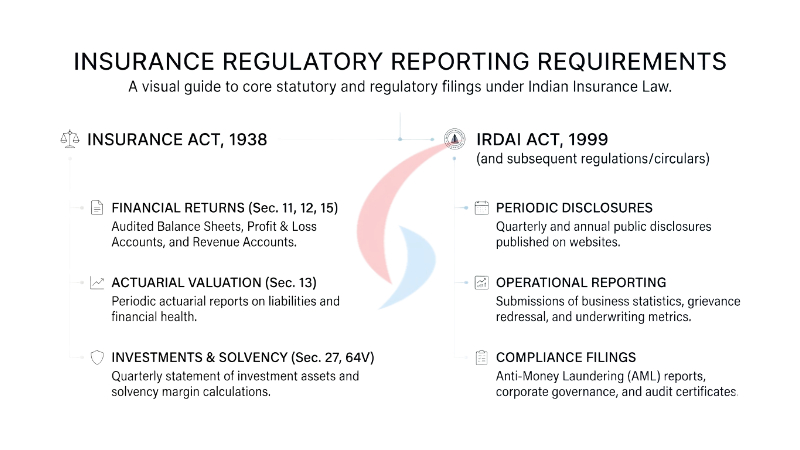
The legal basis for regulatory reporting arises from the Insurance Act, 1938, the IRDAI Act, 1999 and the regulations and circulars applicable to each category of regulated entity.
| Legal Provision | Reporting Relevance |
| Insurance Act, 1938 | Regulation and supervision of insurance business |
| IRDAI Act, 1999 | Regulatory powers and information requirements |
| IRDAI (Insurance Brokers) Regulations, 2018 | Broker records and regulatory returns |
| Regulation 39 | Broker auditor certificates and BAP returns |
| IRDAI Master Circular on Submission of Returns, 2024 | Consolidated insurer reporting requirements |
| IRDAI Circulars, 2026 | Migration of specified functions to integrated BAP |
The law establishes the reporting obligation, while the applicable circulars, return formats and portal instructions determine how information must be submitted. An entity should not assume that successful portal registration automatically satisfies every statutory reporting obligation.
Who Needs to Use the IRDAI BAP Portal?
The BAP system serves different regulated entities depending on the modules made available by IRDAI. These may include insurance companies, registered insurance brokers, reinsurers, foreign reinsurance branches and other authorised insurance-sector participants.
| Regulated Entity | Relevant BAP Activities |
| Insurance companies | Prescribed financial and operational returns |
| Insurance brokers | Registration-related functions and periodic returns |
| Reinsurers | Reinsurance reporting and specified applications |
| Foreign Reinsurer Branches | Applicable reinsurance regulatory submissions |
| Health insurers | Health regulatory returns and product-related functions |
| Other intermediaries | Applicable authorised modules, where available |
Each entity must follow its specific reporting requirements. For example, a direct insurance broker should not assume that every return prescribed for a life insurer or reinsurer also applies to its business.
Businesses planning to enter the insurance broking sector can explore Insurance Broker Registration in India to understand IRDAI eligibility, registration procedures and documentation requirements.
IRDAI BAP Portal Registration and Login Process
Step 1: Identify the Correct BAP Module
The applicant should identify the appropriate BAP module based on the required filing or regulatory activity. Different modules are available for insurance brokers, insurers and reinsurers. Selecting the correct module helps ensure that the submission follows the applicable IRDAI requirements.
Step 2: Obtain Authorised Access
The company must obtain authorised login credentials through the applicable IRDAI registration or onboarding process. Access should be assigned to an authorised representative responsible for regulatory filings. Login details must be kept secure to prevent unauthorised access.
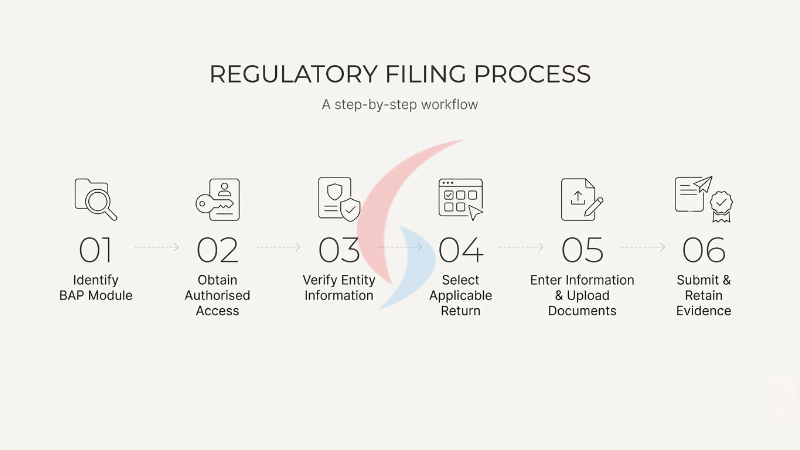
Step 3: Verify Entity Information
After logging in, the user should verify the company's legal name, IRDAI registration number and other relevant details. The information should match the official registration records. Any discrepancy should be addressed before proceeding with the filing.
Step 4: Select the Applicable Return
The authorised user should select the required regulatory return and reporting period from the available options. Different returns may apply depending on the entity's registration category and activities. The filing requirements and deadlines should be verified before entering information.
Step 5: Enter Information and Upload Documents
The applicant must complete the required fields and provide accurate financial, operational or compliance information. Supporting documents should be uploaded in the prescribed format, wherever applicable. All information must be reviewed carefully to avoid errors or incomplete submissions.
Step 6: Submit and Retain Evidence
After verifying the information, the authorised user should complete the final submission through the portal. The company should retain the acknowledgement number, submission receipt or available filing confirmation. These records may be required during future regulatory reviews or compliance inspections.
IRDAI BAP Portal Filing Requirements for Insurance Brokers
Insurance brokers have specific regulatory obligations under the IRDAI (Insurance Brokers) Regulations, 2018, as amended. Regulation 39 is particularly important because it requires prescribed auditor-certified information and periodic returns. It expressly refers to returns submitted in the formats prescribed under IRDAI's Business Analytics Project. The information helps IRDAI examine whether brokers continue meeting applicable capital, net worth, deposit, professional indemnity and remuneration requirements.
Important Insurance Broker Reporting Requirements
| Reporting Requirement | Information Covered |
| Financial statements | Audited accounts and auditor observations |
| Capital and net worth | Compliance with financial requirements |
| Regulatory deposit | Maintenance of prescribed deposit |
| Professional indemnity | Insurance coverage certification |
| Remuneration | Compliance with applicable payment provisions |
| Reinsurance accounts | Additional information for relevant broker categories |
| Periodic BAP returns | Business and financial information in prescribed formats |
Under the 2018 Regulations, the specified half-yearly auditor certificates are ordinarily furnished before 31 October and 30 April. Audited financial statements are subject to separate filing timelines. For example, where a broker's annual remuneration increases substantially, its professional indemnity coverage may also require review. The figures used for regulatory reporting should therefore agree with its financial records. The company must additionally check subsequent amendments, filing circulars and currently prescribed formats before submission.
For a detailed understanding of post-registration obligations, read Insurance Broker Compliances in India, covering statutory records, regulatory returns and ongoing broker compliance.
Financial Statements and Auditor Certificates
Financial reporting is one of the most important compliance activities for a registered insurance broker. Under Regulation 38 of the 2018 Regulations, brokers must prepare audited financial statements and submit the required documents within the prescribed period. The regulation refers to submission within 30 days of the Annual General Meeting or before 30 September, whichever is earlier.
Regulation 39 separately provides for specified half-yearly auditor certificates covering matters such as capital, net worth, deposits, professional indemnity insurance and remuneration. For example, a broker may have adequate funds in its bank account but still face a reporting issue if the required net worth calculation is incorrect. The compliance team should therefore coordinate with the finance department and auditors before filing.
Insurance brokers should also understand the mandatory coverage requirements explained in our guide on Professional Indemnity Insurance for Insurance Brokers.
Quarterly, Half-Yearly and Annual Reporting
IRDAI reporting requirements vary according to the nature of the entity, its business and the applicable return. Some returns are periodic, while others are linked to specific regulatory events. There is no single submission deadline applicable to every BAP return.
| Reporting Frequency | Practical Purpose |
| Monthly | Reporting where prescribed for particular activities |
| Quarterly | Periodic operational or financial reporting |
| Half-yearly | Prescribed intermediary certificates and other returns |
| Annual | Audited statements and annual regulatory information |
| Event-based | Specific applications, changes or regulatory disclosures |
Companies should prepare an internal compliance calendar identifying each return, applicable period, responsible employee and submission deadline. A reporting calendar must reflect the current regulatory directions rather than simply copying the deadlines used by another insurance company.
To understand the remuneration records relevant to regulatory reporting, explore Insurance Broker Commission and Remuneration Rules.
Latest IRDAI BAP Portal Updates in 2026
On 28 August 2026, IRDAI issued Circular IRDAI/REINS/CIR/MISC/114/08/2026 concerning the migration of specified reinsurance regulatory returns and related functions to its upgraded Business Analytics Platform. The migration affects relevant insurers, reinsurers, Foreign Reinsurer Branches and other covered reinsurance participants. It includes specified reporting functions and applications relating to cross-border reinsurers. Affected entities must follow the integrated BAP instructions for the migrated activities instead of assuming that earlier submission channels remain available.
Health Insurance Reporting Migration
IRDAI issued Circular IRDAI/HLT/CIR/MISC/141/10/2026 on 30 October 2026, concerning the migration of health regulatory returns and health product-related functions. From 2 November 2026, specified health product UIN generation, product modification and withdrawal functions were directed through the upgraded BAP Health Product Module.
The circular also addresses health regulatory returns for FY 2024–25, FY 2025–26 and later reporting periods, including specified RET 197 submissions for the first two quarters of FY 2026–27, subject to the stated exceptions. These changes show that businesses must continuously monitor IRDAI circulars. A filing process that was correct earlier may require a different module or submission channel after migration.
Readers can explore Types of Insurance Brokers: Direct vs Reinsurance to understand the different broker categories and their regulatory responsibilities.
Documents Required for IRDAI BAP Filings
The documents required depend on the filing category. However, businesses should generally maintain the following records for relevant regulatory submissions:
- IRDAI Certificate of Registration
- Corporate registration and authorised signatory details
- Audited financial statements
- Auditor certificates and regulatory declarations
- Capital, net worth and deposit records
- Professional Indemnity Insurance details, where applicable
- Business and remuneration records
- Relevant correspondence and previous filing acknowledgements
Common Errors During IRDAI BAP Returns Filing
One common mistake is entering financial information without reconciling it with the company's audited records. Differences between financial statements and regulatory returns may lead to clarifications or compliance concerns. Another problem arises when businesses depend entirely on one employee to manage portal access. If that person leaves the organisation, important credentials, filing records or deadlines may become difficult to manage.
Companies also sometimes select an incorrect return period, overlook mandatory fields or assume that saving information amounts to final submission. A proper internal review process should include independent verification of the return and confirmation that the final submission was successfully recorded.
Storytelling Example: How a Broker Avoided a Reporting Delay
Returning to SecurePath Insurance Brokers Private Limited, Rohan notices that the company's upcoming regulatory submission requires information from several departments. The finance team has prepared the financial statements, but the compliance team still needs to reconcile the remuneration records and obtain the relevant auditor certifications.
Instead of entering incomplete information into BAP, Rohan prepares a reporting checklist and assigns responsibilities to individual departments. The operations team provides business data, the finance team verifies the figures and the auditor reviews the required certificates. Once the information is ready, Rohan completes the applicable return and retains the submission acknowledgement.
The company also introduces a recurring compliance review to identify future filing obligations before their deadlines. This fictional example demonstrates how coordination, accurate documentation and timely internal preparation can make IRDAI reporting more manageable.
Consequences of Non-Compliance with IRDAI Reporting Requirements
Failure to submit prescribed regulatory returns may result in regulatory scrutiny, requests for clarification or other action under applicable law. Incomplete or misleading information may raise additional concerns, particularly where the figures relate to capital adequacy, remuneration or professional indemnity coverage.
The consequences depend on the nature of the violation, the applicable regulations and the circumstances involved. A company should not assume that a late filing will always be resolved merely by uploading the missing return. It should address the default and comply with any directions issued by IRDAI.
Best Practices for IRDAI BAP Portal Compliance
A useful compliance process begins with a central filing calendar. Every applicable return should have a designated preparer, reviewer and authorised submitter. The company should reconcile financial figures before entering them into the portal, maintain updated supporting records and preserve filing acknowledgements.
It should also review IRDAI circulars regularly, particularly when new BAP modules or submission procedures are introduced. For example, an insurance broker handling business in multiple locations may maintain separate internal records but should ensure that the consolidated information reported to IRDAI is accurate and complete.
For broader guidance on maintaining regulatory records and meeting filing obligations, read our article on IRDAI Insurance Broker Compliance.
Why Choose Compliance Calendar LLP for IRDAI Compliance?
Compliance Calendar LLP assists insurance businesses and intermediaries in understanding regulatory requirements, registration procedures and ongoing compliance obligations.
Companies establishing an insurance broking business can explore our Insurance Broker License service to understand applicable IRDAI eligibility, documentation and regulatory approval requirements.
Our team can also assist businesses with understanding BAP reporting obligations, preparing compliance documentation, identifying applicable returns and reviewing filing requirements based on their registration category.
For professional assistance with insurance regulatory compliance, contact Compliance Calendar LLP at +91 9988424211 or info@ccoffice.in.
Frequently Asked Questions (FAQs)
Q1 What is the IRDAI BAP Portal?
Ans. The IRDAI BAP Portal is a digital regulatory platform used for prescribed insurance-sector submissions. It supports various reporting and application functions. Access depends on the applicable entity category and module.
Q2 What is the full form of BAP?
Ans. BAP originally stood for Business Analytics Project. IRDAI now also refers to its upgraded Business Analytics Platform. Both descriptions relate to its digital regulatory reporting system.
Q3 Is BAP filing mandatory for insurance brokers?
Ans. Registered insurance brokers must submit prescribed periodic returns under Regulation 39. The regulation refers to the Business Analytics Project. Brokers should follow the current applicable filing instructions.
Q4 Are all insurance returns filed through BAP?
Ans. No. Different returns may use BAP, email or other authorised channels. The applicable method depends on IRDAI directions. Businesses should verify the filing route for each return.
Q5 What documents are required for BAP filing?
Ans. Requirements depend on the particular return. Financial statements, auditor certificates and business records may be relevant. The current portal format determines the actual information required.
Q6 What are the BAP filing deadlines?
Ans. There is no universal deadline for every return. Some filings are monthly, quarterly, half-yearly or annual. The applicable regulation or circular specifies the reporting period.
Q7 Can incorrect BAP filings be corrected?
Ans. Correction procedures depend on the module and filing status. Entities should follow the available revision process or seek IRDAI guidance. A previously submitted return should not be silently altered.
Q8 What changed in the IRDAI BAP Portal in 2026?
Ans. IRDAI migrated specified reinsurance functions to integrated BAP in August 2026. Health returns and product-related functions were also migrated in October and November. Entities must use the applicable updated modules.
Q9 What happens if a company misses an IRDAI filing?
Ans. A missed filing may lead to regulatory follow-up or action under applicable provisions. The company should identify the default and take corrective steps. Any explanation must be accurate and properly documented.
Q10 Can a consultant assist with IRDAI BAP compliance?
Ans. Yes. A compliance consultant can help identify returns, prepare records and review reporting requirements. Final submission must follow the authorised portal process. The regulated entity remains responsible for compliance.
Article last updated on : 18 Nov 2026.











































































_learn_crop10_thumb.jpg)