



A single incorrect figure in an RBI filing can create unexpected problems for an Indian company receiving foreign investment. The investment may have been received through a proper banking channel, the shares may have been allotted within the prescribed period, and all corporate documents may be available. Yet the company may still face difficulties because its foreign shareholding details were entered incorrectly on the RBI FIRMS portal.
Consider a startup in Bengaluru that received Rs 2 crore from a Singapore investor. While preparing Form FC-GPR, its compliance team discovers that the Entity Master shows fewer foreign-held shares than the company's statutory records. The previous accountant had entered an incorrect figure during an earlier reporting exercise.
Correcting Errors in RBI Entity Master and SMF requires companies to distinguish between entity-level foreign investment records and transaction-specific reporting. An incorrect Entity Master entry, a rejected FC-GPR, and an error discovered in an already acknowledged FC-TRS filing may require different corrective procedures.
What is RBI Entity Master and Single Master Form (SMF)?
The Reserve Bank of India introduced the Foreign Investment Reporting and Management System (FIRMS) to facilitate electronic reporting of prescribed foreign investment transactions. Two important parts of this system are the Entity Master Form (EMF) and Single Master Form (SMF).
The Entity Master records information about an Indian entity and its foreign investment history, including relevant identification, capital and shareholding particulars. It helps establish the ownership position used in subsequent foreign investment reporting. Its information must remain consistent with the company's actual records.
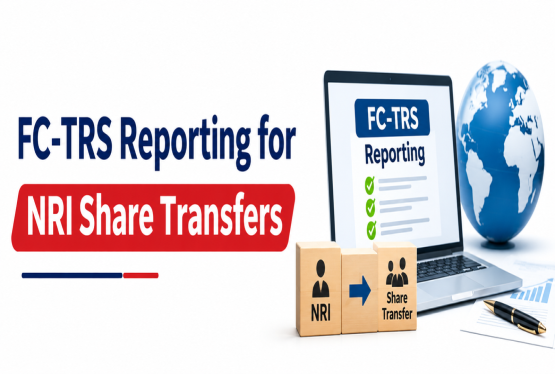
The Single Master Form is an electronic reporting facility through which prescribed FEMA returns are filed. These include Form FC-GPR for qualifying fresh issues of equity instruments, Form FC-TRS for specified share transfers, and other applicable foreign investment returns.
For example, if a company already has 25% foreign shareholding and issues additional equity shares to an overseas investor, the reporting process may rely on the company's existing investment information. An incorrect opening shareholding position can lead to inconsistencies in the new transaction. The Entity Master and SMF therefore serve different purposes, but their information must be reconciled.
To understand their respective functions, read our article on EMF & SMF Reporting: Key Differences, Rules and Compliance.
What Types of Errors Occur in RBI Entity Master and SMF?
Most FIRMS reporting problems arise from incorrect entity details, inaccurate shareholding information, improper form selection, or differences between supporting documents and the particulars entered online. A minor spelling mistake may be easier to explain than a discrepancy affecting the number of shares held by foreign investors.
|
Common Error |
Possible Consequence |
|
Incorrect company name, CIN or PAN |
Entity identification mismatch |
|
Wrong paid-up or authorised capital |
Inconsistent capital structure |
|
Incorrect foreign shareholding |
Mismatch in subsequent SMF reporting |
|
Wrong investor country or residential status |
Incorrect investment classification |
|
Incorrect allotment or transfer date |
Possible reporting deadline discrepancy |
|
Wrong number or class of shares |
Inconsistency with corporate records |
|
Incorrect investment amount |
Mismatch with bank and valuation documents |
|
Wrong AD bank selection |
Verification or processing difficulties |
|
Missing or incorrect supporting documents |
Bank observations or rejection |
These problems should be identified before another foreign investment transaction is reported. An important distinction is that correcting an electronic record is not the same as correcting an underlying FEMA violation. If the transaction itself breached investment conditions, simply changing a portal entry will not resolve the substantive non-compliance.
Laws and Legal Provisions Governing RBI Entity Master and SMF Corrections
Errors in FIRMS must be examined under the Foreign Exchange Management Act, 1999, the applicable foreign investment rules, RBI reporting regulations and official FIRMS instructions.
|
Applicable Act or Regulations |
Important Provisions |
Legal Requirements |
|
Sections 6, 13 and 15 |
Governs capital-account transactions, FEMA contraventions and compounding. |
|
|
Applicable investment and pricing provisions |
Regulates foreign investment eligibility, shareholding, pricing and transfers. |
|
|
FEMA (Mode of Payment and Reporting of Non-Debt Instruments) Regulations, 2019 |
Regulation 4 |
Prescribes reporting requirements for applicable foreign investment transactions. |
|
Applicable reporting instructions |
Explains prescribed foreign exchange reports and their submission requirements. |
|
|
Sections 39, 56, 88 and applicable provisions |
Governs relevant allotment, share transfer and statutory register requirements. |
The Companies Act and FEMA operate together. A company must ensure that its RBI reporting agrees with its statutory registers, allotment records, share transfer documents and financial information. For instance, if a company's MCA filings show 1,00,000 equity shares allotted to a foreign investor but its FIRMS records show 10,000, the company must investigate which record is incorrect and obtain the appropriate correction.
Difference Between Entity Master Correction and SMF Correction
Although both records are maintained through FIRMS, the responsible user and correction route may differ.
|
Particulars |
Entity Master Correction |
SMF Correction |
|
Purpose |
Correct entity-level foreign investment information |
Correct a specific regulatory return |
|
Common Information |
Entity details, capital and historical ownership |
Investor, investment, allotment or transfer particulars |
|
Relevant User |
Entity User |
Business User |
|
Main Regulatory Channel |
RBI's designated Entity Master correction process |
AD bank and applicable FIRMS reporting procedure |
|
Supporting Evidence |
Corporate records and earlier foreign investment filings |
Transaction documents, valuation and remittance evidence |
|
Effect on Other Records |
May affect subsequent reporting information |
May affect a particular transaction and its resulting ownership position |
Before requesting a correction, companies should determine whether the error originated in the Entity Master, in a particular SMF return, or in the underlying company records. This distinction is essential because correcting only the latest return may leave an earlier inconsistency unresolved.
How to Correct Errors in RBI Entity Master
Entity Master corrections generally begin with a review of the existing record and the documents supporting the correct information. Companies should use the current RBI-designated correction procedure rather than assuming every historical entry can be changed independently through the portal.
Step 1 – Identify the Incorrect Information: Log in through the authorised Entity User account and examine the company's existing particulars. Identify the exact field requiring correction, such as foreign shareholding, company information or capital details.
Step 2 – Verify the Correct Information: Compare the Entity Master with the register of members, MCA filings, share certificates, investment agreements and earlier RBI acknowledgements. If the discrepancy concerns historical ownership, establish the correct position as at the relevant reporting date.
Step 3 – Prepare Supporting Documents: Collect documents showing the existing entry, proposed correction and reason for the change. A clear reconciliation statement can help the reviewing authority understand how the correct figure was determined.
Step 4 – Follow the Appropriate RBI Correction Channel: Where the field can be edited through a currently available portal facility, follow the applicable instructions. For changes requiring authority intervention, submit the request to the RBI Regional Office responsible for the Entity Master correction, using the prescribed communication channel and documentation.
Step 5 – Verify the Updated Record: After the correction is processed, review the Entity Master to ensure that the relevant details agree with the company's records. Retain the correspondence, supporting documents and confirmation.
RBI's FIRMS FAQs and user instructions identify specific correction routes. Companies should check the current contact details on the official FIRMS portal before submitting a request, particularly because historical helpdesk instructions may differ from more recent procedures.
Practical Example: Incorrect Foreign Shareholding in Entity Master
Consider BluePeak Software Private Limited, a fictional company based in Noida. In 2022, it issued 80,000 equity shares to an investor from the United Kingdom. The allotment was properly documented, but an employee mistakenly entered only 8,000 shares in the Entity Master.
In 2026, BluePeak receives another round of foreign investment. While preparing the new FC-GPR, its company secretary discovers that the existing foreign shareholding shown in FIRMS does not match the company's register of members.
Instead of changing the current allotment information to make the totals match, the company prepares a detailed reconciliation of the original investment. It collects the earlier FC-GPR acknowledgement, PAS-3 filing, shareholding records and relevant bank documents.
The company then follows the designated RBI correction procedure for the Entity Master discrepancy.
Once the record has been appropriately corrected, the compliance team can prepare the new report using accurate opening ownership information.
This example demonstrates why companies should correct the source of an error instead of adjusting a later filing to conceal the mismatch.
How to Correct Errors in an SMF Filing on RBI FIRMS
SMF corrections depend on the status of the particular return. A draft awaiting submission, a return rejected by the AD bank and an already acknowledged filing may not follow the same procedure. ompanies should therefore first identify the actual reporting status displayed in FIRMS.
|
SMF Filing Status |
Appropriate Approach |
|
Draft or Unsubmitted |
Correct available fields before submission. |
|
Submitted and Under Review |
Contact the AD bank and follow the applicable observation or correction procedure. |
|
Rejected |
Examine the reasons and follow the current instructions for a fresh or corrected filing, as permitted. |
|
Acknowledged or Approved |
Seek guidance from the AD bank regarding modification of the accepted return. |
|
Incorrect Historical Ownership |
Examine whether Entity Master correction is also required. |
A company should not assume that a rejected return can always be edited and resubmitted using the same reference number. Equally, it should not submit a duplicate return for an already acknowledged transaction without confirming the proper correction route. Where the error relates to FC-GPR or FC-TRS, the AD Category-I bank responsible for verification is normally the first point of contact for identifying the relevant corrective procedure.
For further reading, our article on FC-GPR vs FC-TRS 2026: When to File Each Form? explains the differences between reporting new equity issues and existing share transfers.
Practical Story: A Rejected FC-GPR Filing
Suppose BrightNest Technologies Private Limited, a fictional startup in Gurugram, receives Rs 1.50 crore from an overseas investor. The company allots equity shares and submits Form FC-GPR within the prescribed period. During verification, the AD bank finds that the valuation certificate mentions an issue price of Rs 150 per share, while the form shows Rs 105. The number of shares and total investment amount also require reconciliation. The bank rejects the filing and identifies the inconsistencies.
BrightNest's finance manager initially considers submitting the same information again with a new covering letter. However, the company's adviser recommends checking the investment agreement, actual allotment records and remittance evidence before making any changes.
The team discovers that the correct issue price is Rs 150. It prepares the corrected transaction details and supporting documents, then coordinates with the AD bank to follow the applicable filing procedure. The main lesson is that a rejected filing should be corrected using the actual transaction records, not merely the figures that appear easiest to enter in the portal.
Our article on Need of Valuation Report under FEMA Law explains the valuation requirements applicable to foreign investment and share transfer transactions.
Documents Required for RBI Entity Master and SMF Corrections
The supporting documents depend on the error and the investment transaction. A correction involving only contact information will generally require different evidence from a request to change the number of equity shares held by a foreign investor.
|
Document |
Purpose |
|
Certificate of Incorporation and PAN |
Establish company identity |
|
Existing Entity Master Record |
Identifies the incorrect particulars |
|
RBI Filing Acknowledgements |
Establishes previously reported transactions |
|
Register of Members and Shareholding Pattern |
Supports actual ownership information |
|
Form PAS-3 and Corporate Resolutions |
Supports relevant equity allotments |
|
Share Transfer Agreement or SH-4, where applicable |
Supports relevant share transfers |
|
Valuation Certificate |
Supports prescribed FEMA pricing |
|
Bank Remittance and KYC Documents |
Verifies funds and investor information |
|
Correction Request or Explanation Letter |
Explains the discrepancy and requested change |
|
Authorisation Letter |
Establishes the representative's authority |
The company should explain the original entry, the correct entry, the reason for the discrepancy and the documents supporting the correction.
For businesses reviewing historical foreign investment transactions, our guide on FEMA Due Diligence: Process, Checklist and Compliance explains how regulatory filings, bank records and shareholding information can be reconciled.
RBI FIRMS Helpdesk, AD Bank and Regional Office: Whom Should You Contact?
One common reason correction requests remain unresolved is that companies approach the wrong authority. The appropriate channel depends on the type of correction requested. Entity Master issues requiring regulator intervention should follow the RBI's designated process, while problems involving a specific SMF return should generally be taken up with the relevant AD bank.
|
Nature of Problem |
Appropriate Contact |
|
Entity Master record requiring regulatory modification |
Designated RBI Regional Office or current RBI correction channel |
|
FC-GPR or FC-TRS return under verification |
Concerned AD Category-I bank |
|
Rejected or acknowledged SMF return |
AD bank, with further RBI guidance where required |
|
Technical FIRMS access problem |
Official FIRMS technical helpdesk |
|
Entity User or Business User credentials |
Relevant user-support facility specified by FIRMS |
The official portal is RBI FIRMS, which provides access to user manuals, FAQs and contact details. Companies should avoid relying on unofficial websites that imitate the FIRMS portal or outdated email instructions. The current RBI portal should be used to identify the relevant contact and method of submission.
RBI Reporting Deadlines and the Effect of Corrections
Entity Master maintenance does not have a general recurring annual filing deadline. However, individual SMF returns are subject to statutory reporting timelines.
|
FEMA Reporting Form |
General Deadline |
|
FC-GPR |
Within 30 days of the issue of applicable equity instruments |
|
FC-TRS |
Generally within 60 days of the prescribed transfer or payment trigger |
|
Form DI |
Within 30 days of the relevant downstream investment allotment |
|
LLP(I) |
Within 30 days of receipt of consideration, where applicable |
|
Generally within 60 days of the relevant disinvestment or transfer |
|
|
Generally by 15 July annually, where applicable |
These deadlines arise from the relevant FEMA reporting requirements. Requesting an Entity Master correction does not automatically extend or suspend them.
For example, if a company must submit FC-GPR within 30 days but discovers an Entity Master mismatch shortly before the deadline, it should promptly approach the relevant authority and AD bank. It should retain evidence of the issue and the steps taken to resolve it.
The treatment of a rejected or corrected submission for delay calculation depends on the applicable RBI instructions and the circumstances. Companies should not assume that the original attempted submission will always protect them from Late Submission Fee consequences.
Penalties for Incorrect or Delayed RBI Reporting
Incorrect reporting and delayed reporting are not necessarily the same contravention.
Where a company submits a mandatory FEMA return after the prescribed deadline, the RBI's Late Submission Fee mechanism may apply. The applicable amount depends on the form, transaction amount, delay period and RBI directions.
For certain transaction-based reports, including FC-GPR and FC-TRS, RBI prescribes an amount-based LSF calculation, subject to applicable conditions.
LSF = Rs 7,500 + (0.025% × A × n)
Here, A represents the amount involved in the delayed reporting, while n represents the period of delay calculated under RBI instructions. However, an incorrect Entity Master entry does not automatically attract the same LSF calculation. The company must first identify whether any reportable filing obligation was delayed or a separate FEMA contravention occurred. Where the underlying transaction violates substantive FEMA requirements, penalties under Section 13 of the Foreign Exchange Management Act, 1999, or compounding under Section 15 may become relevant.
For a wider discussion, read RBI Reporting of FC-GPR, FC-TRS, FLA, ODI and ECB to Avoid ED Actions.
Latest RBI Rules and Regulatory Updates in 2026
Foreign investment reporting requirements have undergone changes during 2026. Companies correcting historical records must distinguish between amendments affecting investment reporting generally and the procedural instructions governing Entity Master or SMF corrections.
|
Regulatory Development |
Compliance Importance |
|
RBI Reporting Master Direction, updated 1 October 2026 |
Consolidates applicable FEMA reporting requirements. |
|
June 2026 amendments to the FEMA reporting regulations |
Require review of the current provisions relevant to the transaction. |
|
RBI Foreign Investment Master Direction, updated June 2026 |
Relevant to investment classification, pricing and transfer conditions. |
|
RBI Compounding Master Direction, updated 23 October 2026 |
Relevant where the discrepancy involves a substantive FEMA contravention. |
|
FIRMS Portal Instructions and FAQs |
Provide operational guidance on Entity Master and SMF correction channels. |
The October 2026 RBI Reporting Master Direction confirms the continuing importance of accurate and timely FEMA returns.
However, there is no verified universal 2026 rule allowing businesses to freely edit every previously approved SMF return or Entity Master field. The available correction method must be confirmed from the current FIRMS instructions and the competent authority.
This distinction matters when a company is attempting to correct investment information from several years earlier.
Why Choose Compliance Calendar LLP ?
At Compliance Calendar LLP, we assist Indian companies, startups and foreign-invested businesses with FEMA reporting, Entity Master records, FIRMS documentation and related regulatory compliance.
|
Our Services |
How We Help |
|
Entity Master Review |
Identify discrepancies in entity and foreign investment information. |
|
SMF Error Assessment |
Examine incorrect FC-GPR, FC-TRS and other transaction reports. |
|
Correction Documentation |
Assist with preparing explanations, reconciliations and supporting records. |
|
AD Bank Coordination |
Support responses to reporting observations and document requests. |
|
FEMA Compliance Review |
Examine applicable pricing, reporting and investment conditions. |
|
Delayed Filing Assistance |
Assist with assessing LSF and available regularisation procedures. |
Businesses can explore our EMF and SMF Reporting Services and FEMA Due Diligence Services for professional assistance.
For guidance on correcting RBI Entity Master details or SMF reporting errors, contact Compliance Calendar LLP at 9988424211 or info@ccoffice.in.
Frequently Asked Questions (FAQs)
Q1. How can a company correct incorrect Entity Master details on RBI FIRMS?
Ans: The company should first identify the incorrect entry and collect supporting documents. Where the correction cannot be made through the available portal facility, it should approach the designated RBI Regional Office using the current prescribed procedure.
Q2. Can an approved SMF filing be corrected?
Ans: Corrections to acknowledged SMF returns may be considered through the applicable RBI and AD bank procedures. Companies should contact the concerned AD bank, explain the discrepancy and provide supporting records. Direct editing is not available for every approved return.
Q3. What happens if FC-GPR is rejected by the AD bank?
Ans: The company should review the rejection reasons, correct the underlying information and follow the applicable instructions for submitting a corrected or fresh return. It should also examine whether the final valid submission results in delayed reporting.
Q4. Is Entity Master the same as Single Master Form?
Ans: No. Entity Master records an Indian entity's foreign investment and ownership information. Single Master Form is used to report specified foreign investment transactions such as FC-GPR, FC-TRS and Form DI.
Q5. What documents are required for Entity Master correction?
Ans: Relevant documents may include the incorporation certificate, PAN, shareholding pattern, register of members, original foreign investment records, MCA allotment filings and earlier RBI acknowledgements. Additional evidence depends on the nature of the correction.
Q6. Who handles SMF corrections: RBI or the AD bank?
Ans: The concerned AD Category-I bank is generally the first point of contact for corrections relating to a specific SMF filing. Certain changes or unresolved issues may require RBI involvement. The appropriate route depends on the filing's status and the correction requested.
Q7. Can a company create a new Entity Master if its existing record is incorrect?
Ans: Companies should not create duplicate Entity Master records simply to avoid correcting an existing entry. They should use the designated correction procedure and maintain evidence supporting the accurate foreign investment position.
Q8. Is there a penalty for incorrect RBI Entity Master information?
Ans: An incorrect entry does not automatically attract a fixed monetary penalty. However, inaccurate reporting, delayed mandatory returns or substantive FEMA violations may require regulatory action, Late Submission Fee or other regularisation measures.
Q9. What are the latest RBI Entity Master and SMF rules in 2026?
Ans: RBI's Reporting Master Direction was updated on 1 October 2026, and its compounding instructions were updated on 23 October 2026. Companies should also follow the current FIRMS user manuals and correction procedures.
Q10. Can Compliance Calendar LLP assist with RBI Entity Master and SMF corrections?
Ans: Yes. Compliance Calendar LLP assists businesses with reviewing FIRMS information, identifying discrepancies, preparing supporting documents and coordinating with relevant AD banks on FEMA reporting matters.
Article last updated on : 18 Nov 2026.














































_learn_crop10_thumb.jpg)