


BRSR Core has become an important part of ESG Reporting in India, as investors increasingly expect companies to support their sustainability claims with measurable data. Information about carbon emissions, renewable energy consumption, employee safety and environmental performance must be backed by reliable records.
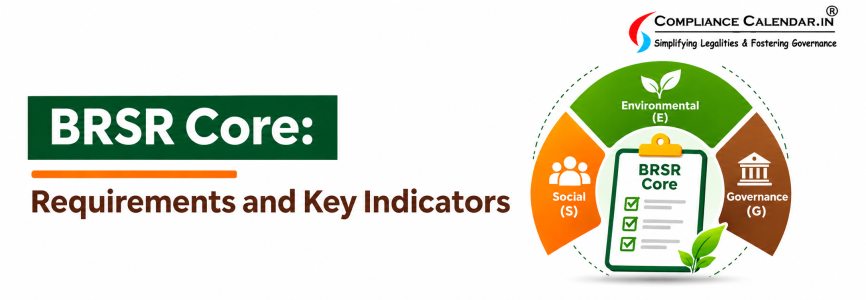
The Securities and Exchange Board of India (SEBI) introduced BRSR Core on July 12, 2023, covering Key Performance Indicators (KPIs) under nine ESG attributes. It forms part of the broader Business Responsibility and Sustainability Report (BRSR) applicable to specified listed entities.
For FY 2026–27, the BRSR Core assessment or assurance requirement extends to the top 1,000 listed entities by market capitalisation. SEBI has also introduced changes relating to independent verification, value chain disclosures and voluntary green credit reporting.
What Is BRSR Core Under SEBI Regulations?
BRSR Core is a subset of the Business Responsibility and Sustainability Report containing selected sustainability Key Performance Indicators under nine ESG attributes. It was introduced by SEBI to improve the reliability, comparability and independent verification of sustainability information disclosed by listed entities. While the complete BRSR covers several aspects of responsible business conduct, BRSR Core focuses on measurable indicators such as greenhouse gas emissions, water consumption, energy usage, employee wellbeing, gender diversity and business transparency.
For example, suppose a listed automobile manufacturer claims that its operations have become more environmentally friendly. Under the applicable BRSR Core indicators, the company needs to report relevant quantitative information rather than simply stating that it has adopted sustainable practices.
The BRSR Core format is prescribed through SEBI Circular dated July 12, 2023, along with subsequent amendments and industry reporting standards.
Interested in learning can also read BRSR Reporting: Applicability, Format and Due Dates to understand the complete reporting requirements before examining BRSR Core in detail.
Why Did SEBI Introduce BRSR Core?
Before introducing BRSR Core, SEBI had already made BRSR disclosures mandatory for the top 1,000 listed entities. However, sustainability reporting presented a practical challenge because companies operating in different industries sometimes used different measurement methods and reporting assumptions.
A company reporting improved environmental performance might rely on estimates, while another company might use detailed operational records. Without consistent metrics and independent verification, investors could find it difficult to compare sustainability performance.
SEBI introduced BRSR Core to address these concerns through selected, measurable ESG indicators. The objective is to improve the credibility of sustainability information and reduce the risk of misleading environmental or social claims, commonly described as greenwashing.
For example, if two manufacturing companies claim to use water efficiently, comparable water consumption and intensity indicators can help investors assess their actual performance. This makes BRSR Core useful not only for regulatory compliance but also for identifying operational risks.
Legal Provisions Governing BRSR Core in India
BRSR Core is governed primarily by the SEBI (Listing Obligations and Disclosure Requirements) Regulations, 2015, along with circulars prescribing reporting indicators, verification requirements and implementation standards.
|
Law or SEBI Circular |
Relevant Provision |
BRSR Core Requirement |
|
Regulation 34(2)(f) |
BRSR disclosures and BRSR Core requirements for covered listed entities |
|
|
Prescribed BRSR format |
Introduced the structured sustainability reporting format |
|
|
BRSR Core framework |
Introduced nine ESG attributes, KPIs and phased independent verification |
|
|
Industry Standards on Reporting of BRSR Core |
Prescribed industry standards to support consistent reporting |
|
|
Assessment, assurance and value chain amendments |
Permitted assessment or assurance and revised value chain disclosures |
|
|
Consolidated LODR compliance requirements |
Provides consolidated guidance for listed entities |
BRSR Core Applicability in India for FY 2026–27
BRSR Core applies to specified listed entities according to the implementation schedule prescribed by SEBI. The requirement for independent assessment or assurance has been introduced in phases based on market capitalisation.
|
Financial Year |
Listed Entities Covered |
Verification Requirement |
|
FY 2023–24 |
Top 150 |
Reasonable assurance under the original framework |
|
FY 2024–25 |
Top 250 |
Assessment or assurance under the amended provisions, as applicable |
|
FY 2025–26 |
Top 500 |
Assessment or assurance |
|
FY 2026–27 |
Top 1,000 |
Assessment or assurance |
The company's ranking must be examined under the applicable SEBI market capitalisation and transition provisions. Companies entering or leaving a prescribed category should verify the relevant compliance timeline rather than relying on an earlier ranking.
Important 2026 Update: For FY 2026–27, the phased BRSR Core assessment or assurance requirement extends to the top 1,000 listed entities.
What Are the Nine Key Indicators of BRSR Core?
BRSR Core includes nine ESG attributes covering environmental performance, employee welfare, gender diversity, inclusive development and business transparency. These indicators help listed entities measure and disclose their sustainability performance.
|
No. |
ESG Attribute |
Key Indicators |
Reporting Focus |
|---|---|---|---|
|
1 |
Greenhouse Gas Footprint |
Scope 1 and Scope 2 emissions, emission intensity |
Climate impact and carbon emissions |
|
2 |
Water Footprint |
Water consumption, discharge and intensity |
Water conservation and management |
|
3 |
Energy Footprint |
Renewable and non-renewable energy consumption, energy intensity |
Energy efficiency and sustainability |
|
4 |
Waste Management |
Waste generated, recycled, reused, recovered and disposed of |
Waste reduction and circular economy |
|
5 |
Employee Wellbeing and Safety |
Employee welfare expenditure and workplace safety incidents |
Employee health and occupational safety |
|
6 |
Gender Diversity |
Women's share of gross wages and sexual harassment complaints |
Gender equality and workplace inclusion |
|
7 |
Inclusive Development |
MSME procurement, domestic sourcing and wages in smaller towns |
Economic inclusion and local development |
|
8 |
Fairness with Customers and Suppliers |
Customer data breaches and accounts payable days |
Customer protection and fair supplier payments |
|
9 |
Openness of Business |
Purchase and sales concentration, related-party transactions, loans and investments |
Corporate transparency and accountability |
Important Note: These are summarised indicators. Companies must follow the prescribed definitions, calculation methods and disclosure requirements in the official SEBI BRSR Core Annexure.
Understanding the Environmental Indicators of BRSR Core
The first four BRSR Core attributes focus on environmental performance. These indicators examine how a company's operations affect the climate and natural resources. The greenhouse gas footprint measures the company's relevant direct and purchased-energy-related emissions through Scope 1 and Scope 2 reporting. For example, a manufacturing company may generate direct emissions through fuel combustion and indirect emissions through purchased electricity. The company must calculate and disclose the prescribed indicators using suitable records and methodologies.
The water footprint focuses on water consumption and related measurements. This is particularly important for industries such as textiles, chemicals, paper manufacturing and food processing, where water use can significantly affect operating costs and environmental compliance. Similarly, the energy footprint covers renewable and non-renewable energy consumption. Waste management indicators examine how much waste the company generates and how that waste is recycled, reused, recovered or disposed of.
For example, a paper manufacturer that generates 500 tonnes of waste annually cannot demonstrate effective waste management merely by stating that it supports recycling. It must provide the relevant measurable information in accordance with the prescribed reporting requirements.
Companies dealing with producer responsibility may also explore EPR Registration and Compliance Services to understand the separate regulatory obligations relating to applicable products, packaging and waste streams.
Social and Governance Indicators Under BRSR Core
BRSR Core covers important social and governance indicators related to employee wellbeing, gender diversity, inclusive development, customer relationships and business transparency.
|
Key Indicator |
Reporting Requirements |
Example |
|---|---|---|
|
Employee Wellbeing and Safety |
Employee welfare expenditure, workplace safety incidents and worker wellbeing. |
Reporting safety incidents and employee benefits. |
|
Gender Diversity |
Women's share of total gross wages and sexual harassment complaints under the POSH Act, 2013. |
Tracking women's wage participation and workplace complaints. |
|
Inclusive Development |
Procurement from MSMEs and small producers, and wages associated with employment in smaller towns. |
Reporting purchases from MSME suppliers. |
|
Fairness with Customers and Suppliers |
Customer data breaches and supplier payment periods. |
Reporting delays in supplier payments. |
|
Openness of Business |
Concentration of purchases and sales, and related-party transactions. |
Disclosing major supplier relationships and related-party dealings. |
How Are BRSR Core KPIs Calculated?
BRSR Core includes quantitative measurements and intensity ratios. Companies must follow the definitions and calculation methods prescribed in the applicable reporting format and industry standards.
One important indicator relates to the number of days of accounts payable.
Illustrative calculation:
Days of Accounts Payable = (Accounts Payable × 365) ÷ Cost of Goods or Services Procured
Suppose a listed company has accounts payable of Rs 20 crore and an annual cost of goods and services procured of Rs 200 crore.
Its illustrative calculation would be:
(20 × 365) ÷ 200 = 36.5 days
This means the calculation gives an accounts payable period of 36.5 days. The company must use the prescribed accounting definitions and appropriate reporting figures rather than relying on estimates prepared solely for publication.
Similarly, prescribed environmental intensity indicators relate resource consumption or emissions to relevant business output measures. These indicators can help compare operating performance across reporting periods, although their interpretation should consider differences in business activities and reporting boundaries.
Case Study: How BRSR Core Exposed Hidden Costs in a Manufacturing Company
Prakash Engineering Ltd., a fictional listed manufacturer operating in Gujarat and Maharashtra, identified several operational challenges while preparing its BRSR Core disclosures for FY 2025–26.
|
Key Area |
Challenges Identified |
Actions and Results |
|---|---|---|
|
Energy Consumption |
Gujarat factory consumed 18 lakh electricity units annually. |
Energy monitoring helped reduce consumption to 16.5 lakh units. |
|
Employee Safety |
Safety training records were incomplete and maintained separately. |
Introduced standardised documentation and improved recordkeeping. |
|
Supplier Management |
Purchases were concentrated among a few suppliers. |
Reviewed procurement practices and improved supplier monitoring. |
|
Cost Savings |
High electricity consumption increased operational expenses. |
Achieved potential annual savings of Rs 12 lakh at Rs 8 per unit. |
|
ESG Compliance |
Sustainability data was scattered across departments. |
Improved data collection, reporting accuracy and verification readiness. |
Key Takeaway: This illustrative case shows how BRSR Core reporting can help companies identify operational inefficiencies, strengthen employee safety practices, improve governance and reduce business costs while meeting SEBI's sustainability disclosure requirements.
Latest SEBI BRSR Core Amendments and Updates in 2026
The regulatory position in November 2026 reflects SEBI's July 2023 BRSR Core framework, December 2024 reporting standards and March 28, 2025 amendments. These updates provide greater flexibility in assessment, assurance and value chain ESG disclosures.
|
Regulatory Update |
Latest SEBI Requirements |
|---|---|
|
BRSR Core Verification |
Listed entities can choose between third-party assessment and assurance, subject to applicable SEBI requirements. |
|
Industry Reporting Standards |
Companies must follow prescribed reporting standards to maintain consistency and accuracy in ESG disclosures. |
|
FY 2026–27 Applicability |
The phased assessment or assurance requirement extends to the top 1,000 listed entities by market capitalisation. |
|
Value Chain ESG Disclosures |
Voluntary for the top 250 listed entities from FY 2025–26, with related assessment or assurance voluntary from FY 2026–27. |
|
Value Chain Reporting Criteria |
Relevant partners are identified using a 2% threshold for purchases or sales. Companies may limit reporting coverage to 75% of purchases and sales, respectively, subject to applicable conditions. |
|
Green Credit Disclosures |
SEBI introduced a voluntary leadership indicator under BRSR Principle 6 for green credits generated or procured by listed entities and their top ten value chain partners. |
These amendments aim to improve the reliability of sustainability disclosures while reducing unnecessary compliance burdens. Companies should maintain accurate ESG records and follow the applicable SEBI reporting standards.
How to Prepare BRSR Core Disclosures in India
Preparing BRSR Core requires coordination between different business departments. The Company Secretary or compliance officer may oversee the process, but environmental information often comes from operations teams, employee data from HR, and supplier and related-party information from finance and procurement. The first step is to determine applicability based on the company's relevant market capitalisation ranking and SEBI transition provisions. Management should then identify the indicators applicable to the reporting period and assign responsibility for each data category.
The company should collect supporting evidence such as electricity bills, fuel purchase records, emissions calculations, water records, waste disposal documents, payroll information, safety registers, procurement records and related-party transaction details. Once the information is compiled, the relevant departments should check calculations, reporting boundaries and consistency with other corporate disclosures. Any prescribed estimates should be supported by documented methodologies.
Where assessment or assurance is mandatory, the company must appoint an independent and competent provider and provide the supporting records necessary for verification. The verified BRSR Core disclosures should then be incorporated into the relevant annual reporting process. BRSR Core is not ordinarily treated as a completely separate annual filing with a universal independent deadline. Companies must follow the applicable SEBI annual report, disclosure and stock exchange submission requirements.
Is BRSR Core Mandatory for Private Companies and MSMEs?
BRSR Core independent assessment or assurance is not automatically mandatory for private limited companies, unlisted public companies, MSMEs or startups. The principal SEBI requirements apply to specified listed entities under the prescribed market capitalisation schedule. However, smaller businesses may receive ESG-related data requests from major listed customers, financial institutions and investors.
For example, a packaging manufacturer supplying products to a large listed consumer goods company may be asked to provide information on energy consumption, recycling practices and employee safety.
Although this does not automatically create an independent BRSR Core filing obligation for the supplier, maintaining accurate sustainability records can help it respond to customers and improve operational oversight.
Businesses looking to understand the wider position can read ESG Reporting in India: Applicability and Requirements and ESG Compliance for Startups.
Why Choose Compliance Calendar LLP for BRSR Core Compliance?
BRSR Core involves technical ESG measurements, SEBI reporting obligations, corporate governance requirements and coordination between multiple departments. Listed companies often need assistance in understanding applicability, reviewing supporting records and organising their compliance processes.
Compliance Calendar LLP provides professional assistance relating to corporate compliance, ESG advisory and regulatory reporting. Businesses can seek support in reviewing BRSR Core applicability, identifying required disclosures, examining documentation gaps and coordinating reporting preparations.
For professional assistance, contact 9988424211 or email info@ccoffice.in
Frequently Asked Questions (FAQ’S)
Q1. What is BRSR Core in India?
Ans. BRSR Core is a subset of the Business Responsibility and Sustainability Report introduced by SEBI. It contains selected Key Performance Indicators under nine ESG attributes and is subject to phased independent assessment or assurance requirements.
Q2. Is BRSR Core mandatory in 2026?
Ans. Yes, the prescribed BRSR Core assessment or assurance requirements apply to covered listed entities. For FY 2026–27, the phased requirement extends to the top 1,000 listed entities by market capitalisation, subject to applicable SEBI provisions.
Q3. How many key ESG attributes are covered under BRSR Core?
Ans. BRSR Core covers nine ESG attributes relating to greenhouse gas emissions, water, energy, waste, employee wellbeing, gender diversity, inclusive development, customer and supplier fairness, and business transparency.
Q4. What is the difference between BRSR and BRSR Core?
Ans. BRSR contains broader sustainability disclosures aligned with the nine NGRBC principles. BRSR Core is a selected subset of measurable indicators requiring independent assessment or assurance for specified listed entities.
Q5. Is BRSR Core assurance compulsory for all listed companies?
Ans. No. The requirement depends on the prescribed market capitalisation schedule and transition provisions. Covered companies may choose assessment or assurance under SEBI's amended requirements.
Q6. Can a Chartered Accountant conduct BRSR Core assurance?
Ans. Yes, a Chartered Accountant may conduct BRSR Core assurance if the relevant competence, independence and other requirements are satisfied. However, SEBI does not require every verification provider to be a Chartered Accountant.
Q7. What is the BRSR Core reporting deadline?
Ans. BRSR Core disclosures are integrated into the applicable annual sustainability reporting process. There is no universal separate filing deadline for every company. The annual report submission requirements under Regulation 34 of the SEBI LODR Regulations remain relevant.
Q8. Are value chain ESG disclosures mandatory in FY 2026–27?
Ans. No. Under SEBI's March 28, 2025 amendments, value chain ESG disclosures are voluntary for the top 250 listed entities from FY 2025–26. Assessment or assurance of those disclosures is voluntary from FY 2026–27.
Q9. Is BRSR Core mandatory for private limited companies?
Ans. No. Private limited companies are not automatically required to obtain BRSR Core assessment or assurance under SEBI's listed-entity requirements. However, they may have other ESG-related legal or contractual obligations.
Q10. What documents are required for BRSR Core reporting?
Ans. Depending on the applicable indicators, companies may need energy bills, emissions records, water consumption data, waste management records, payroll information, employee safety records, procurement details, related-party transaction information and relevant corporate policies.
Article last updated on : 19 Nov 2026.





































































_learn_crop10_thumb.jpg)